


Why Rishikesh Is Called the Yoga Capital of the World
Table of Contents
- Is “Yoga Capital of the World” an official title?
- 7 Reasons Rishikesh is Called the Yoga Capital of the World
- 1. A holy setting where the Ganga leaves the mountains
- 2. Swami Sivananda and the Divine Life Society
- 3. The Beatles and the Maharishi’s ashram
- 4. A huge number of schools, ashrams and retreats
- 5. The International Yoga Festival
- 6. A setting that supports practice
- 7. A simple, supportive lifestyle
- A Short Timeline
- Myths and facts
- When to Visit
- How to Choose a Yoga School in Rishikesh?
- What Else To See While You Are Here
- Final Thoughts
- Frequently Asked Questions
- Why is Rishikesh called the Yoga Capital of the World?
- Who made Rishikesh famous for yoga?
- What is the best time to visit Rishikesh for yoga?
- How long should I stay?
- Is Rishikesh vegetarian?
- Do I need yoga experience to practise there?
- How do I reach Rishikesh?
In February 1968, the Beatles travelled to a small town in the Himalayan foothills to study meditation.
Not to play a concert. To sit still.
Why there?
And why do people still go?
A yoga festival in Rishikesh in March 2026 was praised by the Governor of Uttarakhand for drawing over 10,000 people from 33 countries.
Ten thousand people. One small town.
So what makes Rishikesh so special?
Why is it called the Yoga Capital of the World?
The short answer: a holy river, a long line of sages, famous teachers like Swami Sivananda, one very famous band, and a huge number of schools and ashrams for a town this size.
But some of what you read online is exaggerated.
In this article, you’ll get the 7 real reasons, the facts behind them, and what is only a myth. You’ll also learn how to choose a good yoga school here.
Rishikesh is called the Yoga Capital of the World because it brings together a holy Himalayan setting on the Ganga, a long tradition of sages, famous teachers like Swami Sivananda, global fame after the Beatles’ 1968 visit, an annual International Yoga Festival, and a very large number of yoga schools and ashrams. It is a popular nickname, not an official title.
Rishikesh at a Glance
- Location: Rishikesh is in Dehradun district, Uttarakhand, in the foothills of the Himalayas. It is known as the Gateway to the Garhwal Himalayas and about 25 km north of Haridwar.
- River: The Ganga leaves the Shivalik hills here and flows on into the plains of northern India.
- Nickname: “Yoga Capital of the World” is a widely used nickname for the town.
- Local name: Yoga Nagari (City of Yoga).
- Best known for: ashrams, yoga teacher training, meditation, the Ganga Aarti, the Beatles Ashram, and adventure sports like rafting.
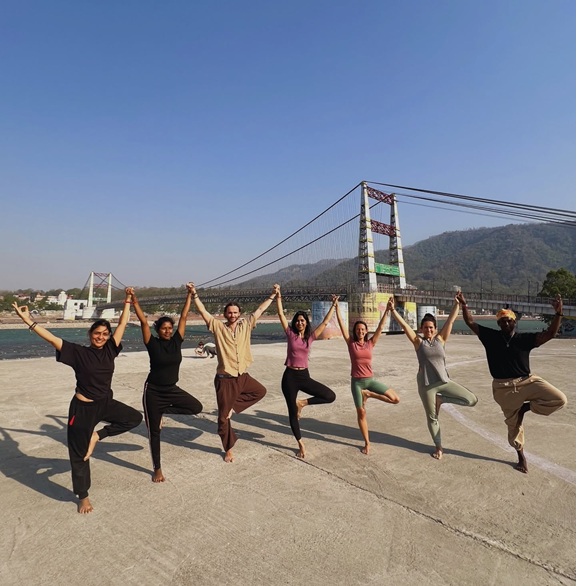
Is “Yoga Capital of the World” an official title?
No, no government or yoga body has formally awarded it. It is a nickname that grew over decades because of the reasons below.
Some tourism material even calls Rishikesh the “birthplace of yoga.” That goes too far. Yoga developed across ancient India, not in one town. A fairer way to say it is that Rishikesh is one of the world’s best-known centres of yoga, in a region where sages have lived and practised for a very long time.
7 Reasons Rishikesh is Called the Yoga Capital of the World
1. A holy setting where the Ganga leaves the mountains
Rishikesh sits where the Ganga comes out of the Himalayan hills. It is also the usual starting point for the northern Char Dham pilgrimage. For centuries, seekers have come here to meditate on the riverbank and in the forests nearby.
The name is traditionally linked to Hrishikesha, a name of Vishnu, and many people also connect the town with rishis, the ancient sages. Either way, the place has long been seen as a good spot for spiritual practice.
2. Swami Sivananda and the Divine Life Society
This is one of the strongest facts behind the title. Swami Sivananda Saraswati founded the Divine Life Society in 1936 at Muni Ki Reti in Rishikesh. Its headquarters, Sivananda Ashram, is about 3 km from Rishikesh town on the bank of the Ganga. He also set up the Yoga-Vedanta Forest Academy in 1948 and wrote over 200 books.
Many of his students later spread yoga to other countries. For many people around the world, the story of modern yoga in India passes through Rishikesh.
3. The Beatles and the Maharishi’s ashram
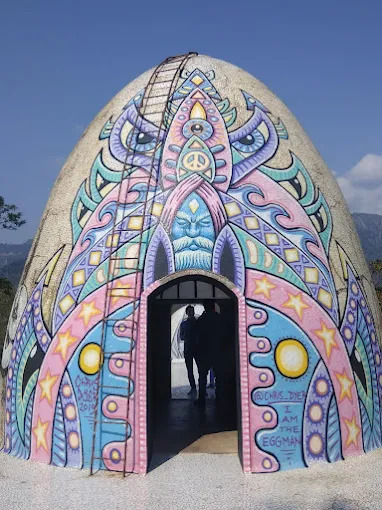
For most Western visitors, this is the moment Rishikesh became famous. The Beatles studied Transcendental Meditation at Maharishi Mahesh Yogi’s ashram near Rishikesh between February and April 1968. The ashram is known locally as Chaurasi Kutia, which means “84 huts” in Hindi.
They were not alone. Other well-known visitors included Mike Love of the Beach Boys, actress Mia Farrow and musician Donovan. The attention brought many Western seekers to Rishikesh, and new yoga and meditation centres followed.
The ashram was left empty for years. It has since been repaired and reopened to visitors inside Rajaji National Park. Check current timings and entry rules before you go.
4. A huge number of schools, ashrams and retreats
For a small town, Rishikesh has a very large number of yoga schools, ashrams, retreats and teacher training courses. Most yoga styles are taught here, and teacher training is offered at many places.
You can find Hatha, Ashtanga, Vinyasa, Iyengar-inspired classes, pranayama, meditation, yoga philosophy and Ayurveda, often within a short walk of each other. That variety is a big reason students keep coming.
I won’t claim it has “more than anywhere else in the world,” because no one has proven that. What is clear is that there are many options, which also means you need to choose carefully.
5. The International Yoga Festival
The International Yoga Festival has been held in Rishikesh in the first week of March since 1999. The 2026 edition at Parmarth Niketan ran from 9 to 15 March. News reports said the opening drew around 1,200 participants from nearly 80 countries.
A separate festival linked to the state government also took place that month, and the Governor praised its turnout (the figure at the top of this article). Dates and organisers can change each year, so always check the official festival website before you plan a trip.
6. A setting that supports practice
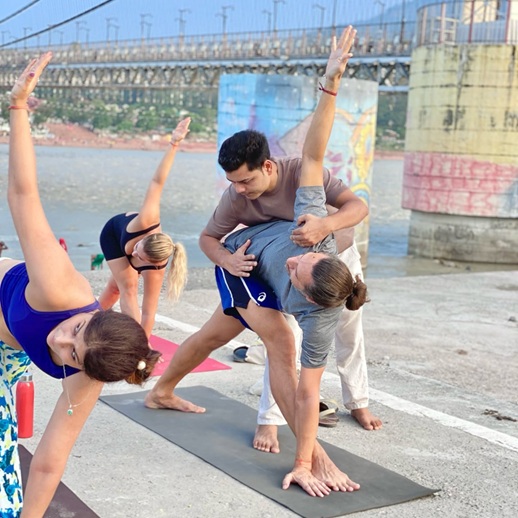
Rishikesh has hills, forest, the river and the early-morning quiet. Sunrise sessions on a riverbank or a rooftop feel very different from a city studio. Many schools sit a little away from the busiest streets, which helps with focus.
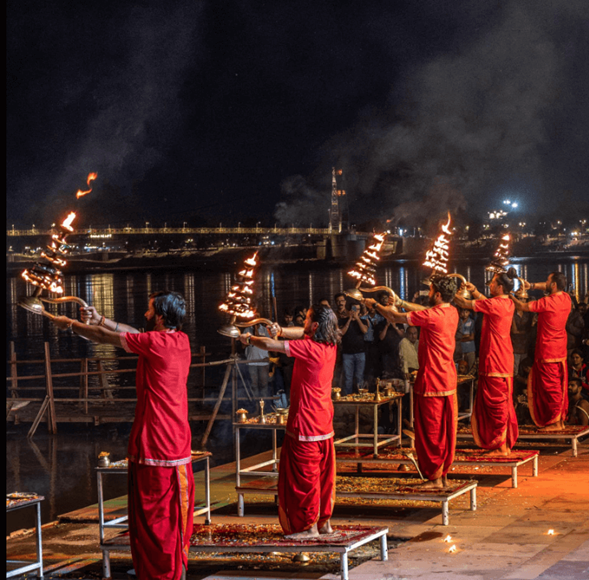
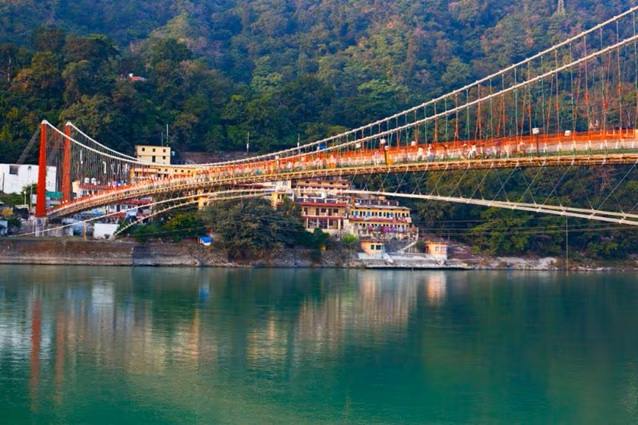
The evening Ganga Aarti, the temples along the river, and the footbridges (like Ram Jhula) add to the feeling that daily life here moves at a different pace.
7. A simple, supportive lifestyle
Rishikesh is known as a vegetarian-only, alcohol-free town. Rules and enforcement can vary by area, so check locally. For many students, that makes it easier to keep a clean routine: early wake-ups, simple food, long practice days, early nights.
It is also a place where you can easily meet other students, share meals and talk about practice. That community feeling is part of why people return.
A Short Timeline
| Year | What happened |
|---|---|
| 1936 | Swami Sivananda founds the Divine Life Society at Muni Ki Reti |
| 1948 | Yoga-Vedanta Forest Academy is set up |
| 1961 | Maharishi Mahesh Yogi leases the land for his ashram |
| 1968 | The Beatles study meditation at Chaurasi Kutia (Feb to April) |
| 1999 | The International Yoga Festival begins |
| 2026 | The festival takes place again in March |
Myths and facts
- Myth: Rishikesh is the birthplace of yoga. Fact: Yoga grew across ancient India. Rishikesh is a major centre, not the single origin.
- Myth: Every school here is authentic and high-quality. Fact: Quality varies a lot. Research before you book.
- Myth: The Ganga here is pristine everywhere. Fact: The river still faces pollution problems, even at Rishikesh. Stretches upstream are cleaner than areas near busy ghats.
- Myth: It is always quiet and peaceful. Fact: The busiest areas can be crowded and noisy, especially in peak season.
When to Visit
These are general seasonal patterns. Check the forecast before you travel.
| Months | What to expect |
|---|---|
| Feb to April | Pleasant weather, the International Yoga Festival in March, busy season |
| May to June | Hot days, fewer visitors |
| July to August | Monsoon, heavy rain, some activities limited |
| Sept to Nov | Clear skies, comfortable weather, popular for teacher training |
| Dec to Jan | Cool to cold mornings and nights, quieter |
How to Choose a Yoga School in Rishikesh?
Because there are so many choices, use this checklist:
- Check the teachers. Look for real training, years of teaching, and a clear lineage.
- Check registration. If you want a globally recognised certificate, ask whether the school is registered with Yoga Alliance and verify it on their official listing.
- Match the style. Hatha, Ashtanga and Vinyasa are different. Pick what you want to learn.
- Read the daily schedule. A good course balances asana, pranayama, philosophy, anatomy and teaching practice.
- Ask about class size. Smaller groups mean more attention.
- See the stay and food. Ask for photos, room details and sample menus.
- Compare reviews on several sites. Don’t rely on one platform.
- Read the fees and refund policy. Know what is included and what is not.
- Talk to a teacher before you pay. A call or video chat tells you a lot.
What Else To See While You Are Here
- Triveni Ghat and the Ganga Aarti in the evening
- Ram Jhula, the suspension footbridge near Sivananda Nagar
- Parmarth Niketan, a large ashram known for its evening aarti and yoga festival
- Beatles Ashram (Chaurasi Kutia) for history and street art
- River rafting, in the right season and with a licensed operator
Also Read: 15 Best Places to Visit in Rishikesh
Final Thoughts
Rishikesh has earned its reputation as the Yoga Capital of the World through its deep spiritual roots, long-standing yoga traditions and the many teachers who continue to share this ancient practice. From practising meditation beside the Ganga to learning traditional Hatha and Ashtanga yoga, the city offers an environment where students can explore yoga beyond physical postures. Its ashrams, experienced teachers and connection with Indian spiritual culture make it a meaningful place for anyone looking to deepen their understanding of yoga.
If you want to take your practice further, joining a Yoga Teacher Training in Rishikesh can be a valuable step. At Rishikul Yogshala Rishikesh, students can learn through structured programmes that cover asanas, pranayama, meditation, yoga philosophy, anatomy and teaching methodology. Whether your goal is to become a certified yoga teacher or develop a stronger personal practice, Rishikesh offers an opportunity to learn yoga in an environment closely connected to its traditional roots.
Frequently Asked Questions
Why is Rishikesh called the Yoga Capital of the World?
Because of its holy setting on the Ganga, its tradition of sages, teachers like Swami Sivananda, the Beatles’ 1968 visit, the International Yoga Festival and its many yoga schools. It is a nickname, not a formal title.
Who made Rishikesh famous for yoga?
Several people and events: Swami Sivananda and the Divine Life Society, Maharishi Mahesh Yogi and the Beatles’ visit, and later the International Yoga Festival and many teacher training schools.
What is the best time to visit Rishikesh for yoga?
February to April and September to November are usually the most comfortable. The International Yoga Festival is held in March.
How long should I stay?
A short visit can be 3 to 4 days. A retreat is often 1 to 2 weeks. A teacher training course usually takes several weeks. Choose based on your goal.
Is Rishikesh vegetarian?
It is known as a vegetarian-only, alcohol-free town. Check local rules, as they can vary by area.
Do I need yoga experience to practise there?
No. Many schools welcome beginners. Check each course’s entry requirements, especially for advanced or teacher training programmes.
How do I reach Rishikesh?
The nearest airport is Jolly Grant Airport near Dehradun. Rishikesh also has its own railway station, and Haridwar station is about an hour away by road. Taxis are easy to find at all three.
This article is for general information and is not medical advice. If you have a respiratory or heart condition, are pregnant, or are unsure whether these practices suit you, please speak to your doctor before beginning.

 +91-8433225327,
 Rishikul Yogshala Rishikesh, Narayan Kunj, Jonk Village, Ram Jhula, Swarg Ashram, Rishikesh, Uttarakhand 249304
 By Airway
 By Railway
 By Bus/Cabs