








Kunjapuri Temple Near Rishikesh: A Gentle Guide to the Sunrise Shakti Peetha in the Himalayas
Table of Contents
- History of Kunjapuri Temple
- Why Kunjapuri Temple Is So Popular
- How Does Kunjapuri Temple Celebrate the Spirit of Shakti?
- Experiencing Kunjapuri: Where Nature, Yoga, and Self-Discovery Unite
- How to Visit Kunjapuri Temple?
- Best Time to Visit Kunjapuri Temple
- Nearby Places You Can Visit
- Safety Travel Tips
- Conclusion
- Frequently Asked Questions
About 35 kilometres above Rishikesh, perched on a Himalayan ridge at 1,676 metres, the Kunjapuri Temple watches the sun rise over a wide sweep of mountains — Banderpunch, Gangotri, Swargarohini, Chaukhamba — all spreading out in the early light. The temple is one of the sacred Shakti Peethas, said to mark the spot where Goddess Sati’s chest fell when Vishnu severed her body. In this guide, we’ll meet Kunjapuri gently, explore its legend, and walk through how to make a sunrise visit.
A One-Day Trip to Kunjapuri Temple is Perfect If You:
- Love being close to nature.
- Practising yoga in Rishikesh and looking for a break from your everyday schedule.
- Wish to watch the sunrise from high in a mountain temple.
In this guide, you will know all the information about the one-day visit to the Kunjapuri temple. You will learn about the location, its history, how to plan your trip smoothly, and nearby places to explore, making your journey even more meaningful.
History of Kunjapuri Temple
As described in Hindu scriptures, Goddess Sati – the wife of Lord Shiva and the daughter of King Daksha – attended her father’s grand yajna (sacrificial ritual). At the ceremony, King Daksha insulted Lord Shiva in front of the gods and sages. Unable to tolerate the disrespect shown to her husband and realising that her father had crossed all limits, Goddess Sati chose to sacrifice herself by entering the fire of the yajna.
Filled with grief and anger, Lord Shiva began his dance, threatening the universe’s balance. To bring balance back, Lord Vishnu used his Sudarshan Chakra to separate Sati’s body into pieces, which fell at different locations across the Indian subcontinent. It is believed that the chest of Goddess Sati fell at the mountain where Kunjapuri Temple now stands, making it a powerful Shakti Peetha where feminine energy is said to reside.
Kunjapuri Temple was established by Jagadguru Adi Shankaracharya, the Hindu philosopher and saint. People have been visiting Kunjapuri Temple for generations. It became easier to reach after independence because better roads were developed connecting it to Rishikesh.
Today, Kunjapuri Temple attracts many international travellers almost every year because of its natural beauty, spiritual importance, and peaceful atmosphere.
Why Kunjapuri Temple Is So Popular
Uttarakhand is full of beautiful temples, but Kunjapuri Temple stands out, and here’s why:
1. Sunrise Views
2. Peaceful Vibes
3. Ideal for a Day Trip
4. A blend of nature and spirituality
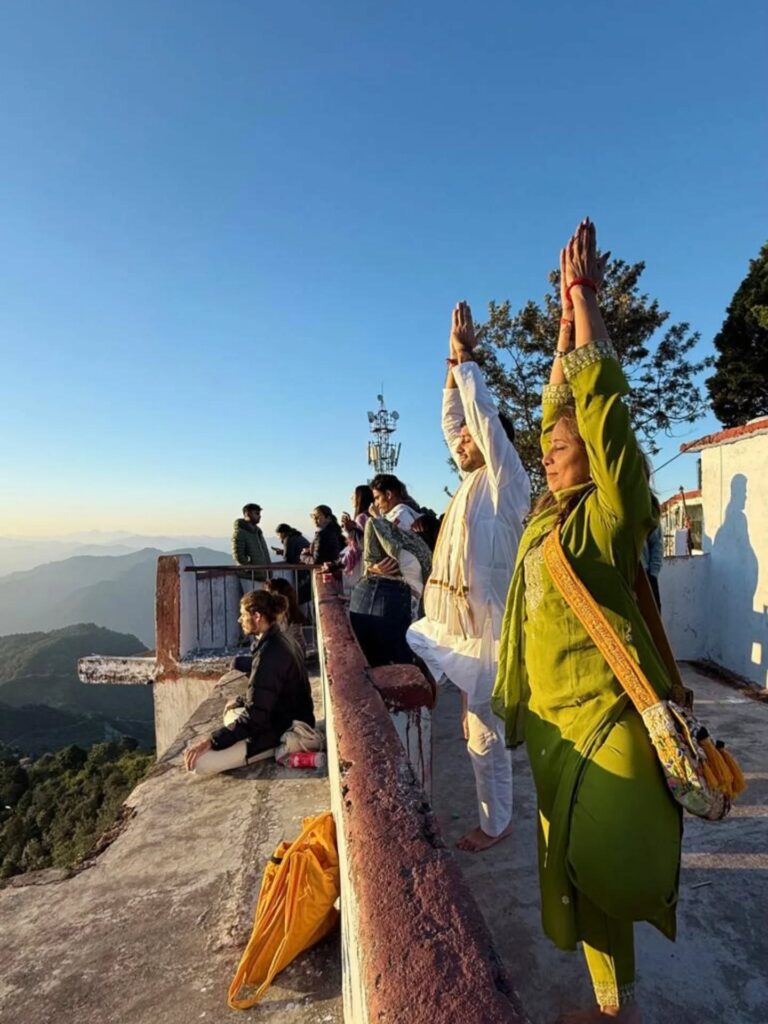
How Does Kunjapuri Temple Celebrate the Spirit of Shakti?
Kunjapuri Temple is also a vibrant centre of cultural and religious celebrations. Throughout the year, the temple comes alive during important Hindu festivals, especially those dedicated to Shakti [divine feminine energy].
1. Navratri Festivities
With great enthusiasm, Navratri is the celebrated festival at Kunjapuri Temple. Dedicated to Goddess Durga in her nine forms, this nine-day festival attracts a large number of devotees from villages, Rishikesh, Haridwar, and other parts of Uttarakhand.
During Navratri, the temple is beautifully decorated with lamps, flags, and flowers. Special pujas and ceremonies take place throughout the nine days, and devotees participate in chants dedicated to Goddess Durga as part of the festival’s traditional observances.
2. Dushera Celebrations
Dussehra, which signifies the victory of good over evil, is celebrated with devotion at Kunjapuri Temple. All gather at the temple to participate in ceremonies. The day ends with evening aartis, during which oil lamps are lit, creating a divine glow across the temple area.
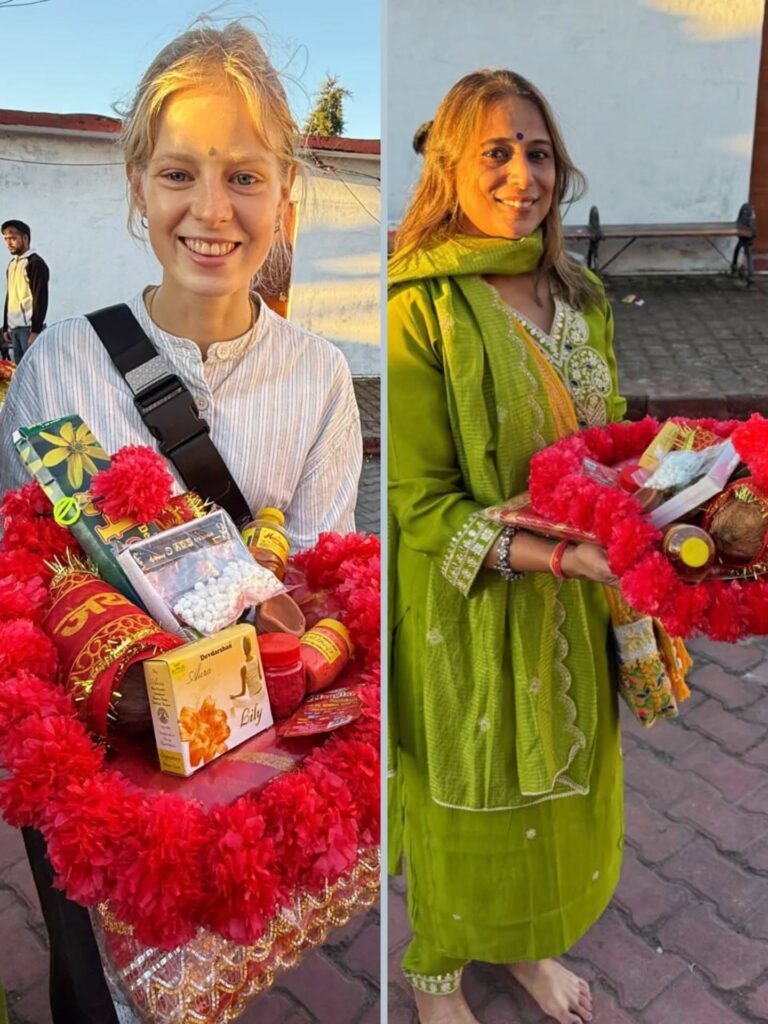
Experiencing Kunjapuri: Where Nature, Yoga, and Self-Discovery Unite
Spending your time in meditation in the temple awakens inner strength and brings a deeper sense of meaning to your experience. This is the reason why most international travellers are attracted to the Kunjapuri Temple and stay in nearby Rishikesh and continue to nurture their practice while exploring other sacred sites.
Kunjapuri is a place where nature and spirituality come together. For those who approach it with an open heart, the experience leaves a lasting impression, offering inner calm, clarity, and a gentle sense of rejuvenation that continues long after the journey ends.
One-Day Trip Itinerary
| Time | Activity |
| 5.00 am | Back in Rishikesh to rest or continue exploring |
| 6.00 am | Reach Kunjapuri Temple and climb the steps |
| 6.15 am-6.45 am | Enjoy the magical sunrise and scenic views |
| 7.00 am | Temple darshan and quiet reflection |
| 7.30 am – 8.30 am | Tea, light snacks and photography |
| 9.00 am – 10.30 am | Return by car or continue exploring the other parts of Rishikesh |
How to Visit Kunjapuri Temple?
- By Taxi or Car – One of the best choices for families is to book a car from Rishikesh. This road leads to the parking area, and from there it is just a short walk to the Kunjapuri temple.
- Kunjapuri Temple Trek – The Kunjapuri trek is an easy climb through forests and fields. Along the way you will get views of the Himalayas and also experience village life.
- Bike or Scooty Ride – Solo travellers can choose this ride to make their journey even more fun and adventurous. You will have the freedom to take photos and explore at your own pace.
Best Time to Visit Kunjapuri Temple
Kunjapuri Temple is open in all seasons. Here is a guide to help you plan the perfect visit:
- October to April are perfect for visiting as temperatures cool down gradually from the summer peak. The skies are clear, offering awesome views of the Himalayas to the north and the flowing Ganga River.
- September and March are great for those who prefer colourful surroundings. The hills are spotted with flowers, and the weather is pleasant for trekking and exploring viewpoints.
- Monsoon Season – During the monsoon season, the mountains surrounding the temple are covered in radiant shades of green. But travellers should be careful, as temple steps can become slippery and clouds may spoil sunrise views.
- Winter – Winter months bring chilly weather, especially early in the morning. A warm jacket, gloves, and a cap are important. As you trek up, you will notice that the mountain air feels refreshing and the fog gives the surroundings a magical feel.

Nearby Places You Can Visit
When visiting the Kunjapuri temple, there are many attractions nearby that can make your trip even more memorable.
- Triveni Ghat – A peaceful riverside spot where you can experience devotional practices.
- Laxman Jhula and Ram Jhula – These two well-known bridges across the Ganga River are the perfect way for capturing memories and explore local markets.
- Neer Garh Waterfall – A serene waterfall is for short treks, picnics, and connecting with nature.
- Rajaji National Park – Perfect for wildlife enthusiasts, with chances to see tigers on safari.
Safety Travel Tips
Visiting Kunjapuri Temple is a wonderful experience, but it is important to stay safe. Here are some tips to ensure a smooth and respectful visit:
- Keep the surrounding areas clean.
- Walk carefully on the steps.
- Do not feed any monkeys or stray animals.
- Follow the temple rules to make your visit meaningful.
- Stay together with your group, especially during early morning hours.
Read More: Mouni Baba Cave: A Sacred Silence in the Spiritual Heart of Rishikesh
Conclusion
There is something special about the journey to Kunjapuri Temple. Standing there as the first light of sunrise touches the Himalayan peaks, surrounded by mountains and an open sky, you realise it is a place that calms your mind and lifts your mood. For students of the 200 Hour Yoga Teacher Training Course in Rishikesh at Rishikul Yogshala, this excursion becomes a highlight, offering a chance to step away from the yoga mats and experience the beauty of the Himalayas.
It is one of those rare places where you don’t just take a photo, and you actually feel present and reconnect with yourself.
Frequently Asked Questions
Q1: Is the hike to Kunjapuri Temple difficult?
Ans: The Kunjapuri Temple trek is moderate, so beginners can manage it by taking a steady pace and wearing comfortable shoes.
Q2: Can senior people visit the Temple?
Ans: Yes, elderly people can reach the temple by car and then take the remaining steps slowly, resting whenever needed.
Q3: Is photography allowed?
Ans: Photography is allowed in the temple area and from the viewpoints.
Q4: Do we need to book in advance?
Ans: No, there is no such advance booking needed to visit the Kunjapuri temple. Visitors can enter freely during opening hours.
Q5: What is the perfect time to visit Kunjapuri Temple?
Ans: The perfect time to visit is early morning for sunrise views. October to March is perfect for pleasant weather and clear skies.

 +91-8433225327,
 Rishikul Yogshala Rishikesh, Narayan Kunj, Jonk Village, Ram Jhula, Swarg Ashram, Rishikesh, Uttarakhand 249304
 By Airway
 By Railway
 By Bus/Cabs