








Why Choose a Residential Yoga Course in Rishikesh? A Gentle, Honest Guide
Table of Contents
- What Is a Residential Yoga Course?
- Why Rishikesh? Understanding the Spiritual and Geographic Significance
- A City Built on Yogic Heritage
- The Himalayas and the Ganges as Teachers
- The Living Lineage of Yoga
- 8 Reasons Why Yoga Teacher Training Is the Best Option in Rishikesh
- 1. Authenticity of Teaching
- 2. Internationally Recognised Certification
- 3. Quality of Teachers
- 4. Affordability Without Compromise on Quality
- 5. A Community of Like-Minded Practitioners
- 6. The Immersive Lifestyle Supports Deep Change
- 7. Proximity to Sacred Sites and Cultural Experience
- 8. Placement Within India’s Broader Yoga Geography
- How to Choose the Right Yoga School in Rishikesh?
- 1. Check Yoga Alliance Registration
- 2. Assess the Teachers
- 3. Examine the Curriculum Carefully
- 4. Read Reviews from Former Students
- 5. Consider Accommodation and Living Conditions
- 6. Look for a School With Real History
- Which Course Level Is Right for You?
- 1. 100 Hour Yoga TTC
- 2. 200 Hour Yoga TTC
- 3. 300 Hour Yoga TTC
- 4. 500 Hour Yoga TTC
- What a Day in a Residential Yoga Course Actually Looks Like
- The Sattvic Diet: Why It Matters During Residential Yoga Course
- Final Takeaway – Residential Yoga Course
- Frequently Asked Questions – Residential Yoga Course
- Q1. What is a residential yoga course in Rishikesh?
- Q2. Who can join a residential yoga course?
- Q3. What are the benefits of residential yoga courses?
- Q4. Why is Rishikesh popular for residential yoga courses?
- Q5. What is included in a residential yoga course?
- Q6. What kind of food is provided during the residential yoga course?
- Q7. Do I need to follow a strict routine during the residential yoga course?
- Q8. Is a residential yoga course worth it?
- Q9. What visa do I need to enroll in a residential yoga course?
- Q10. Is Rishikesh safe for international students?
There comes a point in many yoga journeys when an hour on the mat each week doesn’t quite reach the part of you that’s calling for more. If you’ve felt that quiet pull, a residential yoga course in Rishikesh may be what you’re looking for. It isn’t a holiday, and it isn’t a quick certification — it’s a way of stepping out of your usual life for a few weeks and living, eating, and breathing yoga alongside others doing the same. In this guide, I’d like to share what that looks like, and why this small Himalayan town keeps drawing people back.
That is the moment Rishikesh begins to make sense.
Every year, thousands of students from more than 80 countries arrive in this small Himalayan city on the banks of the Ganges River with one clear intention: to study yoga where it was born, where it was refined, and where it continues to be taught in its most authentic form. Some come to deepen their personal practice. Some come to earn a globally recognised certification and begin teaching. Many arrive not entirely sure what they are looking for, and leave having found far more than they expected.
This guide explains everything you need to know about choosing a residential yoga course in Rishikesh: what makes the city uniquely suited to serious yoga study, what to look for in a school, how to choose the right certification level, and why, when it comes to yoga teacher training in India, Rishikesh consistently stands apart from every other destination.
What Is a Residential Yoga Course?
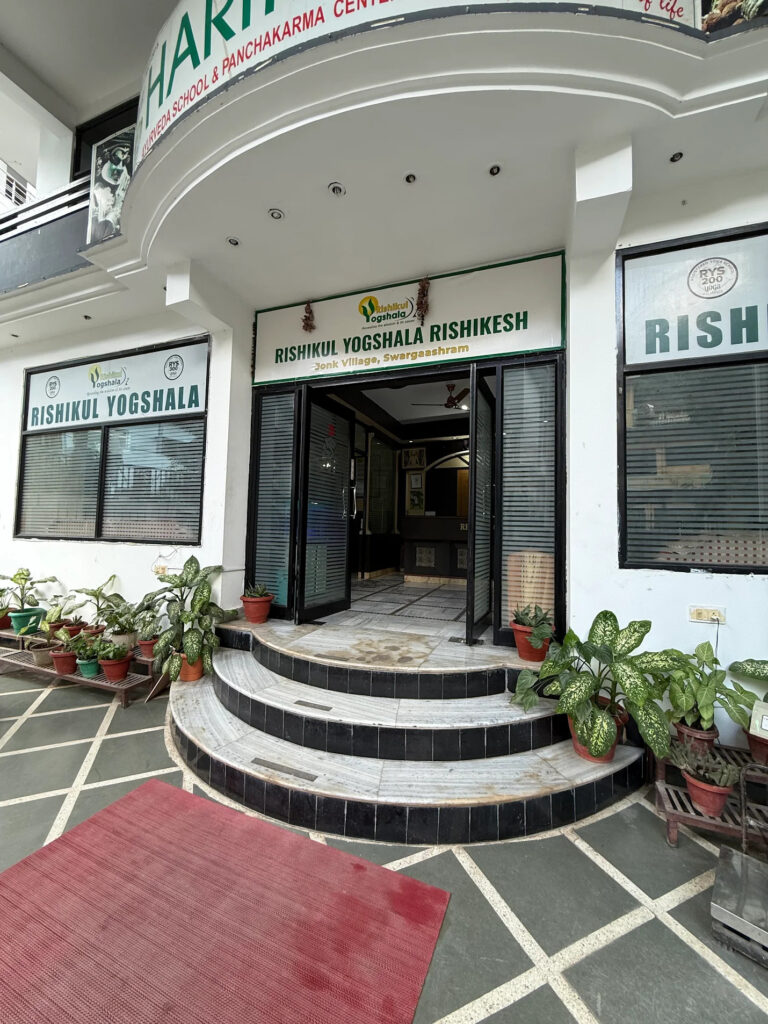
A residential yoga course is a structured, immersive programme in which students live, eat, study, and practise within the same campus or ashram environment. Unlike a drop-in yoga class or a weekend retreat, a residential yoga course removes you fully from your daily environment and places you inside a disciplined yogic schedule for the duration of your training, typically 23 to 56 days, depending on the yoga course you have opted for.
The day begins before sunrise. Meditation and pranayama come first, before the mind has been claimed by the noise of the world. Asana practice follows, then philosophy class, then breakfast. Afternoons bring anatomy sessions, teaching methodology workshops, self-study, and evening meditation. Sattvic meals are provided throughout. Life outside the Residential Yoga Courses, social media, irregular sleep, processed food, the constant motion of daily responsibilities, and pauses for the duration.
This structure is not incidental. It is the point. Yoga, in its traditional form, was never meant to be learned in one hour per week between other commitments. The residential model gives the practice the time and space it has always required.
Why Rishikesh? Understanding the Spiritual and Geographic Significance
A City Built on Yogic Heritage
Rishikesh has been associated with yoga, meditation, and spiritual learning for centuries. Ancient texts describe it as a place where sages retreated to practise tapas (austerity) and receive knowledge. The city takes its name from the legend of Rishi Raibhya, who performed intense penance here and received the vision of Lord Vishnu in the form of Rishikesh, the one who is the lord of the senses.
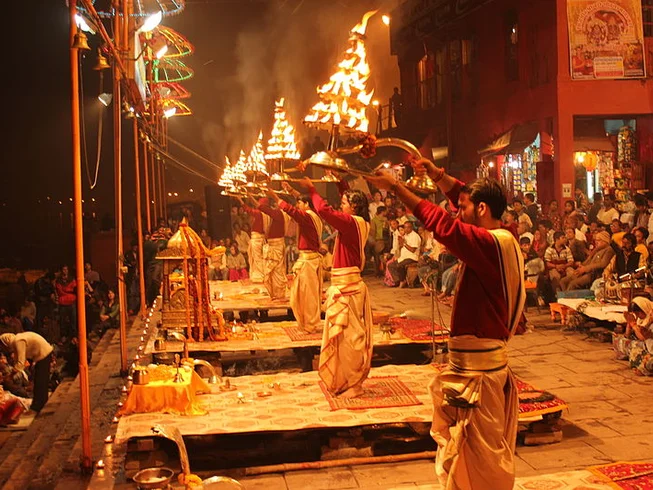
This is not historical trivia. The spiritual atmosphere of Rishikesh is palpable in a way that is difficult to fully describe before you have experienced it. The evening Ganga Aarti at the ghats, thousands of lamps offered to the river as the chanting rises, carries a quality of stillness and presence that most students describe as their first real encounter with a feeling that can only be called sacred.
The Himalayas and the Ganges as Teachers
Yoga philosophy holds that the environment in which we practise directly shapes the quality of our practice. Rishikesh sits at the foothills of the Himalayas, encircled by mountains and threaded through by the Ganges as it leaves the high peaks and moves toward the plains.
The quality of the air, the absence of noise and overstimulation that defines most modern cities, the sound of the river, the sight of mountains, all of this acts on the nervous system in ways that support deep practice. Students consistently report that their concentration improves, their sleep deepens, and their experience of meditation transforms within the first week of being in Rishikesh.
The Living Lineage of Yoga
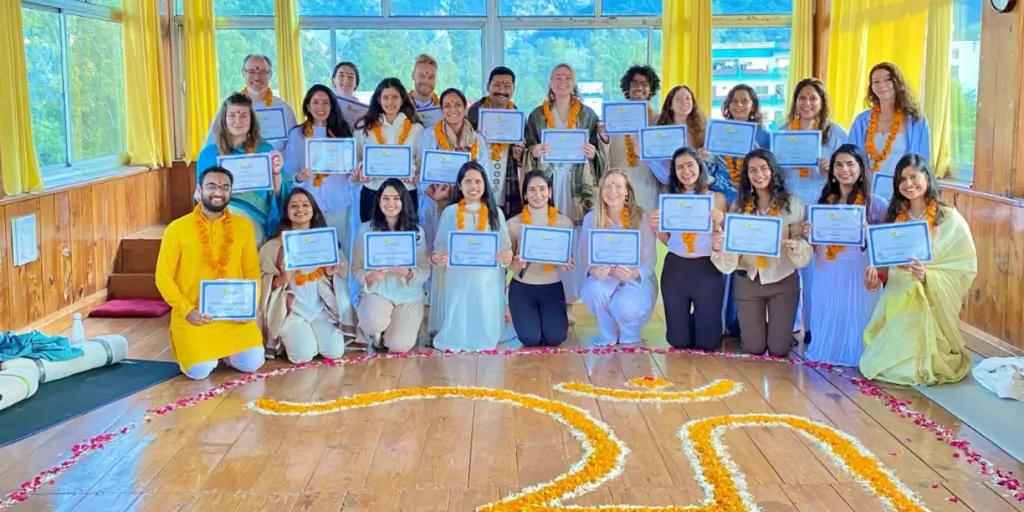
Rishikesh became the international centre of yoga after B.K.S. Iyengar, Swami Sivananda, Maharishi Mahesh Yogi, and other great yoga luminaries made it a home for serious study. Many ancient texts and commentaries on yoga were studied, written, and transmitted in and around this city. That lineage continues today through the teachers who were trained here, who trained others, who continue to teach.
When you study yoga in Rishikesh, you are not learning a modern fitness interpretation. You are receiving knowledge that has passed through an unbroken chain of teachers and students going back many generations.
8 Reasons Why Yoga Teacher Training Is the Best Option in Rishikesh
1. Authenticity of Teaching
The yoga taught in Rishikesh schools, particularly in the older, well-established institutions, is rooted in classical texts: the Yoga Sutras of Patanjali, the Hatha Yoga Pradipika, and the Bhagavad Gita. Teachers here did not learn yoga through a six-week online course. Many were trained under masters who themselves studied in the ashram tradition, where the relationship between guru and student was the primary vehicle of transmission.
This means the curriculum is comprehensive in a way that goes beyond physical postures. Students at a serious school in Rishikesh will explore pranayama, meditation, yogic philosophy, mantra, anatomy, Sanskrit terminology, and teaching methodology, not as optional additions, but as core elements of the training.
2. Internationally Recognised Certification
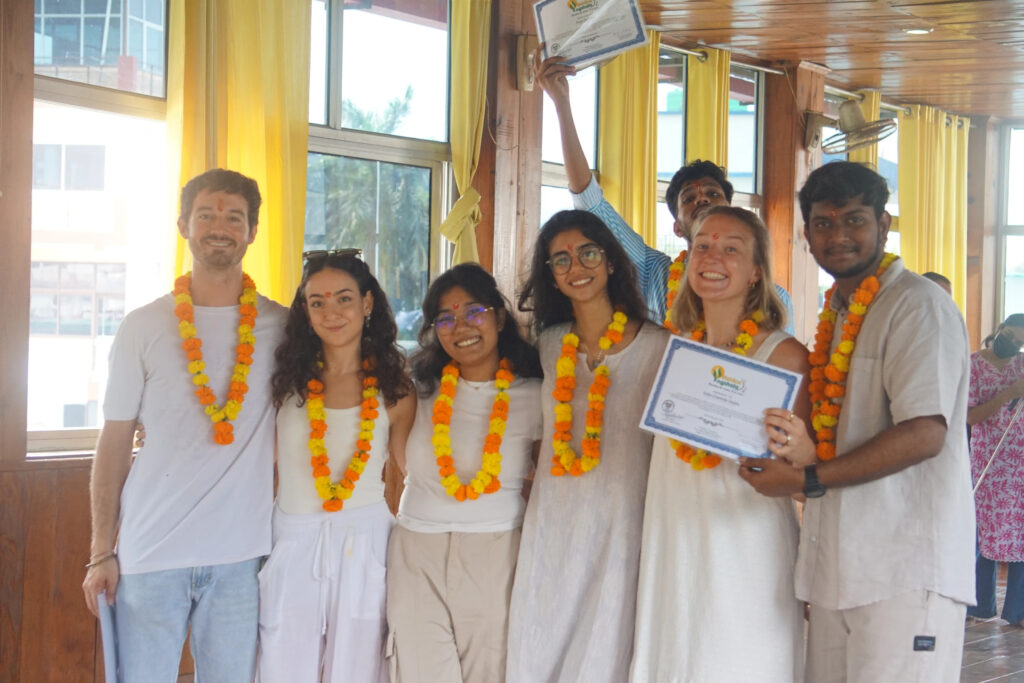
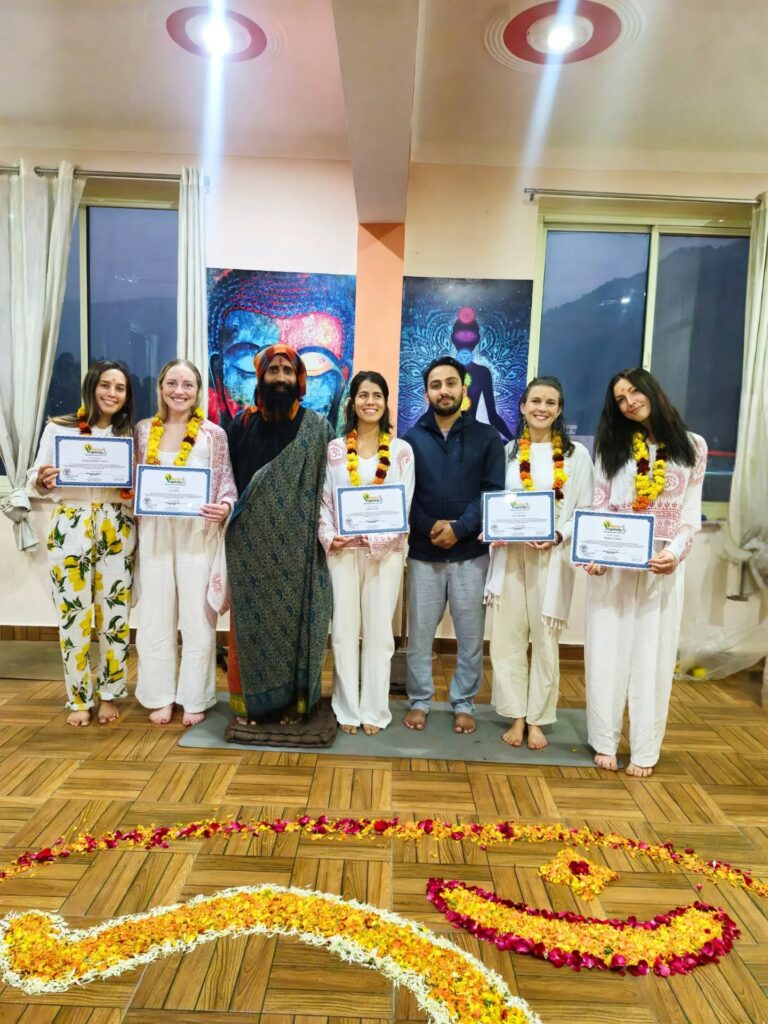
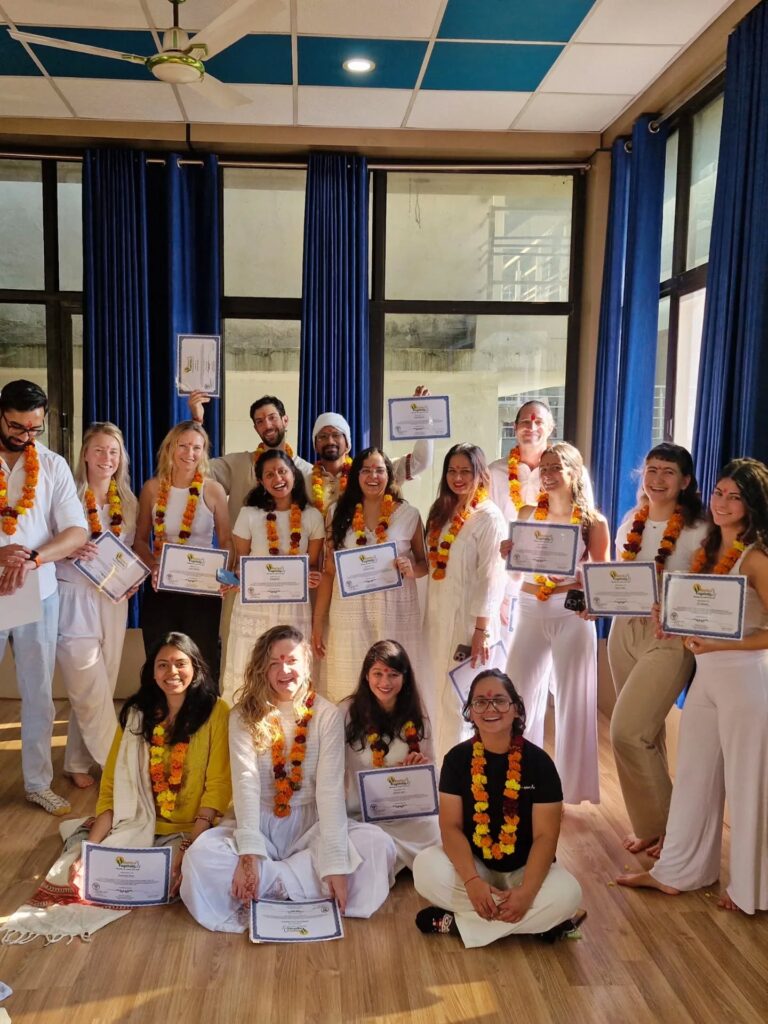
Most reputable schools in Rishikesh are Registered Yoga Schools (RYS) with Yoga Alliance USA, the most widely recognised certification body in the global yoga community. Completing a Yoga Alliance–certified course means you graduate as a Registered Yoga Teacher (RYT) — a credential that allows you to teach professionally in yoga studios, wellness centres, and private settings across the world.
The 200 Hour Yoga Teacher Trainingin Rishikesh is the foundational certification and is recognised globally as the entry-level qualification for yoga teachers. The 300 Hour TTC is the advanced course for those who have completed the 200-hour programme and wish to deepen their practice and teaching. The 500 Hour TTC combines both levels into a single immersive certification for those seeking a comprehensive qualification.
3. Quality of Teachers
The standard of teaching in Rishikesh, particularly in established schools with long track records, is genuinely high. Look for teachers who hold E-RYT (Experienced Registered Yoga Teacher) status with Yoga Alliance, indicating a minimum of 1,000 hours of teaching experience beyond their own certification. The best teachers in Rishikesh bring 7 to 20+ years of hands-on experience and a genuine understanding of yoga as a complete science, not merely a physical practice.
Good teachers in Rishikesh observe individual students. They modify and adapt instruction based on the needs, capacities, and background of each person in the room. They do not simply deliver a standardised curriculum; they respond to where each student actually is, which is what makes the difference between adequate training and genuinely transformative training.
4. Affordability Without Compromise on Quality
Yoga teacher training programmes in Europe, North America, and Australia cost significantly more than equivalent or higher-quality programmes in Rishikesh. A 200 Hour YTT in Rishikesh typically includes accommodation, all sattvic meals, study materials, and the Yoga Alliance certification — at a fraction of the cost of a comparable programme in the West.
The broader cost of living in Rishikesh is also modest. Accommodation, transport, and meals outside the course are all affordable, allowing students to extend their stay for personal exploration without significant expense.
5. A Community of Like-Minded Practitioners
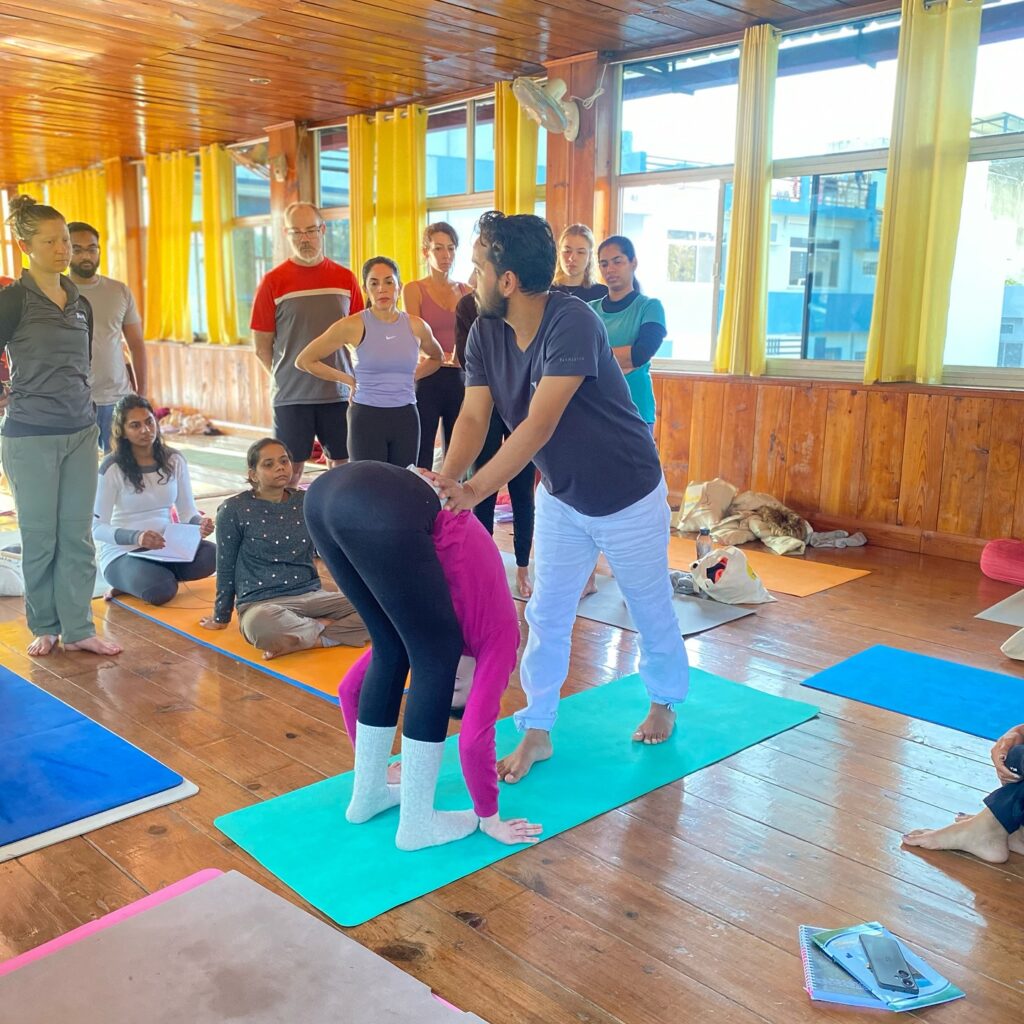
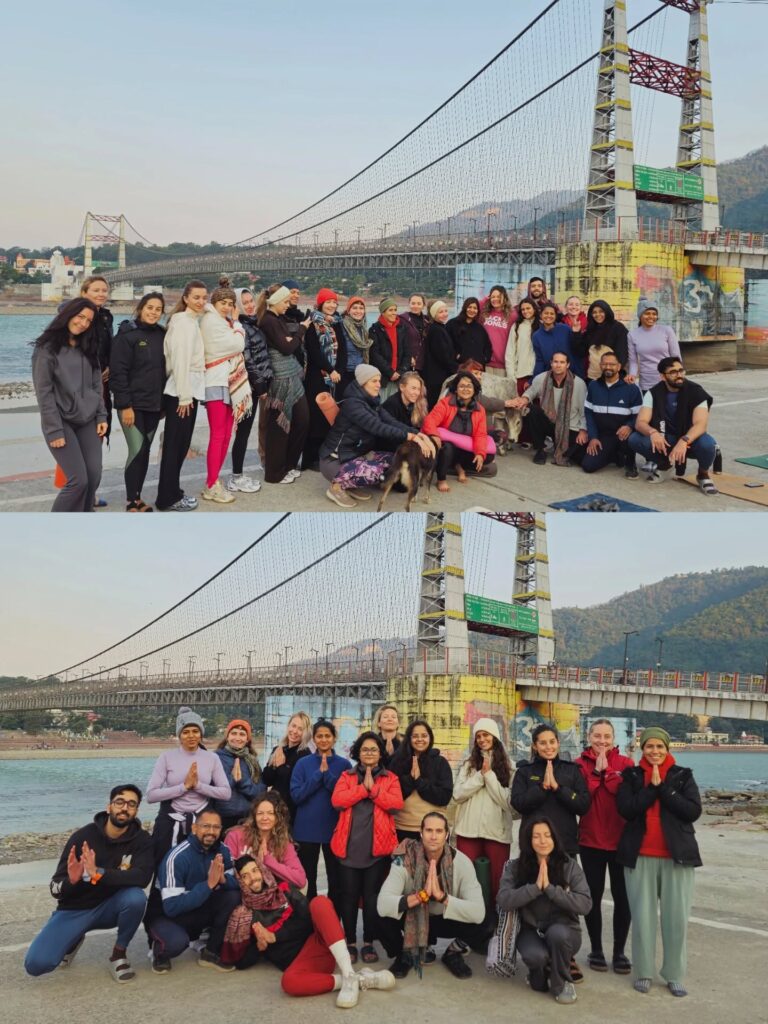
Every month, students from dozens of countries arrive in Rishikesh to study yoga. The community that forms in a residential course, people from different cultures and backgrounds, sharing early mornings on the mat, shared meals, and genuine conversations about practice and philosophy, is one of the aspects of training that students describe most warmly, long after the course has ended.
This is not simply pleasant company. Practising alongside serious, committed students accelerates your own progress in ways that solo practice cannot.
6. The Immersive Lifestyle Supports Deep Change
The residential model, early morning practice, disciplined schedule, sattvic diet, reduced screen time, proximity to nature and the river, creates conditions in which genuine transformation becomes possible. Students who arrive with years of physical yoga practice frequently describe discovering dimensions of the practice, particularly in pranayama, meditation, and philosophy, that had been entirely inaccessible in a non-residential context.
The lifestyle itself is part of the teaching.
7. Proximity to Sacred Sites and Cultural Experience
A day off in Rishikesh is not wasted time. Sunrise at Kunjapuri Temple, with the Himalayas visible in every direction. The evening Ganga Aarti at Triveni Ghat or Parmarth Niketan. A morning on the banks of the river before practice. The temples, the ashrams, the sounds of the city, all of it feeds into the experience of studying yoga in the place where the tradition lives.
Many schools also include excursions and cultural activities as part of the training schedule, ensuring that students experience Rishikesh as a living spiritual city, not simply a backdrop.
8. Placement Within India’s Broader Yoga Geography
Yoga originated in India. UNESCO has recognised it as an Intangible Cultural Heritage of India. To learn yoga in India, and specifically in Rishikesh, the city that has been its international centre for the last century, is to receive the practice with a depth of cultural and historical context that simply cannot be replicated elsewhere. Students who have trained in Rishikesh consistently describe their experience as qualitatively different from what they had previously understood yoga to be.
How to Choose the Right Yoga School in Rishikesh?
With hundreds of schools now operating in Rishikesh, the decision requires careful thought. Here is what to look for.
1. Check Yoga Alliance Registration
This is non-negotiable for anyone seeking a globally recognised teaching qualification. A school registered as an RYS 200, RYS 300, or RYS 500 with Yoga Alliance USA has been assessed against internationally established standards for curriculum, teaching staff, and training hours. Verify registration directly on the Yoga Alliance website before enrolling anywhere.
2. Assess the Teachers
Read the teachers’ individual biographies, not just the school’s general description of its faculty. How long have they been teaching? Under whom did they train? What do they specialise in — Hatha, Ashtanga, Pranayama, Philosophy? A school’s reputation ultimately rests on the quality and depth of its individual teachers.
In conversations with the school before enrolling, ask specifically about class sizes. Smaller groups, typically 10 to 20 students, allow teachers to give genuinely individualised attention. Large batches of 30 or more students significantly reduce the quality of instruction.
3. Examine the Curriculum Carefully
A serious 200 Hour YTT curriculum should cover:
- Asana practice and alignment (Hatha Yoga, Ashtanga Vinyasa)
- Pranayama and breathwork
- Meditation and mindfulness
- Yoga philosophy (Yoga Sutras of Patanjali, Bhagavad Gita)
- Anatomy and physiology relevant to yoga
- Teaching methodology and practicum
- Mantra and Sanskrit basics
- Introduction to Ayurveda
- Ethics of teaching
If a curriculum is weighted almost entirely toward asana with minimal philosophy, pranayama, or teaching methodology, look elsewhere. A complete yoga education prepares you to understand and transmit yoga as a whole, not simply to demonstrate postures.
4. Read Reviews from Former Students
Student testimonials on Google, Tripadvisor, and Trustindex provide genuine insight into the experience of a course. Look specifically for comments about the quality of individual teachers, the structure and depth of the curriculum, the living conditions, and how students felt the training compared to their expectations. Pay particular attention to reviews from students with similar backgrounds and goals to your own.
5. Consider Accommodation and Living Conditions
The accommodation provided during a residential course affects your well-being and, therefore, your capacity to study. Clean, comfortable rooms, hygienic common spaces, proximity to the practice hall, and access to nature all matter. Many students underestimate this factor before enrolling and understand its importance only once they are living it.
Ask about private versus shared room options. Ask whether the school is located near the river or in a quieter part of the city. Ask what the meals are like and whether dietary requirements are accommodated.
6. Look for a School With Real History
There is a significant difference between a school that has been operating for 15+ years and one that opened recently. An established school has refined its curriculum through thousands of students, built a faculty of experienced teachers, and developed a reputation that it is invested in maintaining. It has graduated students who are now teaching successfully around the world, a track record you can verify.
Which Course Level Is Right for You?
1. 100 Hour Yoga TTC
An introduction to the fundamentals of yoga practice and teaching. Suitable for beginners who want to explore yoga teacher training without the full commitment of a longer programme, or for practitioners who want to build a strong foundation before advancing.
2. 200 Hour Yoga TTC
The internationally recognised foundational teaching qualification. Open to all levels, including complete beginners, the 200 Hour TTC provides a comprehensive grounding in asana, pranayama, meditation, philosophy, anatomy, and teaching methodology. Upon completion, graduates can register as RYT-200 with Yoga Alliance and begin teaching professionally worldwide. This is the right starting point for the overwhelming majority of aspiring yoga teachers.
3. 300 Hour Yoga TTC
The advanced course is designed for those who have already completed a 200 Hour YTT and wish to deepen their knowledge and refine their teaching. The 300 Hour TTC explores more advanced asana work, deeper pranayama practices, advanced philosophy, and yoga anatomy, and develops more nuanced teaching skills. Graduates can register as RYT-500 with Yoga Alliance by combining their 200 and 300 Hour credentials.
4. 500 Hour Yoga TTC
A comprehensive, continuous programme that covers the full scope of both foundational and advanced training. The 500 Hour TTC is the highest level of certification offered in a single programme and qualifies graduates to register as RYT-500 with Yoga Alliance directly upon completion.
What a Day in a Residential Yoga Course Actually Looks Like
This is one of the questions prospective students ask most often — and one of the things that surprises them most once they arrive.
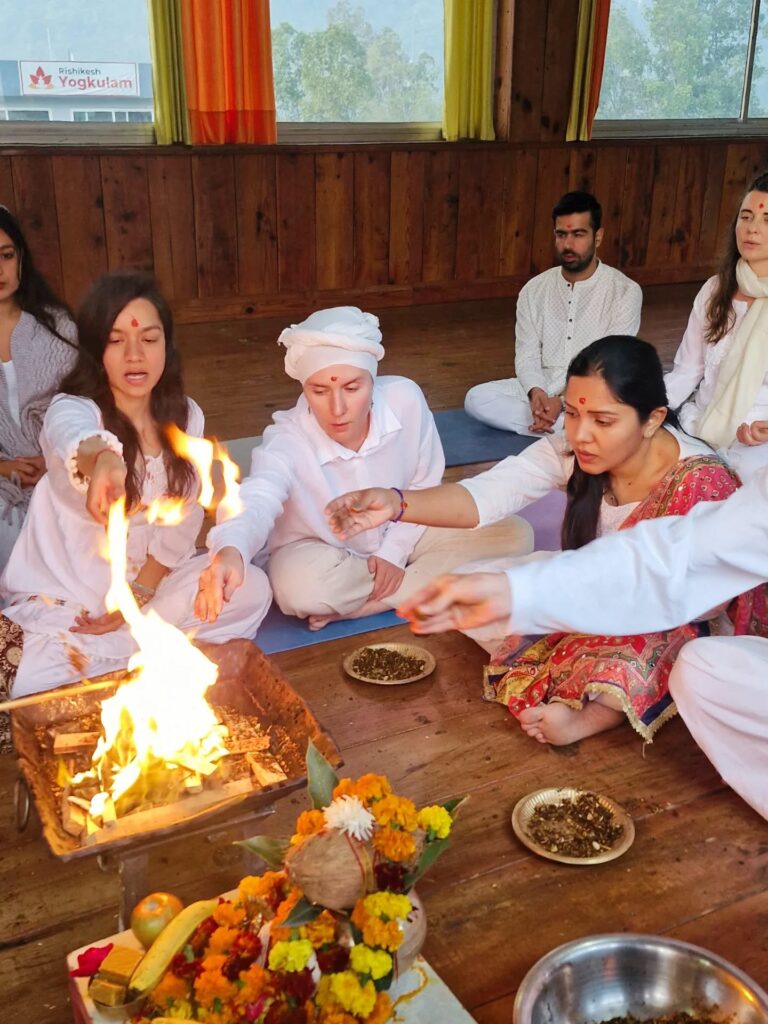
A typical day at a well-run residential school in Rishikesh begins around 5:30 or 6:00 AM. The first practice is seated — pranayama and meditation before the sun has fully risen, in the quiet that belongs only to early morning in a city that wakes slowly. There is something about practising before the mind has been filled with the day’s concerns that creates a quality of stillness difficult to access at other times.
Asana practice follows Hatha Yoga, Ashtanga, and alignment work. Breakfast is sattvic: fruits, porridge, herbal teas, foods that nourish without heaviness. Morning classes cover philosophy or anatomy. Lunch. An afternoon session focused on teaching methodology, practicum, or advanced asana. Self-study. Evening meditation or satsang. Dinner. Rest.
Also Read: Top Yoga Teacher Training Schools in India – 2026
The Sattvic Diet: Why It Matters During Residential Yoga Course
The vegetarian diet provided in Rishikesh yoga schools is not simply a logistical convenience. It is an integral part of the practice.
Sattvic food, fresh, lightly cooked, free from meat, alcohol, and heavy spices, is described in yogic philosophy as the dietary foundation that supports clarity of mind, steadiness of energy, and ease in practice. When you are eating sattvic food consistently, practising daily, and living in the environment of Rishikesh, the combined effect on the nervous system and the quality of practice is noticeable quickly.
Students who arrive with established habits of irregular eating or heavily processed food often describe the dietary shift as one of the most significant aspects of their training — and one they wish to maintain after returning home.

Final Takeaway – Residential Yoga Course
The question of where to study yoga seriously has a clear answer for most of the world’s yoga teachers: Rishikesh. The city carries something that cannot be manufactured elsewhere — a combination of spiritual history, living tradition, natural environment, qualified teachers, and a community of genuine practitioners that creates conditions in which yoga can be understood not as exercise, but as a complete way of being.
A residential yoga course in Rishikesh is not a holiday. It is a period of serious, structured, immersive study that will change how you understand your body, your breath, your mind, and your relationship to the practice you have been developing. It is the most direct path available to anyone who wants to receive yoga as it has always been intended to be transmitted: in full, from a teacher who understands it deeply, in a place that carries its history.
The next Residential Yoga Course begins soon. The seat is waiting.
Frequently Asked Questions – Residential Yoga Course
Q1. What is a residential yoga course in Rishikesh?
Ans. It is a yoga program where you stay at the school and follow a daily routine of yoga, meditation, and healthy living.
Q2. Who can join a residential yoga course?
Ans. Anyone can join, including beginners. You don’t need prior experience to start.
Q3. What are the benefits of residential yoga courses?
Ans. They help improve physical health, mental clarity, discipline, and overall well-being through regular practice.
Q4. Why is Rishikesh popular for residential yoga courses?
Ans. Rishikesh is known for its peaceful environment and strong connection to traditional yoga learning.
Q5. What is included in a residential yoga course?
Ans. It usually includes yoga classes, meditation, pranayama, accommodation, and meals.
Q6. What kind of food is provided during the residential yoga course?
Ans. Most schools provide simple, vegetarian meals that support a healthy and balanced lifestyle.
Q7. Do I need to follow a strict routine during the residential yoga course?
Ans. Yes, daily schedules are structured to help you stay disciplined and get the most out of the course.
Q8. Is a residential yoga course worth it?
Ans. Yes, it offers a focused environment that helps you learn faster and experience real personal growth.
Q9. What visa do I need to enroll in a residential yoga course?
Ans: Most international students arrive on a standard Indian tourist visa. Check requirements for your specific country and contact your chosen school — their admissions team will guide you through the documentation required.
Q10. Is Rishikesh safe for international students?
Ans: Yes. Rishikesh is one of India’s most welcoming cities for international visitors. Thousands of students from around the world study here each year. Established schools provide support from arrival to departure and have teams experienced in assisting international students with logistics, visas, and any questions that arise during the course.
Last Modified Date: 08 April 2026
This article is for general information and is not medical advice. If you have a respiratory or heart condition, are pregnant, or are unsure whether these practices suit you, please speak to your doctor before beginning.

 +91-8433225327,
 Rishikul Yogshala Rishikesh, Narayan Kunj, Jonk Village, Ram Jhula, Swarg Ashram, Rishikesh, Uttarakhand 249304
 By Airway
 By Railway
 By Bus/Cabs