








The Bhagavad Gita: A Gentle Introduction for Yoga Students
Table of Contents
- What is the Bhagavad Gita?
- Who First Wrote the Bhagavad Gita, and How Was It Written?
- Importance of the Bhagavad Gita in the Modern World
- Karma Yoga: The Path of Selfless Action in Practice
- Bhakti Yoga: The Heart of Devotion in Practice
- Jnana Yoga: The Path of Knowledge and Wisdom
- Dhyana Yoga: The Yoga of Inner Stillness
- Bhagavad Gita Slokas and Quotes for Inspiration
- Practical Tips to Apply the Bhagavad Gita in Daily Life
- Conclusion
The Bhagavad Gita is one of the oldest, kindest, and most-loved texts in the yoga tradition. It’s a conversation — between a hesitant warrior and his divine charioteer — about how to live well, act rightly, and stay steady when life feels uncertain. In this guide, we’ll gently meet the Gita, look at the four yogas it teaches (karma, bhakti, jnana, raja), and notice why students of yoga keep returning to it.
In other words, it reminds us that yoga doesn’t just consist of being on a mat but also of our actions, thoughts, and responses to the world around us. Whether you are new to yoga or have been practising for decades, the Bhagavad Gita provides guidelines on how to express emotions, make decisions and connect with your higher self.
In this blog, we will explore the core message of the Gita, its key principles, and how you can apply them to your everyday life.
What is the Bhagavad Gita?
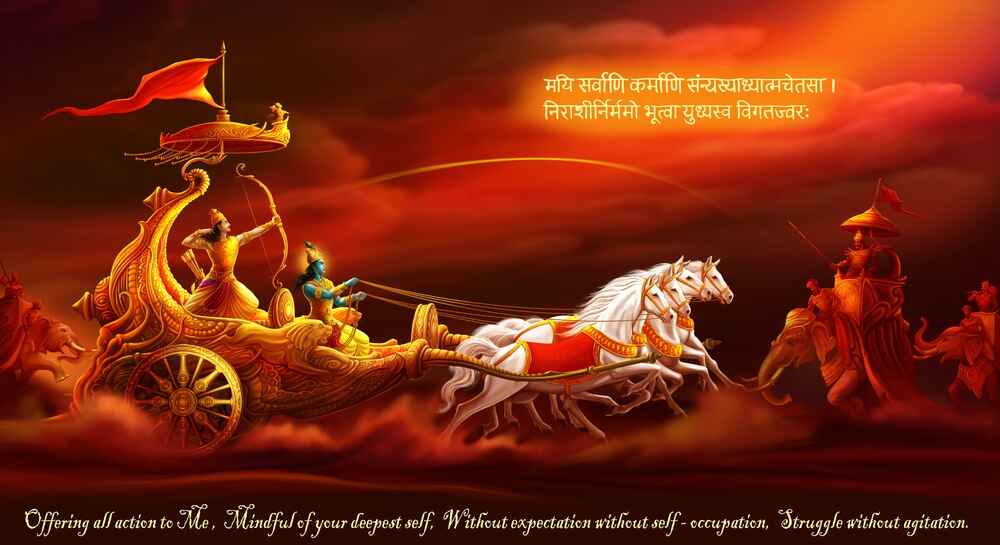
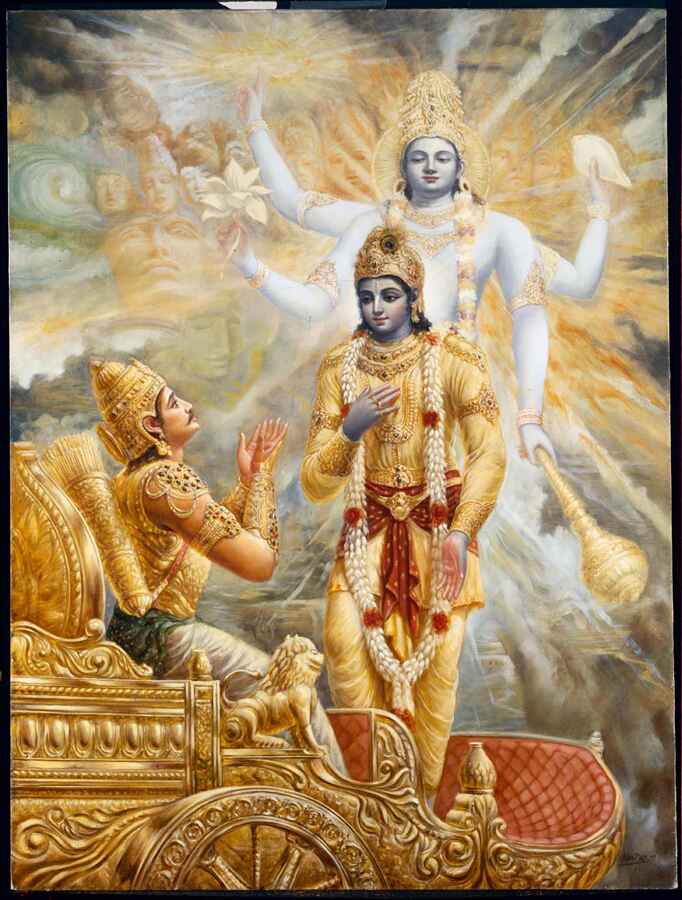
The Bhagavad Gita is a Hindu scripture consisting of 700 slokas [18 chapters] and is an important part of the Indian epic Mahabharata. It is described as a meaningful conversation between Lord Krishna and the warrior prince Arjuna, taking place in the war zone of Kurukshetra. Arjuna struggles between his emotions and duty; confusion dominates his mind and heart. Therefore, in this very moment, Lord Arjuna turns to Lord Krishna for guidance.
Lord Krishna shares advice that helps not just Arjuna with his struggles but also offers lessons for all of us. The teachings of the Gita represent the struggle when making tough decisions in life.
The Bhagavad Gita beautifully combines devotion, principle, philosophy, and lessons in a very relatable way. Its slokas guide us on how to control our minds, act with awareness, and find peace within ourselves. That is why, even in today’s busy, moving world, the Bhagavad Gita continues to offer comfort and guidance for everyday life.

Who First Wrote the Bhagavad Gita, and How Was It Written?
The Bhagavad Gita is believed to have been composed around 5,000 years ago, traditionally during the period of the Mahabharata war. The Gita was written by Sage Ved Vyasa [Maharishi], one of the greatest sages in ancient India and a master of spiritual truths. According to traditional belief, Sage Vyasa dictated the Mahabharata, including the Bhagavad Gita, to Lord Ganesha, who acted as the scribe. Ganesha agreed to write only on the condition that Vyasa would recite the verses continuously without pause. Vyasa, in turn, composed each verse carefully, ensuring depth and meaning.
While Vyasa is the composer, the teachings of the Bhagavad Gita are spoken by Lord Krishna. The text is a conversation between Lord Krishna and Prince Arjuna in the warzone of Kurukshetra. Arjuna, overwhelmed by emotional distress, looks for guidance. Krishna delivers teachings on life, duty, and yoga. After listening to Krishna, Arjuna went on to fight with confidence and inner strength, and he achieved victory.
Importance of the Bhagavad Gita in the Modern World
The Bhagavad Gita shares knowledge that helps us live a joyful life. This book focuses on the four paths of Yoga, which offer effective ways to reach inner peace and self-discovery
Karma Yoga: The Path of Selfless Action in Practice
In the Bhagavad Gita, Krishna teaches that we should focus on doing our duties without expecting anything in return. This idea highlights the main teaching of Karma Yoga. In a yoga teacher training in Rishikesh, students are encouraged to approach every task with awareness without worrying about results. In this way, students learn to act with honesty and responsibility.
Bhakti Yoga: The Heart of Devotion in Practice
In the Bhagavad Gita, Krishna highlights faith as a path to connect with the universe, showing that love and surrender can transform every act, making it purposeful. In the study of yoga teacher training, students start the day by chanting a mantra and dedicating themselves to a higher state of mind. Through learning texts such as the Hanuman Chalisa or different mantras, students also learn how their devotion makes their spiritual connection to divine energy stronger.
Jnana Yoga: The Path of Knowledge and Wisdom
The Gita represents jnana yoga as the path of wisdom that helps us understand who we truly are, beyond the mind and body. In a 200 Hour Yoga Teacher Training in Rishikesh, Jnana Yoga plays an important role by motivating students to study the Holy Scriptures and participate in group discussions that develop clarity and knowledge.
Dhyana Yoga: The Yoga of Inner Stillness
Krishna says that meditation is the best way to calm your mind and connect with your inner self. By including breathing exercises and mindfulness practice in a daily schedule, students gradually learn to withdraw attention from outside noise and turn inward. This process allows the mind to become balanced, creating space for self-observation.
Bhagavad Gita Slokas and Quotes for Inspiration
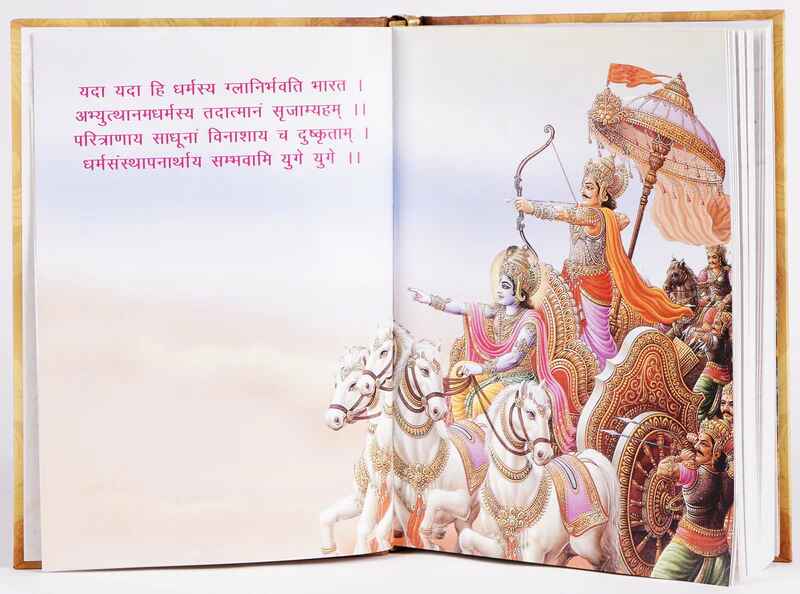
1- यदा यदा हि धर्मस्य ग्लानिर्भवति भारत।
अभ्युत्थानमधर्मस्य तदात्मानं सृजाम्यहम्॥ Gita 4.7
This Line means that whenever people forget what is right and wrong, God appears on Earth to remove the bad and restore balance.
2.उद्धरेदात्मनाऽत्मानं नाऽत्मानं अवसादयेत्। Chapter 6, Verse 5
This line teaches self-discipline and self-reliance. Your mind has the power to either help you grow or hold you back, so it is important to train it with awareness and positive effort.
3. बुद्धियुक्तो जहातीह उभे सुकृतदुष्कृते।
तस्माद्योगाय युज्यस्व योगः कर्मसु कौशलम्॥ Chapter 2, Verse 50
This verse teaches Karma Yoga—the art of doing your work skilfully while staying detached from success or failure. Wise action means focusing on effort and purpose, not just outcomes.
4. बन्धुरात्मात्मनस्तस्य येनात्मैवात्मना जितः। Chapter 6, Verse 6
This verse highlights the power of the mind. If you train and control your mind, it will support and guide you like a friend. If left uncontrolled, it creates obstacles and suffering, acting as an enemy.
5- Bhagavad Gita, 2 chapters, 20 verses
न जायते म्रियते वा कदाचिन्
नायं भूत्वा भविता वा न भूयः ।
अजो नित्यः शाश्वतोऽयं पुराणो
न हन्यते हन्यमाने शरीरे ॥
The soul is never born and never dies.
6- Bhagavad Gita 2.47
कर्मण्येवाधिकारस्ते मा फलेषु कदाचन ।
मा कर्मफलहेतुर्भूर्मा ते सङ्गोऽस्त्वकर्मणि ॥
You have the right to perform your duty but not to the results of your actions.
7- Bhagavad Gita 2.48
योगस्थः कुरु कर्माणि सङ्गं त्यक्त्वा धनञ्जय ।
सिद्ध्यसिद्ध्योः समो भूत्वा समत्वं योग उच्यते ॥
Shows how attachment leads to desire, anger and downfall.
8- त्रिविधं नरकस्येदं द्वारं नाशनमात्मनः ।
कामः क्रोधस्तथा लोभस्तस्मादेतत्त्रयं त्यजेत् ॥
Lust, anger and greed are the three gates to destruction.
Practical Tips to Apply the Bhagavad Gita in Daily Life
- Start your morning by reading one short line from the Gita itself. While doing this practice, you don’t need to analyse it deeply; just understand what it means for your life in the present moment. Finally, let that thought guide how you speak, think, and act during the day.
- When you work sincerely and stay focused on what you can control, then you will observe that your stress naturally reduces. Understand that your efforts will bring the right results in their own time.
- Spend 10 to 15 minutes each day sitting quietly and observing your thoughts. You don’t have to stop your thoughts; watch them come and go. This simple method helps you with your inner self and brings calmness.
- Being grateful for what you have is a most powerful practice. So take time to appreciate simple gifts in your life, such as good health, people who support you, music that lifts you up, your favourite meal, a kind word or smile from a stranger, and clean water to drink.
- Selfless service or seva is a main teaching of the Bhagavad Gita. Offering help with a pure heart to anyone in need without looking for reward brings true happiness from inside and improves your relationship with others.
Read More: Bhootnath Temple Rishikesh: History, Spiritual Significance & Visitor Guide
Conclusion
The Bhagavad Gita is an ancient text that guides you to live a life with purpose and peace. Its lessons on self-knowledge, devotion, duty, and meditation help us stay connected to our true selves. It also teaches that yoga is more than just practising on the mat—it’s about how we live, think, and act in our everyday life.
If you genuinely want to experience the practical application of the Bhagavad Gita in your yoga journey, then you can join Rishikul Yogshala Rishikesh. Through workshops and yoga practice, you will learn how to carry the lessons of the Gita into your life. By embracing the knowledge of the Gita, you can find true purpose in every action and balance in everything you do.

 +91-8433225327,
 Rishikul Yogshala Rishikesh, Narayan Kunj, Jonk Village, Ram Jhula, Swarg Ashram, Rishikesh, Uttarakhand 249304
 By Airway
 By Railway
 By Bus/Cabs