








Gayatri Mantra: Meaning, Benefits and How to Chant It
Table of Contents
- Gayatri Mantra at a Glance
- Gayatri Mantra Lyrics (Sanskrit, Hindi and Roman Script)
- Gayatri Mantra Meaning in English
- Gayatri Mantra Meaning in Hindi (गायत्री मंत्र का अर्थ)
- Word-by-Word Meaning of Gayatri Mantra
- Origin: Where Does the Gayatri Mantra Come From?
- Benefits of the Gayatri Mantra: What It Can Realistically Offer
- 1. It trains focus
- 2. It can calm the mind and ease stress
- 3. It builds breath awareness
- 4. It gives your day a quiet anchor
- 5. It connects you to a tradition
- Gayatri Mantra benefits for students
- Common Claims About the Gayatri Mantra: What the Evidence Says
- How to Chant the Gayatri Mantra: Step by Step
- Pronunciation Guide
- How Many Times Should You Chant? Why 108?
- Best Time to Chant
- Who Can Chant the Gayatri Mantra?
- गायत्री मंत्र के फायदे और जप की विधि
- Learn Mantra, Pranayama and Meditation in Rishikesh
- Frequently Asked Questions:
- What is the Gayatri Mantra?
- What are the benefits of the Gayatri Mantra?
- What does Om Bhur Bhuvah Svah mean?
- How many times should I chant the Gayatri Mantra?
- What is the best time to chant the Gayatri Mantra?
- Who wrote the Gayatri Mantra?
- Can women chant the Gayatri Mantra?
- Can I chant the Gayatri Mantra without a bath?
- Can I chant the Gayatri Mantra at night?
- What if I mispronounce a word?
- Can I listen to the mantra instead of chanting?
- How long until I notice any benefit?
Hundreds of millions of people recite the same twenty-four syllables every morning.
Most have never been told what the words actually say.
And many pages online promise things the mantra cannot deliver.
So here is a clear, honest article from a yoga teacher in Rishikesh.
The Gayatri Mantra is a Vedic prayer from the Rig Veda (3.62.10), traditionally attributed to the sage Vishvamitra. It asks the divine light symbolised by the sun, called Savitr, to inspire our understanding. Chanting it is a traditional practice for focus, calm and spiritual connection, and is often done 108 times at sunrise. Below you will find the lyrics, a word-by-word meaning in Hindi and English, how to chant it correctly, and what the evidence does and does not say about its benefits.
Gayatri Mantra at a Glance
| Source | Rig Veda, Mandala 3, Hymn 62, Verse 10 |
| Traditionally attributed to | Rishi Vishvamitra |
| Deity addressed | Savitr (the sun as divine light). Gayatri Devi is the personified form in later tradition |
| Metre | Gayatri metre: three lines of eight syllables (24 syllables) |
| Language | Vedic Sanskrit |
| Common practice | 3, 11, 27, 54 or 108 repetitions, ideally at sunrise |
| Time for 108 rounds | About 20 to 30 minutes at an unhurried pace |
Gayatri Mantra Lyrics (Sanskrit, Hindi and Roman Script)
Devanagari (Sanskrit / Hindi):
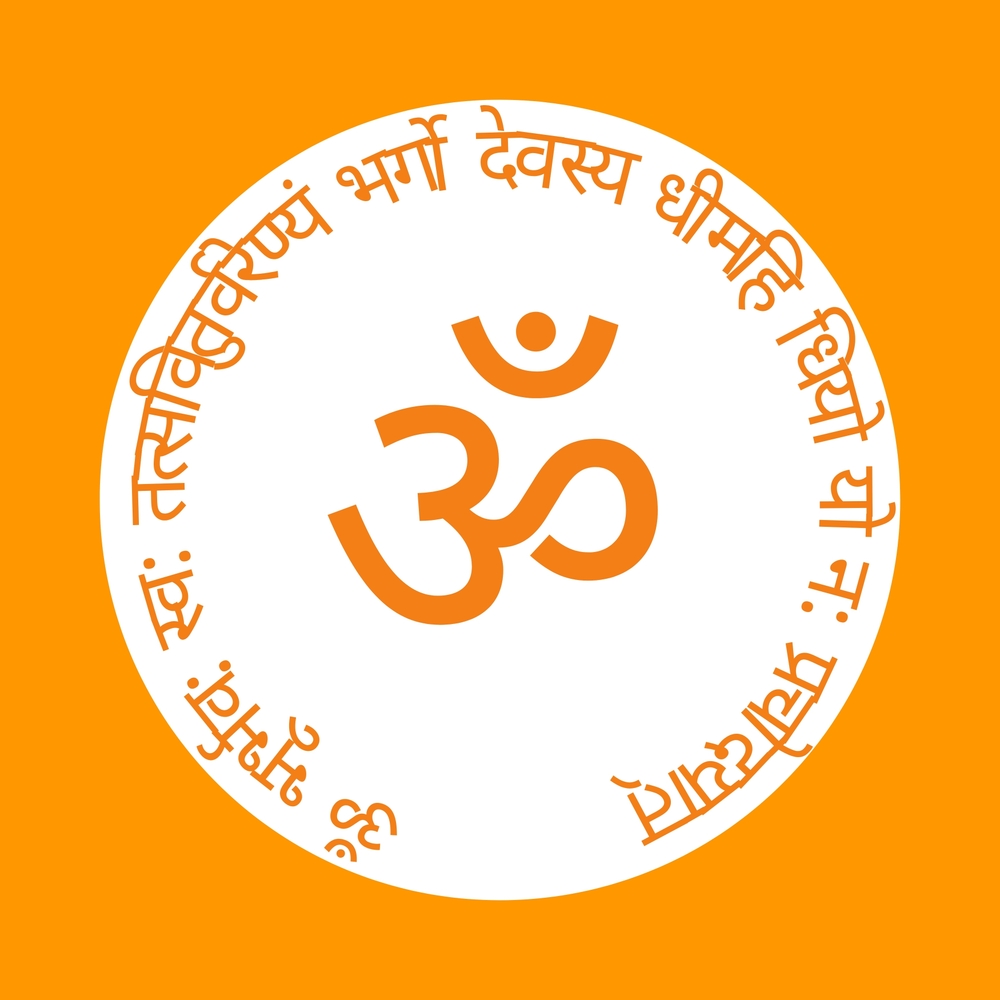
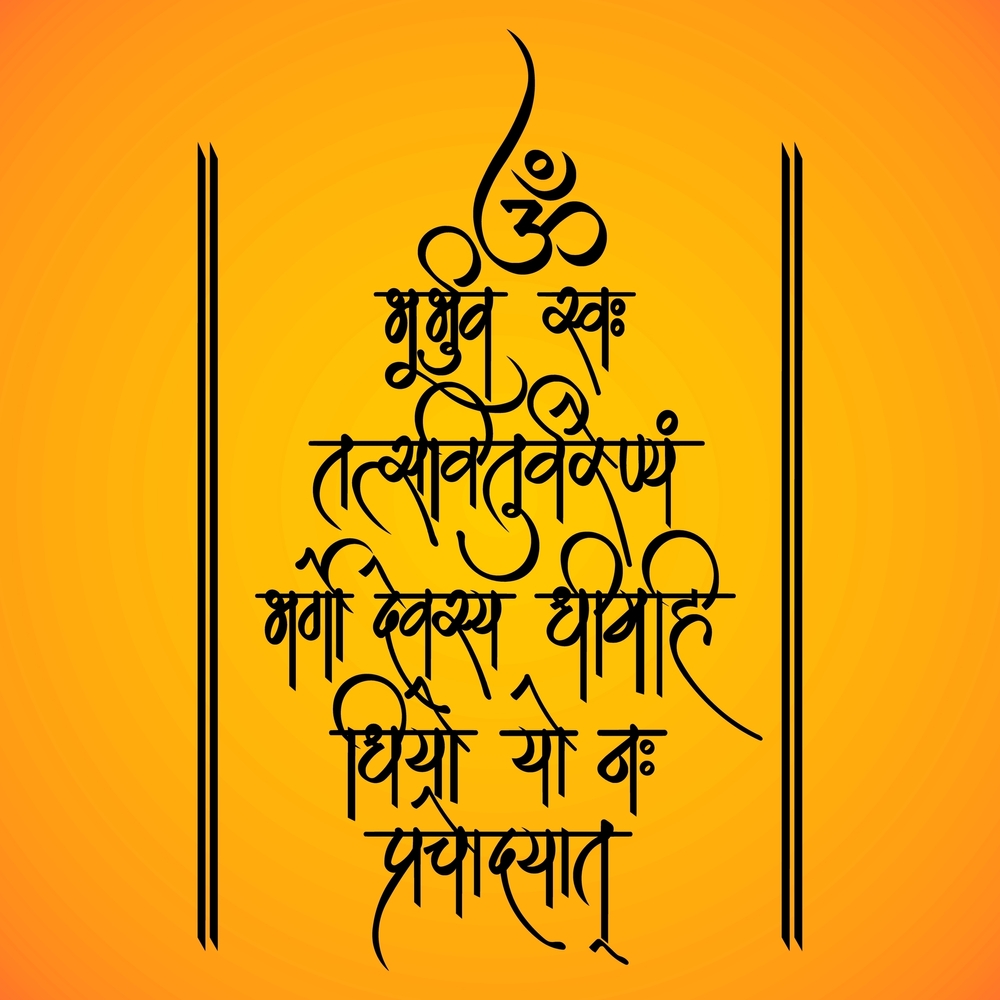
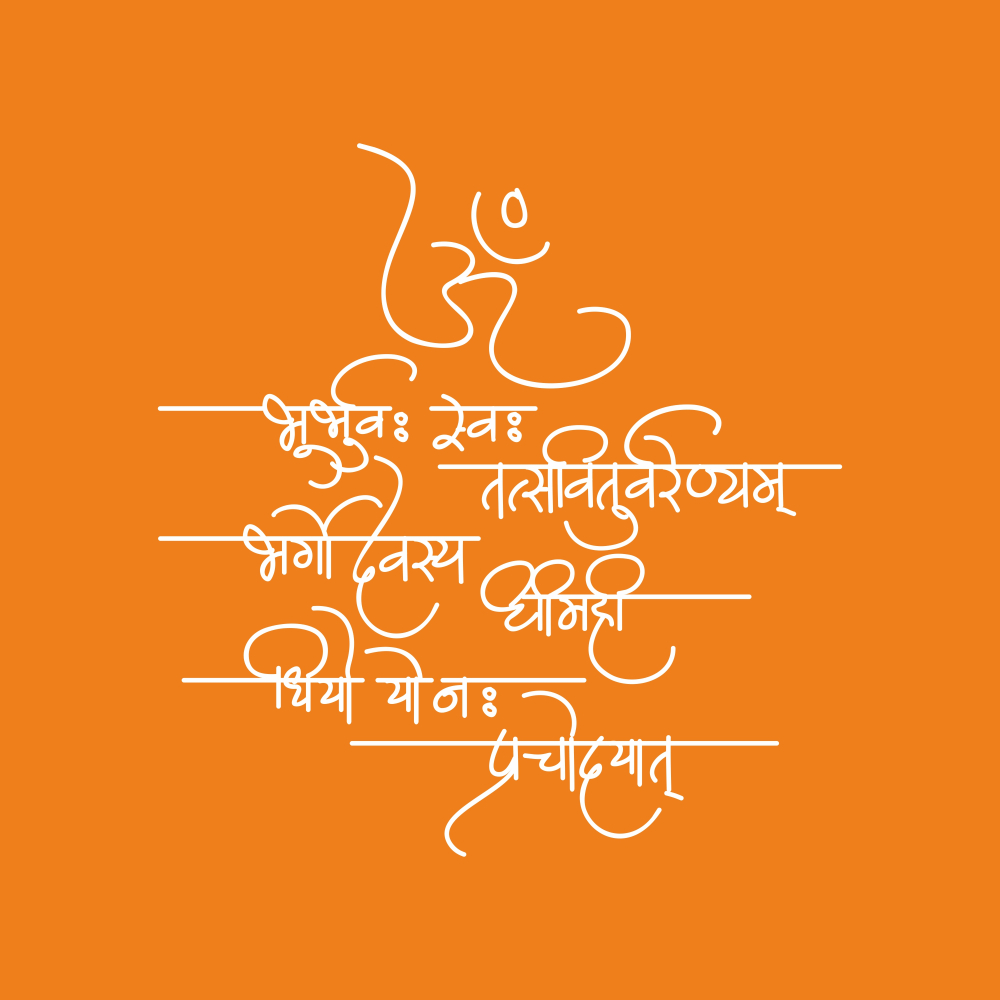
ॐ भूर्भुवः स्वः। तत्सवितुर्वरेण्यं। भर्गो देवस्य धीमहि। धियो यो नः प्रचोदयात्॥
Roman script (IAST):
Om bhūr bhuvaḥ svaḥ tat savitur vareṇyaṁ bhargo devasya dhīmahi dhiyo yo naḥ prachodayāt
Simple spelling for English readers:
Om bhoor bhuvah svah, tat savitur varenyam, bhargo devasya dheemahi, dhiyo yo nah prachodayaat.
Gayatri Mantra Meaning in English
In simple words: We meditate on the radiant glory of the divine light (Savitr). May it inspire and guide our understanding.
A fuller rendering: Om. The earth, the space between, and the heavens. We meditate on that most worthy, radiant light of the divine sun. May it awaken and guide our minds.
There are many translations, and Sanskrit scholars phrase some words differently. This is a faithful, simple version that most teachers would accept.
Gayatri Mantra Meaning in Hindi (गायत्री मंत्र का अर्थ)
सरल अर्थ: हम उस सविता देव (प्रकाशमान परमात्मा) के श्रेष्ठ तेज का ध्यान करते हैं, जो हमारी बुद्धि को सही प्रेरणा दे।
Word-by-Word Meaning of Gayatri Mantra
| Sanskrit word | Hindi | Meaning in English |
|---|---|---|
| Om (ॐ) | ओंकार, प्रणव | The primordial sound, the symbol of the whole |
| Bhūh (भूः) | पृथ्वी / स्थूल जगत | The earth, the physical plane |
| Bhuvah (भुवः) | अंतरिक्ष / प्राण जगत | The space between, the realm of life-energy |
| Svah (स्वः) | स्वर्ग / चेतना लोक | The heavens, the realm of light and spirit |
| Tat (तत्) | वह | That |
| Savituh (सवितुः) | सविता देव का | Of Savitr, the sun as the source of life and light |
| Varenyam (वरेण्यं) | वरण करने योग्य, पूजनीय | Most worthy of choosing and adoring |
| Bhargah (भर्गः) | तेज, प्रकाश | Radiance, effulgence |
| Devasya (देवस्य) | देव का | Of the divine, the luminous one |
| Dhimahi (धीमहि) | हम ध्यान करते हैं | We meditate upon |
| Dhiyah (धियः) | बुद्धियाँ | Our intellects, our understanding |
| Yah (यो) | जो | Who, which |
| Nah (नः) | हमारी / हमें | Our, to us |
| Prachodayat (प्रचोदयात्) | प्रेरित करे | May it inspire, impel and awaken |
In the Sanskrit text the words appear as bhargo, dhiyo and yo because of a rule called sandhi, where sounds join in speech. This is why the lyrics look different from the dictionary forms above.
Origin: Where Does the Gayatri Mantra Come From?
The mantra appears in the Rig Veda, one of the oldest surviving religious texts, in Mandala 3, Hymn 62, Verse 10. The tradition attributes it to the sage Vishvamitra. The Rig Veda is generally dated to roughly 1500 to 1000 BCE.
The name comes from the Gayatri metre, a poetic rhythm of three lines of eight syllables. The deity addressed is Savitr, the sun as a source of light and inspiration. In later tradition the mantra is personified as Gayatri Devi, sometimes called Veda Mata, the mother of the Vedas. These are two layers of the tradition, and it helps to know both when you read different explanations online.
Traditionally, the mantra is part of sandhya vandana, the practice of daily prayers at dawn, noon and dusk, the times when the light changes.

Benefits of the Gayatri Mantra: What It Can Realistically Offer
Most pages promise a long list of effects. I would rather tell you what the practice reliably does, and where the support is stronger or weaker.
| Benefit | Why it can happen | How strong is the support? |
|---|---|---|
| Better focus and concentration | You hold your attention on one sound and meaning | Moderate for meditation practice in general. Not specific to this mantra |
| Calmer mind and less stress | Slow, steady breathing and rhythm settle the nervous system | Moderate for slow breathing and mantra repetition. Studies are small |
| Better breath control | Chanting needs a long, steady exhale | Reasonable, based on how chanting works |
| A steady daily routine | A fixed time and place build habit | Reasonable. Routine itself is calming |
| Sense of meaning and connection | The words express gratitude and aspiration | Personal and spiritual. Not something science measures |
| Easier wind-down at night | A quiet ritual signals the end of the day | Limited, but many students report it |
1. It trains focus
The mantra is short, rhythmic, and has a clear meaning. Holding your attention on it, again and again, is a simple form of concentration practice. This is why teachers often give it to students who find silent meditation difficult.
2. It can calm the mind and ease stress
Chanting slows the breath because you must exhale for a long time. Research on slow breathing and on mantra recitation suggests these practices can calm the body’s stress response. For example, a well-known study in the BMJ (Bernardi et al., 2001) found that reciting a yoga mantra slowed breathing and improved cardiovascular rhythms. Please note this research is on mantra recitation in general, not on a special effect of the Gayatri Mantra.
3. It builds breath awareness
Because each recitation needs a steady breath, regular practice teaches you to notice and lengthen your breath. This carries over into asana and pranayama.
4. It gives your day a quiet anchor
Chanting at the same time each morning builds a habit. Many students tell me the five minutes before the day begins change how they feel for the rest of it.
5. It connects you to a tradition
For many people, the deepest benefit is a feeling of gratitude and connection. This is a personal experience, and it is valid on its own terms. It does not need a scientific explanation.
Gayatri Mantra benefits for students
Students often ask if chanting improves marks. There is no proof of that. What it can offer is a short, calming ritual before study and some practice at sustained attention, both of which can help you sit down and begin.
Common Claims About the Gayatri Mantra: What the Evidence Says
The mantra is often linked with benefits beyond focus and calm. Here is where the evidence stands for some of the most common claims:
- Asthma and other medical conditions: Chanting may help you relax and slow your breathing, but it is not a treatment for asthma or any illness. Please follow your doctor’s plan.
- Immunity and heart health: There is no good evidence that the mantra improves immunity or treats heart conditions. General relaxation can support healthy habits, nothing more.
- Glowing skin and detox: No evidence. Your body removes waste through the liver and kidneys.
- Special sound frequencies (for example, “66 MHz”): This claim is repeated widely online but has no source. Human hearing ranges only up to about 20 kHz, so a frequency in the megahertz range cannot be heard at all. Please treat it as a myth.
- Activating glands, nadis, or chakras: These are concepts from yogic tradition. They describe the subtle body, not anatomy measured by science. They are meaningful inside the tradition, and should be presented that way.
- Aura cleansing: A traditional belief, not a measurable effect.
I share this because trust matters more than big promises. A practice you understand honestly is a practice you keep.
How to Chant the Gayatri Mantra: Step by Step
- Choose your time. Sunrise is traditional. If that is difficult, any quiet time works. Noon and sunset are also traditional.
- Prepare simply. Wash your face and hands, wear comfortable clothes, and sit on a mat or folded blanket in a quiet spot. A bath is traditional but not required.
- Sit upright. Cross your legs or sit on a chair. Keep your spine long and your shoulders relaxed.
- Take three slow breaths. Settle the body before you begin.
- Chant the mantra slowly. Say it in one breath if you can, or in two. Keep a steady, unhurried rhythm.
- Use a mala for counting (optional). A mala has 108 beads. Move one bead for each recitation, using your thumb and ring finger. Do not use the index finger, which is traditionally avoided. Turn back at the guru bead, without crossing it.
- Reflect on the meaning. On each round, think of light, clarity or gratitude.
- Close in silence. Sit quietly for a minute or two before you open your eyes.
Pronunciation Guide
Om (aum) | bhoor | bhu-vah | svah | tat | sa-vi-tur | va-ren-yam | bhar-go | de-vas-ya | dhee-ma-hi | dhi-yo | yo | nah | pra-cho-da-yaat
The sounds dh and bh are breathy, aspirated sounds. The v in varenyam is soft, between v and w. Listening to a teacher chant, and chanting along, is the best way to learn.
How Many Times Should You Chant? Why 108?
The number 108 is considered sacred in Indian traditions, and it matches the number of beads on a mala. Explanations differ, so I would not claim one single reason. Beginners can start with 3, 11 or 27 rounds and build up. Regularity matters more than the count.
Best Time to Chant
The traditional times are sunrise, noon and sunset. Early morning is usually preferred because the mind is quiet. Evening practice also works well for winding down.
Who Can Chant the Gayatri Mantra?
Different traditions have different customs. Some lineages keep the mantra for those who receive formal initiation. Many modern teachers, and communities such as the Arya Samaj, teach that anyone, women and men, children and adults, can chant it with respect. If you follow a particular lineage or guru, follow their guidance. If you do not, chanting with sincerity and respect is welcome in the yoga classroom.
गायत्री मंत्र के फायदे और जप की विधि
गायत्री मंत्र का अर्थ: हम उस प्रकाशमान सविता देव के श्रेष्ठ तेज का ध्यान करते हैं, जो हमारी बुद्धि को सही दिशा में प्रेरित करे।
गायत्री मंत्र के फायदे (लाभ):
- ध्यान और एकाग्रता का अभ्यास होता है
- मन शांत होता है और तनाव कम महसूस हो सकता है
- लंबी और धीमी सांस का अभ्यास बनता है
- सुबह की नियमित दिनचर्या बनती है
- आध्यात्मिक जुड़ाव और कृतज्ञता का भाव बढ़ता है
जप की विधि: सूर्योदय के समय शांत स्थान पर सीधे बैठें, तीन गहरी सांसें लें, फिर माला से 108 बार (या अपनी सुविधा के अनुसार 3, 11 या 27 बार) शुद्ध उच्चारण के साथ जप करें।
नोट: यह अभ्यास मानसिक शांति के लिए सहायक है, इलाज का विकल्प नहीं। बीमारी की स्थिति में डॉक्टर से सलाह लें।
Also Read: Saraswati Mantra for Wisdom and Creativity: Benefits & How to Chant
Learn Mantra, Pranayama and Meditation in Rishikesh
A mantra is best learned with a teacher who can correct your pronunciation and guide your practice. At Rishikul Yogshala, mantra chanting, pranayama and meditation are part of our teacher training programme. Explore our Yoga Teacher Training in Rishikesh, or contact us with your questions.
Frequently Asked Questions:
What is the Gayatri Mantra?
It is a Vedic prayer from the Rig Veda (3.62.10) addressed to Savitr, the divine light symbolised by the sun. It asks that our understanding be inspired and awakened.
What are the benefits of the Gayatri Mantra?
It can help with focus, calm, breath control and building a steady morning routine, and many people find it spiritually meaningful. It is not a medical treatment.
What does Om Bhur Bhuvah Svah mean?
It names three realms: the earth (physical), the space between (life-energy) and the heavens (light and spirit), together pointing to the whole of existence.
How many times should I chant the Gayatri Mantra?
108 times is traditional, using a mala. Beginners can start with 3, 11 or 27 and increase slowly.
What is the best time to chant the Gayatri Mantra?
Sunrise is the traditional best time. Noon and sunset are also traditional, and any quiet time works if you cannot manage dawn.
Who wrote the Gayatri Mantra?
The mantra is traditionally attributed to the sage Vishvamitra and appears in the Rig Veda.
Can women chant the Gayatri Mantra?
Customs differ by lineage. Many modern teachers and communities teach that anyone, women and men, can chant it with respect. Follow your own teacher’s guidance if you have one.
Can I chant the Gayatri Mantra without a bath?
Yes. A bath is traditional for purity, but a clean body and a calm, respectful mind are what matter most.
Can I chant the Gayatri Mantra at night?
Yes. Morning is preferred for focus, but evening chanting is fine and helps many people wind down.
What if I mispronounce a word?
Small mistakes are normal when learning. Listen to a teacher, repeat slowly, and your pronunciation will improve. Sincere practice matters more than perfection.
Can I listen to the mantra instead of chanting?
Yes. Listening can be calming, though chanting aloud gives you the added benefit of breath control.
How long until I notice any benefit?
There is no fixed time. Many people feel calmer after a single session. Steadier focus usually builds over weeks of daily practice.
This article is for general information and is not medical advice. If you have a respiratory or heart condition, are pregnant, or are unsure whether these practices suit you, please speak to your doctor before beginning.

 +91-8433225327,
 Rishikul Yogshala Rishikesh, Narayan Kunj, Jonk Village, Ram Jhula, Swarg Ashram, Rishikesh, Uttarakhand 249304
 By Airway
 By Railway
 By Bus/Cabs