








Why Take a Yoga Course in Rishikesh, India?
Table of Contents
- Yoga in Rishikesh, India
- Yoga in India Is Different
- What Your Days in Rishikesh Actually Look Like
- The Town is Quiet, and That Helps
- Your Teachers Have Real Experience
- The Food is Simple and Surprisingly Good
- Your Room is Simple but Comfortable
- A Typical Day During Teacher Training
- Common Questions Before You Enroll
- Do I need experience before joining a yoga course in Rishikesh?
- How long does teacher training take?
- Is the certification recognized outside India?
- What language are classes taught in?
- Getting to Rishikesh
- When Should You Go?
- What You Take Back Home
Yoga in Rishikesh, India
Rishikesh has been drawing yoga students from around the world for decades. And for good reason. Tucked into the lower Himalayas, right where the Ganges comes rushing out of the mountains, it has a feeling that is hard to put into words. The air is clean, the pace is slow, and everywhere you look, someone is practicing yoga or studying under a teacher they’ve traveled far to learn from.
If you’ve been thinking about becoming a certified yoga teacher or just want to go deeper into your practice, Rishikesh is worth taking seriously. Not because it’s trendy, it’s actually one of the least trendy places you’ll visit. But because yoga here is real. It’s lived, not performed.
Here’s what you should know before you go.
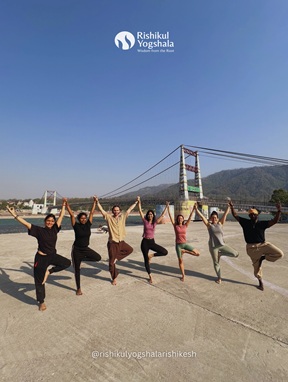
Yoga in India Is Different
In most parts of the world, yoga is something you do a few times a week at a studio. In India, it’s something people grow up with. It’s tied to daily life, to family tradition, to the way people eat, sleep, and think. It has been this way for thousands of years.
The teaching style here comes from the Guru-Shishya tradition, a direct, personal relationship between teacher and student. Knowledge is passed down face-to-face, not from a manual. When you sit in front of a teacher in Rishikesh who has spent 20 or 30 years studying under their own guru, you feel that difference.
This tradition is so important that UNESCO has listed yoga on its Representative List of the Intangible Cultural Heritage of Humanity. That’s not a small thing. It tells you that the world recognizes yoga as a living cultural practice, not just a set of exercises.
When you study in India, you are not just attending a course. You are stepping into that tradition.
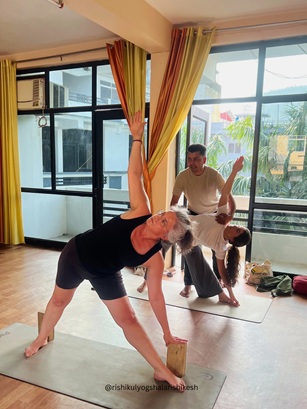
What Your Days in Rishikesh Actually Look Like
Before you book anything, it helps to know what life during a yoga course in Rishikesh actually feels like day to day.
The Town is Quiet, and That Helps
Rishikesh is not a busy city. There are no cars honking outside your window at night. No shopping malls, no nightclubs. Most mornings start before sunrise, and most evenings end early. That might sound boring if you’re used to city life, but students usually say the same thing: after a few days, they don’t miss it at all.
The quietness is actually one of the most important parts of the experience. Yoga asks you to slow down and pay attention — to your breath, your body, your thoughts. It’s much easier to do that when the world around you is already slow.
Your Teachers Have Real Experience
Many of the yoga teachers in Rishikesh were born here or moved here young to study under senior yogis. They didn’t learn yoga from a certification course. They learned it the old way, over many years, from teachers who learned it the same way.
At Rishikul Yogshala, for example, the teachers come with years of personal practice behind them. Each one teaches a little differently — different styles, different ways of explaining things — but they all take the practice seriously. You’ll notice that from the first class.
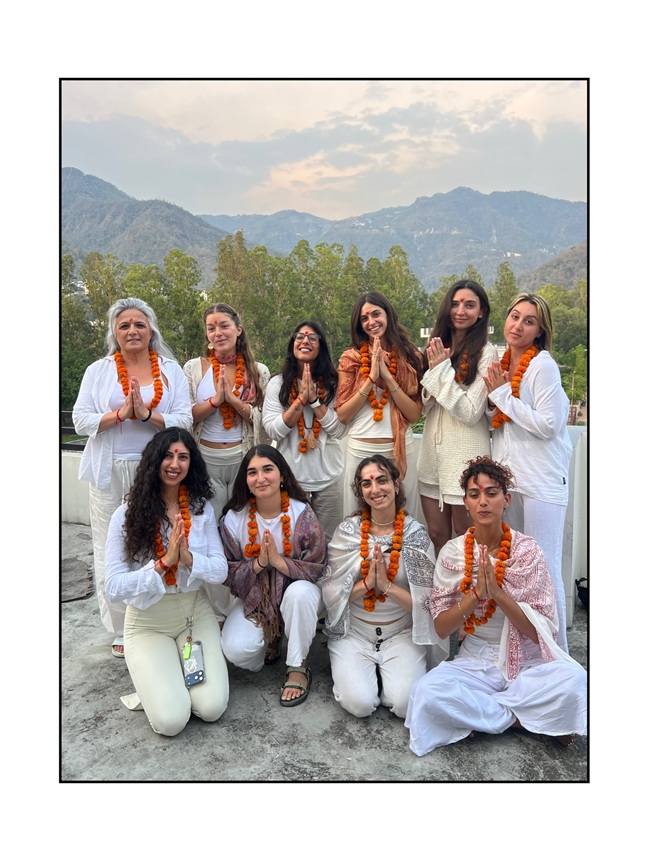
The Food is Simple and Surprisingly Good
During your course, you’ll eat a sattvic diet, which is the Ayurvedic approach to eating. That means vegetarian food, cooked fresh, using local ingredients, eaten at regular times. No heavy spices, no processed anything.
It might sound plain, but most students say they feel noticeably better within a week. Lighter, more focused, sleeping better. The food is part of the practice, not separate from it.
Meals are eaten together. That shared time around food becomes its own small ritual during the course.

Your Room is Simple but Comfortable
Accommodation is on the school premises. Your room will be clean, quiet, and have everything you need — but it won’t be a five-star hotel. That’s by design. The Ayurvedic idea is that simple surroundings help keep the mind clear. Most students adjust quickly and actually come to prefer it.
A Typical Day During Teacher Training
Your schedule will be structured but not overwhelming. Most days look something like this:
- Early morning: meditation and pranayama (breathing practices)
- Morning: Surya Namaskar (sun salutations) and asana practice
- Daytime: philosophy classes, anatomy, teaching methods
- Evening: self-study, reflection, or rest
There is a rhythm to it that most students settle into within the first few days. It’s not a holiday pace, but it’s not punishing either. You’ll feel the structure, and most people find it grounding.
Common Questions Before You Enroll
Do I need experience before joining a yoga course in Rishikesh?
Not necessarily. The 100-hour and 200-hour programs are built to take students from wherever they are. If you have some practice already, that helps. If you don’t, you will still manage. What matters more is that you are serious about learning and willing to put in the daily effort.
How long does teacher training take?
It depends on the program you choose. A 50-hour refresher is a shorter stay. The most common path is the 200-hour course, which usually runs over 28 days. There are also 300-hour and 500-hour programs for people who want to go further. Here’s a simple breakdown:
| Course | Hours | Who it suits |
|---|---|---|
| Foundation Course | 100 hrs YTTC | New students getting started |
| Standard TTC | 200 hrs YTTC | Main Yoga Alliance certification |
| Advanced TTC | 300 hrs YTTC | For those already certified at 200 hrs |
| Professional TTC | 500 hrs YTTC | Full-depth study and mastery |
Is the certification recognized outside India?
Yes, if your school is registered with Yoga Alliance USA. Rishikul Yogshala is a registered Yoga Alliance school, so graduates can apply for RYT (Registered Yoga Teacher) status, which is accepted in over 170 countries. It’s the standard that most yoga studios and employers around the world recognize.
What language are classes taught in?
English is the main language for all international programs. Sanskrit terms are introduced during philosophy and asana classes as part of the learning, but you don’t need to know any before you arrive.
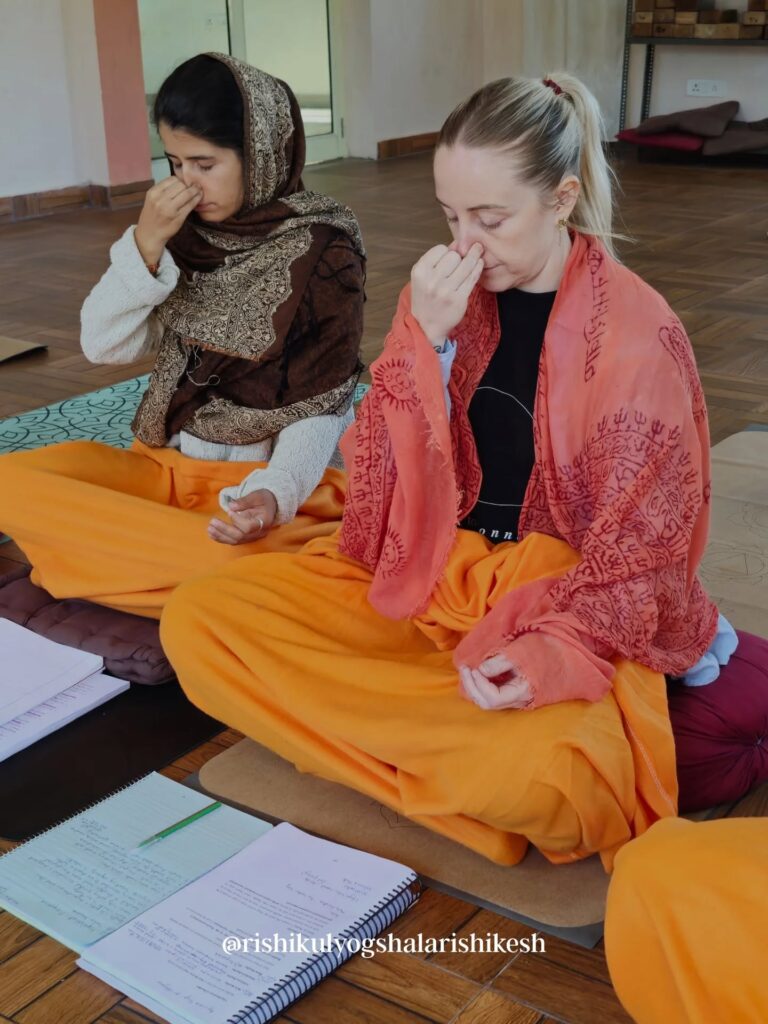
Getting to Rishikesh
The nearest airport is Jolly Grant Airport in Dehradun, about 20 km from Rishikesh town. From there, a taxi or private transfer takes 45 minutes to an hour, depending on traffic.
If you’re comparing flight options and routes, Skyscanner is a good place to start. It lets you compare prices across airlines and find the most practical route from your home country.
Most yoga schools, including Rishikul Yogshala, can arrange an airport pickup for international students. It’s worth asking when you confirm your enrollment. Arriving in Rishikesh for the first time can feel disorienting, and having someone meet you makes the start much smoother.
When Should You Go?
Rishikesh is a year-round destination for yoga. Every season brings something different, and the school runs courses continuously throughout the year, so you can join whenever your schedule allows.
February to May is warm and clear. The days are long, the Himalayas are visible, and early morning practice outdoors feels effortless. Many students choose this window for their first visit.
June to September brings the monsoon season. The hills turn deep green, the Ganges swells, and the town becomes quieter and more intimate. Classes continue as normal inside the school, and many students find this a deeply focused time to train with fewer distractions around them.
October to January is cool and crisp. The skies after the rains are some of the clearest of the year. The cooler temperatures actually suit the physical practice well, and the town feels calm and unhurried.
What You Take Back Home
Most people who come to Rishikesh for a yoga course say the same thing when they leave: they didn’t expect it to change them as much as it did.
Some of that is the certification. Being qualified to teach yoga opens doors, whether you want to teach full-time or just share the practice with a few people you know. But a lot of it is the quieter stuff — a steadier way of sitting with discomfort, a bit more patience, a habit of breathing before reacting.
Those things don’t come from a manual. They come from 28 days of showing up, doing the practice, and being around people who take it seriously.
Rishikesh gives you that environment. What you do with it is up to you.

 +91-8433225327,
 Rishikul Yogshala Rishikesh, Narayan Kunj, Jonk Village, Ram Jhula, Swarg Ashram, Rishikesh, Uttarakhand 249304
 By Airway
 By Railway
 By Bus/Cabs