








What Does Om Shanti Mean? Meaning, Chant & How to Use It?
Table of Contents
- What Does Om Shanti Mean?
- How Do You Pronounce Om Shanti?
- Does Om Shanti Have a Symbol of Its Own?
- Why Is Shanti Repeated Three Times?
- How Om Shanti Connects to the Heart and Throat
- Om Shanti vs. Namaste — What’s the Difference?
- How to Use Om Shanti in Daily Life
- Benefits of Chanting Om Shanti Daily
- Common Misconceptions About Om Shanti
- A Few Tips If You’re Just Starting Out
- Conclusion
- Frequently Asked Questions
- Q1. How do you respond when someone says Om Shanti to you?
- Q2. Can Om Shanti be used at a funeral or memorial?
- Q3. Does Om Shanti have to be spoken aloud, or can it be chanted silently?
- Q4. Why do some people chant “Om” alone while others always add “Shanti”?
- Q5. Is there a specific time of day Om Shanti should be chanted?
- Q6. Does chanting Om Shanti have scientifically proven benefits, or is it purely a belief?
Om Shanti is a Sanskrit invocation meaning “peace within the divine.” Om represents the first sound of the universe; Shanti means a deep, inner peace. Traditionally chanted three times — Om Shanti, Shanti, Shanti — it’s used as a prayer, a greeting, and a closing to meditation or yoga practice.
Chances are you’ve heard it chanted at the end of a yoga class, spoken quietly at a memorial, or used as an easy hello and goodbye among people on a spiritual path. It sounds gentle, almost musical — but there’s more packed into these two words than most people realize.
Below: where the phrase comes from, what each part means, why it’s repeated three times, and how to bring it into daily practice.
What Does Om Shanti Mean?
Om Shanti is made up of two Sanskrit words typically spoken together as one phrase.
The first part, Om, is considered the first sound of the universe — the original vibration everything else grew from. It isn’t a word with a dictionary definition. It’s a sacred sound representing all of existence and consciousness at once.
The second part, Shanti, means peace but a deeper kind than surface-level calm. It points to a state of inner balance where the mind quiets, speech softens, and the body relaxes.
Together, Om Shanti translates roughly to “peace within the divine” or “may there be peace.” It functions less like a statement and more like a spoken wish — an active request for peace to arrive, rather than a description of the idea of peace.
How Do You Pronounce Om Shanti?
Om is pronounced AUM — a slow blend of “ah,” “oo,” and “mm,” letting the sound trail into a hum. Shanti is pronounced SHAHN-tee, with a soft, short “a” (like “shawn”) rather than a hard “an.” Said together slowly: AUM… SHAHN-tee, SHAHN-tee, SHAHN-tee.
There’s no need to get it perfect. Sanskrit teachers generally agree that sincere, unhurried repetition matters more than textbook-precise pronunciation, especially for beginners.
Does Om Shanti Have a Symbol of Its Own?
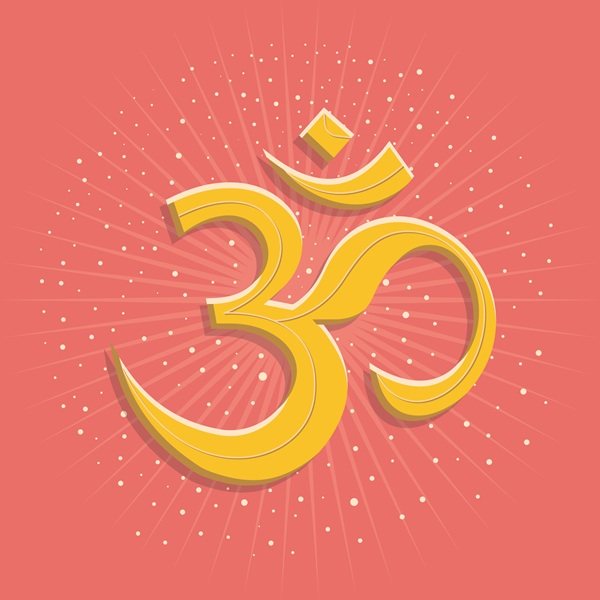
Written out, Om Shanti takes the formॐ शान्ति in Devanagari script — the same script Sanskrit itself is written in. There’s no separate visual icon beyond this written form, but that doesn’t make it any less sacred. ॐ शान्ति carries both sound and meaning together, and the moment it’s spoken or chanted, it becomes something more than text — a vibration of peace, used to greet, to part ways, or simply to affirm a calm state within.
Why Is Shanti Repeated Three Times?
You’ll rarely hear Om Shanti said once. It’s almost always chanted three times: Om Shanti, Shanti, Shanti. This isn’t for rhythm alone. In the Shanti Mantra tradition found in texts like the Brihadaranyaka Upanishad, each repetition addresses peace from a different source of disturbance:
- Adhyatmika — disturbances that come from within: the mind, emotions, and the body itself.
- Adhibhautika — disturbances that come from other beings: people and external circumstances.
- Adhidaivika — disturbances attributed to natural or cosmic forces beyond human control: weather, natural disasters, forces larger than us.
How Om Shanti Connects to the Heart and Throat
Chanting Om Shanti also has a physical dimension. In yogic frameworks, the heart center governs compassion and openness, while the throat center governs voice and honest expression. The practice of chanting is thought to move energy through both.
A simple way to try this is to chant “Om” and let the vibration settle in your chest. As you move into “Shanti, Shanti, Shanti,” let that feeling rise toward your throat. When you finish, sit in the silence and notice how your chest and throat feel.
Om Shanti vs. Namaste — What’s the Difference?
| Aspect | Om Shanti | Namaste |
| Meaning | A prayer or invocation for peace. | A respectful greeting that honors the divine or goodness in another person. |
| Purpose | To invoke inner and outer peace. | To greet, acknowledge, or show respect to someone. |
| Directed Toward | Peace itself; it doesn’t require a specific recipient. | Another person or group of people. |
| When It’s Used | During meditation, yoga, prayers, memorials, or moments of reflection. | At the beginning or end of conversations, yoga classes, or as a respectful greeting. |
| Core Message | “May there be peace.” | “I bow to the divine within you.” |
How to Use Om Shanti in Daily Life
You don’t need a formal practice to bring this into your day. A few realistic ways people incorporate it:
- As a morning intention, some people chant it quietly before getting out of bed, as a way of setting a calmer tone before the day’s demands start pulling attention outward.
- Before a difficult conversation, taking a breath and silently repeating Om Shanti, Shanti, Shanti before a tense meeting or discussion can act as a brief reset, less about magic and more about creating a short pause between stimulus and reaction.
- As a closing to meditation or journaling, ending a quiet practice with the phrase gives it a natural sense of completion, rather than the practice just trailing off.
- In moments of overwhelm, some people use it almost like a verbal anchor: three slow repetitions when a moment feels chaotic, giving the nervous system a beat to catch up.
- As part of deeper study. For those who want to go beyond a daily ritual, structured learning environments like a yoga teacher training in India teach the full chanting tradition, including proper pronunciation, textual context, and the philosophy behind mantras like this one.
Benefits of Chanting Om Shanti Daily
- Find your inner calm. Repeating Om Shanti gives your mind a steady anchor. When thoughts start racing, returning to these words helps you regain balance without losing your center.
- Send peace outward. The phrase invokes peace on three levels: within, with the people around you, and in the wider world. Chanting with this intention is as much an outward gesture as an inward one.
- Stay focused and present. Because chanting occupies voice, breath, and rhythm simultaneously, it leaves little room for the mind to wander, useful if silent stillness tends to spiral into overthinking.
- Let your body unwind. Low, steady sound paired with slow breathing helps activate the body’s rest-and-relax response. You don’t need to be spiritual for this mechanism to work.
- Share the effect. Chanting in a group creates a shared rhythm and a sense of connection, which is part of why so many yoga classes close this way.
Common Misconceptions About Om Shanti
- “There’s a special symbol for Shanti.” There isn’t; it’s text, not a glyph.
- “You have to chant it exactly three times, or it doesn’t count.” Three is traditional and meaningful, but there’s no rule that fewer repetitions void the practice.
- “It’s only for Hindus or yoga practitioners.” It’s used across many spiritual and secular contexts; plenty of people use it simply as a peace-focused intention.
Also Read: What Is a Mantra? Meaning, Types, Benefits, and How It Works?
A Few Tips If You’re Just Starting Out
Keep it simple. Don’t worry about perfect pronunciation on day one; it improves naturally with repetition. Chant slowly rather than quickly; pace matters more than volume. And don’t skip the silence afterward; it’s tempting to treat that pause as dead air, but it’s often the most valuable part of the whole practice.
Also Read: 11 Healing Mantras for Depression and Anxiety That Actually Work
Conclusion
Om Shanti is really about one thing: a sincere wish for peace for you, the people around you, and the world beyond. It’s a practice that welcomes you exactly as you are, with no need for perfect pronunciation, a specific belief system, or even a yoga mat. All it asks for is a quiet moment and a little willingness to slow down.
So why not start today? Find a quiet corner, take a slow breath, and softly chant: Om Shanti, Shanti, Shanti. Let it become a small ritual you return to whenever you need to reset, and if it resonates with you, share it with someone who could use a little peace too. May there be peace.
Frequently Asked Questions
Q1. How do you respond when someone says Om Shanti to you?
Ans: Simply repeat it back. It’s treated as a shared phrase, not a question needing a different answer.
Q2. Can Om Shanti be used at a funeral or memorial?
Ans: Yes. It’s commonly chanted at funerals and memorials as a wish for peace for the departed and for grieving family members.
Q3. Does Om Shanti have to be spoken aloud, or can it be chanted silently?
Ans: Either works. Aloud is common in group settings; silent repetition is common in personal meditation. Neither is considered superior.
Q4. Why do some people chant “Om” alone while others always add “Shanti”?
Ans: Om alone represents ultimate reality in meditation. Adding “Shanti” turns it into a specific prayer for peace rather than pure meditation.
Q5. Is there a specific time of day Om Shanti should be chanted?
Ans: No fixed rule. It’s traditionally chanted at the start or end of practice, but it can be used any time.
Q6. Does chanting Om Shanti have scientifically proven benefits, or is it purely a belief?
Ans: Mostly belief, with one real exception: slow, rhythmic chanting can mildly activate the parasympathetic nervous system, supporting relaxation. The deeper spiritual claims aren’t scientifically testable.
This article is for general information and is not medical advice. If you have a respiratory or heart condition, are pregnant, or are unsure whether these practices suit you, please speak to your doctor before beginning.

 +91-8433225327,
 Rishikul Yogshala Rishikesh, Narayan Kunj, Jonk Village, Ram Jhula, Swarg Ashram, Rishikesh, Uttarakhand 249304
 By Airway
 By Railway
 By Bus/Cabs