








Trataka Meditation: The Ancient Candle-Gazing Practice
Table of Contents
Trataka Meditation
Most people try meditation and give up because they cannot stop thinking. The mind keeps moving, work, tomorrow, yesterday, everything at once. Trataka works differently. You light a candle, sit in front of it, and fix your gaze on the flame. The flame gives the mind one thing to hold onto, and slowly, the rest settles.
It is one of the oldest practices in yoga, mentioned in the Hatha Yoga Pradipika as one of the six Shatkarmas. Teachers in Rishikesh have been passing it down for generations. It is simple to start, costs nothing, and the effects, better focus, calmer nerves, and stronger eyes, show up faster than most meditation techniques.
This guide covers what Trataka is, how to practice it, who it suits, what benefits to expect, and what to watch out for.
What is Trataka Meditation?
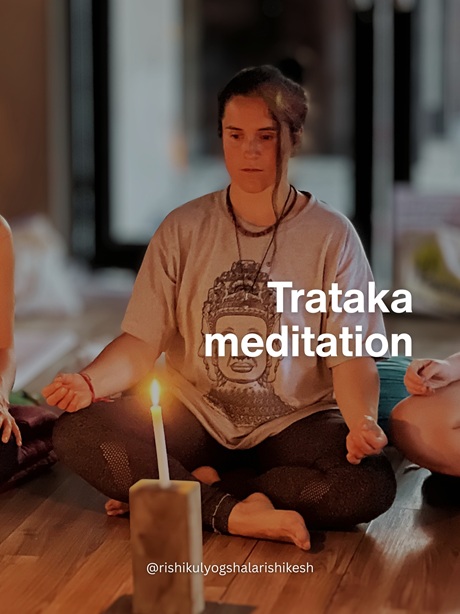
Trataka Meditation is a technique of steady, focused gazing on a single object without blinking. The word Trataka comes from Sanskrit and means to gaze or to look. It has been practiced for centuries across Hindu and Buddhist traditions and is formally classified in yoga as one of the six Shatkarmas, cleansing practices described in the Hatha Yoga Pradipika.
The most common object used is a candle flame, but practitioners also use a black dot on a white wall, a symbol, or a small image. The object itself is less important than the quality of attention you bring to it. The idea is simple: when the eyes are still, the mind tends to follow.
How to Practice Trataka Meditation
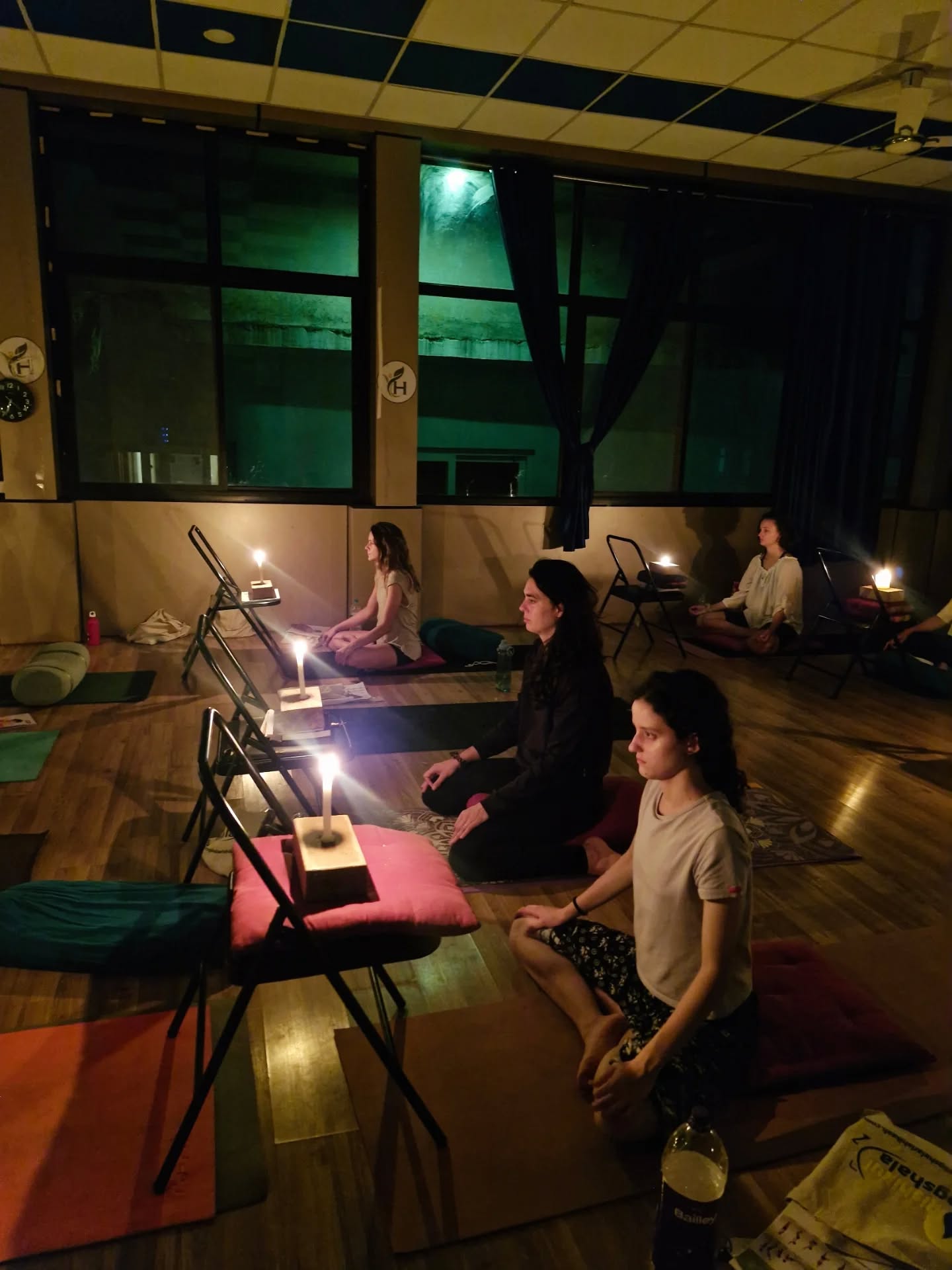
If you would like to give Trataka Meditation a try, here is a quick, easy how-to tutorial on how to do Trataka kriya to get you started:
- Choose an object: A candle flame works best for beginners. Place it at eye level, about two feet away.
- Find a quiet space: Sit comfortably with your spine straight and shoulders relaxed. Switch off any fans or avoid windy spots so the flame stays steady.
- Begin gazing: Look at the flame without blinking or straining. Do not stare hard; keep the gaze soft and steady.
- Maintain focus: If the mind wanders, bring it back to the flame without frustration. That returning of attention is itself the practice.
- End the session: When the eyes feel tired or begin to water, close them gently. You may see an afterimage of the flame behind closed eyes; this is normal. Keep your eyes closed for a minute and rest.
9 Benefits of Trataka Meditation (Candle Gazing Benefits)
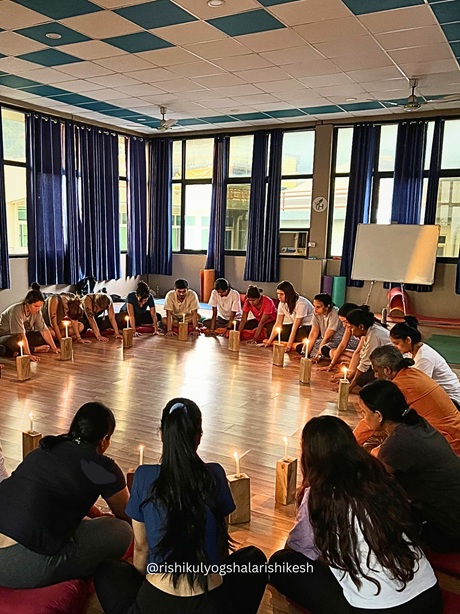
The benefits of Trataka Meditation or Trataka Yoga are manifold and extend beyond relaxation. The following are some of the main Trataka benefits:
- Sharpens Concentration: Trataka trains the mind to stay with one thing. Over time, this carries over into daily life, reading, working, and studying all become easier because the habit of holding attention gets stronger with practice.
- Reduces Stress: Fixing the gaze on a still flame slows the breath naturally and settles the nervous system. Most people notice a calm that comes within the first few minutes of sitting, even on difficult days.
- Strengthens the Eyes: Steady gazing exercises the eye muscles in a way that screen time never does. Regular practitioners often report less eye strain, especially those who spend long hours in front of computers.
- Reduces Anxiety and Low Mood: When the mind has nowhere to wander, the loop of anxious thinking slows down. This is not a cure, but students who practice Trataka regularly often notice a steadier emotional baseline over weeks of consistent practice.
- Supports Spiritual Growth: In the yogic tradition, Trataka is used as a doorway into deeper states of awareness. As the external world fades from attention, practitioners begin to turn inward. Over time, this can open up experiences that go well beyond ordinary meditation.
- Improves Sleep: Practicing Trataka in the evening, away from screens, helps the mind wind down. The stillness it creates makes it easier to fall asleep and stay asleep, something many students notice within the first two weeks.
- Builds Self-Awareness: When the outer noise quiets, you begin to notice what is actually going on inside. Thoughts, patterns, reactions, things that usually pass by too fast to catch, become clearer. This is one of the less talked about but more lasting benefits of the practice.
- Prepares the Mind for Deeper Meditation: If you find it hard to sit still during meditation, Trataka helps. The gaze gives the mind a job to do, and once it settles into that, dropping into deeper meditation becomes much more natural.
- Activates Ajna Chakra: In yogic understanding, steady gazing activates the Ajna chakra, the third eye, located between the eyebrows. This is linked to intuition, mental clarity, and inner perception. Many practitioners report a warm or tingling sensation in this area during longer sessions.
Also Read: The 7 Chakras: A Simple Guide to the Energy Centres in Your Body
Who Should Practice Trataka?
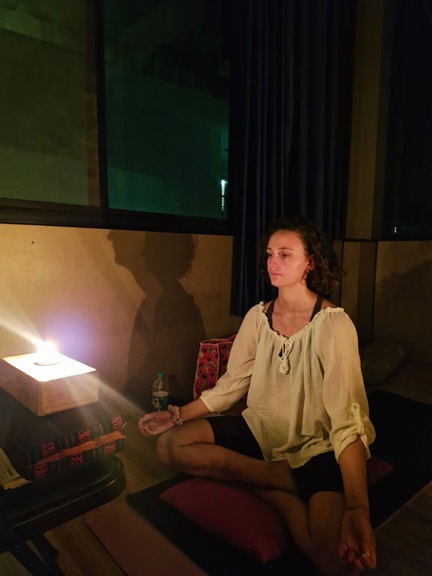
Trataka suits most people. It is particularly useful for anyone who finds it hard to meditate because the mind will not settle, students and professionals who need to hold focused attention for long periods, people dealing with stress or mild anxiety, and yoga practitioners looking to deepen their practice beyond asana.
People with epilepsy, severe eye conditions, or migraines triggered by light should consult a doctor before starting. Pregnant women can practice but should avoid long sessions.
Best Time to Practice Trataka
Early morning, before sunrise, is considered the ideal time in the yogic tradition, when the mind is fresh, and the environment is quiet. Evening practice also works well, especially as a way to transition out of a busy day. Avoid practicing right after meals. A gap of at least two hours is recommended.
Common Mistakes to Avoid
- Straining the eyes — the gaze should be steady, not hard. If your eyes hurt, stop.
- Practicing in a windy spot — a flickering flame breaks the focus and strains the eyes. Find a still room.
- Starting with too long a session — 3 to 5 minutes is enough at the beginning. Pushing too far too soon leads to eye fatigue and puts people off the practice.
- Sitting with a bent spine — the posture matters. A slouched back affects the breath and makes it harder to stay alert.
- Giving up after one or two sessions — the real benefits of Trataka come with consistency, not duration. Ten minutes every day for a month will do more than an hour once a week.
Also Read – 7 Health Benefits of Meditation Practice
Conclusion
Trataka is one of those practices that looks almost too simple from the outside. You light a candle and look at it. But anyone who has sat with it for a few weeks knows that something real happens. The mind gets quieter. The eyes get stronger. The ability to focus on anything improves.
If you are new to meditation or have struggled to stick with it, Trataka is worth trying. Start small, be consistent, and let the practice do its work.
At Rishikul Yogshala, Trataka is taught as part of our residential yoga teacher training programs in Rishikesh alongside Pranayama, Yoga Nidra, and classical meditation. If you want to learn it properly with a teacher, our 200 Hour Yoga TTC in Rishikesh is a good place to start.
Frequently Asked Questions
1. What is Trataka Meditation?
Trataka is an ancient yoga practice of gazing steadily at a single object, most commonly a candle flame, without blinking. It is one of the six Shatkarmas mentioned in the Hatha Yoga Pradipika and is used to train concentration and calm the mind.
2. What does Trataka mean in Sanskrit?
The word Trataka comes from Sanskrit and means to gaze or to look steadily. It refers to the practice of fixing the eyes on one point without letting the gaze wander.
3. Is Trataka safe for the eyes?
Yes, when practiced correctly. The gaze should be soft and steady, not strained or forced. If the eyes water or feel tired, close them and rest. People with serious eye conditions should consult a doctor before starting.
4. How long should I practice Trataka?
Beginners should start with 3 to 5 minutes and gradually build up to 10 to 15 minutes over weeks. There is no need to push for longer sessions early on.
5. Can I practice Trataka every day?
Yes. Daily practice gives the best results. Even 5 to 10 minutes a day is enough to notice a difference in focus and mental calm over time.
6. What is the best time to do Trataka Meditation?
Early morning before sunrise is considered the best time in the yogic tradition. Evening also works well. Avoid practicing right after meals; keep a gap of at least two hours.
7. What object should I use for Trataka?
A candle flame is the most common and recommended object, especially for beginners. Other options include a black dot on a white wall, a symbol, or a small image. The flame is preferred because it naturally draws and holds the attention.
8. What happens when the eyes water during Trataka?
Watering of the eyes is normal, especially in the beginning. In the yogic tradition, this is considered a cleansing effect. When the eyes water, close them gently, rest, and continue if comfortable.
9. Can beginners practice Trataka Meditation?
Yes. Trataka is one of the more accessible meditation practices because the flame gives the mind something concrete to focus on. It is often recommended for people who find it hard to meditate without an anchor point.
10. What is the difference between Trataka and regular meditation?
In most meditation techniques, the focus is internal, on the breath, a mantra, or body sensations. In Trataka, the focus is external, on a physical object. This makes it easier to start for many people and also serves as a preparation for deeper internal meditation practices.
This article is for general information and is not medical advice. If you have a respiratory or heart condition, are pregnant, or are unsure whether these practices suit you, please speak to your doctor before beginning.

 +91-8433225327,
 Rishikul Yogshala Rishikesh, Narayan Kunj, Jonk Village, Ram Jhula, Swarg Ashram, Rishikesh, Uttarakhand 249304
 By Airway
 By Railway
 By Bus/Cabs