








Shavasana (Corpse Pose): Benefits, How to Practise, Contraindications & Real Meaning
Table of Contents
- What Is Shavasana? The Corpse Pose Explained
- Shavasana, Savasana, Mritasana: Why Three Names?
- What The Classical Texts Actually Say?
- How to Do Shavasana (Corpse Pose): Step by Step
- How Long Should You Stay In Shavasana?
- Why Coming Out Slowly Matters
- Benefits of Shavasana
- 1. It downshifts the nervous system
- 2. It supports healthy blood pressure
- 3. It reduces stress and mental fatigue
- 4. It improves sleep quality
- 5. It lets muscles recover
- 6. It sharpens concentration
- 7. It is the container for the practice
- Contraindications of Shavasana: Who Should Modify or Avoid It
- Variations and Props for Corpse Pose
- Common Mistakes in Shavasana
- Shavasana vs Yoga Nidra: What Is the Difference?
- Final Thought
- Frequently Asked Questions About Shavasana
- Why is Shavasana called Corpse Pose?
- How long should you stay in Shavasana?
- Why is Shavasana considered the hardest yoga pose?
- Is it okay to fall asleep during Shavasana?
- What is the difference between Shavasana and Yoga Nidra?
- Why do you roll to the right side before sitting up?
- Can you do Shavasana on a bed?
- Can Shavasana be practised during pregnancy?
- Is Shavasana a form of meditation?
- Can Shavasana lower blood pressure?
Shavasana (Corpse Pose), also spelled Savasana, is a supine relaxation posture commonly practised at the end of a yoga session. In traditional yoga texts, the Gheranda Samhita describes Mritasana (मृतासन), a posture associated with the same corpse-like resting position.
Shavasana at a Glance
| Sanskrit name | शवासन (Śavāsana) |
| Also called | Savasana, Corpse Pose, Mritasana, Total Relaxation Posture |
| Word origin | śava = corpse, āsana = seat or posture |
| Pose type | Supine, restorative, relaxation |
| Difficulty | Physically easy, mentally the hardest pose in yoga |
| When to practise | End of a yoga class; also standalone, or before sleep |
| Duration | 5–15 minutes (roughly 1 minute per 10 minutes of practice) |
| First textual mention | Hatha Yoga Pradipika 1.32 (15th century) |
| Primary benefit | Shifts the body from sympathetic to parasympathetic state |
| Main contraindication | Late pregnancy, acute back pain, active trauma symptoms |
What Is Shavasana? The Corpse Pose Explained
Shavasana is the posture of doing nothing on purpose.
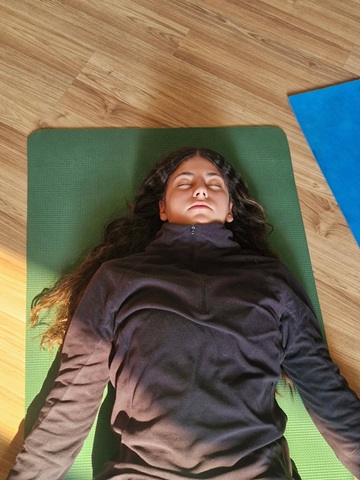
The word breaks into two parts: śava, meaning corpse, and āsana, meaning seat or posture. So Corpse Pose is a literal translation, not a dramatic one. In corpse yoga pose, the body is asked to behave as a body without a driver — no holding, no adjusting, no bracing.
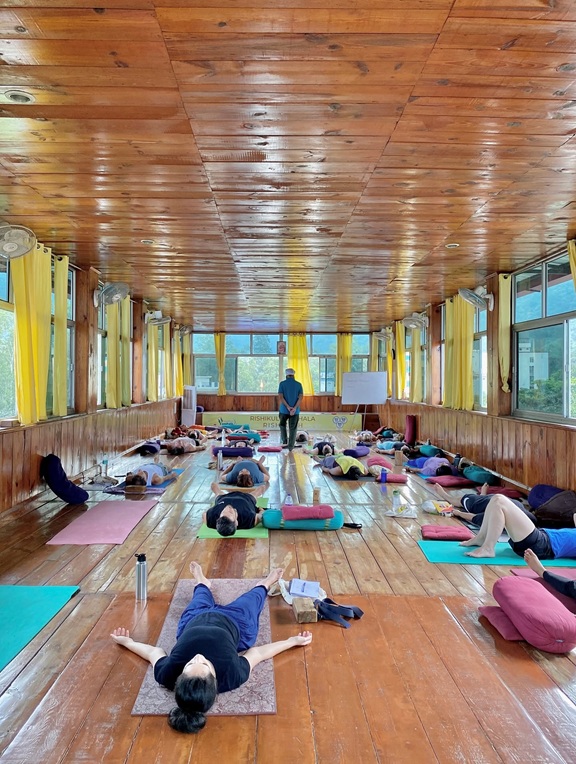
That sounds simple. It is not. In almost every teacher training batch at Rishikul Yogshala, there are students who can hold a headstand for three minutes but cannot lie still for five. Somebody’s foot starts twitching. Somebody sits up early to check the time. Somebody falls asleep and wakes up embarrassed. This is the whole reason the pose carries the name it does.
Shavasana, Savasana, Mritasana: Why Three Names?
These are the same posture. The variation comes from transliteration and from different classical texts.
- Shavasana / Savasana — two ways of writing the same Sanskrit word in English. The Sanskrit श is closer to “sha,” but “savasana corpse pose” is the more common spelling in Western studios. Neither is wrong.
- Mritasana — from mṛta, also meaning dead. This is the name used in the Gheranda Samhita. Same posture, older sibling name.
- Corpse Pose — the standard English rendering.
If you see all four terms used on the same yoga syllabus, they are not four different practices.
What The Classical Texts Actually Say?
Two references matter here, and they are short.
The Hatha Yoga Pradipika (1.32), written by Svatmarama in the 15th century, states that lying supine on the ground like a corpse is called Savasana, that it removes the fatigue caused by other asanas, and that it brings rest to the mind. That is the entire verse. Notice what it does not say: nothing about flexibility, nothing about calorie burn, nothing about achieving anything.
The Gheranda Samhita (2.11) describes the same posture under the name Mritasana, with the same function — it destroys fatigue and quiets the agitation of the mind.
Both texts place Shavasana in the same category: a posture whose entire job is recovery and mental stillness. When B.K.S. Iyengar wrote about it in Light on Yoga, he made the same point and added the harder one — that staying consciously still is more difficult than staying physically still.
How to Do Shavasana (Corpse Pose): Step by Step
This is the sequence taught in traditional Hatha classes. Read it through once, then practise without a phone nearby.
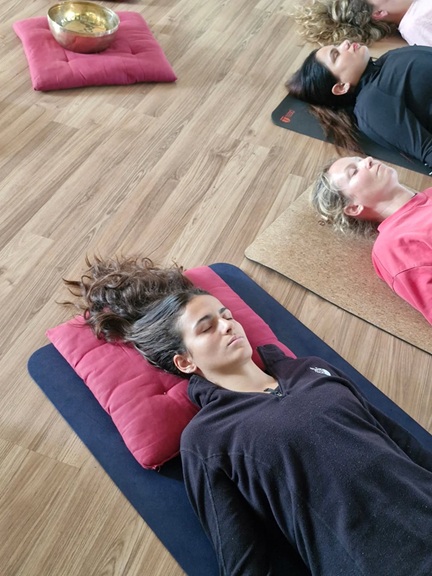
- Lie down on your back on a mat or a firm, non-slippery surface. A carpet works. A soft mattress does not — the spine needs an even surface underneath it.
- Let the legs fall open. Separate the feet to about hip-width or slightly wider, then let the thighs roll outward naturally so the toes point away from each other. Do not hold them open. Let gravity do it.
- Place the arms about 15–20 degrees away from the torso, palms facing up, fingers softly curled. Palms up matters more than people think — it opens the chest and stops the shoulders rolling forward.
- Adjust the back of the head. Lengthen the back of the neck slightly so the chin is not jutting up. If the chin lifts, slide a thin folded blanket under the skull.
- Close the eyes and let the eyeballs settle downward, as if sinking back into the sockets. This one instruction does more for mental quiet than almost anything else in the pose.
- Do a scan from the feet upward. Feet, calves, knees, thighs, hips, belly, chest, hands, arms, shoulders, throat, jaw, tongue, eyes, forehead. At each point, notice and release. Do not force. Just withdraw effort.
- Let the breath find its own rhythm. No counting, no ujjayi, no lengthening. Ordinary breath. Watch it the way you would watch weather.
- Stay. When the mind wanders — and it will — return to the sensation of the body’s weight pressing into the floor. That contact point is your anchor.
- Come out slowly. Deepen the breath. Wiggle fingers and toes. Stretch the arms overhead. Roll onto the right side and rest there for a few breaths. Then press up to sitting with the head coming up last.
How Long Should You Stay In Shavasana?
A workable rule: one minute of Shavasana for every ten minutes of practice. A 60-minute class earns 6 minutes. A 90-minute class earns 9 or 10.
For a standalone relaxation session, 10 to 20 minutes is appropriate. Below 3 minutes, the nervous system has barely started to downshift — you get the position without the effect.
Why Coming Out Slowly Matters
Sitting up fast after deep relaxation can leave you dizzy or oddly irritable. Blood pressure and heart rate have dropped; give them a moment to come back up. Rolling to the right side before rising is the traditional instruction, and it puts less immediate load on the heart.
Benefits of Shavasana
The benefit of Shavasana is that it moves you from the sympathetic nervous state — alert, braced, working — into the parasympathetic state, where the body actually repairs itself. Almost everything below flows from that single shift.
1. It downshifts the nervous system
This is the primary mechanism, and it has been measured. In a randomised controlled trial at the University of São Paulo, savasana relaxation reduced cardiac sympathovagal balance in hypertensive patients, and the reduction persisted for at least 35 minutes after the session ended. In plain terms: the “fight-or-flight” side quietened down, and it stayed quiet after they got up.
2. It supports healthy blood pressure
Research on Shavasana and hypertension goes back decades. A 2007 study published in Complementary Therapies in Clinical Practice found meaningful reductions in mean systolic and diastolic blood pressure among practitioners, and — more interesting — a blunted physiological response when subjects were later exposed to a stress test.
This is supportive practice, not a substitute for treatment. If you take blood pressure medication, do not change your dose based on a yoga blog. Talk to your doctor.
3. It reduces stress and mental fatigue
Shavasana gives the mind a defined container for stillness. Unlike scrolling or napping, you stay awake and aware while the body switches off. Students consistently report that the mental fog after a hard practice clears in Shavasana rather than during it.
4. It improves sleep quality
The body scan sequence used in Shavasana is the same technique that clinical sleep programmes borrow for pre-sleep relaxation. Practising it in the evening trains the nervous system to recognise a settling cue.
5. It lets muscles recover
Muscles lengthen and release under no load. After backbends, twists and standing sequences, this is where the tissue actually integrates the work.
6. It sharpens concentration
Moving attention deliberately through the body is a concentration exercise disguised as rest. In the classical framework, this is where asana starts turning into pratyahara, withdrawal of the senses, which is the doorway to meditation.
7. It is the container for the practice
This is the benefit most people skip, and the one teachers care about most. Without Shavasana, a yoga class is exercise. With it, the practice has somewhere to land. Removing Shavasana from a session is like cooking a meal and not sitting down to eat it.
Contraindications of Shavasana: Who Should Modify or Avoid It
Shavasana is one of the safest postures in yoga, but “safe for most” is not “safe for everyone.” These are the contraindications of Shavasana that experienced teachers screen for before a class begins.
| Condition | What to do |
|---|---|
| Pregnancy (after ~20 weeks) | Avoid lying flat on the back — the uterus can compress the vena cava. Practise on the left side with a bolster between the knees, or semi-reclined with the chest propped up. |
| Acute lower back pain | Place a bolster or rolled blanket under the knees, or rest the calves on a chair seat with thighs vertical. Flat-on-the-floor can aggravate a hot disc. |
| Respiratory difficulty, asthma, heavy cold | Elevate the head and chest on a bolster. Fully supine can feel restrictive. |
| Acid reflux / GERD | Prop the torso at an incline. Avoid practising within 90 minutes of a meal. |
| Recent abdominal, chest or eye surgery | Get clearance first. Getting down and up is often the issue, not the pose itself. |
| PTSD, panic disorder, dissociation history | Closing the eyes and going still can be destabilising. Keep the eyes softly open with a low gaze, shorten the hold, and work with a trained teacher. This is a genuine contraindication and it is under-discussed. |
| Severe restless leg syndrome | Bend the knees, use props, and shorten the duration. |
| Vertigo | Come out extremely slowly, always rolling to the side first. |
One more that is not medical but is practical: if you tend to fall asleep every single time, you are not doing Shavasana; you are napping. Try practising it earlier in the day, with the eyes lightly open, or in a slightly cooler room.
Variations and Props for Corpse Pose
- Knees supported — bolster or rolled blanket under the knees. The single most useful modification for tight hamstrings, back pain, or an anterior pelvic tilt.
- Legs on a chair — calves on the seat, thighs vertical, forming a right angle at the hip and knee. Excellent for sciatic irritation and long-standing back pain.
- Side-lying Shavasana — left side, bolster between the knees, head supported. Standard for pregnancy after the second trimester.
- Supported/inclined Shavasana — a bolster running lengthwise under the spine, or a folded blanket under the upper back and head. Good for asthma, congestion, and reflux.
- Weighted Shavasana — a folded blanket laid across the belly or hips. The gentle pressure helps anxious or restless practitioners settle faster.
- Arms overhead — a slightly more active version that opens the chest and shoulders. Not for people with shoulder impingement.
- Eyes covered — an eye pillow or folded cloth. Light pressure on the eyelids triggers a reflex that slows the heart rate.
Common Mistakes in Shavasana
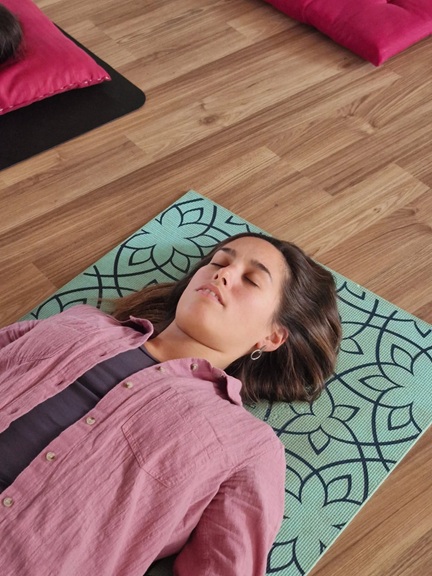
These are the errors teachers correct most often while walking the room during final relaxation:
- Holding the jaw. People release the shoulders and forget the face entirely. Unclench the teeth; let the tongue rest away from the roof of the mouth.
- Keeping the feet upright. If the toes still point at the ceiling, the legs are working. Let them fall out.
- Getting cold. Body temperature drops during deep relaxation. Cover yourself with a blanket before you start, not five minutes in.
- Turning it into breathwork. Shavasana is not pranayama. Deliberate breath control keeps a part of the mind employed. Let the breath alone.
- Cutting it short. The first three minutes are the least useful ones. Leaving at minute four means you did the setup and skipped the pose.
- Practising on a bed. A soft surface lets the lumbar spine sag and the shoulders round.
Shavasana vs Yoga Nidra: What Is the Difference?
They are related but not identical, and the confusion is common.
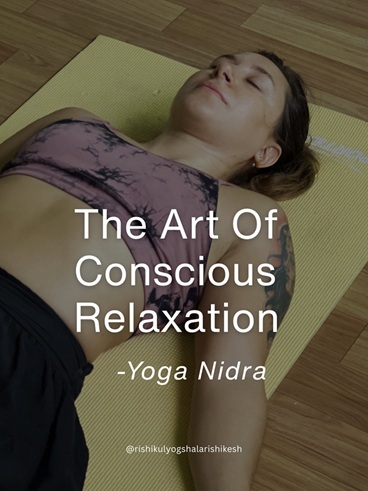
Shavasana is a posture. It is open-ended; you lie still and observe, with no script and no destination.
Yoga Nidra is a guided practice that uses the Shavasana position as its physical container. It has a defined structure: a resolve (sankalpa), systematic rotation of consciousness through body parts, breath awareness, and visualisation, all led by a teacher’s voice.
Put simply: every Yoga Nidra session happens in Shavasana, but not every Shavasana is a Yoga Nidra. If someone is talking you through it step by step, you are doing Yoga Nidra.
Final Thought
Shavasana may seem like a simple resting pose, but it teaches us to slow down, release tension, and become more aware of the present moment. It gives the body and mind time to absorb the benefits of the yoga practice.
For those who want to explore yoga beyond physical postures, Yoga Teacher Training in India at Rishikul Yogshala offers an opportunity to learn asana, pranayama, meditation, and yogic philosophy in a traditional setting.
Ultimately, Shavasana reminds us that yoga is not always about doing more; it is also about learning to pause, let go, and simply be.
Frequently Asked Questions About Shavasana
Why is Shavasana called Corpse Pose?
Shavasana is called Corpse Pose because the body lies completely still on the back, like a body with nobody driving it. The name comes from Sanskrit — śava meaning corpse and āsana meaning posture. It is descriptive rather than morbid: the pose asks you to stop holding, adjusting, and bracing entirely.
How long should you stay in Shavasana?
Stay in Shavasana for 5 to 15 minutes. A practical guideline is one minute of Shavasana for every ten minutes of practice, so a 60-minute class earns about 6 minutes. For a standalone session, 10 to 20 minutes works well. Below 3 minutes, the nervous system has barely begun to settle.
Why is Shavasana considered the hardest yoga pose?
Shavasana is considered the hardest pose because it removes the one thing most people rely on to stay focused: physical effort. Every other asana gives the mind a task to hold. Shavasana gives it nothing, and an untrained mind resists stillness far more stubbornly than it resists difficulty.
Is it okay to fall asleep during Shavasana?
Falling asleep occasionally is not harmful, but it is not the aim. Shavasana trains conscious relaxation — body asleep, mind awake. Falling asleep every single time usually points to sleep debt. Practise earlier in the day, keep the eyes softly open, or cool the room slightly.
What is the difference between Shavasana and Yoga Nidra?
Shavasana is a posture; Yoga Nidra is a guided practice that uses that posture. Shavasana is open-ended with no script. Yoga Nidra follows a set structure — a sankalpa, rotation of consciousness, breath awareness and visualisation, led by a teacher’s voice. Every Yoga Nidra happens in Shavasana, but not every Shavasana is Yoga Nidra.
Why do you roll to the right side before sitting up?
Rolling to the right keeps pressure off the heart while blood pressure and heart rate return to normal. In yogic physiology, it also opens the left nostril, associated with ida nadi — the cooling, calming channel — which supports the restful state just built. Sitting up straight from flat can leave you dizzy.
Can you do Shavasana on a bed?
A bed is not ideal. A soft mattress lets the lower back sag and the shoulders round forward, so the spine never fully releases. A firm, even surface — a mat, rug or carpeted floor — gives the body something to let go into. If a bed is the only option, use a firm mattress with support under the knees.
Can Shavasana be practised during pregnancy?
Not flat on the back after roughly 20 weeks, because the weight of the uterus can compress the vena cava and reduce blood return to the heart. Practise side-lying on the left with a bolster between the knees, or semi-reclined with the chest and head propped on a bolster.
Is Shavasana a form of meditation?
Shavasana is not meditation itself, but it is the doorway to it. In the eight-limbed framework, it sits closest to pratyahara, the withdrawal of the senses that precedes concentration and meditation. The pose trains attention to stay steady without being given a task — the same skill meditation depends on.
Can Shavasana lower blood pressure?
Studies indicate Shavasana reduces sympathetic nervous activity and can support lower blood pressure, with effects measured for at least 35 minutes after practice. It is a complementary practice, not a replacement for prescribed treatment. Do not adjust medication without speaking to your doctor.
This article is for general information and is not medical advice. If you have a respiratory or heart condition, are pregnant, or are unsure whether these practices suit you, please speak to your doctor before beginning.

 +91-8433225327,
 Rishikul Yogshala Rishikesh, Narayan Kunj, Jonk Village, Ram Jhula, Swarg Ashram, Rishikesh, Uttarakhand 249304
 By Airway
 By Railway
 By Bus/Cabs