








International Students: Everything You Need to Know About Yoga Teacher Training in India
Table of Contents
- What Yoga Teacher Training in India Actually Means
- What a Real Day Looks Like
- Why Do International Students Travel to India for Yoga Teacher Training?
- Why So Many International Students Choose Rishikesh?
- Visa Requirements for International Yoga Students
- The Routes Available
- The detail almost nobody explains properly
- What This Means For You, Practically
- Visa Fees Vary By Nationality
- Applying, Step By Step
- What It Actually Costs
- Course fees
- What a Course Fee Usually Includes
- What It Usually Does Not Include
- Realistic Additional Costs
- Three Important Points/Tips About Money
- Questions Worth Asking Before You Pay a Deposit
- The Best Time Of Year To Come
- Getting From Your Country to Rishikesh
- Step one: fly to Delhi
- Step two: Delhi to Rishikesh
- A Practical Arrival Tip
- What to pack
- Food, Water and Staying Healthy
- The food
- The water
- Stomach upsets
- Vaccinations and insurance
- Culture, clothing and simple etiquette
- Safety, money and staying connected
- Is Rishikesh safe?
- If you are travelling alone
- Money
- SIM card and internet
- Is Rishikesh Safe for International Students?
- A note for students travelling alone
- After The Course: Yoga Alliance and Teaching at Home
- Mistakes International Students Make
- Frequently Asked Questions
- Do I need to be flexible or advanced to join a 200-hour course?
- How long should I stay in India?
- Can I do a yoga teacher training on a tourist visa?
- How much money do I need in total?
- Is the food safe for foreigners?
- Will I be able to call home?
- Is Rishikesh safe for a woman travelling alone?
- What if I get injured during the course?
- Can I bring my partner who is not doing the course?
- Do I need vaccinations for India?
- What is the difference between a retreat and a teacher training?
- Is Yoga Alliance registration compulsory to teach?
- Can I pay in instalments?
- What happens if my flight is cancelled or delayed?
Every year, thousands of people fly into India from the US, the UK, Germany, Australia, Israel, Brazil and dozens of other countries to train as yoga teachers.
You have probably already seen what they came for. Sunrise over the Ganga. A hall full of mats. Someone chanting at six in the morning.
That part is real. It is also not the part anyone struggles with.
The hard part happens long before the mat. It happens at home, on your laptop, with fifteen tabs open and a booking page you have not clicked yet. Which visa do you actually need, and why does every school give you a different answer? What will this really cost once flights, insurance and a month of laundry are in? Which months are simply too hot to practise in? Can you drink the water? And what happens when you land in Delhi at two in the morning with a four-hour drive still ahead of you?
None of that goes on a brochure.
This guide is for international students coming to India and is informed by our experience of welcoming and supporting students from around the world. Where information, particularly visa requirements, can vary or be unclear, we make that clear rather than providing misleading or outdated information.
If you are still choosing a school, we have a separate guide for that. This one is about everything else.
What Yoga Teacher Training in India Actually Means
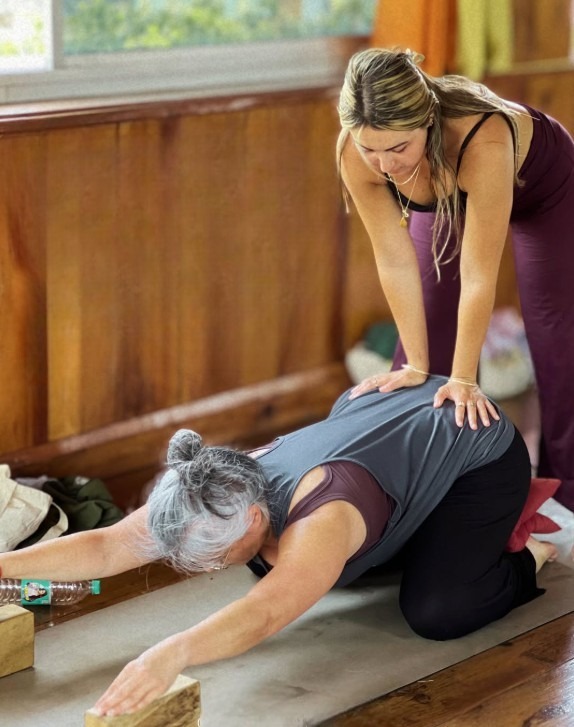
A yoga teacher training course, usually shortened to YTT or TTC, is a full-time residential course. You live at the school. You eat, sleep, and study there for the whole month.
Course length is not simply a matter of “more is better.” It determines what you are actually qualified to do afterwards under the Yoga Alliance system, which is the credential most studios worldwide look for.
| Course | Typical duration | What it is for |
|---|---|---|
| 100-hour | 12–14 days | Deepens your personal practice. A good fit if you cannot take a full month off work, or want to test residential life before committing. Not sufficient on its own for RYT registration |
| 200-hour | 24–28 days | The standard entry-level teaching qualification worldwide (RYT 200). Where almost every first-time student starts |
| 300-hour | 25–30 days | Advanced training. Requires a completed 200-hour certificate first |
| 500-hour | Standalone, or 200 + 300 combined | The highest standard Yoga Alliance registration (RYT 500) |
| Specialised courses (prenatal, Ayurveda, meditation) | Usually 50–95 hours | Add-on certifications for a niche, taken after or alongside a 200-hour |
One thing worth saying early. A YTT is not a holiday. There is a real difference between a yoga retreat, where you rest, and a teacher training, where you get up at six and sit exams. Both are good. They are not the same thing, and choosing the wrong one is a common regret.
What a Real Day Looks Like
Schedules differ between schools, but the shape is similar almost everywhere.
| Time | What happens |
|---|---|
| 6:00am | Wake up, herbal tea |
| 6:30am | Pranayama and meditation |
| 7:30am | Morning asana practice, usually Hatha or Ashtanga, around 90 minutes |
| 9:15am | Breakfast |
| 10:30am | Classroom session — philosophy, anatomy, or teaching methodology |
| 12:00pm | Alignment and adjustment practicum |
| 1:00pm | Lunch, then a rest and self-study break |
| 4:00pm | Evening asana practice, usually the second style of the day |
| 6:00pm | Mantra chanting, meditation, or Yoga Nidra |
| 7:30pm | Dinner |
| 10:00pm | Lights out |
That is roughly ten hours of structured time, six days a week, for four weeks. One day is kept free each week for rest, a workshop, or an excursion, a sunrise trek, a nearby temple, or the evening Ganga Aarti.
Things people are not ready for:
- Week one hurts. Two asana classes a day is more volume than almost anyone does at home. Soreness peaks around day four to six. It passes.
- Philosophy is a real subject. You will study the Yoga Sutras of Patanjali and the eight limbs. There are notes to take and, at most schools, a written exam.
- Anatomy is a real subject too. Muscles, joints, the spine, how the breath mechanically works, and which movements are risky for which bodies.
- You have to teach. Standing in front of your classmates and leading a sequence out loud is part of the assessment. For many students, this is the scariest part and the part they are proudest of.
- The emotional side is real. Long practice hours, no alcohol, unfamiliar food, poor sleep in week one, and a room shared with a stranger. Most groups have a wobbly week two. This is normal, and your teachers have seen it many times.
Graduates consistently describe the pace as demanding rather than overwhelming. The intensity comes from the routine repeating daily, not from any single session being extreme.
Why Do International Students Travel to India for Yoga Teacher Training?
Every year, thousands of people leave their home countries — the US, UK, Germany, Australia, Israel, Brazil, and dozens of others — and spend three to eight weeks in India training to become certified yoga teachers. Here’s what actually draws them, beyond the obvious “India is where yoga began”:
- Depth of instruction. Teachers in places like Rishikesh often trained under a lineage system — a teacher who learned from a teacher who learned from a teacher — rather than picking up yoga purely from a studio franchise model. This doesn’t automatically make every school good, but it does mean the philosophy and technique sections of a course tend to run deeper than a weekend workshop back home.
- Full immersion. You are not squeezing training in around a job. You wake up, practice, study, eat, and sleep in the same small radius for the entire course. Students consistently report that this immersion — not any single class — is what actually changes how they understand yoga.
- Cost. A residential, all-inclusive 200-hour course in India frequently costs less than a non-residential 200-hour course in a major Western city, even after you add flights and a visa. This is one of the most practical, non-romantic reasons people choose India.
- Course variety and availability. India, and Rishikesh specifically, has one of the highest concentrations of Yoga Alliance-registered schools in the world, running batches nearly every month of the year. You are not waiting six months for the next intake.
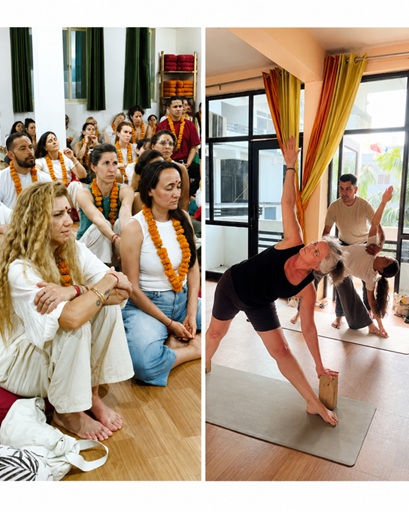
- A genuinely international classroom. A typical 200-hour batch in Rishikesh might include students from the US, UK, Germany, Israel, Australia, and half a dozen other countries, all training together for three to four weeks. For many students, this turns out to be as valuable as the yoga itself.
None of this means training in India is automatically the “right” or “authentic” choice compared to training elsewhere; plenty of excellent teacher trainings exist outside India too. It means India solves a specific combination of depth, immersion, and cost that matters to a particular kind of student. If that’s you, keep reading.
Why So Many International Students Choose Rishikesh?
India is a large country, and yoga teacher training courses run in Goa, Kerala, Dharamshala, Mysore, and several other regions. But Rishikesh, in the northern state of Uttarakhand, is where the largest concentration of international students end up, and it’s worth understanding why, rather than just accepting the label “Yoga Capital of the World” at face value.
Rishikesh sits where the Ganges River comes down out of the Himalayan foothills. The town’s name comes from a Sanskrit name for Vishnu, and it’s mentioned in the Vedas, the Puranas, and the Bhagavad Gita — not as a footnote, but as a place of genuine spiritual importance going back thousands of years.
In the modern era, the town’s association with yoga education specifically dates to the early 20th century, when ashrams like Sivananda Ashram (founded in 1936) began operating as structured centres of yogic study, drawing serious students decades before “yoga tourism” existed as a concept. In 1968, The Beatles came to Rishikesh to study meditation with Maharishi Mahesh Yogi, and that visit is usually credited with introducing the town’s name to a much wider Western audience, though the town’s role in yoga long predates that.
What this means practically for you today:
- A dense concentration of established yoga schools, so you have real choice, not one or two options
- A built-in international student community; you will not be the only foreigner figuring out how things work
- The Ganges running through the town, which most schools use for riverside practice, evening rituals like Ganga Aarti, or simple quiet time
- The Himalayan foothills close by, for sunrise treks and short hikes on rest days
It’s also worth being honest about the realities: Rishikesh is a real, working town, not a resort built for tourists. It gets busy during peak season (roughly October to March, and again in spring), traffic on the narrow roads can be genuinely chaotic, monkeys near food stalls are a real nuisance rather than a charming detail, and the area around the main ghats has a fair number of shops and touts aimed squarely at visitors. None of this should stop you from going; it just means going in with realistic expectations rather than a postcard image.
Yoga Alliance requires individual teacher registration, and it’s a prerequisite for almost every 300-hour advanced program.
Also Read: Why Choose a Residential Yoga Course in Rishikesh? A Gentle, Honest Guide
Visa Requirements for International Yoga Students
This is the section most yoga school websites get wrong, so read it carefully. It is also the part that varies most by your nationality, so treat it as a framework rather than a substitute for checking your own country’s rules.
The Routes Available
- e-Tourist Visa — the online system, available to citizens of roughly 174 countries. Check your specific passport on the official portal
- Regular paper Tourist Visa — processed through an Indian embassy, consulate, or an official partner such as VFS Global
- Student Visa — the fully compliant route for longer or formally structured educational programmes
The detail almost nobody explains properly
India’s official e-Visa guidance lists what is permitted under a tourist e-visa. It includes:
“Attending short term yoga programme or short term courses on local languages, music, dance, arts & crafts, cooking, medicine etc. which should not be a formal or structured course/programme (courses not exceeding 6 months duration and not issuing a qualifying certificate/diploma etc. to the participants).”
Read that last part again. A standard 200-hour YTT that results in a Yoga Alliance-recognised certificate, which is the entire reason most people enrol, arguably falls outside this exemption, because it does issue a qualifying certificate.
In practice:
- Very large numbers of international students attend YTT programmes on a standard tourist e-visa every year without any issue. Enforcement has generally been lenient.
- However, there are documented cases, discussed openly in traveller forums, of e-visa applications that named a specific “200 Hour Yoga Teacher Training” being rejected, citing this exact certificate clause.
- A regular tourist visa obtained through an embassy or VFS Global, rather than the automated online system, is generally seen as carrying less risk on this specific point.
- A Student Visa is the fully unambiguous compliant route for longer or more structured programmes, though it needs supporting documentation from a recognised institution and a longer lead time.
What This Means For You, Practically
- Do not assume a plain tourist e-visa is automatically fine simply because it is the cheapest and fastest option.
- Ask your chosen school directly which visa category their current international students use, and whether they can provide supporting documents.
- If you are unsure, consider the regular tourist visa route through your nearest Indian consulate rather than the online e-visa.
- Always verify current rules on the official portal, indianvisaonline.gov.in, before applying. Categories, permitted activities, and enforcement patterns change. This section reflects what was true at the time of research, not a permanent guarantee.
Visa Fees Vary By Nationality
India prices visas reciprocally, so the fee depends on your passport, not a single global rate.
For a one-month course, you will almost certainly want the 30-day e-Tourist visa, which is inexpensive for most nationalities, typically around USD 25.
One point worth clearing up, because it causes unnecessary alarm: UK passport holders saw a large reciprocal increase on the 5-year e-Tourist visa, which now costs around USD 484. This does not apply to the shorter visas. A UK student attending a one-month training pays around USD 25 for the 30-day visa, or around USD 40 for the 1-year version. Check the fee for your own nationality on the official portal before budgeting.
Applying, Step By Step
- Apply only through the official government portal, indianvisaonline.gov.in/evisa. Third-party sites charge markups for the same form
- Select your visa type and duration
- Enter passport details, upload a plain white-background photo and a scan of your passport bio-page
- Provide a general travel itinerary
- Pay the fee for your nationality. Expect a card surcharge of around 2.5 to 3 percent
- Processing usually takes 2 to 5 business days, but apply 2 to 3 weeks ahead to allow for delays or document requests
Your passport needs at least six months’ validity beyond your arrival date, and two blank pages.
Also worth knowing: the e-Visa is non-extendable and non-convertible. You cannot switch category once inside India, and you cannot stretch it. If you want to extend or change type, you must exit the country and apply again. Book your course dates well inside your visa validity.
Bottom line: Check your visa requirements with the nearest Indian embassy or consulate before booking your flights. This is the most important step to take before travelling to India.
What It Actually Costs
Separate the course fee from the total trip cost. These are two different numbers, and confusing them is the most common budgeting mistake.
Course fees
Our own published fees for international students:
| Course | Shared room | Private room |
|---|---|---|
| 200-hour | $1,200 | $1,350 |
| 500-hour | $2,350 | $2,650 |
Across Rishikesh generally, 100-hour courses commonly run around $650–900, 200-hour courses around $1,000–2,000, and 500-hour courses around $1,800–2,700. The wide ranges reflect real differences in what is included, accommodation quality, private versus shared rooms, meals, extra workshops, rather than one correct price.
What a Course Fee Usually Includes
- Tuition and course materials
- Accommodation for the full course
- Three meals a day
- Yoga Alliance-recognised certification on completion
What It Usually Does Not Include
- International and domestic flights
- Visa fees
- Airport and local transport
- Travel insurance
- Personal spending: laundry, snacks, souvenirs, phone data
- Medical expenses
Realistic Additional Costs
| Category | Approximate range (USD) |
|---|---|
| International return flights | Highly variable by country, often $600–1,800+ |
| Visa | $25 for most nationalities on a 30-day e-visa |
| Travel insurance for a multi-week trip | $50–150 |
| Airport transfer, if not included | $60–100 from Delhi, split with classmates |
| Local SIM or eSIM | $10–25 |
| Laundry for a month | $15–30 |
| Personal spending over 3–4 weeks | $100–300 |
A realistic total for a 200-hour course including flights, coming from outside South Asia, is USD 2,000 to 4,000. That is a wide bracket because flight cost from your specific country is the single biggest swing factor.
Three Important Points/Tips About Money
- Very cheap courses are not automatically bad, but ask why. A $599 course might mean a large batch, a basic room, or teachers early in their careers. Sometimes it just means low overheads. Ask directly how many students are in a batch and who teaches which subject.
- Book early. Early-bird discounts of $100 to 400 are common, and peak-season courses fill months ahead.
- Check what “included” means. Ask specifically about airport pickup, excursions, the certificate, the course manual, and whether meals continue on your day off.
Questions Worth Asking Before You Pay a Deposit
This page is not a guide to choosing a yoga school, we cover that separately. But these are the questions students most often wish they had asked:
- What exactly is included in the fee, and what is not?
- Is airport pickup included, and from which airport?
- What is your current Yoga Alliance registration, and can I verify it independently on the Yoga Alliance directory?
- What is your refund or rebooking policy if my plans change?
- How are dietary restrictions handled?
- Is Wi-Fi reliable, and is laundry available?
- What happens if I have a medical issue during the course?
- How large is a typical batch, and how many teachers are assigned to it?
How a school answers these before you have paid anything is a fair preview of how you will be treated once enrolled.
The Best Time Of Year To Come
YTT Courses run in Rishikesh all year, and each season offers something different. There is no wrong month; there is only the month that suits what you are looking for. Some students want the bright, busy season with a full international batch. Others want a quiet town, a smaller group and more one-to-one attention with their teachers.
Here is what each season actually feels like, so you can match it to the experience you want.
| Season | Months | What it offers |
|---|---|---|
| Spring | Feb, Mar, Apr | Warm days, cool mornings and clear skies. One of the most popular windows, with full international batches and an energetic atmosphere in town |
| Early summer | May, Jun | Long, bright days and warm evenings. Batches are smaller, so you get noticeably more individual attention. Practice sessions are scheduled for the cooler early morning and evening hours, and rooms are prepared for the season |
| Monsoon | Jul, Aug, Sep | The greenest time of year. The hills come alive, the Ganga runs full, and the town is quiet and deeply peaceful. The most introspective season to train in, and often the best value |
| Autumn | Oct, Nov | Comfortable, dry and fresh. The other peak window, with settled weather and a lively student community |
| Winter | Dec, Jan | Crisp mornings, clear Himalayan views and a calm, unhurried town. Many students find this the most powerful season for meditation and pranayama |
A few practical notes, whichever season you choose.
- If you come between May and June, pack light, breathable cotton clothing and a good water bottle. Days are warm, often above 35°C, and the schedule is built around the cooler hours. Students who enjoy heat, or who want a smaller batch, often prefer this time of year.
- If you come during monsoon, bring quick-dry clothes and a light rain jacket. Rain arrives in heavy bursts and clears again, leaving the hills brilliant green. Allow a little extra time for travel days.
- If you come in December or January, bring proper warm layers, thermals and socks. Nights fall to around 5–7°C, and rooms are often unheated. Mornings are cold, and also unusually beautiful.
Whatever month you arrive in, the practice does not change. The schedule, the teaching and the depth of the course stay the same all year.
Getting From Your Country to Rishikesh
Rishikesh has no international airport. Everyone arrives through Delhi.
Step one: fly to Delhi
Indira Gandhi International Airport (DEL) is the entry point for almost all international students. Try to land in the morning if you can, so you are not making onward travel decisions in the middle of the night.
Step two: Delhi to Rishikesh
Four options, roughly 240 km.
- Private taxi — easiest. Six to seven hours by road. Most schools arrange this, and it is what we recommend for a first trip. The driver waits at arrivals with your name. Around USD 60 to 100. Split with classmates arriving the same day and it becomes cheap.
- Domestic flight to Dehradun. Delhi to Jolly Grant Airport (DED) is about an hour, then a taxi 21 km to Rishikesh, roughly 40 to 45 minutes. Fastest overall, but it means a second check-in and a risk of weather delays.
- Train to Haridwar. Trains run from Delhi to Haridwar, 20 to 25 km from Rishikesh, then a short taxi or bus. Comfortable and cheap if you book a reserved AC class in advance. Indian trains sell out early, so this is not a same-day plan.
- Bus. Cheapest, available overnight from Delhi. Fine if you travel light and are a confident traveller. Not ideal after a long-haul flight with luggage.
A Practical Arrival Tip
Message your school your flight number and landing time before you fly, and save their WhatsApp number in your phone. Then download an offline map of Rishikesh. Between landing and getting a working SIM you may have several hours with no data, and that is exactly when you will want a map.
What to pack
Rishikesh has shops. You can buy almost anything you forget. Pack light and leave space, because most students go home with more than they arrived with.
Clothing
- Four to five sets of practice clothes. You will sweat through them daily
- Loose, modest clothes for outside the school. Shoulders and knees covered
- One warm layer, even in summer. Mornings are cool
- A proper jacket, thermals and socks if coming December to February
- Easy slip-on shoes. You will take them off constantly
- A light scarf or shawl, useful for temples, cold halls and sun
Practice
- Your own mat if you are particular. Most schools provide one
- A notebook and pens. You will write more than you expect
- A water bottle, ideally insulated
Health and toiletries
- Prescription medicine in original packaging, with a copy of the prescription
- Rehydration salts, basic painkillers, plasters, antiseptic
- Sunscreen and insect repellent
- Menstrual products in your preferred brand, since choice is limited locally
- A small quick-dry towel
Practical
- A universal adapter. India uses type C, D and M sockets, 230V
- A power bank. Power cuts happen
- Photocopies of your passport and visa, kept separate from the originals
- Some USD or EUR cash to change on arrival
- Earplugs and an eye mask, especially in a shared room
Leave behind: drones, which need special permission, and anything valuable you would be upset to lose.
Food, Water and Staying Healthy
The food
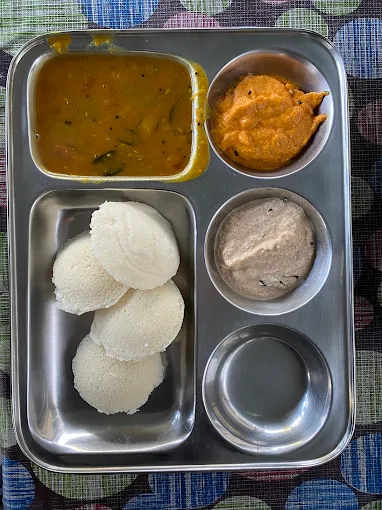
All meals are vegetarian, usually simple sattvic cooking: dal, rice, chapati, vegetable curries, porridge and fruit at breakfast, herbal tea. Portions are generous. Spice levels at schools catering to international students are normally mild.
Tell the school about allergies and dietary needs before you arrive, in writing. Vegan and gluten-free are usually manageable with notice, and hard to fix on the spot.
Remember that Rishikesh is meat-free and alcohol-free by local rule. If you are used to a daily glass of wine or a lot of protein from meat, plan for that adjustment rather than being surprised by it.
The water
Do not drink tap water. Drink filtered or bottled water only.
Most schools provide filtered drinking water, which is why an insulated bottle is on the packing list. Use bottled or filtered water for brushing your teeth in your first days too.
Stomach upsets
Some travellers get an upset stomach in the first week no matter how careful they are. Your gut is meeting new bacteria and new food. Sensible steps:
- Eat at the school and at busy, well-reviewed cafés
- Skip raw salads and pre-cut fruit from street stalls early on
- Skip ice in drinks from small stalls
- Carry rehydration salts and use them at the first sign of trouble
- If a fever or serious symptoms appear, see a doctor. Rishikesh and nearby Dehradun have good clinics
Vaccinations and insurance
Talk to a travel clinic or your doctor at home, ideally six to eight weeks before you fly. Do not rely on a yoga school for medical advice, including ours.
Get travel insurance that covers medical treatment and evacuation, and check whether it excludes anything about your course. It costs less than one night in a hospital.
Culture, clothing and simple etiquette
India is welcoming and forgiving of honest mistakes. A few things go a long way.
- Dress modestly outside class. Shoulders and knees covered. This is a pilgrimage town, and locals notice. Yoga leggings and a vest are fine inside the school, less so on the main road.
- Shoes off before entering the yoga hall, temples, and often people’s homes. Watch what others do.
- Use your right hand for eating, giving, and receiving. The left is traditionally considered unclean.
- Feet matter. Do not point your feet at people, at the altar, or at books. If you accidentally touch someone with your foot, a small apologetic gesture is normal.
- Ask before photographing people, especially sadhus and people at prayer. Some will ask for money, which is their right.
- Namaste works. Palms together, slight bow. Used for hello, thank you, and goodbye, and always appropriate.
- Public affection is not common. Holding hands is fine. Beyond that, keep it private.
- Bargaining is normal in markets and with auto-rickshaws, but not in cafés, restaurants or fixed-price shops. Keep it good-humoured. The amount you are arguing over is usually small to you and meaningful to them.
- Ganga Aarti. The evening river ceremony at Triveni Ghat or Parmarth Niketan is worth attending at least once. Go early, sit down, put the phone away for part of it.
Safety, money and staying connected
Is Rishikesh safe?
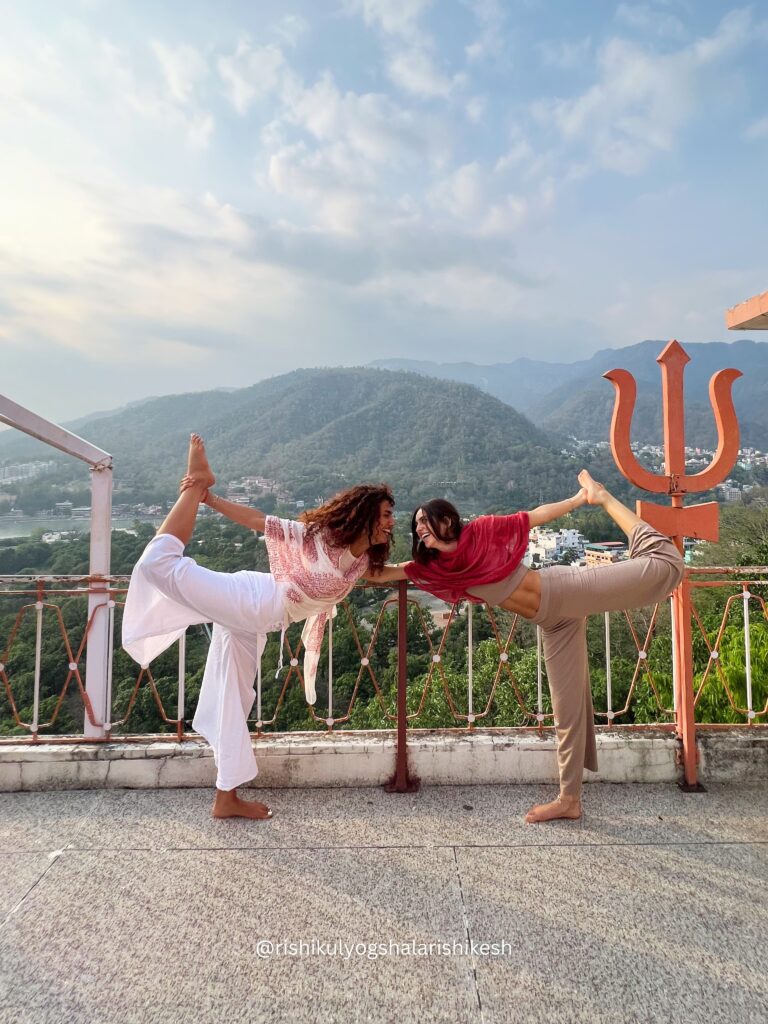
Rishikesh is, by most measures, one of India’s more traveller-friendly towns, with decades of infrastructure built around hosting foreign students. The local economy depends on them.
That said, “generally safe” is not the same as “no precautions needed.” Treat it as you would any unfamiliar destination:
- Use registered taxis or ride apps rather than unmarked vehicles, particularly after dark
- Avoid walking alone on unlit roads late at night
- Keep your passport, cash and cards secured. Carry only what you need for the day
- Be firm and unbothered about turning down unwanted conversation
- Do not accept food or drinks from strangers
- Stay alert to common tourist-area scams such as overcharging and unofficial guides
- Watch your bag on the bridges, which get very crowded
- Monkeys will take food straight out of your hand. Do not carry it openly, and do not make eye contact
- Know your school’s emergency process before you need it
Save your embassy’s number, the school’s number, and India’s emergency number 112 in your phone.
If you are travelling alone
Solo travellers, including a large number of solo women, make up a significant share of YTT students in Rishikesh, and most report positive experiences at established schools. Staying at a residential school gives you a built-in community from day one.
Practical points: choose accommodation with private, lockable rooms, now standard at most reputable schools. Ask your school directly about their security measures — CCTV, staff presence overnight, room locks — before booking rather than assuming.
Money
- ATMs are available in Rishikesh and generally reliable. Tell your bank you are travelling so your card is not blocked
- Cash still rules for small purchases, rickshaws and markets. Carry small notes
- UPI, India’s instant payment system, is used everywhere but usually needs an Indian bank account, so most visitors stick with cash and cards
- Change some money at the airport for the taxi and first days, then use ATMs
SIM card and internet
Buy an Indian SIM at Delhi airport on arrival, or ask your school to help in Rishikesh. You need your passport and visa copy, and a passport photo helps. Data in India is unusually cheap. Airtel and Jio have the best coverage in Uttarakhand.
Wi-Fi at schools is generally fine for messaging and calls home, less reliable for heavy video. Power cuts are short and normal.
One suggestion, offered gently: many students choose to keep their phone mostly off during the course. You did not fly across the world to scroll. Tell people at home you will message every few days, and then let it go.
Is Rishikesh Safe for International Students?
Rishikesh is, by most measures, one of India’s more traveller-friendly towns, with decades of infrastructure built around hosting foreign students and tourists. That said, “generally safe” is not the same as “no precautions needed,” and it’s worth treating it the way you’d treat any unfamiliar destination:
- Use registered taxis or ride apps rather than unmarked vehicles, particularly after dark
- Keep your passport, cash, and cards secured — carry only what you need for the day
- Stay alert to common tourist-area scams (overcharging, unofficial “guides”) — standard travel awareness applies
- Stick to bottled or filtered water and busier, higher-turnover food stalls for hygiene
- If training during monsoon season (roughly July–September), check conditions, since landslides and river-level changes can affect the surrounding hill roads
- Buy travel insurance that covers medical evacuation, and know your school’s emergency process before you need it, not after
A note for students travelling alone
Solo travellers, including a large number of solo women, make up a significant share of YTT students in Rishikesh, and most report positive experiences at established schools. Practical, non-alarmist points: choose accommodation with private, lockable rooms (now standard at most reputable schools), avoid walking alone late at night in unfamiliar or poorly lit areas, and ask your school directly about their specific security measures — CCTV coverage, staff presence, room locks — before booking, rather than assuming.
After The Course: Yoga Alliance and Teaching at Home
Finishing the course gives you a certificate from your school. Registering with Yoga Alliance is a separate, optional step that you do yourself afterwards.
To register as an RYT 200 you must have completed your training at a Registered Yoga School (RYS 200). Check that the school holds this registration before you book, not after.
The process is straightforward. You create an account, choose the RYT 200 designation, enter your training start and end dates, and upload your certificate. Your school then confirms your attendance, which can take a couple of weeks. Then you pay.
Current fees are a one-time USD 50 application fee plus USD 65 annual membership, so about USD 115 in your first year. Check the current figure on the Yoga Alliance site before applying, as fees change.
Do you need it? Not always. Yoga Alliance is a voluntary US-based registry, not a government licence. Some studios in the US, UK and Australia ask for RYT status. Many studios elsewhere care more about how you actually teach. Insurance providers in some countries ask for it, which is often the deciding factor.
Mistakes International Students Make
Booking the flight before confirming the visa. Always the wrong order.
- Arriving the same day the course starts. Come one or two days early. Sleep, adjust, walk around, meet a few classmates. Starting a 5:30 am schedule straight off a long-haul flight is rough.
- Choosing May or June because the flights were cheap. There is a reason they are cheap.
- Packing for a beach holiday. Modest clothes, warm layer, real shoes.
- Booking the cheapest course without asking about group size. Forty students in a batch is a very different experience from fifteen.
- Planning to work remotely during the course. Almost nobody manages it. The schedule is full and your brain is tired.
- Ignoring the day off. Rest, or do laundry, or walk to a waterfall. Do not schedule a punishing three-city trip on your only free day.
- Expecting silence. Rishikesh is busy and loud in places. Bring earplugs and adjust your expectations rather than your plans.
- Skipping travel insurance. Every year someone regrets this.
Frequently Asked Questions
Do I need to be flexible or advanced to join a 200-hour course?
No. Six months to a year of regular practice is enough for most schools. Teacher training is about understanding the practice and learning to teach it, not about performing difficult postures. Almost nobody in a training can do everything.
How long should I stay in India?
A 200-hour course runs 24 to 28 days. Add two days before for arrival and rest, and a few days after if you want to travel. Five weeks total is a comfortable plan.
Can I do a yoga teacher training on a tourist visa?
The e-Tourist visa lists short-term yoga programmes as a permitted purpose, but the official definition of a short-term programme excludes courses that issue a certificate. Many students still travel on tourist visas without difficulty. Because the rule is narrower than it first looks, confirm your specific case with the Indian embassy or consulate in your country before booking.
How much money do I need in total?
Most international students spend USD 1,500 to 3,500, including flights, course, room, food, and spending money. Around USD 2,000 is typical.
Is the food safe for foreigners?
School food is cooked fresh, vegetarian, and prepared for international students daily. Drink only filtered or bottled water, and be cautious with street food in your first week.
Will I be able to call home?
Yes. Indian data is cheap, and Wi-Fi is available. Most students keep contact light on purpose.
Is Rishikesh safe for a woman travelling alone?
It is one of the more comfortable places in India for solo female travellers, and staying at a residential school adds a built-in community from day one. Normal precautions still apply, especially after dark.
What if I get injured during the course?
Tell your teacher immediately. Good schools adjust your practice rather than pushing you through it. This is another reason to have travel insurance.
Can I bring my partner who is not doing the course?
Sometimes, usually at extra cost for room and meals, and subject to space. Ask before booking. Be aware that they will be alone for most of each day.
Do I need vaccinations for India?
Speak to a travel clinic or your doctor at home six to eight weeks before you fly. Requirements vary by country of origin and by what you plan to do.
What is the difference between a retreat and a teacher training?
A retreat is restful and has no exams. A training is a full-time course with a schedule, assessments, and teaching practice. If you want to relax, book a retreat.
Is Yoga Alliance registration compulsory to teach?
No. It is a voluntary registry, not a government licence. It helps in some countries, especially the US, and it is often required by insurers.
Can I pay in instalments?
Most schools take a deposit to hold your place and the balance on arrival. Ask about the refund policy in writing before you pay anything.
What happens if my flight is cancelled or delayed?
Message the school as soon as you know. Missing the first day or two is usually manageable. Missing the first week usually is not.
This article is for general information and is not medical advice. If you have a respiratory or heart condition, are pregnant, or are unsure whether these practices suit you, please speak to your doctor before beginning.

 +91-8433225327,
 Rishikul Yogshala Rishikesh, Narayan Kunj, Jonk Village, Ram Jhula, Swarg Ashram, Rishikesh, Uttarakhand 249304
 By Airway
 By Railway
 By Bus/Cabs