








4 Powerful Meditative Postures for Deep Focus and Relaxation
Table of Contents
“Without proper posture, you will face numberless obstacles in your meditation. And meditation is the core of all practices.”
–Swami Rama
Introduction – Meditative Postures
A good meditation posture requires still, steady, relaxed, and comfortable positioning of the body. If the body moves, sways, jerks, or pain arises, it will distract you from meditation. There is only one important prerequisite for a good meditation posture, which is that it must allow you to keep the head, neck, and torso of the body aligned so that you can breathe freely and diaphragmatically.
In all the meditative postures, the head and neck should be centred, so that they are not twisted or turned to either side. The head should be supported by the neck, without creating tension in either the neck or shoulders. Face forward with the eyes gently closed. Simply allow your eyes to close; don’t squeeze them shut or create any pressure or tension in your eyes. Meditative asanas are powerful postures that promote mental clarity, inner peace, and deep relaxation.
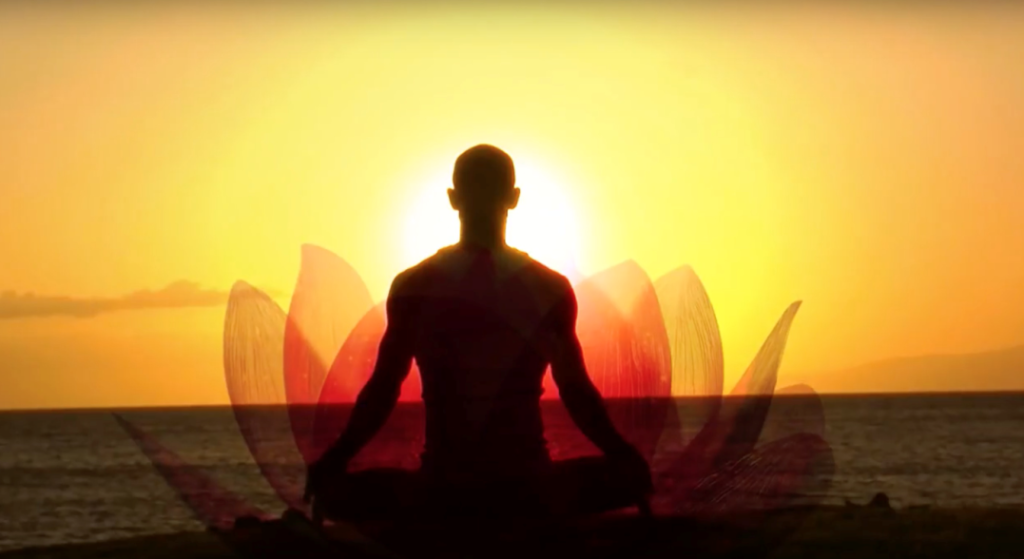
Unfortunately, in most cases, some people have been told to force their gaze upward at a point in their forehead. This creates strain in the eye muscles and even produces a headache. Some yogic practices involve specific focus, but they are not used during meditation. Simply, please understand that all your facial muscles should relax. Your mouth should also be gently closed, without any tension in the jaw area. Breathing should be done through the nostrils.
In all the meditative postures, your shoulders and arms should be relaxed and tension-free and allow both palms to rest gently on your knees. You can keep your hands on Gyan or Chin Mudra (Gesture). For this, gently join the thumb and index finger in a position where you create a circle, which you can think of symbolically as a small circuit that recycles energy within.
There are various ways of sitting where you can perform the meditation. Here we will go through four exclusive meditation postures which one can perform. These postures are as follows:
- Sukhasana (Comfortable Pose)
- Vajrasana (Thunderbolt Pose)
- Ardha Padmasana (Half Lotus Pose)
- Padmasana (Lotus Pose)
Best Asana For Meditation
Let’s discuss some types of meditative asanas.
1. Sukhasana – Comfortable Pose
Sukhasana is the easiest and most comfortable pose among all meditation postures. It can be utilised without ill effect by persons who are unable to sit in the more advanced meditation postures. It facilitates mental and physical balance without causing strain or pain in any part of your body.
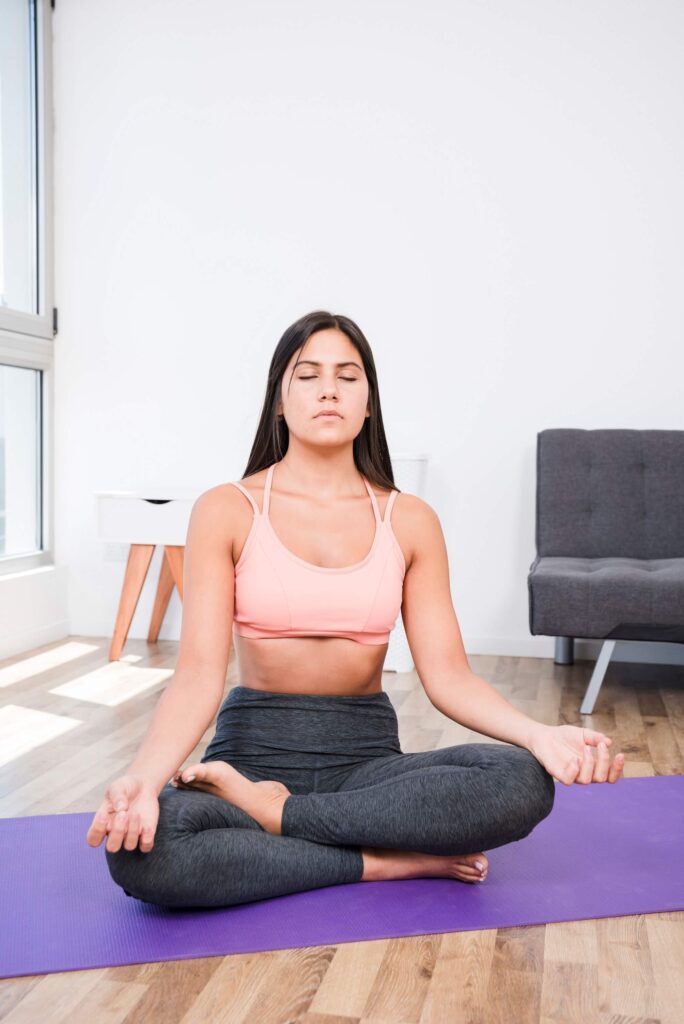
Practice:
- Sit with your legs stretched out in front of your body.
- Bend the right leg and place your foot under the left thigh.
- Now repeat the same from the left leg.
- Place the hands on the knees.
- Keep the head, neck and spine erect.
- Gently close your eyes.
- Relax your whole body.
Read More – Sukhasana (Easy Pose) – Steps, Breathing, Meditation
2. Vajrasana – Sitting on the Heels
Vajrasana quiets and coordinates between your body and mind. This position empowers the processing of blood circulation in the core area and gives strength. Those who find it more comfortable to sit for an extended period without any strain on any part of the body may choose this seating pose while doing the meditation.
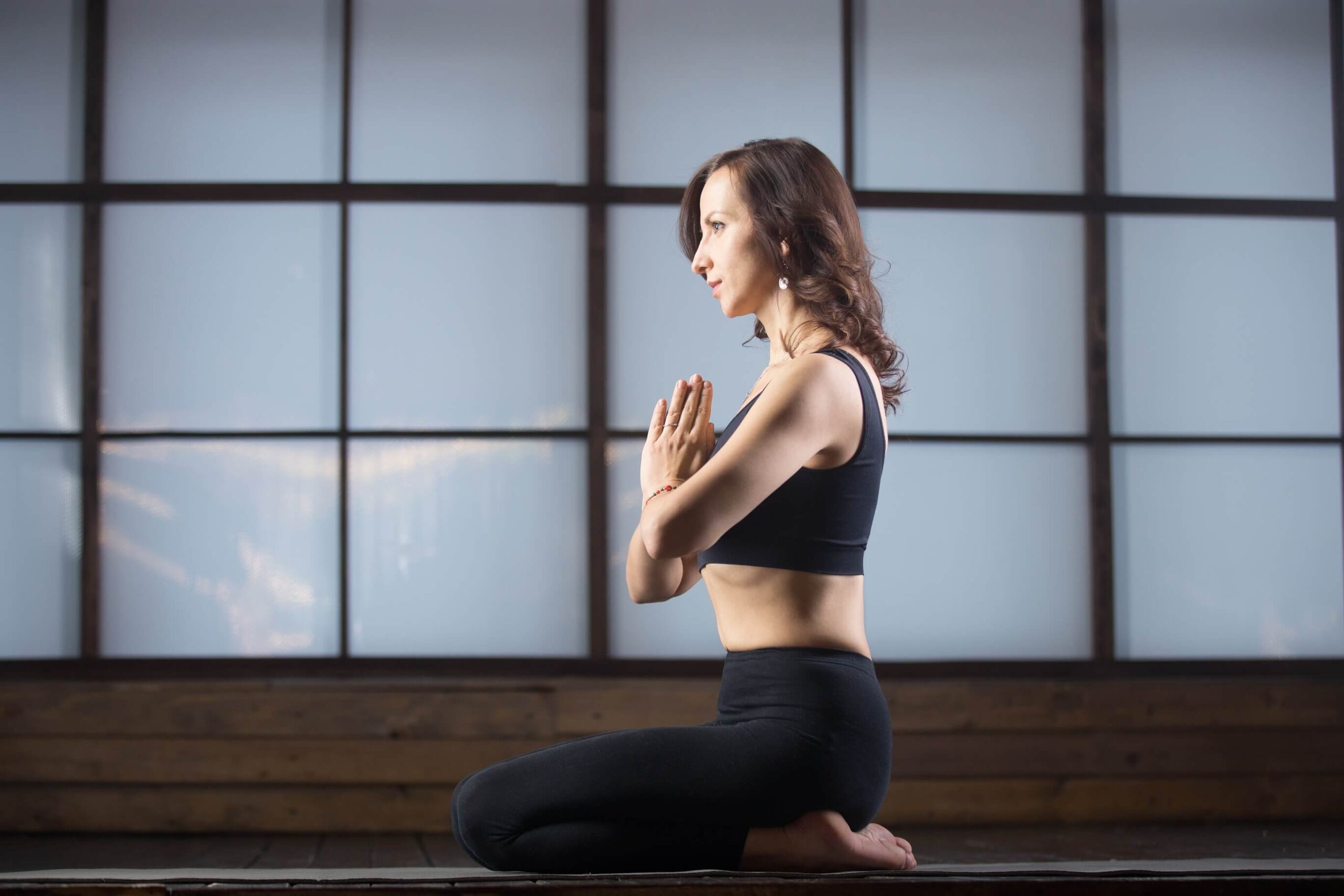
Practice:
- Come on your Knee on the floor
- Touch big toes together and by separating the heels, make a cup shape.
- Your heels should touch the sides of your hips.
- Lower the buttocks and seat slowly between the heal (where the nice arch is being made)
- Place both the hands on the knees.
- Keep your spine erect.
- Make sure that there is no strain on your heels.
- To make it more comfortable, you may use soft blanket.
- Gently close the eyes and relax your whole body.
- Breathe normally.
Read More – Health Benefits of Vajrasana Pose and How to Do It
3. Ardha Padmasana – Half Lotus Pose
Once the practitioners are comfortably seated in Sukhasana or Vajrasana for an extended period, they may start entering into half lotus poses for meditation practice. This half lotus pose may help practitioners to get into the full lotus pose. This practice will give strength to your knees and make the quadriceps and hamstrings flexible enough to fold your legs into full lotus pose.
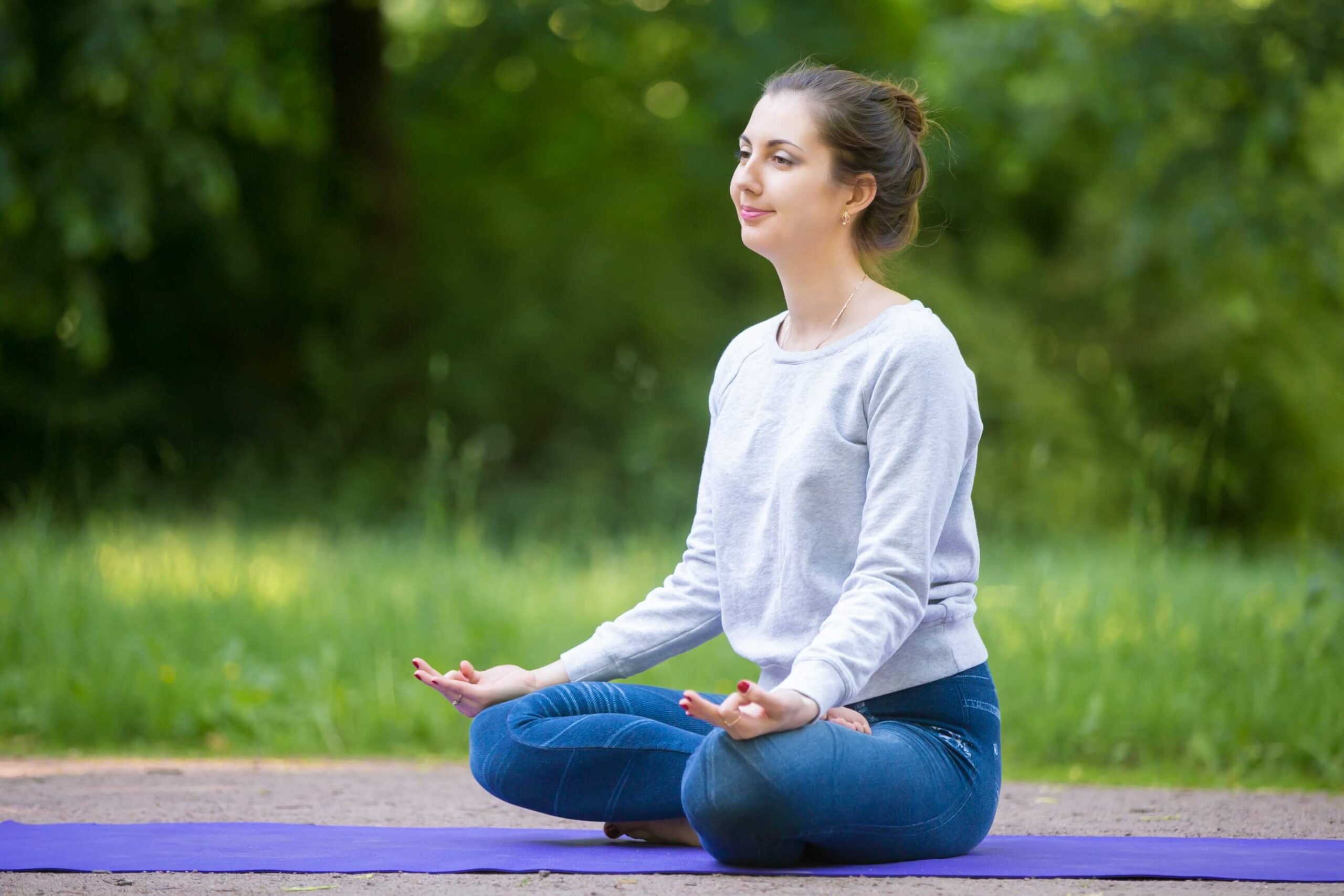
Practice:
- Sit with your legs stretched out on your mat.
- Now bend one leg and place the sole of your foot on the inside of the opposite thigh.
- Bend the other leg and place the foot on top of the opposite thigh.
- Now, we comfortably try to place the upper heel as near as possible to the abdomen area.
- Once all the above points are done, adjust your body and find your comfort.
- Place the hands on the knees and keep the back, neck and head straight in one line.
- Gently close your eyes and relax your whole body. Breathe normally.
Read More – Ardha Padmasana (Half Lotus Pose) – Steps, Precautions, Variations
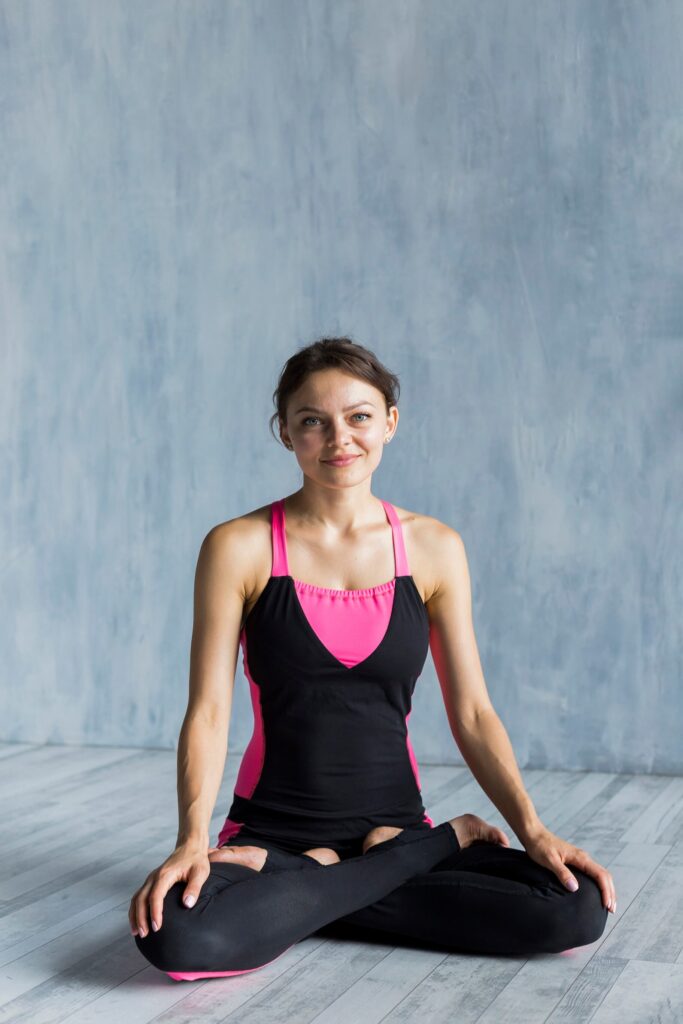
4. Padmasana – Lotus
Padmasana is considered a highly recommended asana in meditation as it allows the body to naturally and completely steady for long periods of time. This pose holds the torso and head like a pillar with the legs as the firm foundation. This steadiness and calmness are the first steps towards real meditation.
Padmasana directs the flow of prana in the upward direction, heightening the experience of meditation. This posture has a relaxing effect on the nervous system. The breath becomes slow naturally, and muscular tension is decreased.
Practice:
- Sit with your legs out in front of the body.
- Slowly bend the right leg and carefully place the foot on top of the left thigh.
- The right sole should face upward and right heel should be close to your pubic bone.
- Adjust yourself and find your comfort level.
- Now bend the left leg and place the foot on top of the right thigh.
- In the final position both the knees should, ideally, touch the ground.
- Place the hands on the knees in any Mudra (Gesture).
- Keep your head, neck and torso straight in one line.
- Gently close the eyes and relax the whole body. Breathe normally.
- Mentally visualize the complete lotus pose and adjust it according to the comfort level of your body.
- Initially start with 1-2 minutes then you can gradually increase the time as per your comfort level.
Read More – Lotus Pose (Padmasana): What is a Lotus Pose and The Health Benefits That Comes With It?
Position of the Fingers in Meditation
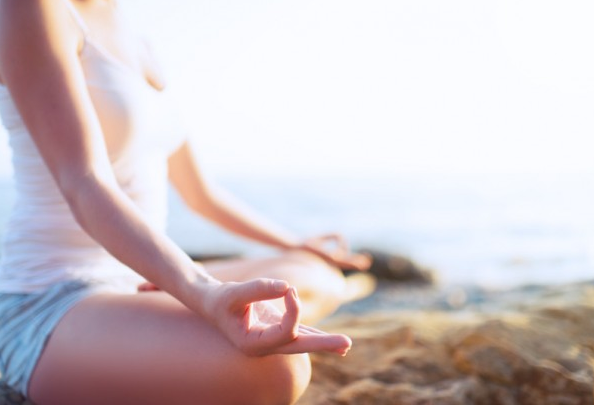
1. Chin Mudra
The Chin Mudra, or the gesture of consciousness, is a well-known yogic hand gesture also referred to as Jnana Mudra and is commonly practised during meditation and pranayama. Chin Mudra: By touching the tip of the thumb to the tip of the index finger, with the other three fingers stretched out, this mudra represents the unification of individual consciousness with universal reality. It’s good for mental clarity, tranquillity, and inner awareness, and plays a central role in yoga and mindfulness.
2. Gyan Mudra
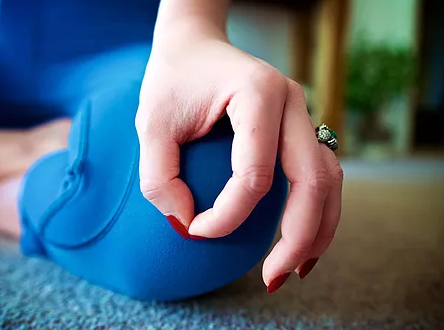
- Chin Mudra & Gyan Mudra – These hand gestures are formed by touching the index finger and thumb, which redirect the prana.
- Practice: Keep both the hands on knee. Now fold the index finger and bend the thumb in order to touch each other. Tip of the finger and thumb should be joint so that the prana is redirected within the body.
- When palms are facing the floor it is called Gyan Mudra and if palms are facing upward it’s called Chin Mudra.
Read More – Learn About Gyan Mudra – 7 Powerful Steps and Benefits Explained
Conclusion
One of the greatest benefits of mindfulness is the development of four individual meditation asanas, popularly known as exclusive meditative postures. Each body position offers distinct benefits that can become a valuable resource on your journey to well-being. As you reach a state of calm, balance, and self-awareness, these postures can be beneficial.
Incorporating this pose into your practice can lead to significant improvements in overall well-being. For those interested in deepening their yoga journey, consider enrolling in a yoga teacher training program. Rishikul Yogshala, a leading Yoga school in Rishikesh, offers comprehensive courses like the 200 Hrs Yoga TTC in Rishikesh, 300 Hour Yoga Teacher Training in Rishikesh, and 500 Hours Yoga Teacher Training in Rishikesh. These programs are designed to help you master your practice and share the transformative power of yoga with others.
This article is for general information and is not medical advice. If you have a respiratory or heart condition, are pregnant, or are unsure whether these practices suit you, please speak to your doctor before beginning.

 +91-8433225327,
 Rishikul Yogshala Rishikesh, Narayan Kunj, Jonk Village, Ram Jhula, Swarg Ashram, Rishikesh, Uttarakhand 249304
 By Airway
 By Railway
 By Bus/Cabs