








Hatha vs Vinyasa Yoga: Which One Is Right for You?
Table of Contents
- What Is Hatha Yoga?
- Example Poses in Hatha Yoga
- Some commonly practised Hatha yoga poses include the following:
- Benefits of Hatha Yoga
- What Is Vinyasa Yoga?
- Example Poses in Vinyasa Yoga
- Vinyasa yoga often combines poses into flowing sequences, such as:
- Vinyasa Yoga Benefits
- Hatha Yoga Vs Vinyasa Yoga: Which One Should You Choose?
- How to Progress from Hatha to Vinyasa Yoga
- Conclusion
- Frequently Asked Questions About Hatha vs Vinyasa Yoga
- Q1. Is hatha yoga slower than vinyasa yoga?
- Q2. Does vinyasa yoga build muscle?
- Q3. Is hatha yoga good for stress relief?
- Q4. Can seniors do vinyasa yoga?
- Q5. What is the best time to practise vinyasa yoga?
If you’ve started exploring yoga classes, you’ve probably noticed two names appearing again and again — hatha and vinyasa. They sound similar, and they share much in common, but they create very different experiences in the body. In this guide, we’ll gently compare hatha and vinyasa yoga: how each one feels, who tends to enjoy which, and how to listen for the style that’s right for you right now.
Both are widely loved, but they offer two very different experiences on the mat.
Hatha yoga is slow, calm, and deeply restorative. It’s the perfect starting point for beginners or anyone who simply wants to slow down, release stress, and feel more connected to their body. Vinyasa yoga, on the other hand, is energetic, fluid, and fast-moving, designed for those who want to challenge themselves, build real strength, and get their heart pumping.
Not sure which one is right for you? Or maybe you’re wondering if you can enjoy both?
This guide is here to make that decision simple. We’ll walk you through the key differences and unique benefits of each style and help you figure out exactly which practice suits your body, lifestyle, and personal goals.
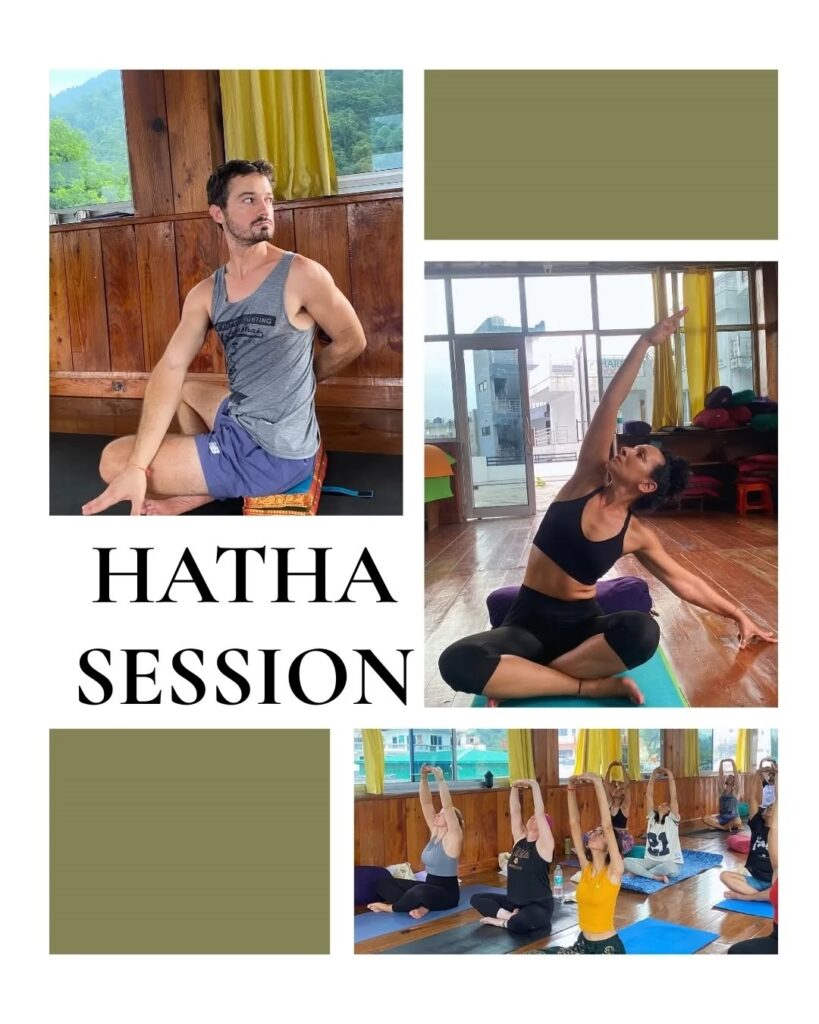
What Is Hatha Yoga?
Hatha yoga is one of the oldest and most traditional forms of yoga. The word “Hatha” comes from Sanskrit, where “Ha” means “sun” and “Tha” means “moon”, representing balance between opposing energies in the body and mind.
Traditionally, Hatha yoga was designed as a preparatory practice for meditation, helping the body become still and the mind calm. In the modern world, it is widely practised as a gentle form of yoga that focuses on postures, breathing, and relaxation.
A study published in the National Library of Medicine found that practising Hatha yoga once a week for 10 weeks improved flexibility, balance, and core strength in beginner women. These findings highlight that even a small amount of regular Hatha yoga practice can lead to noticeable physical improvements over time.
Example Poses in Hatha Yoga
Some commonly practised Hatha yoga poses include the following:
- Mountain Pose (Tadasana)
- Tree Pose (Vrikshasana)
- Cobra Pose (Bhujangasana)
- Child’s Pose (Balasana)
- Seated Forward Bend (Paschimottanasana)
- Warrior I (Virabhadrasana I)
Benefits of Hatha Yoga
- Improves Posture and Body Alignment. Hours at a desk can quietly wreck your posture. Hatha yoga gently corrects your posture, strengthening your spine and helping you stand taller, feel stronger, and move with confidence.
- Enhances Mental Focus and Clarity When you slow down and breathe, something magical happens: your mind clears. Hatha yoga trains you to stay present, making you sharper and more focused in everything you do.
- Improves Sleep Quality. Struggling to wind down at night? Hatha yoga calms your nervous system and eases you into deep, restful sleep. Many practitioners swear by it as their favourite bedtime ritual.
- Supports Better Breathing and Lung Capacity Through pranayama (breathing exercises), Hatha teaches you to breathe fully and freely. Better breathing means better energy, better focus, and a calmer mind throughout the day.
- Supports Heart Health By reducing stress, lowering your heart rate, and improving circulation, Hatha yoga quietly takes care of your heart.
In fact, the foundations of Hatha Yoga, including alignment, breath awareness, and posture holding, are taught in detail during a 200 hour Yoga Teacher Training in Rishikesh at Rishikul Yogshala, helping students build a strong base.
What Is Vinyasa Yoga?
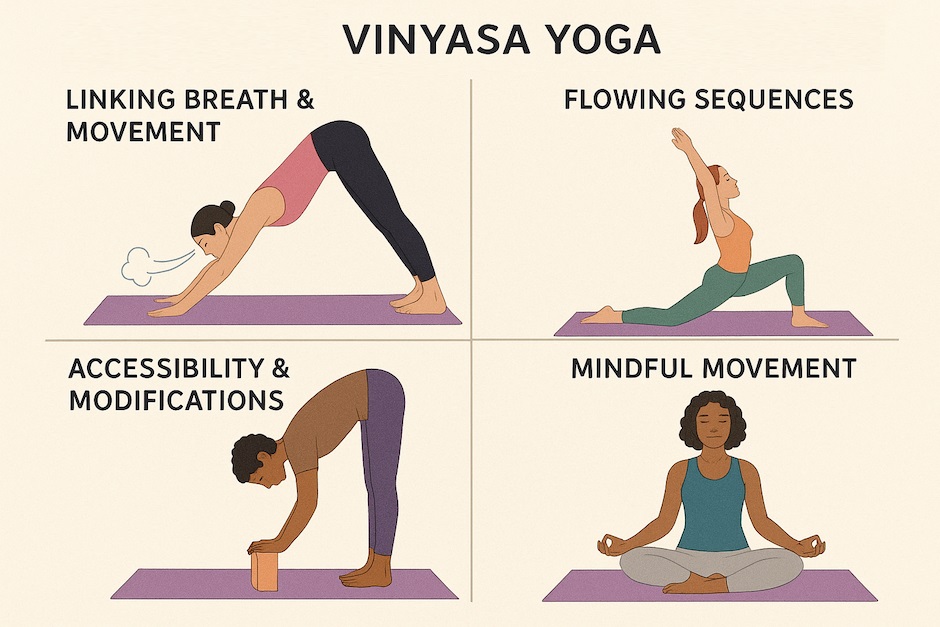
Vinyasa yoga is a modern and dynamic style of yoga that connects movement with breath in a continuous flow. Unlike static poses, Vinyasa involves smoothly transitioning from one posture to another, creating a rhythmic and energetic practice.
A study in the Journal of Yoga & Physical Therapy found that Vinyasa yoga increases heart rate to moderate levels in healthy adults, often similar to moderate-intensity aerobic exercise. It suggests that Vinyasa can improve cardiorespiratory fitness because its continuous, breath-linked movements keep the heart rate elevated more than slower yoga styles.
Example Poses in Vinyasa Yoga
Vinyasa yoga often combines poses into flowing sequences, such as:
- Downward-Facing Dog (Adho Mukha Svanasana)
- Plank Pose
- Chaturanga Dandasana (Low Push-up)
- Upward-Facing Dog (Urdhva Mukha Svanasana)
- Sun Salutation A (Surya Namaskar A) sequence
- Warrior II (Virabhadrasana II)
Vinyasa Yoga Benefits
1. Builds Strength and Muscle Tone
Vinyasa yoga involves holding and moving through poses like plank, chaturanga, and warrior sequences. These poses require body weight support, which helps strengthen the arms, shoulders, core, and legs. With regular practice, the body becomes more toned, strong, and stable.
2. Supports Weight Loss and Fat Burn
Due to its continuous movement and faster pace, Vinyasa yoga increases heart rate and helps burn more calories compared to slower yoga styles. This makes it an effective practice for those aiming to manage weight or lose fat in a healthy, sustainable way.
3. Improves Cardiovascular Health
Vinyasa yoga acts like a light cardio workout because of its flowing sequences. It helps improve blood circulation, increases oxygen supply in the body, and supports heart health by keeping the cardiovascular system active and engaged.
4. Boosts Energy Levels
The combination of movement and breath in vinyasa yoga helps release physical and mental fatigue, leaving the body feeling active, light, and energised after practice.
5. Enhances Focus and Mental Clarity
Because every movement is linked with breath, Vinyasa yoga requires concentration and awareness. This improves mental focus, reduces distractions, and helps calm the mind even during a physically intense workout.
The dynamic flow, sequencing, and breath-to-movement coordination of Vinyasa Yoga are explored more deeply during the 300 hour Yoga Teacher Training in Rishikesh at Rishikul Yogshala, designed for those ready to advance their practice.
Hatha Yoga Vs Vinyasa Yoga: Which One Should You Choose?
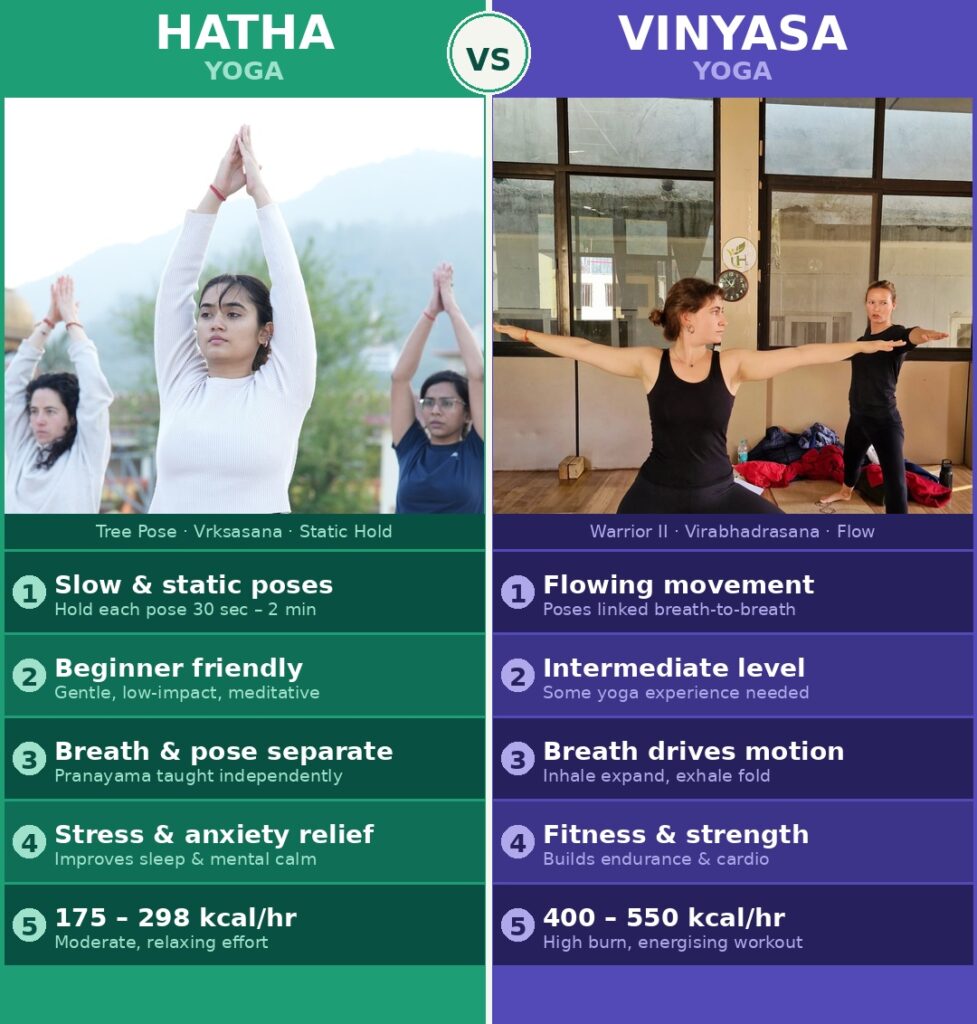
Choosing between Hatha yoga and Vinyasa yoga depends entirely on your fitness level, goals and preferred practice style. Here’s a simple comparison to help you decide:
| Factor | Hatha yoga | Vinyasa yoga |
| Best for | Beginners and People who want relaxation | Active People who like movement and fitness |
| Pace | Slow and calm | Fast and energetic |
| Style of practice | Relaxation, breathing, and correct posture. | You keep moving from one pose to another |
| Main Focus | Relaxation, breathing and correct posture. | Strength, movement, and coordination. |
| FItness Goal | Flexibility and relaxation | Weight loss and stamina building |
Also Read: Boost Your Strength and Flexibility With These Vinyasa Yoga Poses
How to Progress from Hatha to Vinyasa Yoga
- Build a Strong Base with Hatha Yoga — Get comfortable with basic poses and proper alignment first. This foundation will carry you far.
- Improve Your Strength and Stability — Work on planks, chaturanga, and the boat pose. Vinyasa demands control of body weight, so build up gradually.
- Master Breath Control — Inhale as you open and lift. Exhale as you fold and contract. When breathing feels natural, flowing becomes effortless.
- Start Linking Poses Together — Connect a few poses with controlled breath.
- Start with beginner-friendly Vinyasa classes — choose shorter classes with clear instructions. Don’t rush into power yoga before you’re ready.
- Focus on Smooth Transitions — This is where beginners struggle most. Move step by step, keep your core engaged, and be patient with yourself.
- Listen to your body — rest when you need to. Use easier variations. Your practice is yours — honour it at your own pace, not someone else’s.
- Follow a balanced weekly routine — mix Hatha days for recovery and flexibility with Vinyasa days for strength and flow. Balance is everything.
Also Read: Ashtanga Primary Series: Complete Guide for Yogis
Conclusion
Here’s what nobody tells you about yoga: you don’t have to choose just one style forever.
Hatha slows you down and builds awareness. It grounds your mind, opens your body, and gives you a rock-solid foundation. Vinyasa ignites you, building strength, stamina, and a deep connection between breath and movement.
Together they create something truly powerful: a practice that nurtures both your body and your mind. Whether you’re stepping onto the mat for the very first time or returning after years away, start where you are. Trust the process and keep showing up.
Frequently Asked Questions About Hatha vs Vinyasa Yoga
Q1. Is hatha yoga slower than vinyasa yoga?
Ans: Yes, hatha yoga is much slower than vinyasa yoga. In hatha yoga, poses are held for several breaths with focus on alignment and breathing, while vinyasa yoga involves continuous movement from one pose to another.
Q2. Does vinyasa yoga build muscle?
Ans: Yes, vinyasa yoga helps build lean muscle because it uses body weight resistance through dynamic movements like planks, chaturanga and transitions between poses.
Q3. Is hatha yoga good for stress relief?
Ans: Yes, hatha yoga is excellent for stress relief. Its slow pace, deep breathing techniques, and mindful holding of poses help calm the nervous system and reduce anxiety.
Q4. Can seniors do vinyasa yoga?
Ans: Yes, seniors can practise vinyasa yoga, but it should be modified to suit their mobility and fitness levels. Many seniors prefer hatha yoga because it is slower and easier on the joints.
Q5. What is the best time to practise vinyasa yoga?
Ans: Vinyasa yoga is often best practised in the morning or during the daytime, when energy levels are higher, as it is a more dynamic and physically demanding style
Last Modified Date: 30 March 2026

 +91-8433225327,
 Rishikul Yogshala Rishikesh, Narayan Kunj, Jonk Village, Ram Jhula, Swarg Ashram, Rishikesh, Uttarakhand 249304
 By Airway
 By Railway
 By Bus/Cabs