








Yoga and the Vagus Nerve: A Gentle Guide to How Practice Calms the Body’s Master Conductor
Table of Contents
- The Vagus Nerve – The Body’s Masterful Conductor:
- How Yoga Practices Nurture the Vagus Nerve:
- Yoga Poses to Target the Vagus Nerve:
- 1. Child’s Pose (Balasana):
- 2. Supine Twist (Supta Matsyendrasana):
- 3. Legs Up the Wall (Viparita Karani):
- 4. Corpse Pose (Savasana):
- Practices for Daily Life Beyond the Mat:
- Conclusion
The vagus nerve is one of the body’s quietest masterpieces — the long, branching nerve that connects the brain to the heart, the lungs, the gut, and most of the body’s quiet inner workings. When the vagus nerve is well-toned, the body knows how to rest, digest, and recover. When it’s under-stimulated, chronic stress can take hold. Yoga, gentle pranayama, and meditation are some of the most effective ways to support vagal tone — quietly, without medication, through practice. In this guide, we’ll meet the vagus nerve gently, explore how yoga supports it, and walk through four poses that target it well.
Chronic stress, the bane of modern life, disrupts our sleep, weakens our immune system, and throws our health into a tailspin. Thankfully, ancient practices like yoga offer a powerful stress-busting solution. But yoga’s benefits go far beyond the well-known improvements in flexibility and strength. It holds a secret weapon: the vagus nerve. This ‘wandering nerve’ acts as a master conductor, carrying messages between the brain and vital organs like the heart, lungs, and digestive system. Yoga unlocks a world of benefits by stimulating the vagus nerve, promoting relaxation, improving digestion, and enhancing overall well-being.
Let’s delve into the discussion of how this improve nerve health by stimulating the vagus nerve.
The Vagus Nerve – The Body’s Masterful Conductor:
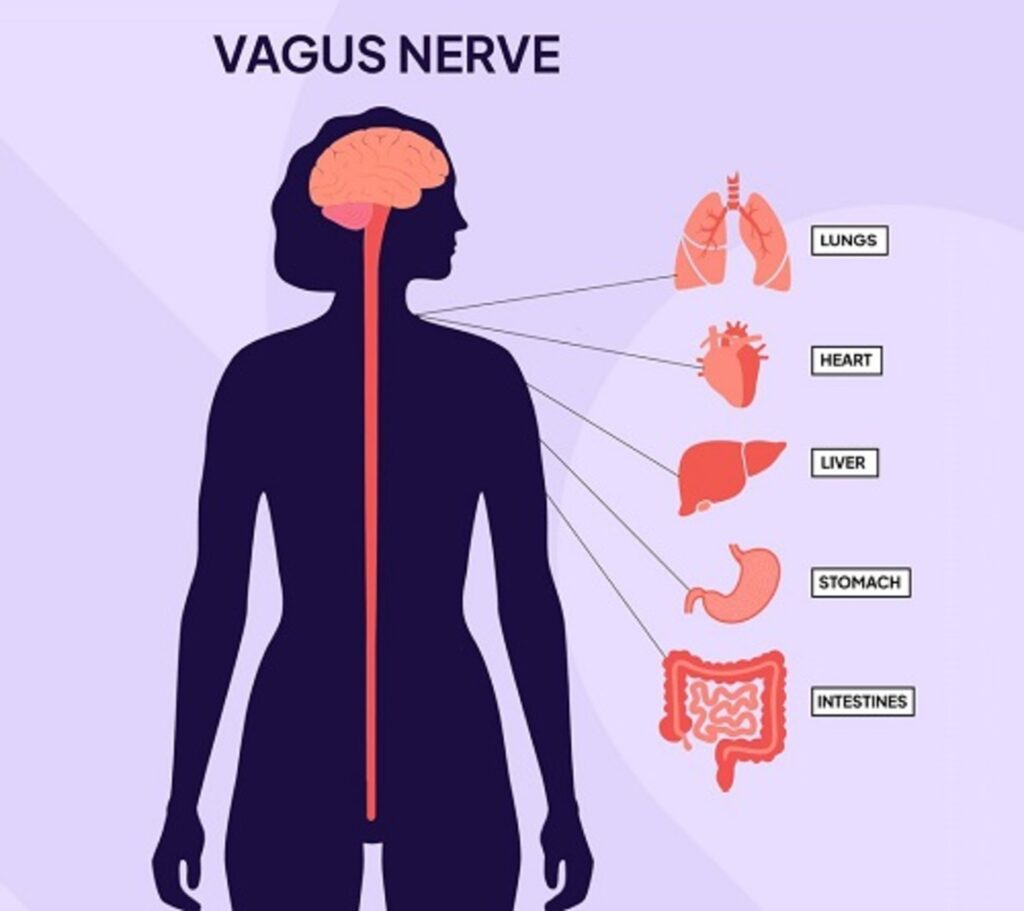
The vagus nerve, often called the ‘wandering nerve’ due to its extensive network throughout the body, is the longest cranial nerve. It acts as a two-way highway, carrying messages between the brain and various organs, including the heart, lungs, digestive system, and facial muscles. As the major component of the parasympathetic nervous system, the vagus nerve plays a crucial role in our body’s rest-and-digest response.
At its best, the vagus nerve facilitates relaxation, reduces blood pressure and pulse rate, aids with digestion, and controls mood. Conversely, a sluggish vagus nerve can contribute to anxiety, inflammation, and digestive issues.
How Yoga Practices Nurture the Vagus Nerve:
The entire nature of yoga is what makes it so beautiful. It combines physical postures (asanas), breathing techniques (pranayama), meditation, and mindfulness, all of which work together to stimulate the vagus nerve and enhance its function. Vagus nerve yoga techniques help stimulate and balance the vagus nerve, promoting relaxation, reducing stress, and enhancing overall well-being. Here’s a closer look at how each element contributes:
1. Deep Diaphragmatic Breathing:
Most of us breathe shallowly, using only the chest muscles. It emphasizes deep, diaphragmatic breathing where the belly expands, and contracts with each inhale and exhale. This type of breathing activates the vagus nerve fibers in the lungs, sending a calming message to the brain and promoting relaxation. Techniques like Ujjayi breath (victorious breath) with a slow, drawn-out exhale further enhance vagus nerve stimulation.
2. Gentle Movements and Body Awareness:
Holding yoga postures with mindful awareness not only improves flexibility and strength but also stimulates the vagus nerve through the mechanoreceptors in the muscles and joints. These receptors send signals to the brain via the vagus nerve, promoting relaxation and body awareness. Additionally, gentle twists and forward bends can gently massage the internal organs, including the digestive system, which is intricately connected to the vagus nerve.
3. Meditation and Mindfulness:
The stress-reducing effects of meditation are well-documented. By quieting the mind and focusing on the present moment, meditation activates the parasympathetic nervous system, with the vagus nerve playing a key role. Mindfulness practices incorporated into yoga, like focusing on the breath during postures, further amplify this effect.
Yoga Poses to Target the Vagus Nerve:
While all yoga practices offer some degree of vagus nerve stimulation, certain poses are particularly effective:
1. Child’s Pose (Balasana):
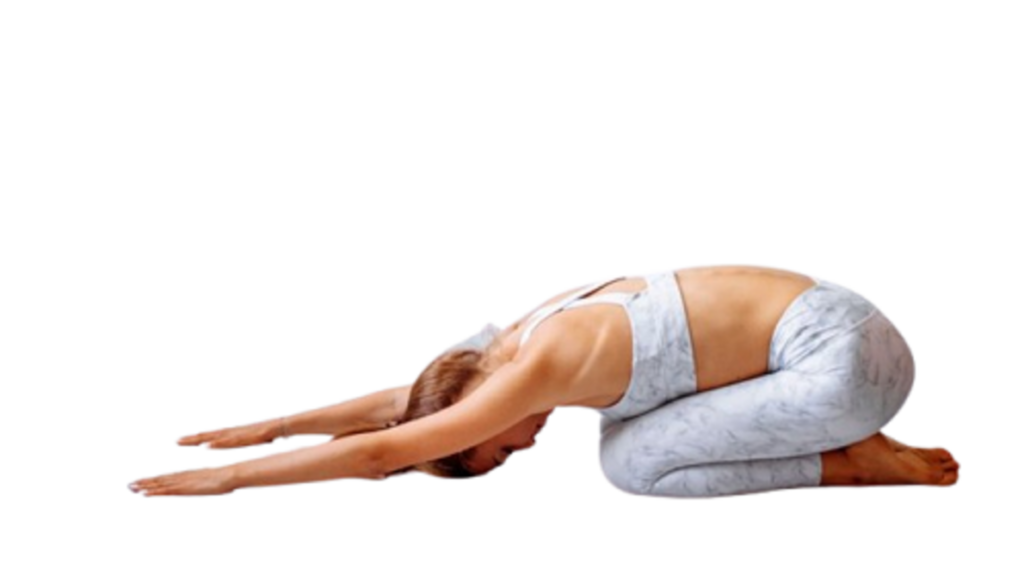
This restorative pose gently compresses the abdomen, stimulating the digestive organs and the vagus nerve.
2. Supine Twist (Supta Matsyendrasana):

This twist massages the internal organs and stretches the spine, both stimulating the vagus nerve.
3. Legs Up the Wall (Viparita Karani):
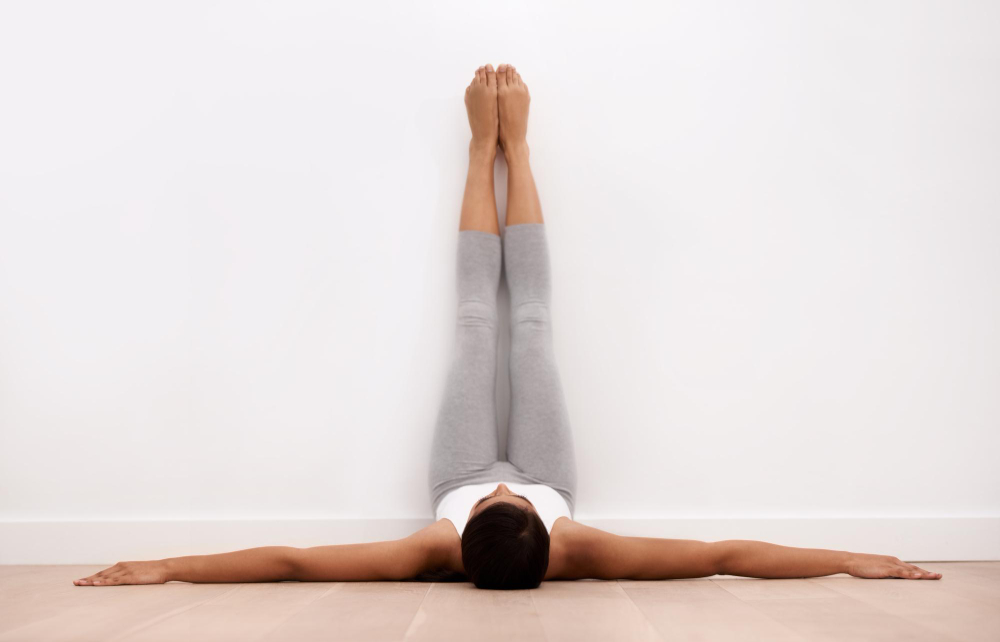
This calming pose improves circulation and promotes relaxation, sending calming signals through the vagus nerve.
4. Corpse Pose (Savasana):
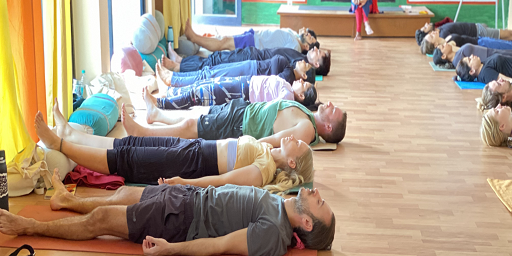
This final resting pose allows the body and mind to fully integrate the benefits of the yoga practice, further enhancing vagus nerve function.
Practices for Daily Life Beyond the Mat:
The benefits of stimulating the vagus nerve extend far beyond the mat. Here are some ways to incorporate vagus nerve stimulation into your daily routine:
1. Cold Exposure: A short cold shower or splashing cold water on your face can activate the vagus nerve and promote alertness.
2. Humming: Humming stimulates the vagus nerve through the vocal cords, promoting relaxation and reducing anxiety.
3. Chanting: Chanting mantras or devotional songs activates the vagus nerve through a combination of sound and vibration.
4. Progressive Muscle Relaxation: Tense and release different muscle groups in your body, sending signals to the brain through the vagus nerve and promoting relaxation.
Conclusion
In summary, yoga provides a powerful and accessible way to support vagus nerve health. By incorporating deep breathing, mindful movement, and meditation, you can experience benefits like reduced stress, improved digestion, better sleep, and overall well-being. Remember, yoga is a journey—start slowly, listen to your body, and embrace its transformative effects. As your vagus nerve strengthens, you’ll handle daily challenges with a calmer mind and stronger body. Roll out your mat, breathe deeply, and embark on a path to optimal health through yoga and vagus nerve stimulation.
Incorporating this pose into your practice can lead to significant improvements in overall well-being. For those interested in deepening their journey, consider enrolling in a yoga teacher training program. Rishikul Yogshala, a leading Yoga school in Rishikesh, offers comprehensive courses like the 200 Hrs Yoga TTC In Rishikesh, 300 Hour Yoga Teacher Training In India, and 500 Hour Yoga Teacher Training India. These programs are designed to help you master your practice and share the transformative power of yoga with others.

 +91-8433225327,
 Rishikul Yogshala Rishikesh, Narayan Kunj, Jonk Village, Ram Jhula, Swarg Ashram, Rishikesh, Uttarakhand 249304
 By Airway
 By Railway
 By Bus/Cabs