







Healing Frequencies Explained: What Science Says vs. What’s Just Belief?
Table of Contents
- What Is a Healing Frequency?
- Where Do These Frequencies Actually Come From?
- Sound Healing in Rishikesh: Where Ancient Practice Meets Modern Curiosity
- How Listening to Healing Frequencies Can Help You
- Sleep Deeper
- Ease Anxiety
- Go Deeper Into Meditation
- Shift Your Mood
- Relax During a Break
- Boost Focus While Studying
- What Are the Most Common Healing Frequencies?
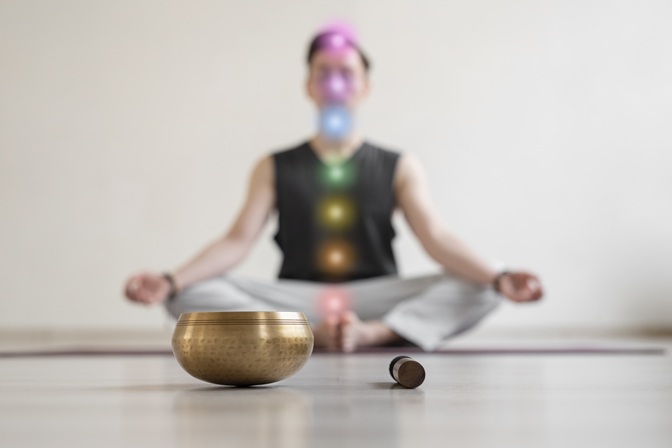
- What Tools Are Commonly Used to Access Healing Frequencies?
- Healing Frequencies vs. Sound Therapy: What’s the Difference?
- How to Start Using Healing Frequencies at Home?
- Is It Safe to Listen to Healing Frequencies?
- Final Thought
- Frequently Asked Questions
- Is 432 Hz actually better than the standard 440 Hz tuning?
- Does 528 Hz really repair DNA?
- Can I listen to binaural beats through speakers instead of headphones?
- How long should I listen for it to work?
- Are healing frequencies safe for children?
- Can healing frequencies replace anxiety or sleep medication?
- Is there a “best” frequency for everyone?
If you’ve spent any time in Rishikesh, sitting by the Ganga at dusk, walking past an ashram during evening aarti, or lying still in a sound bath after a long yoga class, you’ve probably felt it. That strange, specific stillness that only sound seems able to create. A lot of people arrive at that feeling and want to know: what actually just happened to me?
That’s where healing frequencies come in. They’re specific sound tones, 432 Hz, 528 Hz, and others, that are said to ease the mind into relaxation, sharper focus, or deeper sleep. Some of what’s claimed about them holds up under real research. Binaural beats, for instance, do have a measurable calming effect on the nervous system. Other claims, like the idea that a single frequency can “heal” a specific chakra or organ, live more in spiritual tradition than in peer-reviewed evidence.
This guide walks through both sides honestly, so you know exactly what you’re listening to, why it might be helping, and where the line between physiology and folklore actually sits.
What Is a Healing Frequency?
A healing frequency is simply a sound wave, measured in Hertz (Hz), a number describing how many times that wave vibrates per second. That’s the whole technical definition. Everything else is interpretation.
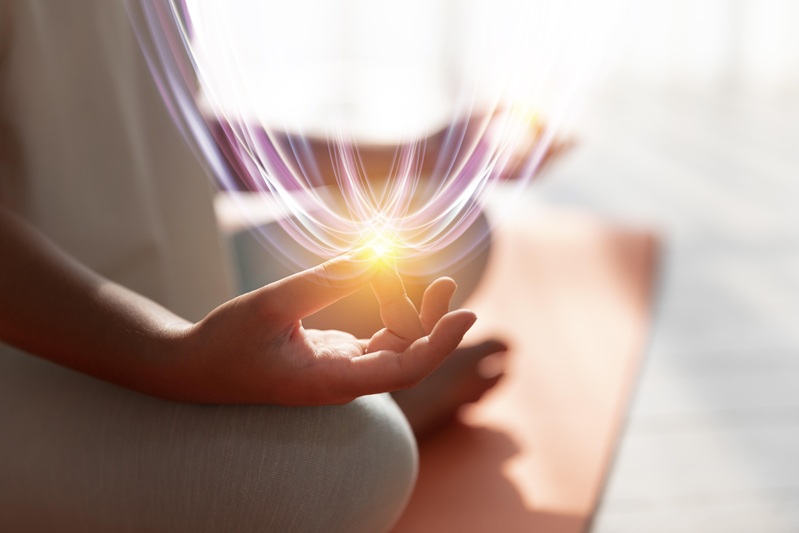
In many spiritual and wellness traditions, the body is thought of as a system of vibrating energy. Stress is described as that energy falling “out of tune,” and playing certain slow, steady tones is believed to help bring it back into balance. This framework comes from wellness philosophy, not clinical medicine, and it’s worth saying plainly: no frequency has been shown to repair tissue, cure illness, or realign an organ.
What is well documented is simpler and, honestly, still pretty interesting: calm, repetitive sound can lower heart rate, ease muscle tension, and shift brainwave activity toward more relaxed states. You don’t need to believe in energy fields for that part to be real.
Where Do These Frequencies Actually Come From?
Using sound intentionally is nothing new. For thousands of years, traditions across India, Tibet, China, and Greece have used chanting, temple bells, and gongs as tools for turning inward. In the Vedic tradition especially, the same tradition that much of Rishikesh’s yoga lineage draws from, sound (nada) has long been treated as a doorway to stillness, not just background noise.
But the specific numbered frequencies you see marketed today, 396 Hz, 417 Hz, 528 Hz, and so on, are a much newer invention than most people assume.
The “Do, Re, Mi” origin. These tones are often labeled Solfeggio frequencies, a name borrowed from the musical syllables (Do, Re, Mi, Fa, Sol, La) developed in the 11th century by an Italian monk, Guido d’Arezzo. He created this system purely to help choir singers learn church melodies; there was no healing framework attached to it at the time.
The modern rebrand. The healing-frequency system as we know it today emerged in the late 20th century, when researcher Joseph Puleo proposed that these tones could be derived from numerical patterns in scripture. The idea was later popularized more widely across the wellness world.
So the honest version of the story is this: sound as a tool for stillness has real, ancient roots. The exact Hz numbers being sold as “ancient secrets” today are a modern construction layered on top of that older tradition, not a rediscovery of it. That doesn’t make them useless. It just means the marketing story and the actual history are two different things.
Sound Healing in Rishikesh: Where Ancient Practice Meets Modern Curiosity
Rishikesh occupies a strange, useful space in this conversation. It’s a place where sound as sadhana (spiritual practice) never really needed scientific validation — mantra chanting, kirtan, and temple bells have been part of daily rhythm here for centuries. At the same time, it’s now one of the places in the world where you’ll find sound healing being taught alongside yoga in a genuinely structured, disciplined way — not just as a spa add-on.
At yoga schools across Rishikesh, sound work usually shows up in a few specific forms:
- Singing bowl sessions, often taught as part of Hatha or meditation modules, where the goal isn’t a specific Hz number but the layered, resonant sound itself settling the nervous system.
- Mantra and chanting practice, rooted in Sanskrit phonetics rather than modern Hz theory, but working on a similar principle — repetitive, resonant sound guiding the mind toward stillness.
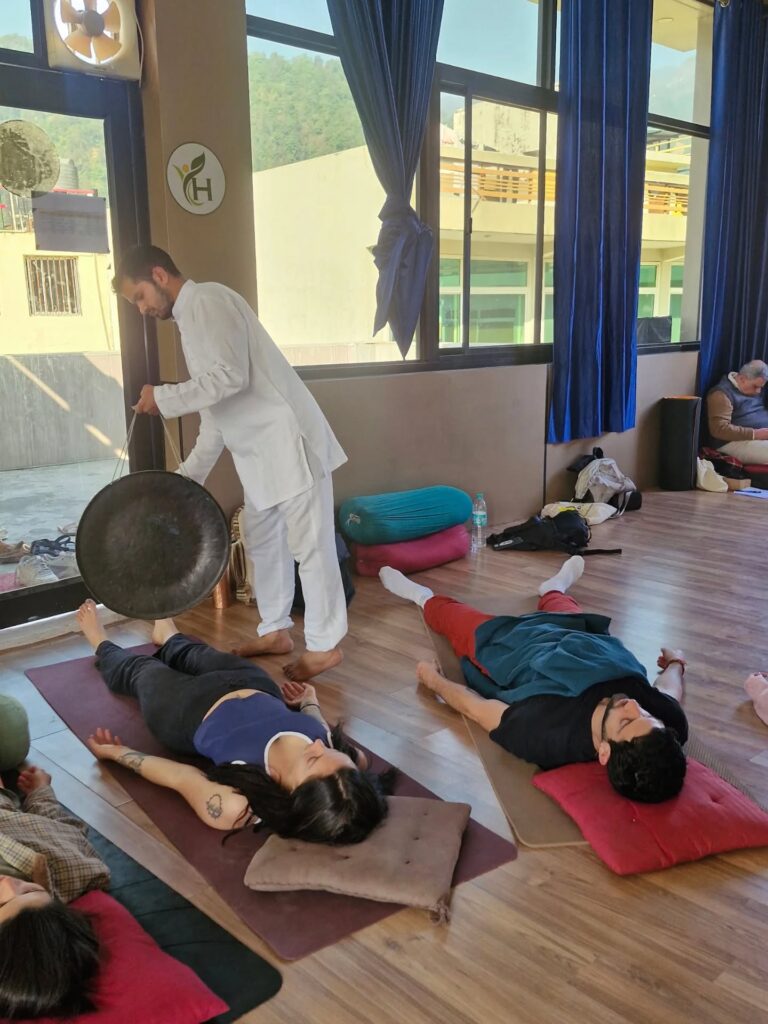
- Gong baths and Nada yoga workshops, increasingly offered as standalone experiences or woven into 200-hour and 300-hour teacher training syllabi.
If you’re training or practicing here, this is genuinely one of the more credible places to explore sound work — not because the frequencies themselves are more “powerful” in Rishikesh, but because the surrounding practice (breath, stillness, guided attention) is taught with real depth, which is what actually makes the sound land.
How Listening to Healing Frequencies Can Help You
Sound isn’t just something we hear — it can also affect how we feel. Many people use certain calming tones and rhythms to relax, sleep better, focus more, or feel less stressed. Here’s how different sounds can help you in everyday life:
Sleep Deeper
If you have trouble winding down, try listening to Delta sounds. These are slow, steady rhythms that mimic the brainwaves your body makes when you are in a deep, dreamless sleep. Pairing them with relaxing tones like 396 Hz or 432 Hz is like sending a “time to rest” signal to your brain.
Ease Anxiety
When life feels overwhelming, Alpha sounds are your best friend. These are perfect for busy days because they help you stay alert but calm. Think of them as a way to take the edge off your stress without making you feel sleepy.
Go Deeper Into Meditation
If you struggle to stay present during meditation, **Theta** sounds can help. These frequencies guide your brain into that dreamy, relaxed state where you feel creative and at peace. It is the perfect background for clearing your head.
Shift Your Mood
You can use these sounds like a manual transmission for your brain. If you’ve been working hard (in a “focus” mode) and need to relax, switching from a fast-paced sound to a slower, relaxing one acts like a mental “gear change” to help you downshift.
Relax During a Break
Playing a calm sound for just 5–10 minutes during a work break can help your mind reset. It’s a quick way to feel refreshed before going back to work.
Boost Focus While Studying
Playing steady background tones while studying or reading can help block out distractions and keep your mind on the task longer.
Also Read: 11 Healing Mantras for Depression and Anxiety That Actually Work
What Are the Most Common Healing Frequencies?
| Frequency (Hz) | Common Name | Commonly Associated With* |
|---|---|---|
| 174 Hz | Relief Frequency | Physical ease and a sense of relaxation |
| 285 Hz | Restoration Frequency | Supporting recovery (traditional wellness claim, not clinically proven) |
| 396 Hz | Liberation Frequency | Letting go of fear and guilt |
| 417 Hz | Change Frequency | Encouraging positive change |
| 432 Hz | Natural Harmony Frequency | Relaxed listening (not an official Solfeggio tone) |
| 440 Hz | Standard Musical Tuning | International tuning standard; not a “healing” frequency |
| 528 Hz | Love / Transformation Frequency | Emotional well-being and inner balance |
| 639 Hz | Connection Frequency | Relationships and communication |
| 741 Hz | Clarity Frequency | Mental clarity and self-expression |
| 852 Hz | Intuition Frequency | Awareness and spiritual reflection |
| 963 Hz | Crown Frequency | Deep meditation and spiritual connection |
*These associations come from wellness and spiritual tradition, not clinical research. Treat them as a lens for intention-setting, not a medical claim.
What Tools Are Commonly Used to Access Healing Frequencies?
1. Digital and targeted frequency tools
- Frequency-Based Audio — Tracks or apps tuned to one exact Hz value, like 432 Hz or 528 Hz.
- Binaural Beats— A slightly different tone played in each ear; the brain perceives the gap between them as a third tone, which is used to nudge the mind toward relaxation or focus.
- AI Music Generators — Apps that layer a chosen Hz tone underneath generated background music for a personalized track.
2. Acoustic and vibrational instruments
These don’t isolate one exact Hz like a digital track — they fill a room with layered, resonant sound instead.
- Singing bowls — set a calm mood and ease you into a meditative state.
- Tuning forks — struck to vibrate at one precise frequency, often held near the body.
- Gongs — deep, rolling vibrations you feel as much as hear, central to gong bath sessions.
- Chimes and bells — bright, clear tones typically used to open or close a session.
3. Physical and integrative systems
- Vibroacoustic therapy — chairs or mats that deliver low sound vibrations directly into the body, not just the ears. This is one of the few tools in this space with genuine clinical research behind it, which makes it worth a closer look if you’re after something evidence-based.
Healing Frequencies vs. Sound Therapy: What’s the Difference?
| Aspect | Healing Frequencies | Sound Therapy |
|---|---|---|
| Definition | Specific Hz-based tones believed to support relaxation or emotional balance | A broader wellness practice using sound, vibration, and music for stress relief |
| Primary focus | Individual frequencies like 432 Hz or the Solfeggio scale | A variety of sounds and instruments combined |
| How it works | Listening to tones or music tuned to a specific Hz | Live or recorded sound from instruments, voice, or vibration |
| Tools used | Frequency-based tracks, tuning apps, binaural beats | Singing bowls, gongs, tuning forks, drums, chanting |
| Examples | 174–963 Hz tones | Sound baths, gong baths, tuning fork therapy, kirtan |
| Purpose | Targeted relaxation, focus, or emotional support | Holistic well-being through combined sound and mindfulness |
How to Start Using Healing Frequencies at Home?
You don’t need a studio or specialized gear — just a quiet moment and a little patience.
- Find a quiet spot where you won’t be interrupted.
- Pick the right setup. Binaural beats require headphones — that’s the only way the ear-separated tones work. Solfeggio tracks or calm background music work fine through a regular speaker.
- Start small. Ten to twenty minutes is plenty for your first few sessions.
- Keep the volume gentle. A soft, moderate level does more for the nervous system than a loud one ever will.
- Pair it with something you already do — a breathing exercise, a short meditation, or the last ten minutes of a yoga practice.
Is It Safe to Listen to Healing Frequencies?
For most people, listening at a normal volume is safe, and plenty of people use these tones daily for sleep, focus, or relaxation without issue. A few things are still worth keeping in mind:
- Keep the volume comfortable — loud audio can damage hearing over time, regardless of the frequency.
- Only use headphones when they’re actually required (binaural beats need them; most other tracks don’t).
- Stop if you feel dizzy, get a headache, or feel uneasy.
- Don’t listen while driving, especially anything designed to relax or slow you down.
- If you have epilepsy or a history of seizures, talk to a doctor before trying binaural beats — repetitive sound patterns can affect some people differently.
Final Thought
Healing frequencies are exactly what they sound like: sound. Nothing mystical in the physics of it, just carefully chosen tones giving your mind somewhere to land.
Some of it holds up to real research: binaural beats really can shift the brain toward calm, focus, or rest. Other parts- chakra pairings, DNA-repair claims, the “ancient secret” origin story- are tradition dressed up as fact. Now you know how to tell the two apart, and that’s really the point. You get to enjoy the practice without needing to buy into the myth to make it worthwhile.
Whether you’re exploring this on your own or during a sound healing session as part of a yoga teacher training in India, the value isn’t in finding the “perfect” Hz number. It’s in giving your nervous system a few honest minutes to settle. That part doesn’t require belief, just a bit of quiet.
Frequently Asked Questions
Is 432 Hz actually better than the standard 440 Hz tuning?
No study has confirmed a real physiological difference between the two. Any calming effect people report is likely personal preference rather than a measurable scientific one.
Does 528 Hz really repair DNA?
No credible evidence supports this claim. Some research does show it can lower stress hormones — a real relaxation effect, just not a DNA-repair one.
Can I listen to binaural beats through speakers instead of headphones?
No. Binaural beats rely on each ear hearing a slightly different tone. Speakers mix the two tones together and cancel the effect, so headphones are required.
How long should I listen for it to work?
10–20 minutes is generally enough. Longer sessions don’t add extra benefit and can lead to ear fatigue.
Are healing frequencies safe for children?
Generally yes, at a low volume, similar to calming music. That said, this isn’t a substitute for medical advice if there’s an underlying health concern.
Can healing frequencies replace anxiety or sleep medication?
No. They can support relaxation, but they aren’t a substitute for prescribed treatment — talk to a doctor about any diagnosed condition.
Is there a “best” frequency for everyone?
It depends on the goal, not the person — Delta for sleep, Alpha for calm, Theta for meditation, Beta for focus.
This article is for general information and is not medical advice. If you have a respiratory or heart condition, are pregnant, or are unsure whether these practices suit you, please speak to your doctor before beginning.

 +91-8433225327,
 Rishikul Yogshala Rishikesh, Narayan Kunj, Jonk Village, Ram Jhula, Swarg Ashram, Rishikesh, Uttarakhand 249304
 By Airway
 By Railway
 By Bus/Cabs