








11 Healing Mantras for Depression and Anxiety That Actually Work
Table of Contents
- What Are Healing Mantras?
- How to Use These Mantras
- How Many Times To Chant
- One Mantra or Many?
- 11 Powerful Healing Mantras for Depression and Anxiety
- 1. Om — The Primordial Sound
- 2. So Hum — The Breath Mantra
- 3. Om Namah Shivaya — Mantra of Release
- 4. Mahamrityunjaya Mantra — The Great Healing Mantra
- 5. Gayatri Mantra — Mantra for Mental Clarity
- 6. Om Shanti Om — Mantra for Inner Peace
- 7. Lokah Samastah Sukhino Bhavantu — Mantra of Compassion
- 8. Om Gam Ganapataye Namaha — Mantra for Removing Obstacles
- 9. Om Mani Padme Hum — Mantra of Universal Compassion
- 10. Aham Prema — Mantra of Self-Love
- 11. Asato Ma Sadgamaya — Mantra for Darkness to Light
- How Long Before You Notice a Difference?
- What the Research Says?
- Healing Mantras at Rishikul Yogshala, Rishikesh
- Frequently Asked Questions
- Q: What is the most powerful mantra for healing?
- Q: How long does it take for healing mantras to work?
- Q: Can I chant healing mantras even if I am not Hindu or do not know Sanskrit?
- Q: Is there a mantra specifically for anxiety attacks?
- Q: How many healing mantras should I chant daily?
- Q: Can children chant healing mantras?
- Q: What is the difference between a healing mantra and an affirmation?
- Final Takeway
A lot of people come to mantra chanting because nothing else is working. The therapy helps, the medication helps, but there is still something restless underneath, a low hum of anxiety that does not go away. Mantras are not a replacement for any of that. But they do something that most other practices do not: they give the mind a sound to hold onto, and when the mind has something to hold onto, it stops spinning.
This is not a new idea. These mantras have been chanted in India for thousands of years. The Hatha Yoga Pradipika, the Vedas, and the Buddhist tradition all point to sound as one of the most direct ways to shift the state of the mind. What modern research is now beginning to confirm, practitioners in Rishikesh have known for a long time: chanting works.
This blog covers 11 mantras that are specifically used for calming the mind, lifting a low mood, and easing anxiety. For each one, we have included what it means, how to chant it, and what to expect.
What Are Healing Mantras?
A mantra is a word, phrase, or sound that is repeated, either out loud, in a whisper, or silently in the mind, during meditation or daily practice. The word comes from Sanskrit: ‘man’ means mind, and ‘tra’ means tool or instrument. So a mantra is quite literally a tool for the mind.
Each mantra carries a specific vibration. When you chant it, that vibration moves through the body, affects the breath, and gradually changes the quality of your attention. You are not just saying words; you are training the nervous system to respond differently to stress.
How to Use These Mantras
Before going into the mantras, a few practical things worth knowing:
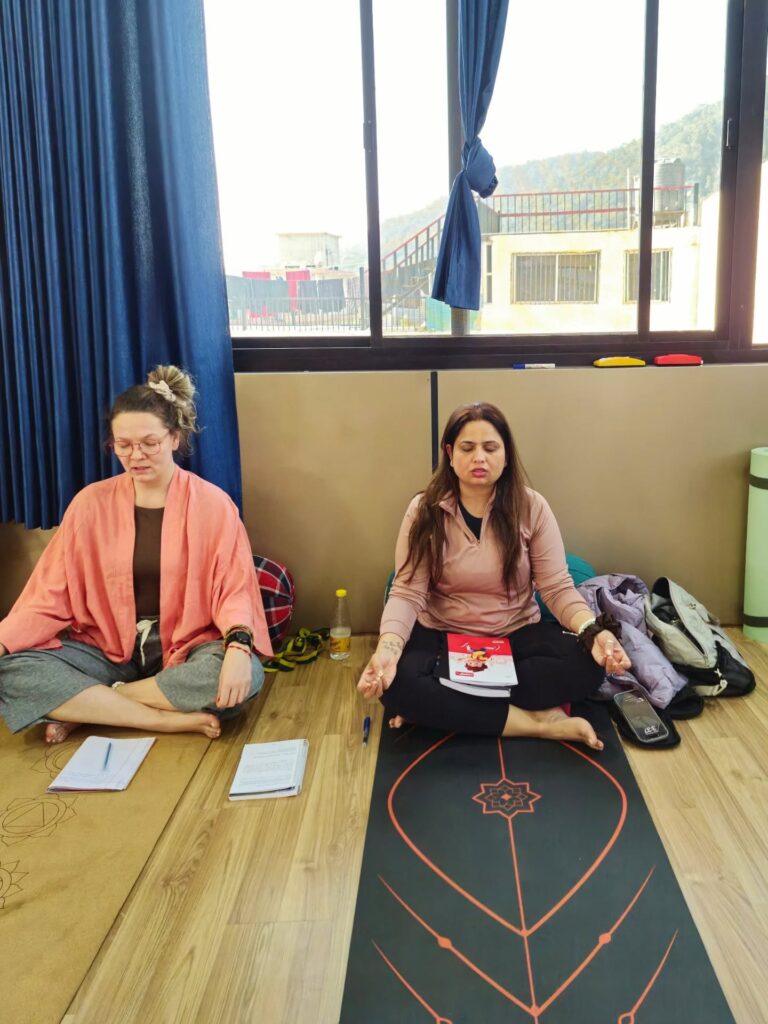
- Sit quietly with your spine straight. You do not need a special posture; a chair works fine.
- Use a mala if you have one. A mala has 108 beads and helps you count repetitions without thinking about it. If you do not have one, chant for a set time, 5, 10, or 15 minutes.
- Chant out loud first. Sound vibration in the body is more powerful than silent repetition, especially for beginners. As you get comfortable, you can move to a whisper, and eventually to silent chanting.
- The best time is early morning, before the day starts, and the mind fills up. The evening before sleep also works well.
- Be consistent. One mantra chanted daily for 40 days will do more than seven mantras chanted once each.
How Many Times To Chant
Traditional recommendations: 11, 27, 54, or 108 repetitions. For beginners dealing with acute anxiety, we suggest simply chanting for a set time — 5 or 10 minutes — rather than counting. The counting can itself become a source of pressure.
One Mantra or Many?
It is better to choose one or two mantras and go deep with them than to rotate through all eleven every day. Pick the one that most closely matches what you are feeling right now. Come back to the others later.
These are not just spiritual ideas. They are practical tools, and that is how we teach them at Rishikul Yogshala.
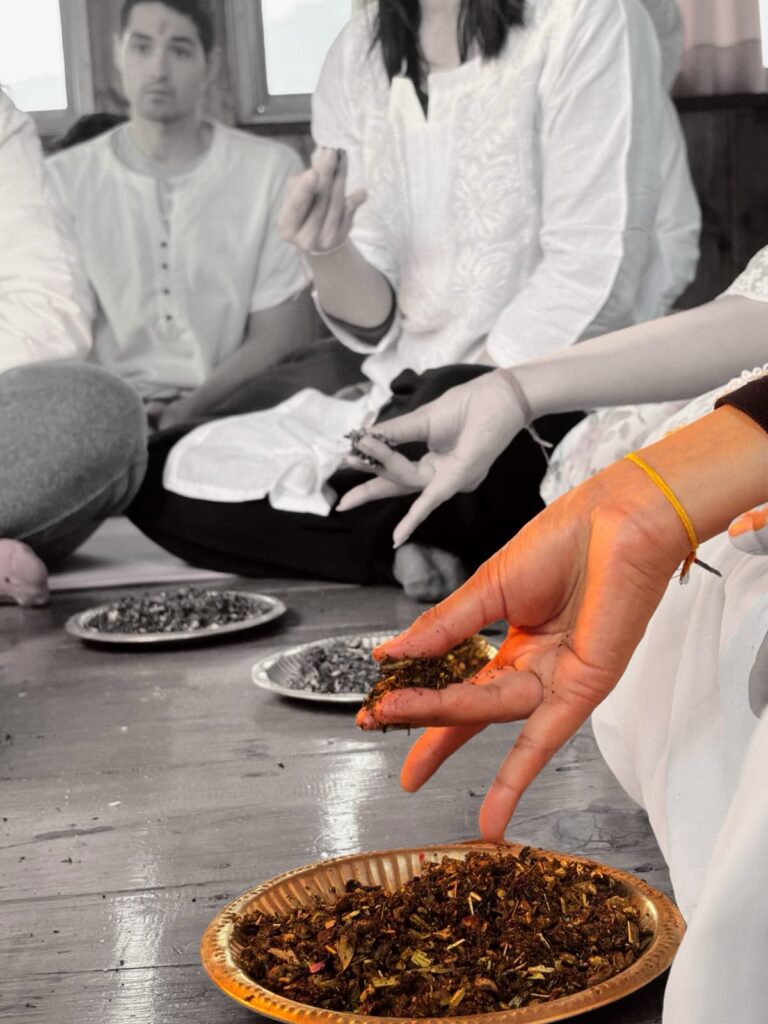
11 Powerful Healing Mantras for Depression and Anxiety
Below are the 11 powerful mantras for healing we teach most consistently. I have listed them in an order that makes practical sense, beginning with the most accessible and moving toward the deeper, more devotional ones.
1. Om — The Primordial Sound
- Mantra: Om (ॐ)
- Meaning: Om has no direct translation. It represents the sound of the universe, the vibration underlying all creation.
- Deity/Origin: Universal / Vedic tradition
- Chakra: Crown Chakra (Sahasrara)
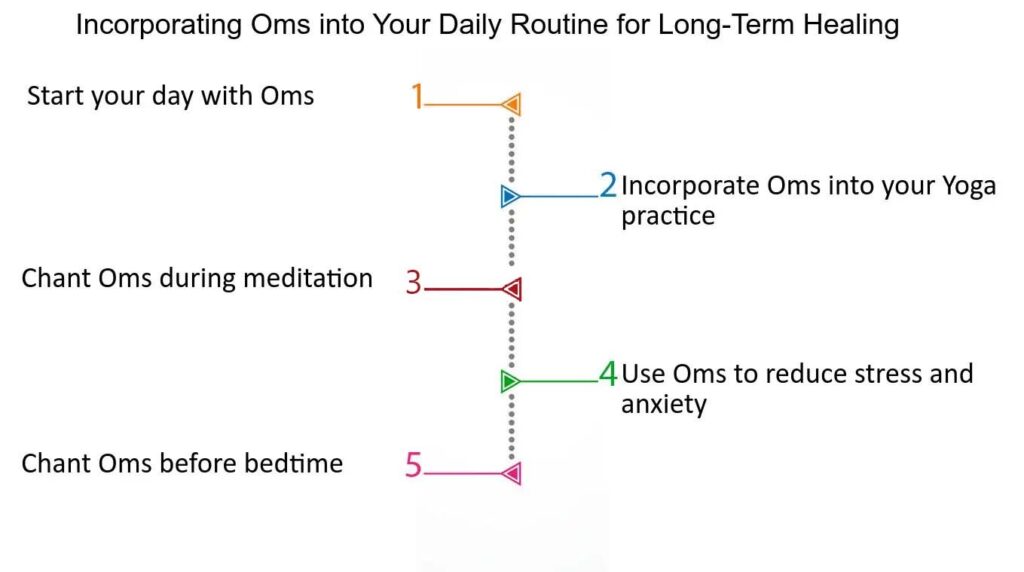
How it helps: Even a few minutes of slow Om chanting slows the breath, lowers the heart rate, and quiets the mental noise that feeds anxiety. It is the simplest mantra for healing and the best place to begin if you are new to chanting. Chant it three to five times slowly before starting any other mantra practice.
2. So Hum — The Breath Mantra
- Mantra: So Hum (सो ऽहम्)
- Meaning: ‘So’ means ‘that’ and ‘Hum’ means ‘I am.’ Together: I am that — meaning I am part of the greater whole, not separate, not alone.
- Deity/Origin: Upanishadic tradition
- Chakra: Heart Chakra (Anahata)
How it helps: This mantra for healing works beautifully because it is tied to the natural breath. ‘So’ on the inhale, ‘Hum’ on the exhale. You cannot chant it wrong. It is deeply calming for people who feel isolated, disconnected, or overwhelmed by a sense of not belonging — all of which are common in depression.
3. Om Namah Shivaya — Mantra of Release
- Mantra: Om Namah Shivaya (ॐ नमः शिवाय)
- Meaning: I bow to Shiva — to the inner self, to the universal consciousness that lives within me.
- Deity/Origin: Lord Shiva / Shaiva tradition
- Chakra: All five lower chakras
How it helps: This is one of the most widely chanted healing mantras in India. Shiva in yogic philosophy is not just a deity — he represents the power of transformation, the one who destroys what no longer serves. Chanting this mantra helps release old pain, old patterns, and emotional heaviness that you have been carrying. It is particularly good for people going through loss, major life changes, or long-term grief.
4. Mahamrityunjaya Mantra — The Great Healing Mantra
- Mantra: Om Tryambakam Yajamahe Sugandhim Pushtivardhanam. Urvarukamiva Bandhanan Mrityor Mukshiya Maamritat.
- Meaning: We worship the three-eyed one (Shiva) who is fragrant and nourishes all. May he liberate us from death — as a ripe cucumber is freed from its vine — and grant us immortality.
- Deity/Origin: Rigveda / Lord Shiva
- Chakra: Root Chakra (Muladhara) and Heart Chakra (Anahata)
How it helps: This is one of the oldest and most powerful mantras for healing in the entire Vedic tradition. Traditionally chanted 108 times using a mala, it is used for physical recovery, emotional healing, and releasing deep-seated fear — including the fear of death, loss, and the unknown that sits at the root of many anxiety disorders. In our Rishikesh classes, we often teach this mantra to students who are dealing with serious illness in the family or their own health fears.
5. Gayatri Mantra — Mantra for Mental Clarity
- Mantra: Om Bhur Bhuva Swaha. Tat Savitur Varenyam. Bhargo Devasya Dhimahi. Dhiyo Yo Nah Prachodayat.
- Meaning: We meditate on that divine light of the sun that illuminates all three worlds. May that light illuminate our minds.
- Deity/Origin: Rigveda / Goddess Gayatri / Sun deity Savitri
- Chakra: Third Eye Chakra (Ajna)
How it helps: The Gayatri is often called the mother of all Vedic mantras. It is specifically a healing mantra for the mind — it targets mental fog, confusion, overthinking, and the kind of scattered, anxious thinking that makes it hard to function. Many students with generalised anxiety report that regular Gayatri Mantra chanting (ideally at sunrise and sunset) helps them feel more grounded and clear-headed within two to three weeks.
6. Om Shanti Om — Mantra for Inner Peace
- Mantra: Om Shanti Om (ॐ शान्ति ॐ)
- Meaning: ‘Shanti’ means peace. Chanted three times, it invokes peace at the three levels of our existence: body, mind, and spirit.
- Deity/Origin: Vedic tradition
- Chakra: Throat Chakra (Vishuddha) and Heart Chakra (Anahata)
How it helps: Simple, accessible, and immediately calming. This is the mantra we recommend when someone is in acute distress — a panic moment, a sudden wave of anxiety, a conflict situation. It can be chanted silently without anyone noticing. Just three slow repetitions of ‘Om Shanti Om’ with conscious breathing can interrupt a stress response within minutes.
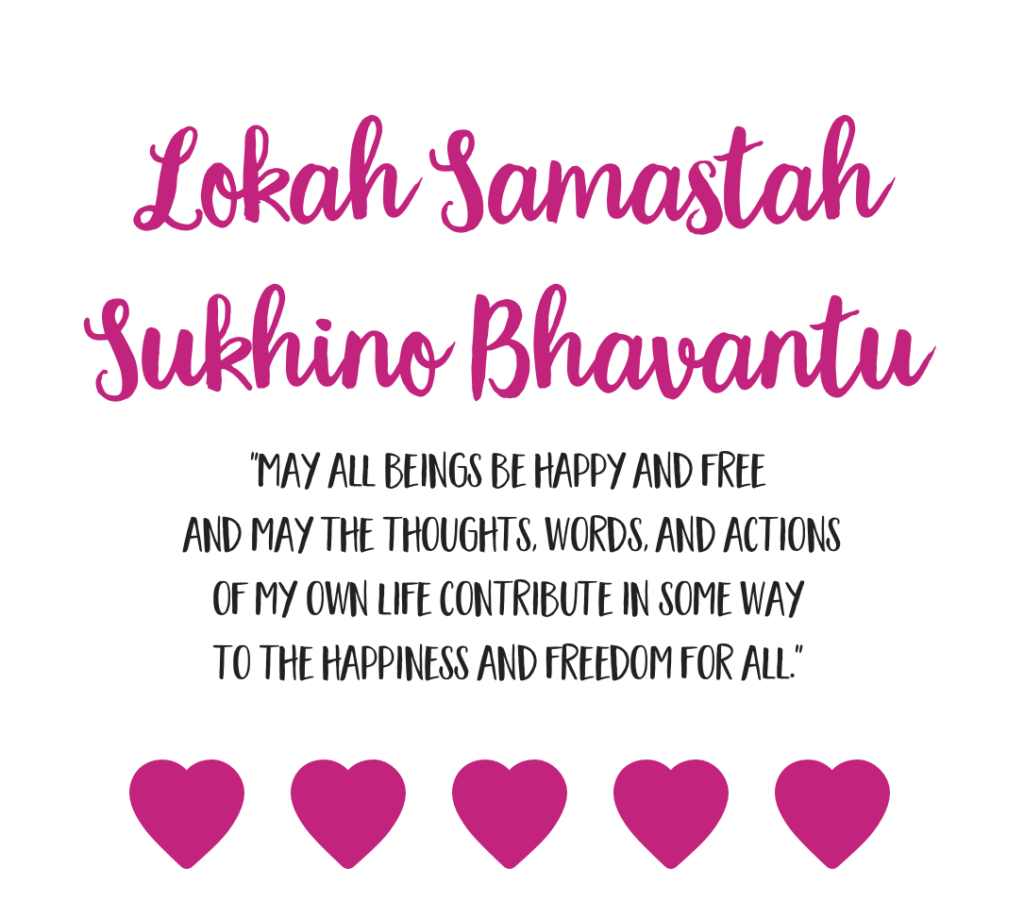
7. Lokah Samastah Sukhino Bhavantu — Mantra of Compassion
- Mantra: Lokah Samastah Sukhino Bhavantu (लोकाः समस्ताः सुखिनो भवन्तु)
- Meaning: May all beings everywhere be happy and free. May my thoughts, words, and actions contribute to that happiness and freedom for all.
- Deity/Origin: Jain and Hindu tradition
- Chakra: Heart Chakra (Anahata)
How it helps: Depression very often comes with intense self-focus — rumination, self-criticism, a sense of worthlessness. This mantra breaks that cycle by directing the heart outward. It is not about ignoring your own pain. It is about remembering that you are part of something larger. Many students find that chanting this mantra even once, slowly and with genuine feeling, shifts the emotional tone almost immediately.
8. Om Gam Ganapataye Namaha — Mantra for Removing Obstacles
- Mantra: Om Gam Ganapataye Namaha (ॐ गं गणपतये नमः)
- Meaning: I invoke and honour Ganesha — the remover of obstacles.
- Deity/Origin: Lord Ganesha / Hindu tradition
- Chakra: Root Chakra (Muladhara)
How it helps: Anxiety is often rooted in a feeling of being blocked — stuck in a situation, unable to see a way forward. This mantra works on that specific feeling. It is not about bypassing hard work; it is about clearing the mental and emotional resistance that makes moving forward feel impossible. We use this mantra at the beginning of new courses and new chapters in our students’ lives.
9. Om Mani Padme Hum — Mantra of Universal Compassion
- Mantra: Om Mani Padme Hum (ॐ मणि पद्मे हूँ)
- Meaning: Roughly: the jewel is in the lotus — meaning the divine is within you, accessible right now.
- Deity/Origin: Tibetan Buddhist tradition
- Chakra: Heart Chakra (Anahata)
How it helps: This is perhaps the most widely chanted mantra in the world. It is a complete healing mantra in itself — chanting it is said to purify the six negative emotions that cause suffering: pride, jealousy, desire, ignorance, greed, and anger. For those experiencing depression or anxiety, regular chanting of Om Mani Padme Hum cultivates a gentleness toward oneself that is genuinely therapeutic.
10. Aham Prema — Mantra of Self-Love
- Mantra: Aham Prema (अहं प्रेम)
- Meaning: ‘Aham’ means I am. ‘Prema’ means divine love. Together: I am divine love.
- Deity/Origin: Sanskrit tradition
- Chakra: Heart Chakra (Anahata)
How it helps: This mantra is less traditional than the others on this list, but it is extraordinarily powerful for people dealing with self-hatred, low self-worth, and the inner critic that fuels so much anxiety and depression. It is a direct affirmation of your essential nature. Chant it 27 times while placing one hand on your heart. It feels strange at first. That discomfort usually means you need it.
11. Asato Ma Sadgamaya — Mantra for Darkness to Light
- Mantra: Asato Ma Sadgamaya. Tamaso Ma Jyotirgamaya. Mrityor Ma Amritam Gamaya. Om Shanti Shanti Shanti.
- Meaning: Lead me from untruth to truth. Lead me from darkness to light. Lead me from death to immortality. Om, peace, peace, peace.
- Deity/Origin: Brihadaranyaka Upanishad
- Chakra: Crown Chakra (Sahasrara) and Third Eye (Ajna)
How it helps: This is one of the most beautiful and complete healing mantras in the Vedic tradition. It addresses exactly what depression and anxiety do to a person — they pull you into unreality, into darkness, into a kind of emotional death. This mantra is a direct prayer for the opposite. Chanted slowly, ideally in the early morning, it sets a powerful intention for the day and reminds the mind of what direction it is trying to move in.
Also Read: Enhance Your Yoga Practice: Deepen Your Connection with Seed Mantras
How Long Before You Notice a Difference?
This is the question most people have, and most blogs avoid answering. The honest answer is, it depends on consistency more than duration.
Most people notice a shift in mood and anxiety within 10 to 14 days of daily practice. Not a dramatic shift, more like a slight loosening. The anxious thoughts are still there, but they feel less urgent. The low mood is still present, but there is a small amount of space around it.
By 40 days of consistent practice, which is the traditional period recommended in yogic teaching, most practitioners report a noticeable and lasting change in how they respond to stress.
Do not judge the practice by how you feel in one session. Judge it by how you feel after three weeks of showing up every day.
What the Research Says?
We are not asking you to take this entirely on faith. There is a growing body of research supporting what practitioners have known for millennia.
- A 2011 study published in the International Journal of Yoga found that regular mantra meditation significantly reduced symptoms of anxiety and improved overall psychological well-being in participants.
- Research from NIMHANS (National Institute of Mental Health and Neurosciences), Bengaluru, has documented measurable reductions in cortisol levels — the stress hormone — following regular mantra-based meditation practice.
- The simple act of rhythmic vocalization, which is what chanting is, activates the vagus nerve. The vagus nerve plays a central role in regulating the parasympathetic nervous system — the body’s ‘rest and digest’ system that counteracts the fight-or-flight response driving most anxiety.
Mantras are not a replacement for professional mental health care, medication, or therapy. If you are dealing with serious depression or anxiety, please seek qualified medical support alongside your practice. But used consistently, these healing mantras can be a genuinely powerful complement to whatever else you are doing.
Healing Mantras at Rishikul Yogshala, Rishikesh
Rishikesh has been a centre of mantra practice and yogic healing for thousands of years. The Ganges, the Himalayas, the ashrams along the banks of the river, this is not just scenery. There is something in the atmosphere of this place that supports going inward.
At Rishikul Yogshala, mantra practice is woven into our yoga teacher training courses, our meditation sessions, and our daily morning and evening prayers. Students in our 200-hour, 300-hour, and 500-hour courses spend time learning not just the text of these mantras but their classical pronunciation, their philosophical context, and their practical application.
Many students tell us that the mantra sessions were, unexpectedly, the most transformative part of their training, more than the asana, more than the pranayama. Something unlocks when the voice and the mind work together with genuine intention.
Frequently Asked Questions
Q: What is the most powerful mantra for healing?
Ans: Different teachers will give different answers, but in our experience at Rishikul Yogshala, the Mahamrityunjaya Mantra is considered the most powerful healing mantra in the Vedic tradition. It addresses healing at the deepest level — physical, emotional, and spiritual. For mental and emotional healing specifically, the Gayatri Mantra and Om Namah Shivaya are also considered extremely powerful.
Q: How long does it take for healing mantras to work?
Ans: Most practitioners report feeling a shift — even if subtle — within the first few sessions. For bigger, lasting change in anxiety and depression, consistent daily practice over 40 days (a traditional period called a ‘sadhana’) is recommended. Please remember: mantras work best as part of a broader wellness approach, not in isolation.
Q: Can I chant healing mantras even if I am not Hindu or do not know Sanskrit?
Ans: Yes, completely. The vibration of the sound works regardless of your religious background or linguistic ability. Pronunciation matters — it is worth learning the correct way to say each mantra — but you do not need to be a scholar. Intention and consistency matter far more.
Q: Is there a mantra specifically for anxiety attacks?
Ans: Om Shanti Om is the most immediately accessible mantra for moments of acute anxiety. It can be chanted silently, anywhere, and just three slow repetitions with conscious breathing can help interrupt a stress response. The So Hum breath mantra is also excellent because it is tied directly to the breath and works instantly.
Q: How many healing mantras should I chant daily?
Ans: For beginners, one mantra chanted consistently is better than many chanted inconsistently. Pick one from this list that resonates with you, chant it for 10–15 minutes each morning, and stay with it for at least 40 days. Depth is more valuable than variety.
Q: Can children chant healing mantras?
Ans: Yes. In Indian tradition, children are often introduced to mantras like Om, the Gayatri Mantra, and Lokah Samastah Sukhino Bhavantu from a very young age. The Gayatri Mantra in particular has been traditionally chanted for children’s mental clarity and focus.
Q: What is the difference between a healing mantra and an affirmation?
Ans: Affirmations are modern psychological tools — positive statements directed at the conscious mind. Mantras are ancient sound formulas that operate at a deeper level, through vibration, repetition, and often through devotional feeling toward a principle or deity. Both can be useful. Mantras tend to have a more physiological effect due to the vocalization involved.
Final Takeway
The mind is not always easy to quiet. Depression and anxiety do not disappear overnight, and no mantra practice will promise you that.
But there is something that happens, gradually, with practice, when you stop fighting your mind and instead give it something beautiful to hold onto. A sound. A rhythm. A meaning. A direction.
That is what these healing mantras are. Not a cure. A companion.
If you are ready to go deeper, to learn these mantras in their proper context, to practice them in the mountains above the Ganges, surrounded by others doing the same work, we would love to have you at Rishikul Yogshala Rishikesh. Our 200 Hours Yoga TTC in Rishikesh includes dedicated mantra and meditation sessions taught by experienced practitioners.
Start where you are. One mantra. Ten minutes. Today
Last Modified Date: 09 April 2026
This article is for general information and is not medical advice. If you have a respiratory or heart condition, are pregnant, or are unsure whether these practices suit you, please speak to your doctor before beginning.

 +91-8433225327,
 Rishikul Yogshala Rishikesh, Narayan Kunj, Jonk Village, Ram Jhula, Swarg Ashram, Rishikesh, Uttarakhand 249304
 By Airway
 By Railway
 By Bus/Cabs