








Yoga Teacher Training in India for American Students: The Complete 2026 Guide
Table of Contents
- Is an Indian Yoga Teacher Training Certificate Accepted in the USA?
- Do I Need RYT 200 to Teach Yoga in the USA?
- Yoga Teacher Training India vs USA: The Real Cost Comparison
- Indian Visa for US Citizens: What You Need to Know
- Flights, Jet Lag, and the 10-Hour Problem
- Health, Insurance, and Medical Care
- Is India Safe? Reading the State Department Advisory Honestly
- Why Do Americans Choose Rishikesh for Yoga Teacher Training?
- What Is a Typical Day Like During a 200-Hour YTT in Rishikesh?
- Teaching in America After You Return
- Frequently Asked Questions
- Do I need to be advanced or flexible to join?
- How long should I plan to be away?
- Will American studios accept my Indian certificate?
- What if I get sick or injured during the course?
- Can I work remotely during the training?
- Is Yoga Alliance registration required to teach in the US?
- Before You Book
Around one in six American adults now practises yoga, and a growing number are looking at India for teacher training. The reason usually starts financial — and then becomes something else entirely.
But the questions Americans have are not the questions a German or Australian student has. Will your certificate work back home? Does your health insurance follow you? What does that State Department advisory actually mean?
This guide answers the American-specific questions honestly, including the parts that don’t flatter us. For everything universal — what a training day looks like, what to pack, food and culture — see our complete guide for international students.

Is an Indian Yoga Teacher Training Certificate Accepted in the USA?
Here is what most Americans don’t realise. Yoga Alliance is itself an American organisation — a nonprofit membership body headquartered in Arlington, Virginia. It registers schools worldwide, and its standards don’t change based on where a school operates. An RYS 200 in Rishikesh is held to the same published curriculum standard as an RYS 200 in Portland.
So a graduate of a registered Indian school applies for the RYT 200 credential exactly the way a graduate of a Colorado studio does.
How to verify before you pay a deposit:
- Go to the Yoga Alliance directory at yogaalliance.org
- Search the school name
- Confirm the RYS 200 listing is active
- Read the graduate reviews on that listing
If a school cannot be found in that directory, its certificate will not qualify you for RYT registration — whatever the website claims.
What registration costs: $50 one-time application fee plus $65 annual dues — $115 in your first year, then $65 annually. Your school confirms your attendance, which typically takes one to two weeks. 115 in your first year, then $65 annually. Processing typically takes one to two weeks while your school confirms attendance.
Do I Need RYT 200 to Teach Yoga in the USA?
No, there is no single US government licence called an RYT 200 that every yoga teacher must have.
However, RYT 200 can be useful when looking for teaching opportunities because some yoga studios and employers use Yoga Alliance registration as one of their hiring requirements.
If you complete a 200-hour teacher training in India, the usual pathway is:
Complete your training → receive your course certificate → apply for the appropriate Yoga Alliance registration → use your RYT credential when applying for teaching opportunities.
Before enrolling, check the school’s current Yoga Alliance registration rather than relying only on the school’s website. You should also ask whether the programme you’re considering meets the requirements for the registration you plan to pursue.
Yoga Teacher Training India vs USA: The Real Cost Comparison
The honest version, with flights included.
| Training in India | Training in the USA | |
|---|---|---|
| Tuition | $1,000–$2,000 | $2,000–$5,000 |
| Accommodation | Included | Not included |
| Meals | Included (3/day) | Not included |
| Flights | $700–$1,500 | $0 |
| Visa | Variable (see below) | $0 |
| Travel insurance | $50–$150 | $0 |
| Yoga Alliance registration | $115 | $115 |
| Realistic total | $2,000–$4,000 | $2,100–$5,100+ |
US in-person 200-hour programmes typically run $2,000–$5,000, and that figure usually covers tuition only. You still pay for your own housing, your own meals, and your commute to the studio for months.
Once you account for that, the gap widens rather than narrows, and cost turns out not to be the most important difference anyway.
The real difference is structure.
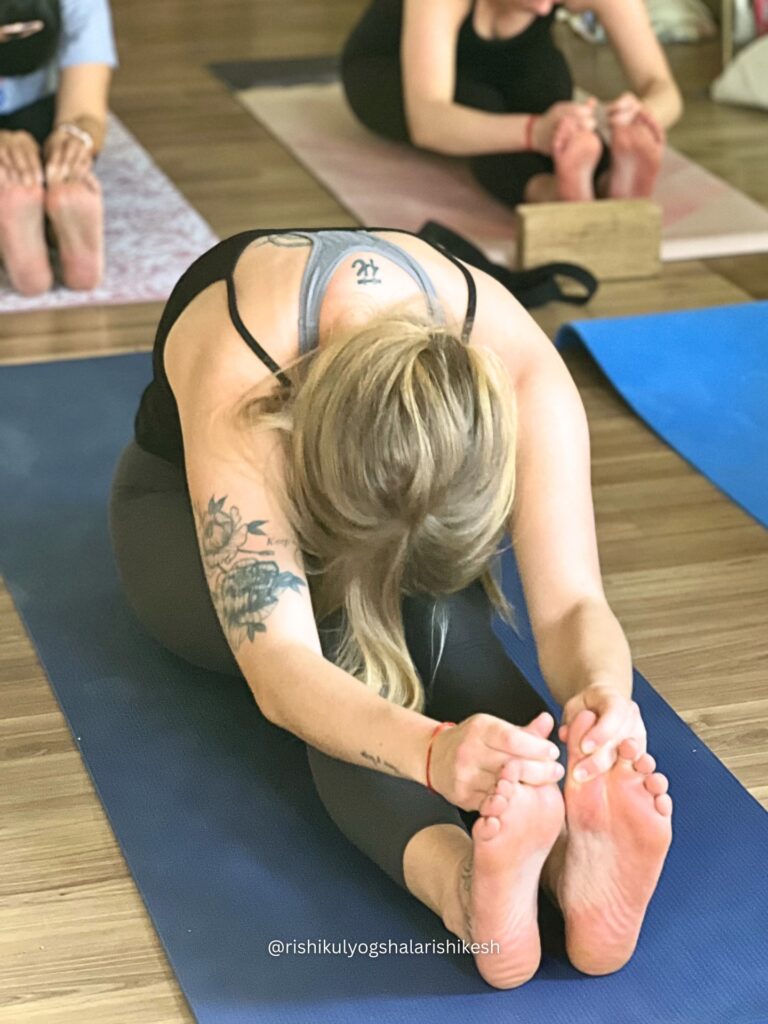
Most American 200-hour programmes are delivered in weekend format, spreading 200 hours across six to nine months. You practise on Saturday, return to your job on Monday, and come back three weeks later having lost the thread. Learning that is broken into fragments tends to stay fragmented.
A residential yoga training in India compresses those same 200 hours into 24 to 28 consecutive days. You wake, practise, study, eat, and sleep inside the same rhythm for a month. Students consistently say it isn’t any single class that changes their understanding; it’s the accumulation, day after day, with nothing else competing for attention. That is simply not reproducible in a weekend format, at any price.
- Depth of curriculum is the second difference. Yoga philosophy, Sanskrit, pranayama, and meditation are core graded subjects in a traditional Indian training, taught by teachers who studied them within a lineage. In many Western programmes these become a single afternoon module wedged between asana sessions. Most Indian schools also teach multi-style — Hatha and Ashtanga together — rather than the single studio-brand method common in the US.
- And there is the setting itself. Rishikesh has been a centre of yogic study since long before yoga tourism existed. Practising beside the Ganges at sunrise, in the foothills where this tradition was formed, is part of the education rather than decoration around it.
- One honest note on fit. A residential training requires four consecutive weeks. If your work or family situation genuinely cannot accommodate that, a local weekend programme is a reasonable path and we’d rather you take it than force something that doesn’t fit.
But if you can clear the month — and most people who want this find they can, with enough notice — the immersive format is the one that changes how you practise and how you teach. That is the reason people fly this far, and it’s the reason they say afterwards that it was worth it.
Indian Visa for US Citizens: What You Need to Know
Apply only through indianvisaonline.gov.in/evisa, the official government portal. Third-party sites charge a markup for the identical form, and the government explicitly warns against intermediaries promising “express” processing.
On the fee: the official portal states that e-Visa fees are country-specific. We are deliberately not quoting a dollar figure, because amounts reported for US passport holders in 2026 have been inconsistent and reciprocal pricing changed during the year. Check the official fee schedule linked on the portal before budgeting. A 3% bank transaction charge applies to card payments, or 4% via PayPal.
Requirements: passport valid at least six months at the time of application (not arrival), two blank pages, a white-background photo, and a scanned passport bio page.
Timing: apply a minimum of four days before arrival; applications open 120 days ahead. Two to three weeks out is sensible, in case documents are queried.
Which visa applies to a YTT — read this carefully. The portal permits “attending short term yoga programme… which should not be a formal or structured course/programme (courses not exceeding 6 months duration and not issuing a qualifying certificate/diploma etc.)”
A 200-hour YTT does issue a qualifying certificate. Large numbers of students travel on tourist e-visas every year without incident, but the wording does not clearly cover a certificated course.
Your cleaner options:
- e-Student Visa — now available as an e-Visa sub-category, valid one year, requiring an admission letter from a recognised institution stating course duration
- Regular tourist visa through an Indian consulate or a VFS Global office in the US
Ask your school which route their current American students use and whether they can supply supporting documents.
Also note: the e-Visa is non-extendable, non-convertible, valid only at designated entry points, and not valid for Protected or Restricted areas.
Flights, Jet Lag, and the 10-Hour Problem
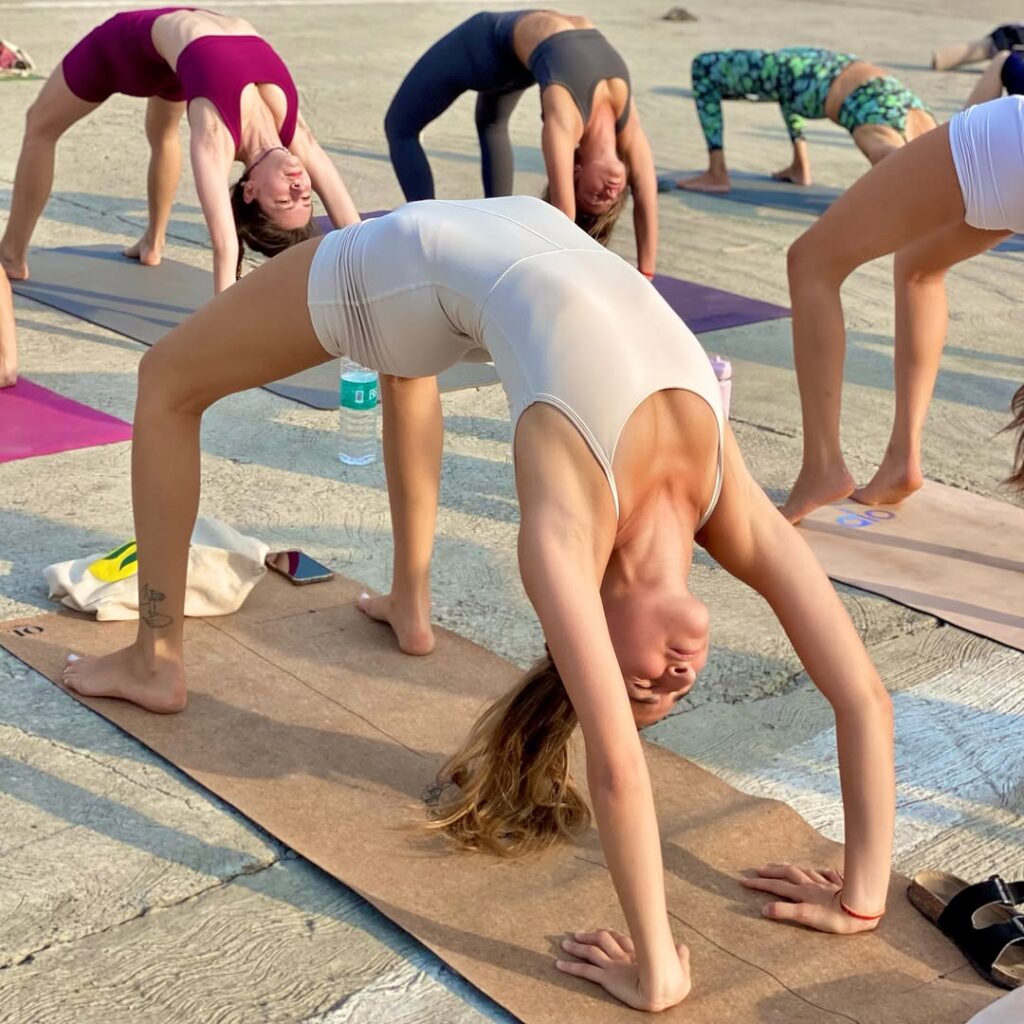
Rishikesh has no international airport. Every American student arrives via Delhi (DEL).
Nonstop options: Air India, American, and United operate nonstops to Delhi from JFK, Newark, Chicago O’Hare, Washington Dulles, and San Francisco. JFK–Delhi averages around 15 hours; West Coast routes run longer. Schedules on several US–India routes shifted during 2026, so verify current service when booking rather than assuming.
Then Delhi to Rishikesh — roughly 240 km. A private taxi takes six to seven hours and costs $60–$100, which most schools arrange. Alternatively fly Delhi to Dehradun (about an hour) then take a 45-minute taxi.
The part Americans specifically underestimate: India is 9.5 hours ahead of Eastern time and 12.5 ahead of Pacific. Combine that with a 15-hour flight and a six-hour drive, and arriving the day your course starts is a genuinely bad plan.
Arrive two days early. Sleep. Walk around. Meet a few classmates. Starting a 6:00 am schedule straight off a long-haul flight is the most common regret we hear from American students.
That time gap also shapes calling home — early morning in Rishikesh is evening in the US.
Health, Insurance, and Medical Care
Your US health plan almost certainly does not cover you in India. The State Department states this directly: US Medicare and Medicaid do not work abroad, and most hospitals overseas don’t accept US health insurance. Many require advance payment before treatment, often in cash.
Buy travel medical insurance that includes medical evacuation. For a multi-week trip this runs roughly $50–$150 — less than one night in a hospital.
Vaccinations: CDC recommends hepatitis A and typhoid for most travellers to India, plus routine vaccines (MMR, Tdap, polio) being current. Hepatitis B, rabies, and Japanese encephalitis depend on your itinerary and length of stay. Book a travel clinic appointment four to six weeks before departure — typhoid and hepatitis A need around two weeks to become effective.
Do not take medical advice from a yoga school, including ours. Speak to a travel clinic.
Bring prescription medication in original packaging with a copy of the prescription. Be cautious buying medication locally; the CDC warns that counterfeit drugs circulate in India. Rishikesh and nearby Dehradun have functioning clinics for anything that arises mid-course.
Is India Safe? Reading the State Department Advisory Honestly
India is rated Level 2 — Exercise Increased Caution, advisory dated 16 June 2025, citing crime and terrorism.
Context first: Level 2 is the second-lowest of four tiers — the same rating applied to France, Spain, Italy, and Germany. The Level 4 zones named in the advisory (Jammu and Kashmir, Manipur, parts of central and eastern India) do not include Uttarakhand, where Rishikesh sits.
But there is a line in that advisory we are not going to skip past. The State Department states: “Do not travel alone, especially if you are a woman,” and separately, “The U.S. government advises against women traveling alone in India.” The advisory cites sexual assault at tourist sites as a specific risk.
We’re not going to tell you that’s overblown. It is your government’s official position and you should weigh it yourself.
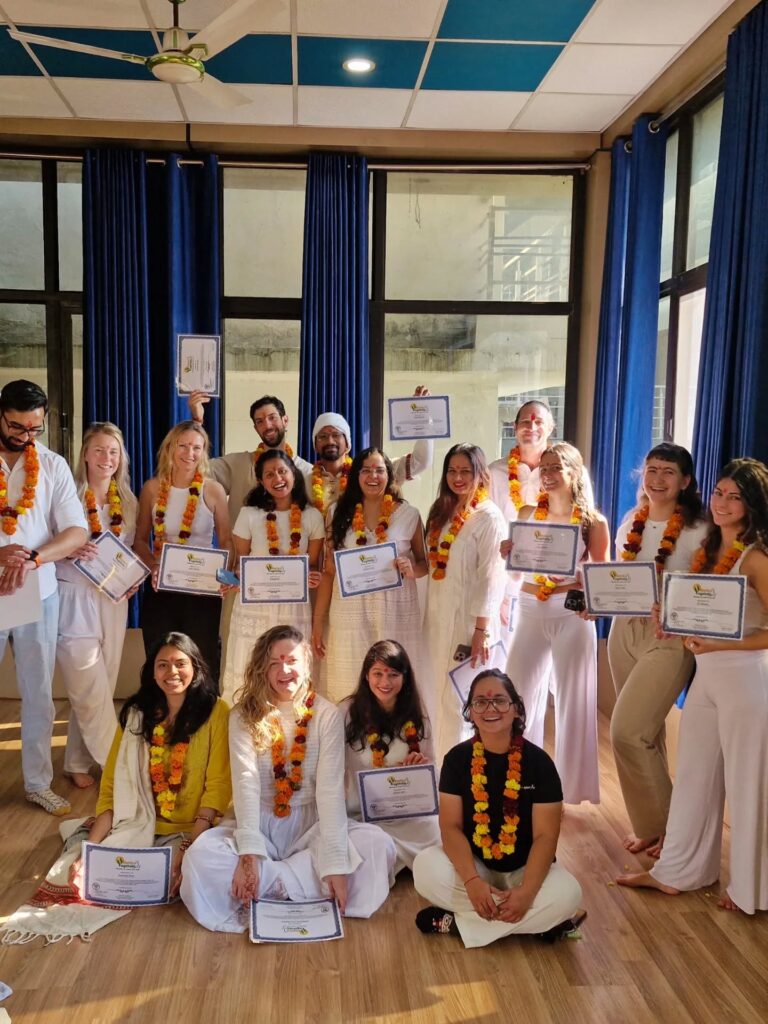
What we can tell you is what genuinely reduces risk. Staying at a residential school means you are not navigating the country alone — you arrive into a group, eat and study together, and have staff on site. Ask any school directly about lockable private rooms, overnight staff presence, and school-arranged airport pickup rather than a taxi you flag down yourself. If a school is vague on those questions, that tells you something.
Standard precautions still apply: registered taxis or ride apps after dark, no walking alone on unlit roads at night, passport and cards secured, ride details shared with someone at home.
Two things Americans specifically get wrong:
Satellite phones and GPS devices are illegal in India. This includes Garmin inReach and similar satellite messengers, which US travellers often carry by habit. Penalties reach $200,000 and up to three years’ imprisonment. Leave them at home.
Rishikesh sits in seismic zone 5 — India’s highest earthquake risk band, per the State Department. Uttarakhand also sees severe monsoon flooding; the 2013 floods killed thousands and stranded American citizens. Not a reason to avoid the region, but a reason to carry evacuation insurance and know your school’s emergency procedure before you need it.
Enrol in STEP (Smart Traveler Enrollment Program) so the US Embassy can contact you. Save 112 (emergency from a mobile) and US Embassy New Delhi: +91-11-2419-8000.out assuming that a destination is completely safe or unsafe. It is about understanding the risks and taking sensible precautions.
Why Do Americans Choose Rishikesh for Yoga Teacher Training?
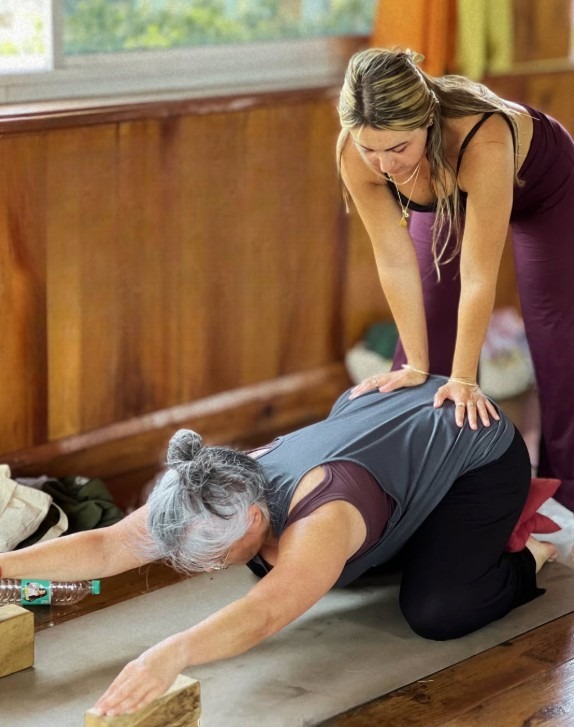
For many American students, the attraction of completing yoga teacher training in India is not simply the lower course cost. It is the opportunity to study yoga in an environment where the practice has deep cultural and historical roots.
A residential training in Rishikesh can allow you to spend several weeks focused on:
- Asana and alignment
- Pranayama
- Meditation
- Yoga philosophy
- Anatomy and teaching methodology
- Daily self-practice
- Teaching practice
- Living in a community with other yoga students
The experience is also different from completing a teacher training while continuing your normal work and social schedule at home.
That does not automatically make India a better choice for everyone. If you cannot take several weeks away from work or family responsibilities, a local US programme may be more practical.
The right choice depends on what you want from your training: immersion and cultural experience, convenience, local networking, cost, or a combination of these.
Also Read: Why Choose a Residential Yoga Course in Rishikesh? A Gentle, Honest Guide
What Is a Typical Day Like During a 200-Hour YTT in Rishikesh?
A residential yoga teacher training is much more intensive than attending a weekly yoga class.
A typical day may include early-morning practice followed by meditation, pranayama, philosophy, anatomy, teaching methodology, and practical teaching sessions. Exact schedules vary by school.
For example, a training day may look broadly like:
- Early morning: Meditation, pranayama and yoga practice
- Morning: Breakfast and theoretical classes
- Late morning/afternoon: Anatomy, philosophy or teaching methodology
- Afternoon: Practice and teaching sessions
- Evening: Meditation, discussion or additional practice
Most residential programmes have one or more rest periods during the week, but students should still expect a full schedule.
This is why working a normal US job remotely during a 200-hour YTT can be difficult. The training itself requires consistent attendance, while the time difference between India and the USA can make work meetings even harder to manage.

Teaching in America After You Return
Let’s be realistic, because the yoga industry rarely is.
Reported averages for US yoga instructors vary widely by source — Indeed reports around $34.55/hour, Salary.com around $25/hour, and the Bureau of Labor Statistics places the broader fitness instructor category near $46,000 annually. Studio group classes commonly pay $35–$75 per class. Privates run $75–$150/hour. Corporate classes pay considerably more.
The honest arithmetic: teaching 10–15 group classes a week at $50 each works out to roughly $26,000–$39,000 a year — and 10–15 classes weekly is a heavy load on your body and voice.
Most new teachers do not quit their jobs. Many teach part-time alongside other work, and those who earn well usually build something beyond group classes: privates, workshops, online offerings, corporate contracts.
A 200-hour certificate is a beginning, not a career. Anyone telling you otherwise is selling something.
Frequently Asked Questions
Do I need to be advanced or flexible to join?
No. Six months to a year of regular practice is enough for most schools. Teacher training is about understanding and transmitting the practice, not performing difficult postures.
How long should I plan to be away?
A 200-hour course runs 24–28 days. Add two days before for arrival and jet lag, plus any travel afterwards. Five weeks total is comfortable.
Will American studios accept my Indian certificate?
Yes, if it’s from an RYS-registered school and you register as an RYT 200. Studios look at the credential and how you teach, not the country.
What if I get sick or injured during the course?
Tell your teacher immediately. Good schools modify your practice rather than pushing you through. This is also why travel insurance matters.
Can I work remotely during the training?
Almost nobody manages it. The schedule runs roughly ten hours a day, six days a week, and the time difference makes US working hours land in the middle of your night.
Is Yoga Alliance registration required to teach in the US?
No. It is voluntary. It helps with studio hiring and some insurance providers, but it is not a licence.
Before You Book
Ask any school these four questions, and judge them by how readily they answer:
- What is your Yoga Alliance registration, and can I verify it in the directory myself?
- How many students are in a typical batch, and how many teachers?
- What exactly is included in the fee — and what isn’t?
- What is your refund policy if my plans change?
How a school treats you before you’ve paid anything is a fair preview of how you’ll be treated once you arrive.
This article is for general information and is not medical advice. If you have a respiratory or heart condition, are pregnant, or are unsure whether these practices suit you, please speak to your doctor before beginning.

 +91-8433225327,
 Rishikul Yogshala Rishikesh, Narayan Kunj, Jonk Village, Ram Jhula, Swarg Ashram, Rishikesh, Uttarakhand 249304
 By Airway
 By Railway
 By Bus/Cabs