








Chakrasana (Wheel Pose / Upward Bow): A Gentle, Careful Guide to Yoga’s Deepest Backbend
Table of Contents
Introduction – Wheel Pose Yoga or Chakrasana
Chakrasana — the Wheel Pose, sometimes called Upward Bow (Urdhva Dhanurasana) — is one of yoga’s deepest backbends. You lie on your back, plant your hands by your ears, plant your feet, and lift the whole body into a high, supported arch. It opens the chest, strengthens the shoulders and legs, and asks for years of patient preparation. In this guide, we’ll meet Chakrasana with care, walk through how to build up to it safely, and be honest about who should approach it gently.
In this blog, we’ll walk you through everything that you need to know about this wonderful yoga pose: Wheel Yoga Pose, or Chakrasana Posture.
If you are looking to enrol in the best yoga programme, we recommend signing up for our 200 hour yoga teacher training in Rishikesh with an add-on of a peaceful environment and a professional yoga instructor certificate.
Yoga Wheel Pose Benefits
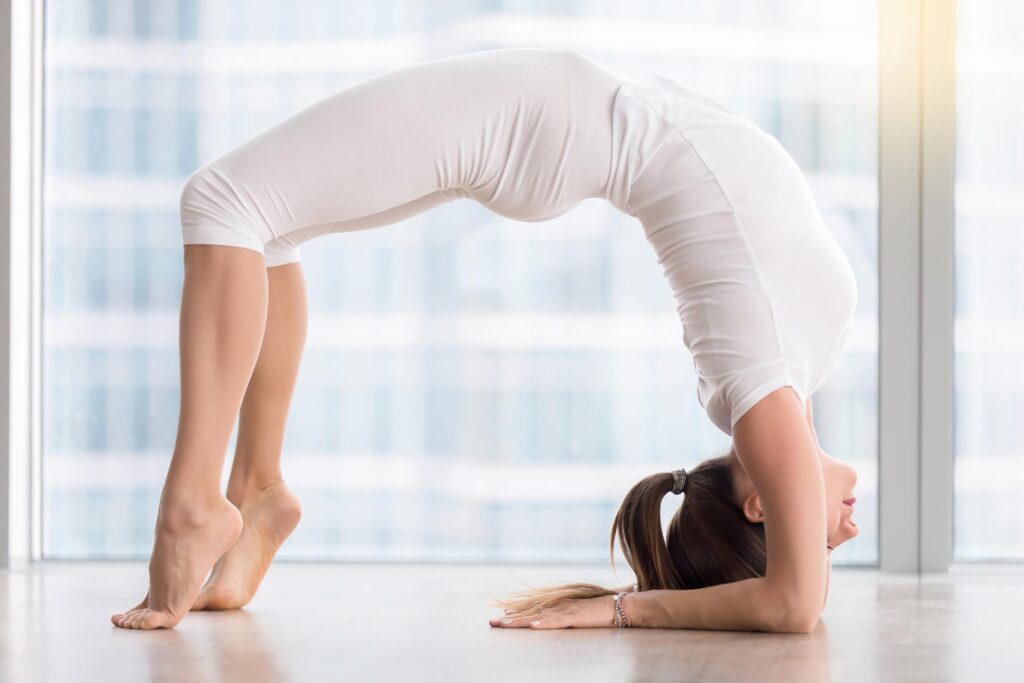
Chakrasana pose, also known as backbends, increases stamina, increases spinal mobility, elevates the chest and shoulders, improves breathing patterns, and may even have positive effects on blood sugar levels and adrenal functionality.
Let us learn some of the other benefits of Wheel Pose:
- According to one study, including the Chakrasana pose and similar backbends in a yoga regimen makes the spine more flexible.
- Wheel Pose and other Hatha yoga postures were practiced by survey participants to significantly increase their physical strength in just 12 weeks.
- Practicing the Wheel Pose might lower blood sugar levels for those with type 2 diabetes. Backbends were shown to lower haemoglobin A1c levels in diabetics.
How to Do The Wheel Pose Yoga Posture?
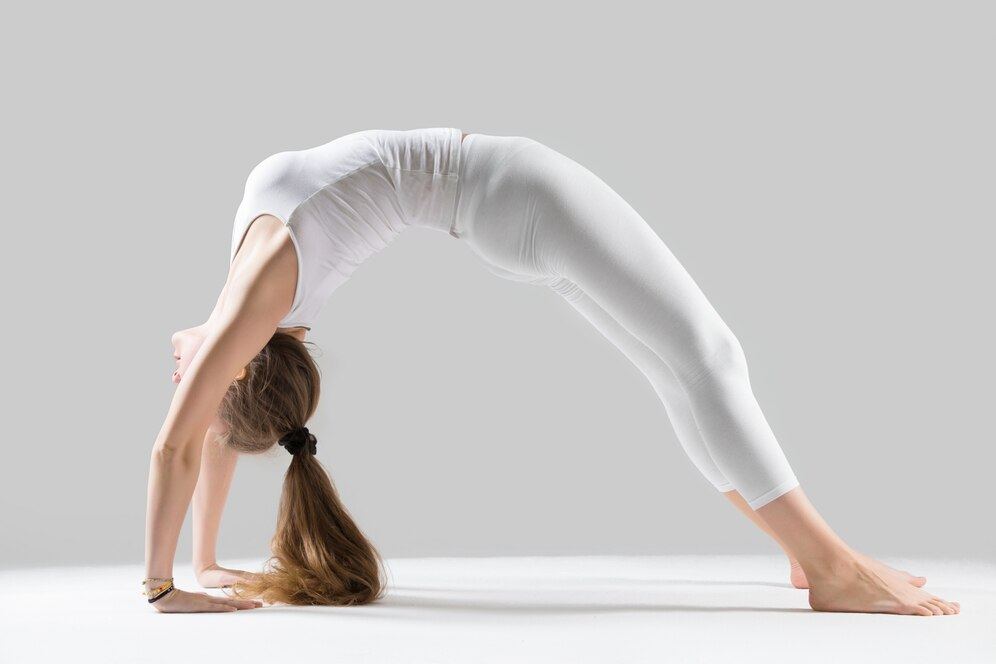
Want to take advantage of the benefits of Wheel Yoga? Simply follow the steps given below to practice the Wheel Yoga Pose from the comfort of your home:
- Knees should be bent while lying on your back with your feet hip-width apart. Firmly press your feet into the ground.
- Place one hand on the yoga mat directly above each shoulder. Point your fingertips at your shoulders.
- Raise your hips and engage your inner thighs as you inhale.
- Put additional pressure on your feet. To lift your hips higher, move more of your weight onto your palms. Your gluteus maximus may relax now. It will safeguard your lower spine.
- Stretch your legs and arms as far as you can while being comfortable.
- Let your head hang in a relaxed, stable position to prevent neck discomfort.
- To lower yourself, gently tuck your chin, flex your elbows, and come back to the top of your head. Spine vertebra by vertebra, return to the mat.
Read More: Apana Vayu Mudra: Top Benefits, Steps, Precautions, Tips for Beginners
Safety Precautions when Practicing Wheel Pose or Chakrasana Pose
Wheel Pose is an excellent way to activate your back muscles. However, there are certain restrictions to practicing this pose. It is advised to avoid this pose under the following circumstances:
- Lower back issues
- Shoulder injury
- Pregnancy
- Blood pressure issues
- Carpal Tunnel Syndrome
- Heart problems
- Headaches
This stretch expands the heart and aids in letting go of grief and anxiety.
Modifications of the Wheel Pose or Chakrasana Pose
If Wheel Pose is difficult for you, there are some things you can do to adjust it according to your flexibility.
- To adjust: Begin with the Bridge Pose if you are a novice or have low spine flexibility.
- To make it more challenging: Slowly bring your hands closer to your feet to up the difficulty. The wheel form rises as you put your hands and feet closer together. Make sure to keep putting pressure on your feet firmly. Continue to transfer your weight in support of your hands.
Final Words
Sometimes we focus on the appearance of a position when it would be best to concentrate on how it makes us feel.
You will only experience the advantages of this asana if you are constant in your practice. Practice its variants and strenuous asanas like Ardha Chandrasana to keep yourself interested.
Thankfully, there are variants and yoga props that may help make Chakrasana Pose more approachable while still keeping the practice fun and engaging.
Incorporating this pose into your practice can lead to significant improvements in overall well-being. For those interested in deepening their yoga journey, consider enrolling in a yoga teacher training program. Rishikul Yogshala Rishikesh, a leading Yoga school in Rishikesh, offers comprehensive courses like the 200 Hour Yoga TTC in Rishikesh and the 300 Hour Yoga Teacher Training in Rishikesh. These programmes are designed to help you master your practice and share the transformative power of yoga with others.
Wheel Pose – FAQs
1) What is the wheel pose best for?
This is also known as backbending, increases stamina, increases spinal mobility, elevates the chest and shoulders, improves the breath, and may even have positive effects on blood sugar levels and adrenal functionality.
2) Why is wheel pose so difficult?
Chakrasana pose is challenging since it calls for mobility in the shoulders, spine, and complete front body, as well as strength in the wrists, legs, and arms. Wheel posture may be accomplished and made easier by developing the necessary strength and flexibility.
3) Who should not do the Wheel Pose?
When practicing, one should take measures if they experience any neck or back pain while holding the posture. This position should not be done by pregnant women, those with glaucoma, or anyone who has migraines or vertigo.
Last Modified Date: 23 September 2025
This article is for general information and is not medical advice. If you have a respiratory or heart condition, are pregnant, or are unsure whether these practices suit you, please speak to your doctor before beginning.

 +91-8433225327,
 Rishikul Yogshala Rishikesh, Narayan Kunj, Jonk Village, Ram Jhula, Swarg Ashram, Rishikesh, Uttarakhand 249304
 By Airway
 By Railway
 By Bus/Cabs