








Pawanmuktasana (Wind Relieving Pose): Steps, Benefits & Precautions
Table of Contents
- Why Pawanmuktasana Is the Best First Pose for Gas and Bloating?
- Pawanmuktasana at a Quick Glance
- What is Pawanmuktasana?
- Where does it come from?
- Is it the same as Apanasana?
- How to do Ardha Pawanmuktasana
- How to do Pawanmuktasana?
- Why does gas get trapped in the stomach?
- Pawanmuktasana Benefits
- What Does Science Say?
- Easy Variations and Changes
- Simple Tips for Beginners
- Common Mistakes to Avoid
- Who Should Not Do Pawanmuktasana (contraindications)
- Best time, how long, and how many times
- Good poses to do with it
- Conclusion
- Frequently Asked Question
- What is Pawanmuktasana in English?
- Does Pawanmuktasana really remove gas?
- What is Ardha Pawanmuktasana?
- Can I do Pawanmuktasana after eating?
- Is Pawanmuktasana good for constipation?
- Can Pawanmuktasana reduce belly fat?
- Can I do Pawanmuktasana during pregnancy?
- Which are the best wind relieving yoga poses?
Pawanmuktasana (Wind Relieving Pose) is an easy yoga pose. You lie on your back and hug your knees to your chest. This presses your belly softly and can help release trapped gas. It may also relax your lower back. It is good for beginners. Hold it for 5 to 10 slow breaths, 3 to 5 times, on an empty stomach.
Why Pawanmuktasana Is the Best First Pose for Gas and Bloating?
Do you feel heavy, gassy, or bloated after food? Do you sit for many hours and get a stiff lower back? Then Pawanmuktasana is a good pose for you.
It is one of the first poses we teach new students at our school in Rishikesh. Why? Because it is simple. You do not need to be flexible. You do not need any tools. You only need a mat and a few minutes.
In this guide, you will learn what the pose means, how to do it step by step, its benefits, and who should not do it. We use very simple words, so anyone can follow along at home.
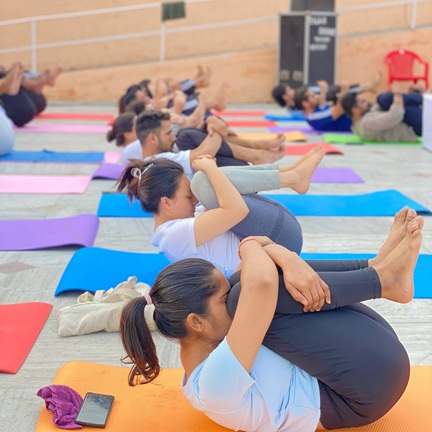
Pawanmuktasana at a Quick Glance
| Point | Details |
|---|---|
| Sanskrit name | Pawanmuktasana (also written Pavanamuktasana) |
| English name | Wind Relieving Pose, Knee to Chest Pose |
| Meaning | Pawan = wind, Mukta = release, Asana = pose |
| Type of pose | Lying on the back (supine), Hatha Yoga |
| Level | Beginner |
| Easy version | Ardha Pawanmuktasana (one leg at a time) |
| Main body parts | Belly, lower back, hips, thighs |
| Top benefits | Releases gas, eases bloating, supports digestion, relaxes the lower back |
| How long to hold | 5 to 10 slow breaths |
| Rounds | 3 to 5 |
| Best time | Morning, on an empty stomach |
| Tools needed | Yoga mat or folded blanket |
| Avoid if | Pregnant, recent belly surgery, hernia, slipped disc, neck problems |
What is Pawanmuktasana?
Pawanmuktasana is a lying-down yoga pose. You bring your bent knees close to your chest and hold them with your arms. It is also written as Pavanamuktasana.
The name comes from three Sanskrit words:
| Word | Meaning |
|---|---|
| Pawan | Wind or air |
| Mukta | Free or release |
| Asana | Pose |
So, Pawanmuktasana means “the pose that releases wind”. In English, people call it the Wind Relieving Pose, Wind Relieving Posture, Wind Release Pose or Knee to Chest Pose.
Where does it come from?
This pose is part of Hatha Yoga. In the Bihar School of Yoga tradition, the word “Pawanmukta” is also the name of a full set of simple exercises. Swami Satyananda Saraswati wrote about this set in his book Asana Pranayama Mudra Bandha. The set has three parts:
- Part 1: moves for the joints (toes, ankles, knees, wrists, neck).
- Part 2: moves for the belly and digestion. The knee-to-chest pose is in this part.
- Part 3: moves to free blocked energy in the body.
In this blog, we talk about the single pose that most people know as Pawanmuktasana.
Is it the same as Apanasana?
They look almost the same. In Apanasana, you usually keep your head on the floor and rock gently. In the classic Pawanmuktasana, you can lift your head toward your knees. Both help the belly and the lower back.
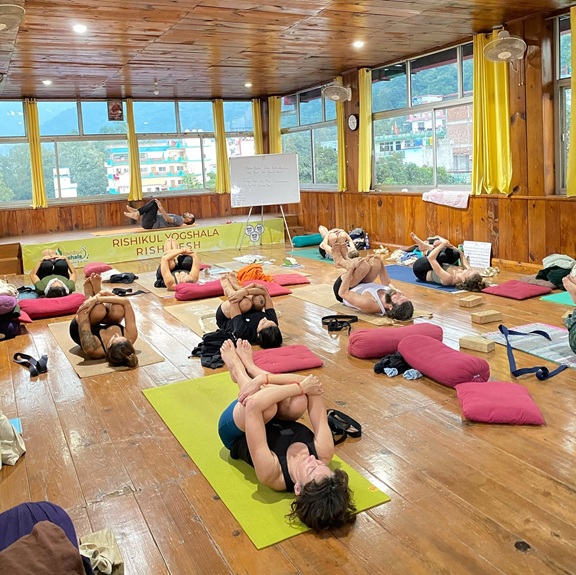
How to do Ardha Pawanmuktasana
“Ardha” means half. In this version, you bend only one leg at a time. Start with this if you are new. It is softer on the back and the belly.
Before you start: Use a yoga mat or a folded blanket. Wear loose clothes. Keep your stomach empty or wait 3 to 4 hours after a meal.
- Lie down. Lie flat on your back. Keep your legs straight and together. Keep your arms by your sides.
- Relax. Close your eyes for a moment. Take 2 or 3 slow, deep breaths.
- Bend the right knee. Breathe in. Bend your right knee and bring it close to your chest.
- Hold the knee. Join your fingers together. Put your hands just below your right knee, on the shin.
- Press gently. Breathe out. Pull the knee softly toward your chest. Your thigh will press on your belly.
- Lift your head (optional). If your neck feels fine, lift your head. Try to bring your chin or nose close to your knee. If not, keep your head on the floor.
- Stay. Hold for 5 to 10 slow breaths. Keep your left leg straight on the floor.
- Come back. Breathe in. Put your head down. Breathe out. Slowly release the leg and make it straight.
- Other side. Now do the same with your left leg.
Remember: Start with the right leg first, then the left. In yoga, the right side presses the ascending colon (the part of the large intestine that goes up), and the left side presses the descending colon. This follows the natural way food moves in the gut.
How to do Pawanmuktasana?
Do this after the one-leg version feels easy.
- Lie down. Lie on your back with your legs straight.
- Bend both knees. Breathe in. Bend both knees and bring them toward your chest.
- Hug your knees. Wrap your arms around both legs. You can hold your elbows or join your fingers.
- Press gently. Breathe out. Pull your knees softly toward your chest. Feel a light press on the belly.
- Lift your head (optional). Lift your head and bring your chin toward your knees. Keep your shoulders soft.
- Stay. Hold for 5 to 10 slow breaths. Breathe from the belly.
- Rock (optional). You can rock slowly from side to side. This gives a nice massage to the lower back.
- Come back. Put your head down first. Then slowly release your legs and make them straight.
- Rest. Lie still in Shavasana (Corpse Pose) for a few breaths.
Breathing tip: Breathe in when you are free. Breathe out when you press the knees in. Never hold your breath.
Why does gas get trapped in the stomach?
Gas in the gut is normal. Everyone has it. But sometimes it gets stuck and causes pain, heaviness, or a tight, swollen belly. Here are some common reasons:
- Eating too fast. When you eat or drink quickly, you swallow extra air.
- Some foods. Beans, rajma, chana, cabbage, onions, and fizzy drinks can make more gas.
- Sitting for long hours. When the body does not move, the gut also moves slowly.
- Stress. Worry and tension can upset digestion.
- Late or heavy dinners. A big meal just before sleep is hard to digest.
Pawanmuktasana helps because it gently presses the belly and moves the body. This can help stuck gas find its way out. It works even better when you also eat slowly, chew well, and walk after meals. You can read more simple tips in our blog on preventing bloating and gas after meals.
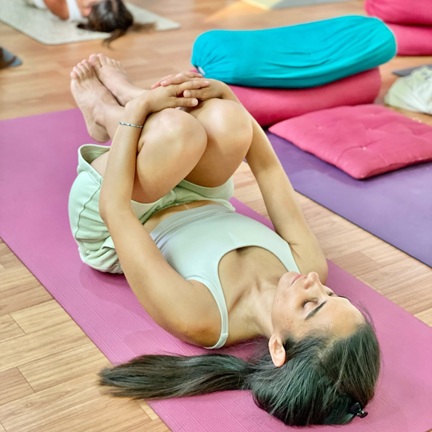
Pawanmuktasana Benefits
The main benefit is simple: the pose presses the belly gently, and this can help gas move out. Here are the key Pawanmuktasana benefits:
- Helps release gas. When your thighs press your belly, trapped air in the gut can move. This is why it is called the wind-relieving pose.
- Helps with bloating. Many people feel lighter and less “full” after a few rounds.
- Supports digestion. The soft press works like a belly massage. It may help the bowels move, which can help with mild constipation.
- Relaxes the lower back. The knee-to-chest shape gently stretches the lower back and hips. It feels good after long hours of sitting.
- Loosens the hips. Bending the knees deeply makes the hip joints more free.
- Tones the belly muscles. Lifting the head uses the stomach muscles lightly.
- Calms the mind. Slow breathing in a curled-up position can make you feel safe and calm.
What Does Science Say?
Research on this one pose alone is limited. But it has been used in yoga studies for the gut. In a study at AIIMS, New Delhi, men with IBS (a common gut problem with loose motions) did 12 yoga poses, including Pawanmuktasana, and one breathing practice, twice a day for 2 months. Their gut symptoms and worry levels improved, like the group that took medicine. This was a small study of 22 men, and the pose was one part of a full routine.
Our honest view: Pawanmuktasana is a helpful habit, not a cure. It works best with healthy food, enough water, fibre, and daily walking. If your stomach problem is severe or lasts a long time, please see a doctor.
Easy Variations and Changes
Everyone’s body is different. Choose the version that feels right for you.
| Who | What to change |
|---|---|
| Complete beginners | Do only the one-leg version. Keep your head on the floor. |
| Neck pain | Do not lift your head. Put a thin pillow under it. |
| Tight hips or big belly | Keep the knees a little apart. Hold the back of the thighs, not the shins. |
| Older people | Do it on a bed or a thick mat. Hold each side for 3 to 5 breaths only. |
| Cannot lie down | Sit on a chair. Hug one knee up to the chest, then the other. |
| Want a little more | Rock slowly side to side, or make small circles with your knees. |
You can also use a strap or a towel around the shin if your hands cannot reach.
Simple Tips for Beginners
If you are trying this pose for the first time, these small tips will make it easy and safe:
- Go slow. Move into the pose and out of it slowly. There is no hurry.
- Start small. On the first few days, do only 2 or 3 rounds. Add more rounds slowly.
- Use a soft surface. A mat or a folded blanket protects your back and spine.
- Keep your face relaxed. Do not tighten your jaw or shoulders.
- Feel, do not force. A light press on the belly is enough. You should never feel pain.
- Be regular. Doing it for 5 minutes every day is better than doing it for 30 minutes once a week.
- Do not worry about sound. Passing gas during this pose is normal. That is the whole point of the wind-relieving pose!
If you have any health problems, learn the pose first from a trained yoga teacher.
Common Mistakes to Avoid
- Doing it after a meal. A full stomach plus pressure can cause discomfort. Wait 3 to 4 hours.
- Pulling too hard. The press should be soft. If it hurts, you are pulling too much.
- Holding your breath. Keep breathing slowly all the time.
- Pulling the neck up. Lift your head with your belly muscles, not by straining the neck. If the neck hurts, keep the head down.
- Lifting the other leg. In the one-leg version, keep the straight leg resting on the floor.
- Getting up fast. Come out slowly and rest for a moment.
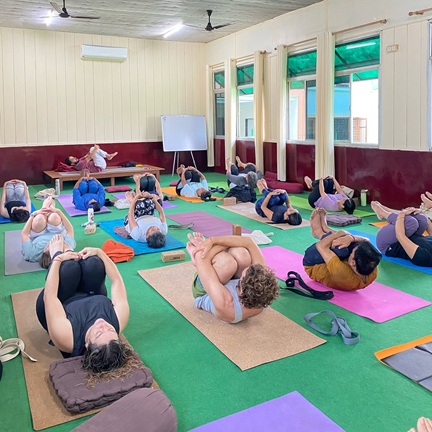
Who Should Not Do Pawanmuktasana (contraindications)
This pose is safe for most people. But please do not do it, or ask your doctor first, if you have:
- Recent surgery on the belly, back, or hips, including a C-section.
- Hernia or piles (haemorrhoids) that are painful.
- Pregnancy. Avoid pressure on the belly. After the first 3 months, doctors often advise not lying flat on the back for long. Ask your doctor about safe poses.
- Slipped disc or serious back pain.
- Neck problems such as cervical spondylosis. Keep your head down, or skip the pose.
- High blood pressure or heart problems. Do not lift the head, and do not strain.
- Knee injury that hurts when you bend it fully.
Also, some teachers suggest going easy during periods. Listen to your body.
Stop at once if you feel sharp pain, dizziness, or strong discomfort.
Best time, how long, and how many times
| Question | Simple answer |
|---|---|
| Best time | Early morning, on an empty stomach. Many people do it after waking up, even before getting out of bed. |
| After food? | Wait 3 to 4 hours after a full meal. |
| How long to hold | 5 to 10 slow breaths (about 20 to 60 seconds). |
| How many rounds | 3 to 5 rounds. One round = right leg, left leg, both legs. |
| How often | Daily is fine if it feels good. |
Good poses to do with it
- Before:Uttanpadasana (Raised Legs Pose) or gentle leg stretches.
- After:Bhujangasana (Cobra Pose) to bend the back the other way, then Shavasana to rest.
- With it:Apana Vayu Mudra and slow belly breathing also support digestion.
Conclusion
Pawanmuktasana is small, simple, and very useful. Just a few minutes each morning can help you feel lighter, ease gas, and relax your lower back. Start with one leg, breathe slowly, and never force it. Over time, it can become a calm and healthy part of your day.
Want to learn yoga poses like this the right way, with trained teachers? Join our 200 Hour Yoga Teacher Training in Rishikesh and build a strong base in Hatha Yoga.
Frequently Asked Question
What is Pawanmuktasana in English?
In English, Pawanmuktasana is called the Wind Relieving Pose. It is also known as the Knee to Chest Pose or Wind Release Pose.
Does Pawanmuktasana really remove gas?
It can help. The gentle press on the belly can help trapped gas move out. Many people feel relief within a few minutes. It is not a medicine, so see a doctor if gas pain is strong or frequent.
What is Ardha Pawanmuktasana?
Ardha Pawanmuktasana is the half version of the pose. You bring only one knee to the chest at a time. It is best for beginners.
Can I do Pawanmuktasana after eating?
No. Do it on an empty stomach or 3 to 4 hours after a meal. Pressing a full stomach can cause discomfort.
Is Pawanmuktasana good for constipation?
It may help with mild constipation because it massages the belly. For best results, also drink enough water, eat fibre and stay active.
Can Pawanmuktasana reduce belly fat?
Not directly. No single pose burns fat from one area. It can tone the belly muscles a little, but fat loss needs good food and regular exercise.
Can I do Pawanmuktasana during pregnancy?
It is best to avoid it, because it presses the belly. Ask your doctor or a trained prenatal yoga teacher for safe options.
Which are the best wind relieving yoga poses?
Other helpful wind relieving yoga poses include Apanasana, Vajrasana (sitting on the heels after meals), Balasana (Child’s Pose), Supta Matsyendrasana (lying twist) and Marjariasana (Cat-Cow).
This article is for general information and is not medical advice. If you have a respiratory or heart condition, are pregnant, or are unsure whether these practices suit you, please speak to your doctor before beginning.

 +91-8433225327,
 Rishikul Yogshala Rishikesh, Narayan Kunj, Jonk Village, Ram Jhula, Swarg Ashram, Rishikesh, Uttarakhand 249304
 By Airway
 By Railway
 By Bus/Cabs