


Heart Chakra (Anahata): Meaning, Signs of Blockage and How to Balance It
Table of Contents
- What Is the Heart Chakra?
- The Meaning Behind the Name
- Why the Heart Chakra Is Called the Bridge?
- Signs of a Blocked Heart Chakra
- Signs of an Overactive Heart Chakra
- What Can Close the Heart Chakra?
- 6 Ways to Balance the Heart Chakra
- 1. Heart-Opening Yoga Poses
- 2. Pranayama (Breathing Practices)
- 3. Chanting the Bija Mantra “Yam”
- 4. Hand Mudras
- 5. Loving-Kindness (Metta) Meditation
- 6. Daily Life Habits
- What Does Science Say?
- A Simple 10-Minute Heart Chakra Practice
- When to Talk to a Doctor
- Final Thoughts
- FAQs
- What is the heart chakra?
- Where is the heart chakra located?
- What colour is the heart chakra?
- What does “Anahata” mean?
- What is the mantra for the heart chakra?
- How do I know if my heart chakra is blocked?
- What are the best yoga poses for the heart chakra?
- How long does it take to balance the heart chakra?
- Can the heart chakra be overactive?
- Is the heart chakra connected to the physical heart?
- Which chakra should I work on first?
Think of the last time you felt truly connected to someone. Maybe you hugged a friend, helped a stranger, or sat quietly and felt grateful. Most people feel that moment in the chest. Yoga has a name for that place: the heart chakra, or Anahata.
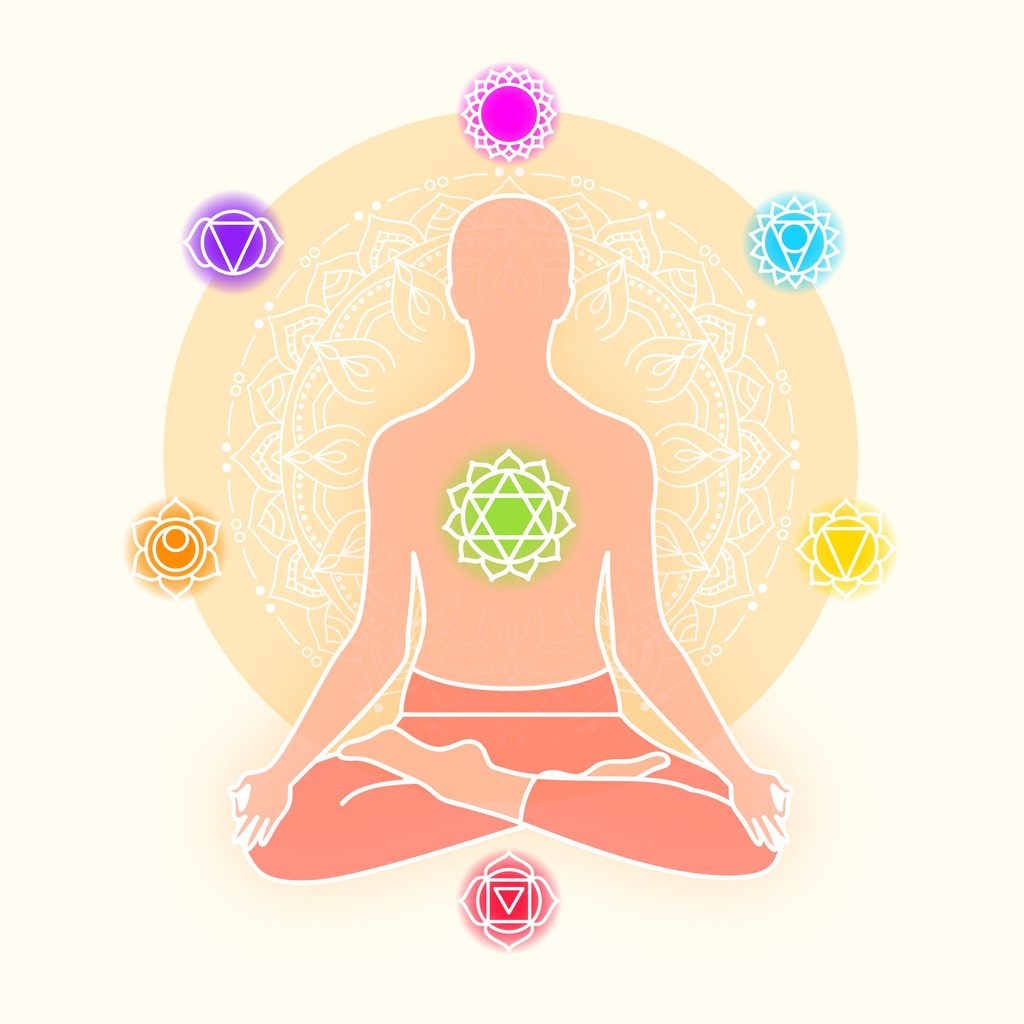
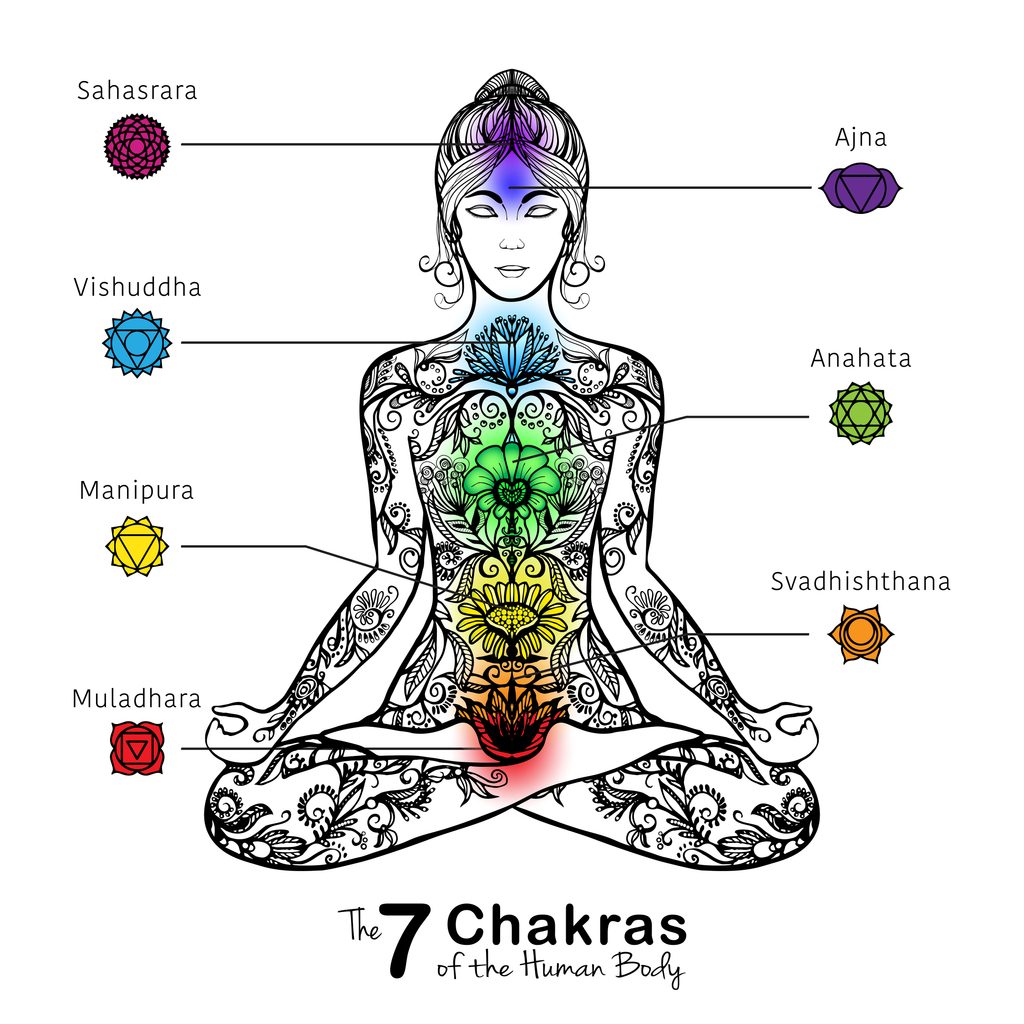
The heart chakra (Anahata) is the fourth of the seven main chakras. It sits in the centre of the chest. In yogic teaching it governs love, compassion, forgiveness, and our ability to connect with others. Its colour is green, its element is air, and its seed mantra is “Yam.”
In this guide, we will cover what Anahata means, how to recognise when it feels closed, and which practices help.
What Is the Heart Chakra?
The heart chakra is one of the seven main energy centres described in yogic and tantric texts. If you are new to the idea, you can start with our article on the 7 chakras.
Anahata is placed in the centre of the chest, close to the physical heart. Traditionally, it is drawn as a green lotus with twelve petals. Inside the lotus is a six-pointed star made of two triangles, one pointing up and one pointing down. This shape stands for balance between the earthly and the spiritual sides of life.
It is important to say clearly that chakras are part of a spiritual and philosophical system. They are not organs that a scan can find. Many people find the framework useful as a way to understand their emotions and body, and that is how we use it here.
Anahata at a Glance
| Detail | Heart Chakra |
|---|---|
| Sanskrit name | Anahata |
| Meaning | “Unstruck” or “unhurt” |
| Number | Fourth of seven |
| Location | Centre of the chest |
| Colour | Green (pink in some traditions) |
| Element | Air (Vayu) |
| Seed mantra | Yam |
| Symbol | Twelve-petalled lotus with two interlocking triangles |
| Sense | Touch |
| Themes | Love, compassion, forgiveness, trust, acceptance |
The seed syllable is “yam.” The air element is linked to this chakra, which is why the mantra sits at the centre of the lotus.
The Meaning Behind the Name
“Anahata” means “unstruck.” It comes from the idea of anahata nada, the inner sound that is not made by two things hitting each other. Yogis describe it as a subtle sound heard in deep meditation.
There is a gentle lesson in the name. Under all the hurt, disappointment, and fear we collect, there is a part of us that stays whole. The heart chakra practice is about reaching that part again.
Why the Heart Chakra Is Called the Bridge?
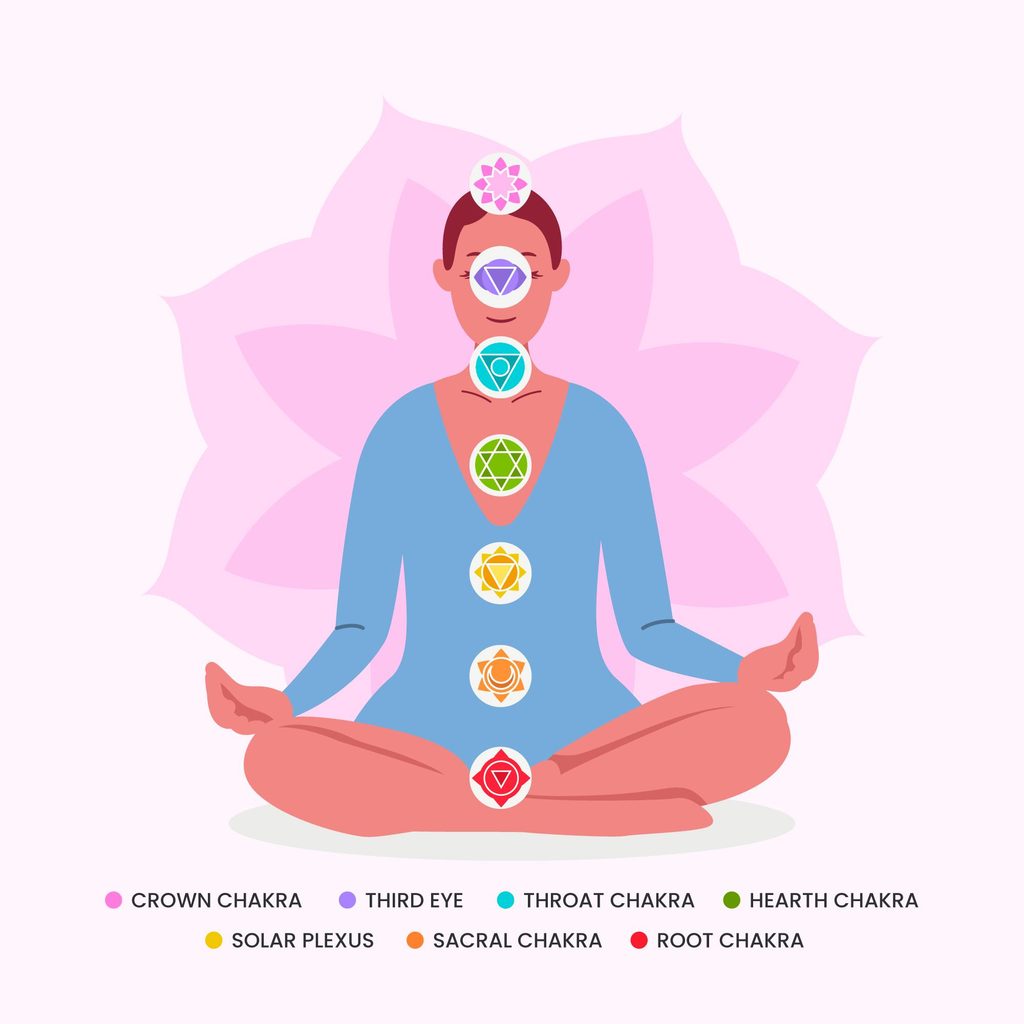
The seven chakras run from the base of the spine to the crown of the head. The first three, Root, Sacral and Solar Plexus, deal with survival, pleasure and personal power. The top three, Throat, Third Eye and Crown, deal with expression, insight and spiritual awareness.
Anahata sits right in the middle. It joins the two halves. In simple terms, it is where “what I need” begins to turn into “what we need.” This is why many teachers say a closed heart makes it hard to grow in any other direction.
Signs of a Blocked Heart Chakra
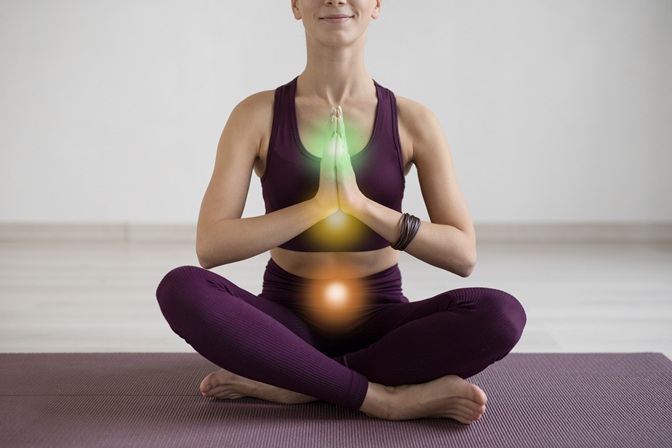
In yogic teaching, a blocked or underactive Anahata can show up in feelings and behaviour first. You may notice:
- Difficulty trusting people, even those who have earned it
- Holding on to old grudges or finding it hard to forgive
- Feeling lonely even when surrounded by people
- Staying emotionally distant or avoiding closeness
- Being very critical of yourself or of others
- Fear of being hurt that keeps you from forming new bonds
- Grief that feels stuck long after the loss
Traditional sources also link a blocked heart chakra with tightness in the chest, shallow breathing, and stiffness in the upper back and shoulders. These are associations from yogic tradition. They are not diagnoses. If you have any of these physical symptoms, please read the doctor section below.
Signs of an Overactive Heart Chakra
The opposite can also happen. When this energy is out of balance in the other direction, a person may:
- Give so much to others that they forget their own needs
- Struggle to say no
- Become very clingy or dependent in relationships
- Feel hurt easily or take things personally
- Lose themselves in other people’s problems
Balance means loving others without abandoning yourself. A healthy heart chakra includes self-love, too.
What Can Close the Heart Chakra?
Yoga does not say there is one cause. Common triggers include:
- Heartbreak, betrayal or the loss of someone close
- Childhood experiences where love felt conditional
- Long-term stress and emotional overload
- Holding in anger or resentment
- Social isolation
- Slouching posture that closes the chest, such as long hours at a desk or phone
The last one is worth noticing. When we are sad or anxious, the shoulders roll forward and the chest caves in. Over time, that posture can feed the same feelings it came from.
6 Ways to Balance the Heart Chakra
1. Heart-Opening Yoga Poses
These poses stretch the chest, shoulders, and upper back. Move slowly and let your breath lead.
- Bhujangasana (Cobra Pose): Lie on your belly with hands under your shoulders. On an inhale, lift your chest while keeping your lower ribs on the floor. Keep your neck long. Hold for 5 breaths.
- Ustrasana (Camel Pose): Kneel with knees hip-width apart. Place your hands on your lower back and lift your chest up and back. Move to your heels only if it feels comfortable. This is a deeper backbend, so go gently.
- Setu Bandhasana (Bridge Pose): Lie on your back with knees bent. Press your feet down and lift your hips. Roll your shoulders under to open the chest.
- Matsyasana (Fish Pose): Lying on your back, lift your chest and rest the crown of your head lightly on the floor. Place a bolster under your upper back if your neck feels tight.
- Gomukhasana arms (Cow Face arms): Even without the full pose, this arm position opens the shoulders and front chest.
- Anahatasana (Heart-Melting Pose): From all fours, walk your hands forward and lower your chest toward the floor. It is a soft stretch for the upper spine.
Beginner tip: Do a few rounds of Cat-Cow first to warm up the spine before moving into deeper backbends.
2. Pranayama (Breathing Practices)
Because the heart chakra is linked with air, breathwork is a natural fit.
- Deep three-part breath (Dirga Pranayama): Breathe into the belly, then the ribs, then the upper chest. Exhale in the reverse order. Do 10 rounds.
- Alternate nostril breathing (Nadi Shodhana): Breathe in through one nostril and out through the other, with no breath holding. It calms the mind and steadies the breath.
- Bhramari (Humming Bee Breath): Hum gently on the exhale. Feel the vibration in the chest.
You can read more about calming the mind through breath in our breath awareness meditation guide.
3. Chanting the Bija Mantra “Yam”
Sit comfortably. Place one hand on your chest. Inhale deeply, then chant “Yaaaam” slowly as you exhale, letting the sound hum in the chest. Repeat for 5 to 10 minutes. You can also chant it silently if you prefer.
4. Hand Mudras
Place your hands in Padma Mudra (Lotus Mudra) at the chest: palms together, with the base of the palms, thumbs, and little fingers touching while the other fingers spread like petals. Some teachers also use Anahata Mudra or simple Anjali Mudra (palms together at the heart). Hold for a few minutes with steady breathing.
5. Loving-Kindness (Metta) Meditation
This is one of the most direct ways to work with the heart. Sit quietly and silently repeat these phrases, first for yourself, then for a loved one, then for someone neutral, and finally for someone you find difficult:
“May you be happy. May you be healthy. May you be at peace.”
Start with yourself. Many people find that part hardest, and that is usually the part that needs the most care. For more on starting a practice, see the benefits of meditation.
6. Daily Life Habits
Chakra work does not stay on the mat. Small habits matter:
- Spend time in nature, especially around green spaces
- Practise gratitude. Write down three things each night
- Forgive in small ways, starting with minor annoyances
- Spend real time with people you care about
- Do something kind without telling anyone
- Eat fresh green vegetables and leafy foods, which fit the colour theme and are good for you anyway
What Does Science Say?
There is no scientific evidence that chakras exist as physical energy wheels. Chakras are a yogic concept. What research does look at are the practices used to work with them: yoga, breathing, meditation, and stress reduction.
On that side, there is encouraging but limited evidence. In 2017, the American Heart Association reviewed the research and concluded that meditation might benefit the heart, but the studies were modest in size and quality, so meditation should be considered a potential lifestyle option rather than a proven treatment. The AHA has also noted that some studies suggest yoga may help with blood pressure, cholesterol, and stress, though many of those studies are small.
A large Indian trial that followed nearly 4,000 heart attack survivors across 24 hospitals also reported that a low-cost yoga programme was safe and offered benefits to patients.
So the honest takeaway is this: yoga, breath work, and meditation are safe for most people; they can reduce stress, and stress reduction supports heart health. Think of them as a helpful addition to medical care, never a replacement for it.
A Simple 10-Minute Heart Chakra Practice
You can do this at home any time of day.
- Settle (1 minute): Sit with your spine tall. Close your eyes. Place one hand on your heart.
- Breathe (3 minutes): Take slow, deep breaths. Feel your chest rise and fall under your hand.
- Visualise (2 minutes): Imagine a soft green light glowing in the centre of your chest. With each inhale, it grows a little brighter and wider.
- Chant (2 minutes): Chant “Yam” quietly on each exhale.
- Send kindness (2 minutes): Silently repeat, “May I be happy. May I be at peace. May all beings be at peace.”
- Rest: Sit in stillness for a few breaths, then open your eyes slowly.
When to Talk to a Doctor
Please do not treat chest symptoms as a chakra problem. See a doctor promptly if you have chest pain, pressure or tightness, shortness of breath, an irregular heartbeat, or dizziness. These can be signs of a medical condition that needs proper care.
Also speak to your doctor before starting backbends or breath-holding practices if you have a heart condition, high blood pressure, a neck or spine problem, or if you are pregnant. If you have heart or lung concerns, avoid breath retention and keep your practice gentle.
Grief, deep sadness, or anxiety that lasts for weeks is also worth discussing with a doctor or counsellor. Yoga can sit beside that support, not in place of it.
Final Thoughts
The heart chakra asks us to be a little softer, with others and with ourselves. You do not need to force it open. Start small: a few slow breaths, one backbend, one kind thought. Over time, these small acts add up.
If you want to go deeper into chakras, pranayama and meditation under experienced guidance, you can explore our 200 Hour Yoga Teacher Training in Rishikesh, where these teachings are part of the curriculum.
FAQs
What is the heart chakra?
The heart chakra, or Anahata, is the fourth of the seven main chakras in yoga. It is located in the centre of the chest and is linked with love, compassion, forgiveness and emotional connection.
Where is the heart chakra located?
It sits in the centre of the chest, near the physical heart. In yogic texts, it is described along the spine, at the level of the heart.
What colour is the heart chakra?
Green is the main colour. Some traditions also use pink to represent tenderness and gentle love.
What does “Anahata” mean?
It means “unstruck” or “unhurt.” It points to the idea that a part of us stays whole and untouched by pain.
What is the mantra for the heart chakra?
The seed mantra is “Yam.” You chant it slowly on the exhale, feeling the vibration in your chest.
How do I know if my heart chakra is blocked?
In yogic teaching, signs include trouble trusting others, holding on to grudges, loneliness, fear of closeness, and harsh self-criticism. These are emotional and traditional signs, not medical ones.
What are the best yoga poses for the heart chakra?
Cobra, Camel, Bridge, Fish, Cow Face Arms, and Heart-Melting Pose are commonly used because they open the chest, shoulders, and upper back.
How long does it take to balance the heart chakra?
There is no fixed time. Some people feel calmer after a single session of breathing and meditation. Others work with it for months. A short daily practice works better than one long session now and then.
Can the heart chakra be overactive?
Yes. An overactive heart chakra can look like people-pleasing, difficulty saying no, emotional dependence or losing yourself in other people’s needs.
Is the heart chakra connected to the physical heart?
Tradition links the two through location and symbolism. Modern science has not shown that chakras affect the physical heart. If you have any heart concern, see a doctor.
Which chakra should I work on first?
Many teachers suggest starting from the root chakra and moving up, since it builds a stable base. That said, a gentle heart practice such as loving-kindness meditation is safe to begin with at any time.
This article is for general information and is not medical advice. If you have a respiratory or heart condition, are pregnant, or are unsure whether these practices suit you, please speak to your doctor before beginning.


 +91-8433225327,
 Rishikul Yogshala Rishikesh, Narayan Kunj, Jonk Village, Ram Jhula, Swarg Ashram, Rishikesh, Uttarakhand 249304
 By Airway
 By Railway
 By Bus/Cabs