








Humility in Yoga: A Gentle Guide to the Quietest Virtue of the Practice
Table of Contents
Of all the qualities yoga gently cultivates, humility may be the quietest — and the hardest. The pose you can’t yet do, the breath that won’t deepen, the meditation that turns into thirty minutes of grocery lists: each one is a small invitation to humility. The yogic tradition values it deeply, not as self-deprecation, but as the honest recognition that we are always students. In this guide, we’ll explore what humility means in yoga, how it shows up in asana, pranayama, and meditation, and gentle ways to cultivate it.
What is Humility in Yoga
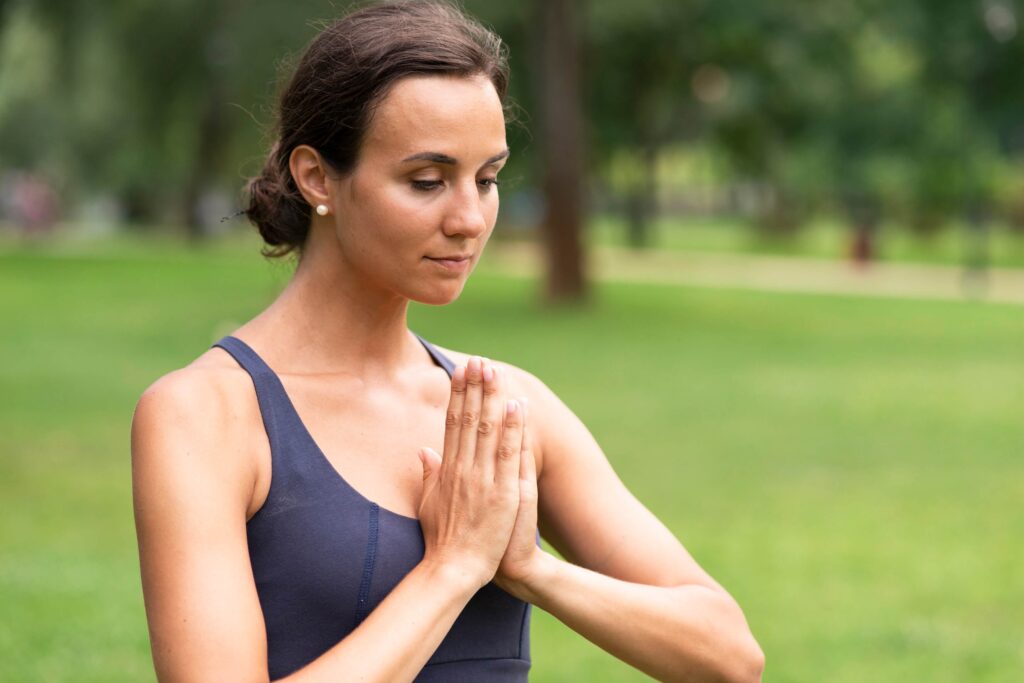
Many ask what is humility in yoga, well to answer that in a precise manner, humbleness refers to a mindset of acknowledging your limitations, and letting go of ego and pride, and approach the practice with an open mind. It’s about not comparing themselves with others, but about learning and improving in the practice. Acceptance is the key to humility.
In yoga, humility is based on finding our own shortcomings and limits. By accepting our weaknesses, one evolve as individuals and discover more about themselves. Yoga is not a competition, and it lays a strong emphasis one accepting oneself and their physical limitations without comparison or judgement.
Humility Vs Ego
In Humility one embraces openness and surrender. In yoga, humility allows practitioners to approach the mat without expectations, avoiding any form of comparison and judgement. Humbleness helps to create a balanced mindset where progress is celebrated without any form of arrogance!
The Role of Humility in Asana Practice

The Notion of Letting Go of Perfectionism
Many yoga practitioners get caught up in achieving the perfect pose. However, with humbleness, it teaches individuals that every posture in a journey, and that it’s okay to fall, or even take a step back.
Listen to the body
Humbleness in yoga encourages students to listen to their bodies rather than push beyond their limits. This is a great way of preventing injury and fostering a sustainable yoga practice. Thus, knowing when to rest, is a sign of wisdom and not a sign of weakness.
To Be Present and Not Competitive
If one is in a class setting; it becomes easy to compare oneself with others. Humbleness reminds the practitioners that yoga is not a competition but an individual journey of spiritual growth and self-discovery. Thus staying present and focusing inward allows for true growth.
Also Read: Prasarita Padottanasana: Benefits, Modifications and Variations
Cultivating Humility in Pranayama and Meditation

Surrendering to the Breath
Pranayama requires patience and presence. One should know that humility in pranayama means accepting the natural rhythm of the breath rather than forcing control. One has to learn to trust the process and allow the breath to guide the practice!
Embrace the Mind’s Limitations
Meditation can be very challenging, especially when the mind is extremely restless. Humility in meditation means acknowledging these distractions without any form of frustration. Practitioners here learn to observe their thoughts with kindness and non-attachment.
The Spiritual Dimension of Humility in Yoga
- Ishvarapranidhana: Surrendering to a Higher Power: One of the very core principles of yoga, Ishvarapranidhana, translates to surrendering to a higher power. This doesn’t really mean religious devotion but rather trusting the universe, the practice, and also the wisdom that unfolds over time.
- Accepting life’s Flow: Yoga as a practice teaches that life is ever-changing. With humility, individuals accept challenges and uncertainties with grace. Here one starts to understand that growth comes from struggle and discomfort.
Practical Ways to Cultivate Humility in Yoga
- Adopt a Beginner’s Mindset: It doesn’t matter how advanced one becomes in yoga; one should approach each session with curiosity and openness and be open to all kinds of learning.
- Practice Gratitude: Gratitude shifts the focus from what one lacks to what one has. One should be thankful for the ability to practice yoga, as that fosters humility and contentment.
- Serve Others: Once you share yoga with others, whether it be through teaching, encouragement, or community involvement, this helps to build humbleness and selflessness. By seva, this means to lend a hand to people without asking for anything in return. Many Yoga Schools in Rishikesh teach their students the value of serving the underprivileged and giving back to the community. The students develop a sense of interconnectivity as a result of unselfish devotion, and they also learn that their acts can have a wonderful impact on the world!
- Accept Feedback Gracefully: One should be open to learning from teachers and peers without any defensiveness. This helps to foster growth and humility. Take feedback in a positive way and don’t feel bad if someone criticises your practice; take it as a learning, and grow with every feedback you get.
- Reflect on the Bigger Picture: Yoga as a practice, as we all know, is more than just physical postures; it’s a path to spiritual growth and connecting with yourself. This as a practice helps to prevent ego-driven thoughts and focuses on self-discovery.
Conclusion
Thus, with yoga one can engage with humbleness and learn to be a humble person who has a bigger heart and is considerate about their surroundings. humbleness in yoga inspires us to accept impermanence, remove our ego, face our limits and practice selfless service!
Humility in yoga is a lifelong practice that deepens one’s connection with the self, the community, and the universe. It allows practitioners to embrace their strengths and limitations with grace! With letting go of the ego, surrendering to the practice, and having an open heart, one can experience the wisdom and joy that yoga offers.
If you’re someone who wants to practice yoga at a professional level: they can enroll at Rishikul Yogshala, which offers many programs and courses such as 200 Hour Yoga TTC in Rishikesh, 300 Hour Yoga Teacher Training in Rishikesh, and 500 Hour Yoga Teacher Training in Rishikesh.
With yoga and humility, one can face the world with a clear understanding of our place in it.
Some Frequently Asked Questions About Humility in Yoga
1. What is humility in yoga?
Humility in yoga is about having an open mindset and also being self-aware. It’s also about letting go off the ego and learn with every fall or setback that comes your way.
2. Why is humility important in Yoga?
Humility is very important in yoga, as it helps one to remain open to growth, prevents any form of injuries, and also has a deeper spiritual growth and leads to personal development.
3. Does humility mean I should not challenge myself in yoga?
No! Humility means approaching challenges with awareness and by understanding your body’s capabilities and not forcing yourself to do some asanas that are not beneficial for you!
This article is for general information and is not medical advice. If you have a respiratory or heart condition, are pregnant, or are unsure whether these practices suit you, please speak to your doctor before beginning.

 +91-8433225327,
 Rishikul Yogshala Rishikesh, Narayan Kunj, Jonk Village, Ram Jhula, Swarg Ashram, Rishikesh, Uttarakhand 249304
 By Airway
 By Railway
 By Bus/Cabs