








Bakasana and Kakasana: A Gentle Guide to Crane Pose, Crow Pose, and the Variations Beyond Basics
Table of Contents
Many yoga students learn ‘Crow Pose’ in their first arm balance class. What they often don’t learn is that Crow and Crane are technically different poses: Kakasana — Crow Pose — keeps the arms bent; Bakasana — Crane Pose — straightens them. Both are beautiful, both are demanding, and once you’ve found steady balance in the first, a whole family of variations opens up. While our companion post covers the foundational first-arm-balance practice, this guide explores the variations and the kind progression beyond the basics.
What is Bakasana (Crane Pose) and Kakasana (Crow Pose)
Bakasana, also known as Crane Pose, and Kakasana, known as Crow Pose, are similar yoga poses that involve body balance and strength of the core and back muscles. The Sanskrit word ‘Baka’ means ‘crane, ‘Kaka’ means ‘crow, and ‘asana’ refers to the yoga posture. It’s called crane pose because your body looks like a crane when you do it correctly. Similarly, Crow Pose is also named because of the crow-like appearance of your body in this pose.

Bakasana yoga is a pose for those who are at an intermediate to advanced level in yoga. In this pose you balance on your hands, place your shins on your upper arms, and lift your feet off the ground. Performing this pose requires a lot of concentration, strength, and coordination throughout your body.
Steps to do Bakasana Yoga
Below is a step-by-step guide to performing Bakasana yoga, which will help you find the right steps, but it is advisable to take our 200 Hour Yoga TTC in Rishikesh to learn and practise the yoga asanas under the guidance of an experienced and certified yoga teacher.
- Begin in a squatting position with your feet close together and your knees apart.
- Place your hands on the mat in front of you, shoulder-width apart, fingers spread wide.
- Bend your elbows slightly and press your knees against the upper arms or in your armpits if you feel comfortable.
- Shift your weight forward onto your hands and lift your hips, tucking in the tailbone.
- Engage your core muscles, and with a controlled movement, lift your feet off the ground, balancing on your hands.
- Keep your drishti (gaze) forward on the ground and breathe deeply. Hold the Bakasana for as long as you feel comfortable, then release.
Benefits of Bakasana
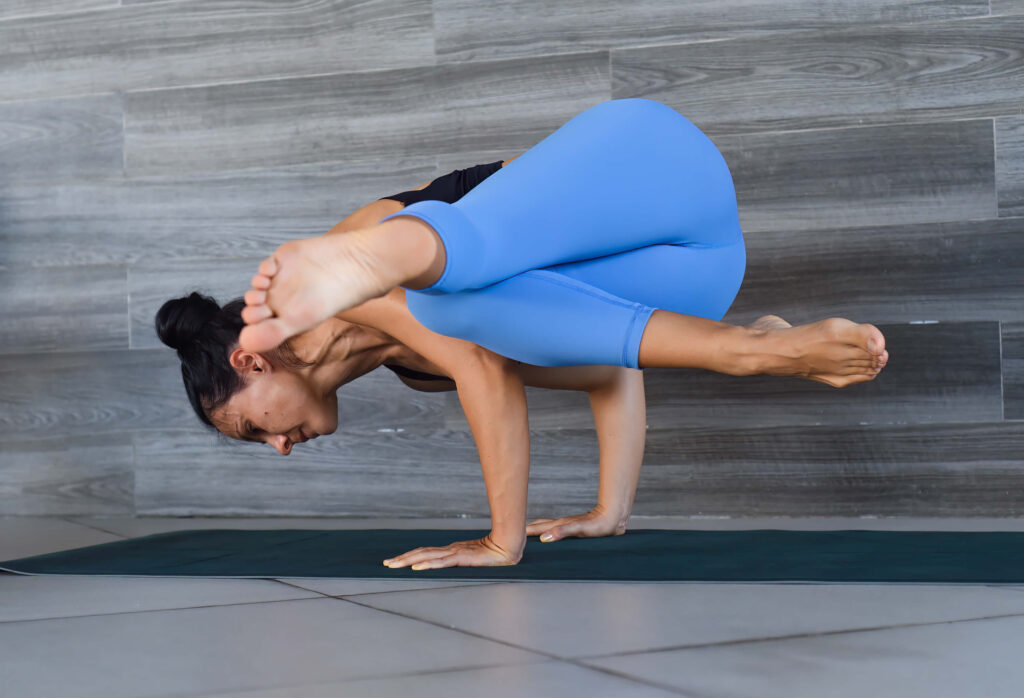
This asana offers a variety of physical and mental benefits, some of which are described below:
- Strengthens arms and wrists: Balancing your body weight on your hands in Kakasana provides significant arm and wrist strength that helps prevent injuries and improves upper body strength.
- Enhances Core Stability: This yoga requires a strong core to maintain balance. Regular practice of the Crane Pose and Crow Pose strengthens the abdominal muscles, leading to better core stability.
- Improves Balance and Concentration: This pose improves your balance and concentration, thereby increasing your mind-body connection and mental focus.
- Tones Abdominal Organs: The compression of the abdomen in Bakasana and Crow pose massages and stimulates the digestive organs, aiding in digestion.
- Increases spinal flexibility: This asana makes your spine more flexible and adaptable, thereby reducing pressure on your joints and ligaments.
- Improves overall health: This asana helps improve the overall health of the body by engaging the core and back muscles, shoulders, arms, legs, and wrists. It also provides relief from back problems caused by bad posture and lifestyle.
- Develops Self-confidence: Successfully mastering Crane Pose or Crow Pose can boost your self-confidence and esteem, as it requires overcoming the fear of falling.
Difference Between Bakasana (Crane Pose) and Kakasana (Crow Pose)
While Bakasana and Kakasana look similar, the only difference is that in Bakasana the arms are kept straight like the long legs of a crane, and the knees are kept close to the underarms, whereas in Kakasana the balance is done on the bent arms.
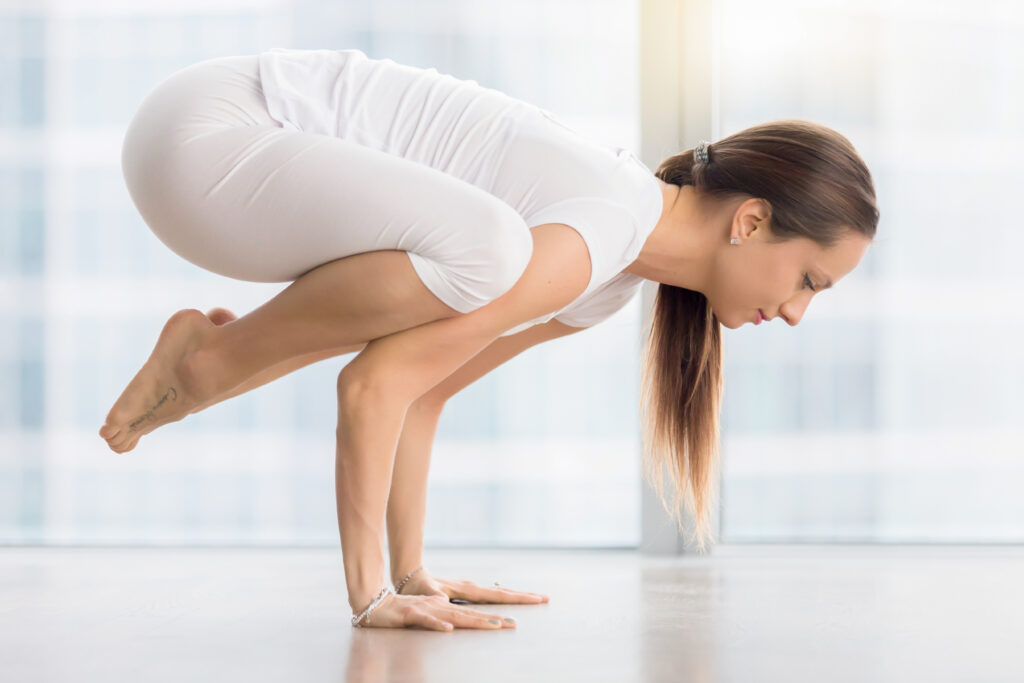
Tips for a Successful Bakasana
While Crane Pose and its variations can be challenging, with regular practice and patience, you can achieve success. Below are some tips to help you successfully practise Bakasana yoga:
- Warm-Up: Be sure to warm up adequately, focusing especially on the wrists, arms, and core muscles.
- Focus on Breath: Taking slow and steady breaths is important to stay balanced and focused. Remember to keep breathing while doing the asana.
- Engage Core Muscles: Remember to engage your core muscles throughout the Crane pose to maintain strength.
- Gaze Forward: Fix your vision at a point slightly ahead of you to help with balance and focus.
- Practice Regularly: Like any yoga pose, consistency is the key. Dedicate time to practising Crane Pose and Crow Pose regularly to see progress.
- Use props: Placing a folded blanket under your head or a yoga block under your feet can provide additional support to overcome the fear of falling.
Conclusion
In conclusion, mastering the Crane Pose and Crow Pose requires physical strength, coordination, and mental focus. To fully learn and perfect these challenging asanas, consider joining our Yoga School in Rishikesh. We offer a range of programmes, including the 100 Hour Yoga Teacher Training in Rishikesh, 200 Hrs Yoga TTC In Rishikesh, 300 Hour Yoga Teacher Training in Rishikesh, and 500 Hour Yoga Teacher Training in Rishikesh. These courses provide the guidance and environment needed to advance your practice and enjoy the profound rewards of this ancient discipline.
This article is for general information and is not medical advice. If you have a respiratory or heart condition, are pregnant, or are unsure whether these practices suit you, please speak to your doctor before beginning.

 +91-8433225327,
 Rishikul Yogshala Rishikesh, Narayan Kunj, Jonk Village, Ram Jhula, Swarg Ashram, Rishikesh, Uttarakhand 249304
 By Airway
 By Railway
 By Bus/Cabs