








Full Moon Meditation: Meaning, Benefits and How to Practise
Table of Contents
- What is Full Moon Meditation?
- The Spiritual Significance of Full Moon Meditation in Yogic Culture
- Balancing the Ida and Pingala Through Meditation
- The Peak of Prana
- Full Moon Meditation Benefits
- How to Do Full Moon Meditation: Step-by-Step Process
- Best Time to Meditate on a Full Moon
- Best Full Moon Meditation Techniques to Practice
- 1. Breath Awareness Meditation
- 2. Mantra Meditation
- 3. Trataka Meditation
- Can Beginners Practise Full Moon Meditation?
- Full Moon Meditation vs New Moon Meditation: What Is the Difference?
- Common Mistakes to Avoid During Full Moon Meditation
- Final Thoughts on Full Moon Meditation
- Key Frequently Asked Questions About Full Moon Meditation
- What is the Significance of Full Moon Meditation in Yogic culture?
- Can Beginners Meditate on the Full Moon?
- What Is the Best Time to Practise Full Moon Meditation?
- Is it Necessary to Meditate Outside in the Full Moon?
- How to meditate on cloudy and rainy nights?
- Who Should Avoid Full Moon Meditation?
- Why Do Practitioners Give Special Importance to Certain Tithis?
Why do yogis treat the full moon night differently from every other night?
In the yogic tradition, the moon mirrors the mind. On Purnima, when it is fully lit, the mind is said to turn naturally inward.
That is why seekers have meditated under the full moon for generations. Here is what the practice means, and how you can try it tonight in five minutes.
What is Full Moon Meditation?
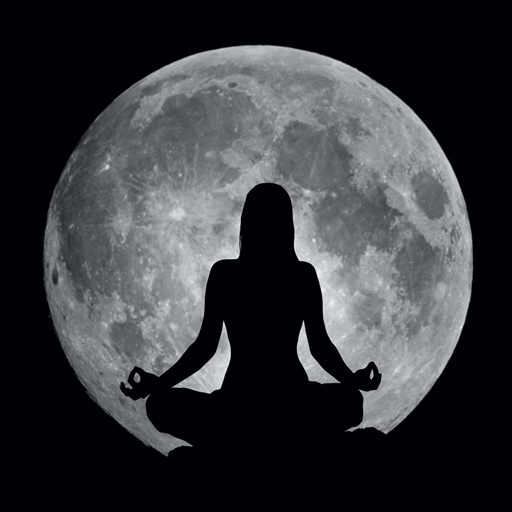
Full moon meditation is an ancient, sacred practice in which practitioners sit in moonlight to contemplate. Full moon meditation is about using the highest energetic qualities of the lunar cycle. Practitioners meditate to balance their emotions and enhance their spiritual awareness. The full moon is called Purnima in Sanskrit and traditionally represents wholeness and inner purity.
In the traditional yogic culture, the night of Purnima is an auspicious night in which they pray and meditate under moonlight. The full moon night provides them an opportunity to take a pause from their life to reflect inward and dive deeper into their meditation practice.
The Spiritual Significance of Full Moon Meditation in Yogic Culture
In Eastern philosophy, the moon represents the mind (Manas). Meditating on Purnima allows the practitioners to sync themselves with Mother Nature, which builds a bridge between individual consciousness and cosmic energy.
Balancing the Ida and Pingala Through Meditation
In yogic culture, the sun represents a very important energy channel within us called Pingala. It is an active, masculine solar energy channel. The moon symbolizes the Ida energy channel, a receptive and feminine lunar energy channel. The full moon meditation helps enhance the intuitive qualities of these energy channels together.
The Peak of Prana
Yogic tradition holds that prana, the vital energy, is abundant on Purnima, which is why practices done on this night are believed to go deeper.
Full Moon Meditation Benefits
A full moon night offers a quiet pause that many practitioners say lifts their mood and eases tension.
- Emotional Release and Cleansing: Many practitioners find that sitting quietly on a full moon night lets suppressed thoughts and feelings surface, so they can be acknowledged and released.
- Enhanced Intuition: Many practitioners feel the mind is calmer and more receptive on a full moon night, which can make meditation feel deeper and bring a sense of clarity.
- Chakra Alignment: In yogic tradition, full moon meditation is believed to support the Ajna (third eye) and Sahasrara (crown) chakras.
- Encourages Spiritual Reflection: Seekers prefer to meditate on the full moon because it offers an auspicious occasion for contemplation and spiritual observances.
How to Do Full Moon Meditation: Step-by-Step Process
- Choose a peaceful environment where you can sit comfortably and feel the moment as moonlight falls on you. Preferably, remain on an empty stomach before starting the full moon meditation.
- Some light stretching before meditation can make you feel a little more relaxed and in order with self-alignment.
- Sit on your mat or cushion (your asana, or seat) with your back straight.
- Now gently close your eyes and start focusing on your breathing. Feel the air in your nostrils while inhaling and exhaling. Breathe slowly and naturally, letting each breath settle you.
- You will experience various thoughts emerging in your brain; let them come. Don’t try to control them. Simply observe the type of thoughts emerging in your mind.
- Every time these thoughts emerge in your brain, try to get your focus back to the simple breathing process.
- Repeat the process to get your focus back. Do it for 5 minutes and gradually increase the time of your practice.
Best Time to Meditate on a Full Moon
There’s no single “perfect” time. Here are three popular options:
- After moonrise, when the moonlight first reaches the ground.
- Late at night, when the surroundings are quiet.
- Early morning, about an hour before sunrise.
| Time | Why Choose This Time? |
| After Moonrise | Helps you slow down after a busy day |
| Late at night | The silence makes it easier to turn inward |
| Early morning, before dawn | A peaceful setting for self-reflection |
Consistently following the meditation routine is more important than finding the best timing to meditate.
Best Full Moon Meditation Techniques to Practice
There are several meditation techniques that a practitioner can practice on the night of a full moon. You can choose the technique according to your comfort and experience.
1. Breath Awareness Meditation
It is a beginner-friendly and most commonly used meditation technique. It is performed to settle mental distractions.
How to practise:
- Pick a quiet spot where you can sit comfortably, ideally with some moonlight. Try to start on an empty stomach.
- Do a minute or two of gentle stretching to loosen up.
- Sit with your back straight, close your eyes, and follow your breath.
- Let thoughts come and go without fighting them.
- Start with 5 minutes and add time as it feels natural.
Want a more detailed walkthrough? See Breath Awareness Meditation.
2. Mantra Meditation
Mantra Meditation involves the repetition of the sacred sound, which helps in improving the focus of the practitioner. One of the commonly practiced mantras is OM. Mantra chanting helps build concentration, and many people find the steady vibration deeply calming.
How to practise:
- Sit in any comfortable posture. Padmasana (lotus pose) is traditional, but sitting cross-legged on a cushion, or even on a chair, works just as well, especially if you’re new or have knee or back discomfort.
- Feel relaxed and gently close your eyes
- Slowly chant the sacred mantra, Om. Or, if you have another sacred mantra, you can chant that.
- Focus on the vibration of the mantra
- Continue mantra chanting for the next 5 -10 minutes.
- After your chanting session, take a pause to relax and open your eyes.
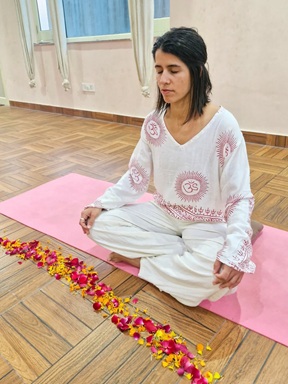
3. Trataka Meditation
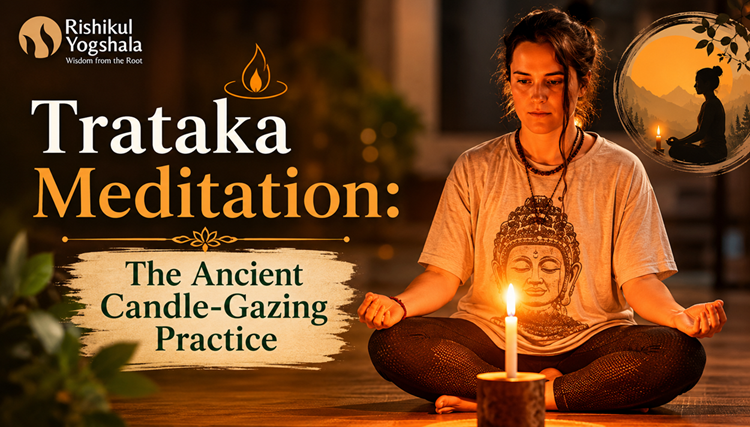
Trataka meditation is a yogic gazing practice, traditionally done with a candle flame. Moon gazing is a gentle variation, and it’s a lovely way to feel connected to nature on Purnima.
- Find a comfortable seat with a clear view of the moon.
- Rest your gaze softly on the moon, without straining your eyes. Blink naturally if you need to.
- Gaze for one to two minutes, noticing its glow and the stars around it.
- Close your eyes and stay with your breath, letting the image fade.
| Meditation Technique | Main Focus | Suitable for |
| Breath Awareness Meditation | Setting Mental distraction | Beginners and regular practitioners |
| Mantra Chanting Meditation | Builds concentration through sacred sound | Practitioners who want to focus on sacred sounds |
| Trataka (Moon Gazing Meditation) | For Mindful observation | People who want to align their energy with nature |
Can Beginners Practise Full Moon Meditation?
Definitely, beginners can practise full moon meditation as it is not an advanced yoga asana that requires previous experience. If someone is a complete beginner, they should start with a simple routine rather than trying to sit for longer periods.
Full Moon Meditation vs New Moon Meditation: What Is the Difference?
Both the full moon and the new moon hold immense symbolic significance in different spiritual traditions. Interestingly, both the moons are associated with different themes and intentions. The full moon is associated with completeness, calmness, and inner purity. The new moon represents a new beginning, renewed energy, and introspection.
| Basic | Full Moon Meditation | New Moon Meditation |
| Sanskrit Name | Purnima | Amavasya |
| Lunar Phase | Moon is fully illuminated | Moon is not visibly illuminated |
| Energy Levels | Highlights high energy | Highlights low energy |
| Represents | Amplification or Release & let go | New beginnings or planting a new seed |
| Meditation Focus | Expansion or achieving the state of completeness | Provides the opportunity for introspection or setting a new direction |
Both have their own significance and are actually complementary to each other, as both offer the opportunities for self-reflection.
Common Mistakes to Avoid During Full Moon Meditation
Although full moon meditation is simple, beginners can still make some mistakes. Being aware of these mistakes can help you to build a comfortable and meaningful meditation routine.
Here are some of the most common mistakes that need to be avoided
- One of the most common and biggest mistakes that a new practitioner can make is not taking expert guidance. If you have any doubts or are unsure about how to proceed, you can always seek expert support.
- Meditating in a cluttered or noisy space. It’s hard to settle your mind in a noisy or unfamiliar environment, especially when you’re a beginner.
- Trying to force yourself to sit for longer sessions when you are not comfortable.
- Fighting or controlling the thoughts and not letting them go when they emerge in your mind.
- Expecting extraordinary results from the few initial sessions.
- Being inconsistent or changing your meditation spot too often.
Final Thoughts on Full Moon Meditation
Full moon meditation is a simple practice with a lot of depth. It asks only that a person sit, breathe, and listen inward while the moon is at its brightest. Regular practice can bring more calm, focus, and a sense of connection with nature, and in the yogic view, it helps replenish prana, the vital energy.
The best way to begin is small. Five quiet minutes on the next Purnima is enough. For those who feel drawn to go deeper, learning breathwork, mantra chanting, trataka, and meditation techniques under experienced guidance can make the practice more steady and meaningful.
This is where structured training helps. Meditation is taught as one part of the 200 Hour Yoga Teacher Training in Rishikesh at Rishikul Yogshala Rishikesh, alongside Hatha and Ashtanga yoga, pranayama, and yoga philosophy. Students learn these practices from experienced teachers in Rishikesh, a place where yogic traditions have been practised for generations. For beginners as well as those who wish to teach one day, it is a grounded place to start.
Key Frequently Asked Questions About Full Moon Meditation
What is the Significance of Full Moon Meditation in Yogic culture?
The Sanskrit name of the full moon is Purnima, symbolizing completeness and illumination. From the yogic perspective, it reflects devotion and self-awareness associated with important observances such as Guru Purnima.
Can Beginners Meditate on the Full Moon?
Yes, beginners can meditate on the full moon. They can start with the 5-10 minute sessions and if they need help, then they can take the expert guidance from an experienced Yogi. However, no previous yoga or meditation is required.
What Is the Best Time to Practise Full Moon Meditation?
The most popular timing choices of yogis who want to practice full moon meditation are in the evening, when the full moon rises in the sky. But if someone likes, they can also practice late at night and in the early morning, one hour before dawn.
Is it Necessary to Meditate Outside in the Full Moon?
There is no such compulsion that a practitioner needs to sit outside to meditate on moonlight. Choose the ideal timing that suits you and decide for yourself where you are comfortable practicing the full moon meditation. You can practice indoors as well as outdoors according to your comfort and night safety priority. Sit outside only when your outdoor area is safe, like a balcony, terrace, or garden area, to directly absorb the moonlight.
How to meditate on cloudy and rainy nights?
If the full moon is unclear or it’s raining at night, you do not need to see the full moon to practise meditation on Purnima. You can simply meditate indoors using breath awareness, mantra repetition or quiet self-reflection. The practice does not depend on direct moonlight. Simply visualise the full moon in your mind and meditate upon it.
Who Should Avoid Full Moon Meditation?
Full moon meditation is gentle for most people. If you have chronic back pain, a medical condition, or a mental health condition, check with your doctor or an experienced teacher first. If sitting on the floor is uncomfortable, a chair works fine.
Why Do Practitioners Give Special Importance to Certain Tithis?
Purnima is the 15th and final tithi (lunar day) of Shukla Paksha, the bright, waxing fortnight of the lunar month. It occurs when the moon sits directly opposite the sun, at 180 degrees, and appears fully illuminated. Each tithi is measured by the moon’s angular distance from the sun, roughly 12 degrees per tithi, rather than by the sunrise-to-sunrise day. That’s why practitioners check a Panchang for the exact start and end time of Purnima in their location before planning meditation, prayer or fasting.
This article is for general information and is not medical advice. If you have a respiratory or heart condition, are pregnant, or are unsure whether these practices suit you, please speak to your doctor before beginning.

 +91-8433225327,
 Rishikul Yogshala Rishikesh, Narayan Kunj, Jonk Village, Ram Jhula, Swarg Ashram, Rishikesh, Uttarakhand 249304
 By Airway
 By Railway
 By Bus/Cabs