


Setu Bandhasana Benefits: What Bridge Pose Really Does for Your Body
Table of Contents
- Setu Bandhasana Benefits at a Glance
- Health Benefits of Setu Bandhasana
- 1. It strengthens the glutes, hamstrings and back muscles
- 2. It loosens tight hips and opens the chest
- 3. It can support lower back comfort
- 4. It helps improve posture
- 5. It calms the mind and eases stress
- 6. It makes breathing feel easier
- 7. It builds core and pelvic stability
- 8. It builds body awareness
- Who Benefits Most from Bridge Pose
- How Long Until You Notice the Benefits?
- Safety: Who Should Be Careful
- Go Deeper with Experienced Teachers in Rishikesh
- Frequently Asked Questions
- What are the main benefits of Setu Bandhasana?
- Is Setu Bandhasana good for back pain?
- Does Bridge Pose help the thyroid?
- Does Bridge Pose reduce belly fat?
- How often should I practise it to see benefits?
- Is it safe to do Bridge Pose every day?
Back pain affects hundreds of millions of people worldwide.
Many of them sit for hours every day.
So what if one simple pose, held for under a minute, could help your back feel stronger?
It’s called Setu Bandhasana. Bridge Pose.
But does it really do everything the internet says?
Setu Bandhasana (Bridge Pose) is a gentle backbend where you lie on your back and lift your hips. Its best-supported health benefits are stronger glutes, hamstrings and back muscles, looser hips and chest, better posture, and a calmer mind. In this guide, I separate what the pose truly does from what is only repeated online, so you know what to expect.

Setu Bandhasana Benefits at a Glance
| Benefit | What the pose does | How strong is the support? |
|---|---|---|
| Stronger glutes, hamstrings and back | Lifting the hips works the muscles behind the body | Well established. Bridging is a standard physiotherapy exercise |
| Looser hips and chest | Stretches hip flexors, front of the shoulders and chest | Reasonable, based on how the pose moves the body |
| Support for lower back comfort | Builds strength around the spine | Moderate. Studies are on yoga programmes, not Bridge Pose alone |
| Better posture | Strengthens the back and opens the chest | Reasonable, but few studies on this pose alone |
| Calmer mind and less stress | Slow breathing and a steady hold relax the body | Moderate for yoga and slow breathing in general |
| Easier, fuller breathing | Opens the ribs and chest | Limited. Comfort improves, big lung changes are not proven |
| Core and pelvic stability | Hips, core and pelvic muscles work together | Reasonable. Commonly used in rehab exercise |
| Body awareness | Teaches you to feel alignment | Based on teaching experience, not formal studies |
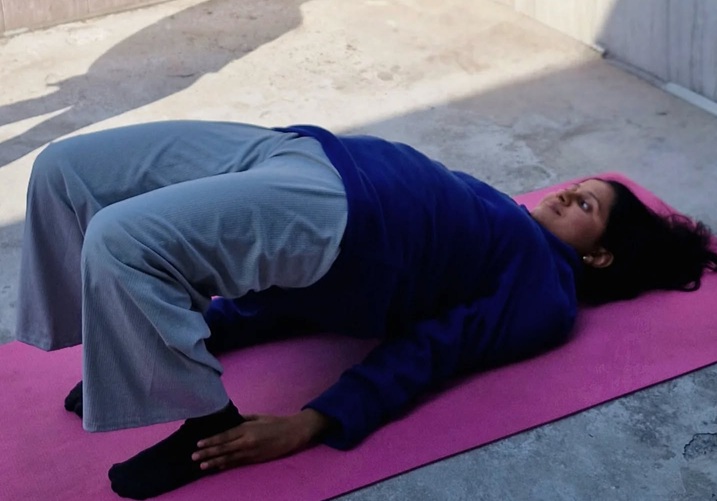
Health Benefits of Setu Bandhasana
1. It strengthens the glutes, hamstrings and back muscles
When you press your feet down and lift your hips, the buttock muscles, the back of the thighs and the muscles along the spine all switch on together. These are the muscles that weaken first when we sit for long hours.
Who it helps most: Desk workers, people who drive a lot, and anyone whose legs feel weak and back feels tired by evening.
2. It loosens tight hips and opens the chest
Sitting shortens the hip flexors (the muscles at the front of the hips) and rounds the shoulders forward. Bridge Pose stretches both areas at the same time, which is why many students say they feel taller afterwards.
Who it helps most: Students, laptop users, and people who feel stiff when they stand up after sitting.
3. It can support lower back comfort
Stronger glutes and back muscles share the load that the lower spine would otherwise carry alone. Research shows that regular yoga practice can help people with chronic low back pain, but those studies use full programmes, not one pose. Think of Bridge Pose as one useful piece of a routine, not a treatment.
Who it helps most: People with mild, muscle-related stiffness. If your pain is sharp, new, or travels down the leg, see a doctor first.
4. It helps improve posture
Good posture comes from strong back muscles and a chest that can open freely. Bridge Pose trains both. The effect builds slowly, so practise it often and stay aware of how you sit during the day.
Who it helps most: Anyone who notices rounded shoulders or a forward head position.
5. It calms the mind and eases stress
Holding the pose while breathing slowly gives the nervous system a chance to settle. Ending with a few minutes in Savasana adds to this. The calming effect comes mostly from the slow, steady breathing, which is why Bridge Pose works well at the end of a practice or before bed.
Who it helps most: People with busy minds and tense shoulders at the end of a long day.
6. It makes breathing feel easier
A lifted chest gives the ribs more room to move. Most students notice that breath feels fuller and slower in the pose. This is a comfort effect. Please do not expect it to treat asthma or any lung condition, and speak to your doctor if you have one.
7. It builds core and pelvic stability
To keep the hips level and the knees steady, the core, glutes and pelvic muscles have to cooperate. This is one reason physiotherapists often use bridging in rehabilitation, and one reason it prepares you for harder poses like Wheel Pose.
8. It builds body awareness
Bridge Pose teaches you to notice where your knees, feet and spine are without looking. This skill makes every other pose safer. It is also the benefit I see most clearly in beginners after just a few classes.
Who Benefits Most from Bridge Pose
| If you are… | Why Bridge Pose suits you |
|---|---|
| A desk worker | Counters long hours of sitting by working the glutes and opening the hips |
| A beginner | Easy to learn, easy to adjust with a block, low risk when done carefully |
| A runner or gym-goer | Strengthens the glutes and hamstrings and gently stretches tight hips |
| Stressed or sleeping badly | A quiet, restorative way to slow down the breath |
How Long Until You Notice the Benefits?
There is no fixed timeline, and everyone is different. Many people feel looser and calmer right after a session. Strength and posture changes usually need several weeks of regular practice, a few times a week. Short, regular sessions work better than one long one.

Safety: Who Should Be Careful
Bridge Pose is gentle, but check with your doctor first if you have a neck injury, a recent spine or abdominal surgery, a slipped disc, high blood pressure or heart problems, or if you are pregnant. Stop if you feel sharp pain, numbness or dizziness. For the full list of precautions and how to modify the pose, see our Bridge Pose guide.
Go Deeper with Experienced Teachers in Rishikesh
Knowing what a pose does is useful. Knowing how to guide someone into it safely is a skill. At Rishikul Yogshala, we teach alignment, anatomy and sequencing so you can practise, and teach, with confidence. Explore our Yoga Teacher Training in Rishikesh, or contact us with your questions.
Frequently Asked Questions
What are the main benefits of Setu Bandhasana?
It strengthens the glutes, hamstrings and back muscles, stretches the hips and chest, supports posture and lower back comfort, and helps you relax.
Is Setu Bandhasana good for back pain?
It can help with mild, muscle-related stiffness by strengthening the muscles around the spine. It is not a cure. If your pain is sharp, new or spreads down the leg, see a doctor before practising.
Does Bridge Pose help the thyroid?
There is no solid evidence that it does. Yoga can support your general health alongside medical treatment, but it should not replace it.
Does Bridge Pose reduce belly fat?
No pose can remove fat from one area. It builds muscle strength, which supports overall fitness when combined with good food and regular activity.
How often should I practise it to see benefits?
A few times a week, 2 to 3 rounds each time, is a sensible start. Consistency matters more than holding the pose for a long time.
Is it safe to do Bridge Pose every day?
For most healthy people, yes, if it feels comfortable and there is no pain. Rest if you notice strain in the neck or lower back.
This article is for general information and is not medical advice. If you have a respiratory or heart condition, are pregnant, or are unsure whether these practices suit you, please speak to your doctor before beginning.

 +91-8433225327,
 Rishikul Yogshala Rishikesh, Narayan Kunj, Jonk Village, Ram Jhula, Swarg Ashram, Rishikesh, Uttarakhand 249304
 By Airway
 By Railway
 By Bus/Cabs