








Types of Yoga Teacher Training Courses: How to Choose?
Table of Contents
- How Yoga Teacher Trainings Actually Differ
- Types of Yoga Teacher Training By Style
- 1. Hatha Yoga Teacher Training
- 2. Ashtanga Vinyasa Yoga Teacher Training
- 3. Vinyasa Flow Yoga Teacher Training
- 4. Kundalini Yoga Teacher Training
- 5. Yin and Restorative Yoga Teacher Training
- 6. Multi-Style Yoga Teacher Training
- Types of Yoga Teacher Training By Format
- 1. Residential Yoga Teacher Training
- 2. Non-Residential Yoga Teacher Training
- 3. Online Yoga Teacher Training
- 4. Hybrid Yoga Teacher Training
- 5. Intensive vs Part-Time
- Types of Yoga Teacher Training by Hours
- 1. The 100-Hour Course
- 2. The 200-Hour Course
- 3. The 300-Hour Course
- 4. The 500-Hour Course
- Specialty and Add-On Trainings
- So Which Type Should You Choose?
- A Last Thought
- Frequently Asked Questions
- Can I do a 300-hour without a 200-hour?
- Is an online yoga teacher training recognised by Yoga Alliance?
- Do I need to be flexible to do a teacher training?
- Which style is best for a complete beginner?
- What visa do I need for a yoga teacher training in India?
- Can I learn two styles in one course?
Yoga teacher trainings differ in three things: the style you learn, the format you learn it in, and the number of hours you complete. Most people compare only the hours. That is the main reason students arrive in Rishikesh and discover, in week two, that they signed up for the wrong course.
I have been running trainings here since 2010. In that time, I have watched a lot of people choose well, and a fair number choose badly, and the pattern is consistent. Nobody regrets the hours they picked. They regret the style, or they regret the format. So let me walk you through all three properly.
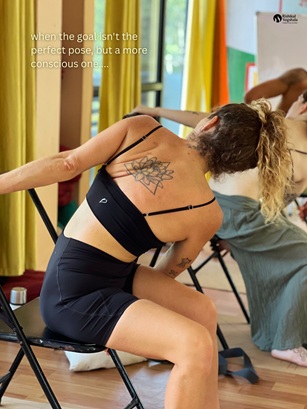
How Yoga Teacher Trainings Actually Differ
| Types | Your Options |
| Style | Hatha, Ashtanga Vinyasa, Vinyasa Flow, Iyengar-influenced, Kundalini, Yin & Restorative, multi-style |
| Format | Residential, non-residential, online, hybrid, intensive, part-time |
| Hours | 85, 100, 200, 300, 500 |
Work through them in that order. Style first, then format, then hours. Almost everyone does it backwards, starts with “should I do 200 or 300,” and never questions whether the course teaches a style they actually want to spend six hours a day inside.
Types of Yoga Teacher Training By Style
This is the axis that decides what your mornings feel like for a month.
1. Hatha Yoga Teacher Training
Classical Hatha holds postures. You come into the shape, you stay, you breathe, you come out. A Hatha class in the traditional sense is slower than most Western studio yoga and gives a lot of room to pranayama, kriya, and meditation alongside the asana.
- Suits you if: you want to understand alignment deeply, you have an injury history, you are drawn to the philosophical and breath side of yoga, or you plan to teach older students, beginners, or people in a therapeutic setting.
- Does not suit you if: you came to yoga through gym-style flow classes and the idea of holding Trikonasana for eight breaths sounds like a punishment. Be honest with yourself about this.
2. Ashtanga Vinyasa Yoga Teacher Training
Ashtanga is a fixed sequence, practised in the same order every time, linked by breath and vinyasa. The Primary Series is demanding and repetitive by design. The repetition is the method, not a flaw in it.
- Suits you if: you want structure, you like measurable progress, you are physically strong or want to become so, and you respond well to discipline.
- Does not suit you if: you get bored doing the same thing daily, or you have wrist, shoulder, or lower-back issues that jump-backs will aggravate. I have sent students home from Ashtanga-heavy weeks more than once. There is no shame in it.
3. Vinyasa Flow Yoga Teacher Training
Vinyasa Flow is the creative cousin. Sequences change, the teacher builds them, music is often involved, and there is far more freedom in how a class is put together.
- Suits you if: you want to teach in Western studios. Realistically, this is what most gyms and studios in Europe, North America and Australia are hiring for.
- Does not suit you if: you want a fixed method to hold onto. Flow demands that you become a sequencer, and that is a genuine skill that takes time to build.
4. Kundalini Yoga Teacher Training
Kriya, mantra, breathwork and repetitive movement, with a strong emphasis on energy rather than shape. Very different in feel from the three above.
- Suits you if: the meditative and energetic side of yoga is what pulls you, more than the physical.
- Does not suit you if: you are uncomfortable with chanting or with practices that ask for belief. Some people love it. Some find it alienating. Try a few classes before you commit a month.
5. Yin and Restorative Yoga Teacher Training
Long holds, props, floor-based, three to five minutes in a shape. Almost the opposite of Ashtanga.
- Suits you if: you want to teach stressed people, older students, or anyone recovering from something.
- Does not suit you if: it is your only training. Yin is usually taken as a specialisation after a 200-hour, not instead of one.
6. Multi-Style Yoga Teacher Training
This is what most Rishikesh schools, including ours, actually run. A multi-style 200-hour typically gives you a Hatha class and an Ashtanga or Vinyasa class each day, plus philosophy, anatomy, pranayama, meditation and teaching methodology.
- Suits you if: you do not yet know what you want to teach. This is most first-time students, and there is nothing wrong with that.
- Does not suit you if: you already know. If you have practised Ashtanga for four years and want to teach Ashtanga, a specialised course will serve you better than a general one.
- My honest position: we teach Hatha, Ashtanga Vinyasa and Vinyasa Flow in a multi-style format. We do not teach Kundalini or Iyengar, and if that is what you want, I would rather point you to a school that does it properly than take your booking.
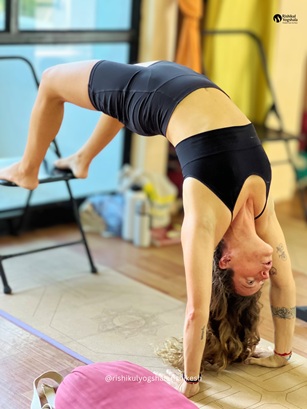
Types of Yoga Teacher Training By Format
Style decides what you learn. Format decides whether you can actually finish it.
1. Residential Yoga Teacher Training
You live at the school. Accommodation, meals, and classes are one package. This is the standard format in India, and it is what we run.
What it really looks like, so there are no surprises: the day starts between 5:30 and 6:00 am and runs to around 7:00 pm, six days a week. Meals are vegetarian and sattvic. In Rishikesh specifically, alcohol and meat are not available anywhere in the town — it is a holy city, and this is not a school rule; it is municipal law. Rooms are ashram-style, usually twin-sharing unless you pay for a private one.
- Suits you if: you can clear a month, you want full immersion, and you want the cost of food and accommodation folded into one price.
- Does not suit you if: you need caffeine at 9 am and quiet evenings alone, or you have a health condition that makes shared accommodation and a fixed schedule difficult. Say so at the enquiry stage. Any decent school will work with you or tell you honestly that it is not a fit.
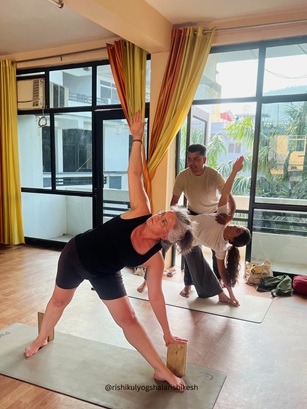
2. Non-Residential Yoga Teacher Training
You attend the same course but arrange your own stay. Common for students already living in the area, or for those bringing a partner who is not training.
Suits you if: you want independence or specific dietary or accessibility arrangements. Does not suit you if: you are on a tight budget. Once you add a guesthouse and eating out, this often costs more, not less.
3. Online Yoga Teacher Training
Live sessions, recordings, or a mix.
Suits you if: you cannot travel, you are working full time, or you want to spread the cost over months. Does not suit you if: you want hands-on adjustment training. Learning to physically assist a student in a backbend through a screen is not something I have seen work well.
One practical warning: Yoga Alliance has changed its rules on online training more than once since 2020. Check the current position on their own website before you pay anyone, and get written confirmation from the school that the specific course you are booking is registerable.
4. Hybrid Yoga Teacher Training
Theory online, practical in person. A sensible compromise that shortens the time you need to be abroad.
Suits you if: you can only take two weeks off but want in-person practical training. Does not suit you if: you want the full immersion effect, which does depend on being away from your normal life.
5. Intensive vs Part-Time
An intensive runs daily for three to five weeks. A part-time course runs evenings or weekends across three to six months.
Intensives change you faster, because immersion is doing real work. Part-time courses embed the material more slowly and often more durably. If you have the option of either, ask yourself whether you want transformation or integration. Both are valid answers.
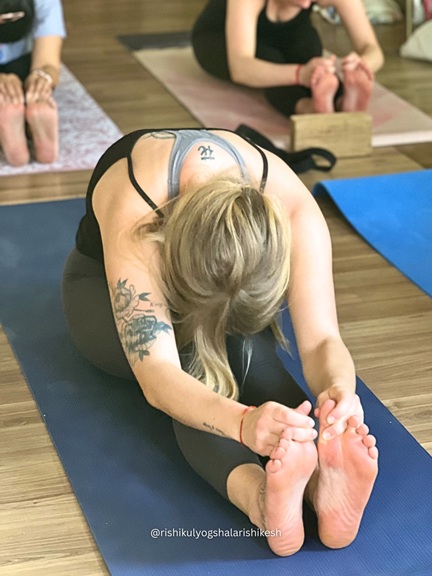
Types of Yoga Teacher Training by Hours
Now the axis everybody starts with.
| Course | Prerequisite | Credential | Typical duration | Typical fee range |
|---|---|---|---|---|
| 85-hour Prenatal | 200-hour recommended | RPYT pathway | 10–12 days | [YOUR FEE] |
| 100-hour | None | Certificate, not a Yoga Alliance RYT | 12–14 days | [YOUR FEE] |
| 200-hour | None | RYT-200 | 24–28 days | [YOUR FEE] |
| 300-hour | Completed 200-hour | RYT-500 (combined) | 28–32 days | [YOUR FEE] |
| 500-hour | None (200+300 combined) | RYT-500 | 55–60 days | [YOUR FEE] |
1. The 100-Hour Course
A foundation course. It covers asana, pranayama, basic anatomy and philosophy, and gives you a genuine grounding.
Here is the thing nobody tells you: a 100-hour does not make you a Yoga Alliance registered teacher. It is a certificate of completion. If your goal is to teach professionally, the 100-hour is a stepping stone, not a destination.
Who regrets it: people who booked it because it was cheaper, intending to teach. They end up paying for a 200-hour six months later. Who loves it: people who want depth in their own practice and have no intention of teaching. For them it is perfect.
Read more about our 100-Hour Yoga Teacher Training in Rishikesh
2. The 200-Hour Course
The industry standard. On completion, you can register with Yoga Alliance as an RYT-200, which is what nearly every studio worldwide asks for.
Four weeks covering asana, alignment, pranayama, meditation, yoga philosophy, anatomy and physiology, teaching methodology, and supervised practice teaching. That last part matters more than people expect. Knowing a pose and being able to hold a room of twelve strangers are different skills.
Who regrets it: almost nobody, honestly. The regrets are about style and format, not hours. Who should wait: if you have been practising for under six months, give it another six. You will get far more from it.
Read more about our 200-Hour Yoga Teacher Training in Rishikesh
3. The 300-Hour Course
Advanced training for people who already hold a 200-hour. You cannot do a 300-hour without a completed 200-hour — this is a Yoga Alliance requirement, not a school preference. Together they make up the RYT-500.
Expect advanced asana, deeper philosophy, therapeutic applications, sequencing, and a real focus on your voice as a teacher.
Who regrets it: people who come straight from their 200-hour without teaching in between. Teach for a year first. You will arrive with actual questions instead of theoretical ones, and the course will be worth several times more to you.
Read more about our 300-Hour Yoga Teacher Training in Rishikesh
4. The 500-Hour Course
The 200 and 300 taken back to back, roughly two months. Same RYT-500 credential at the end.
Who it suits: people with a long clear window who want to arrive as a practitioner and leave as a teacher, without a second trip. Who regrets it: people who underestimated eight weeks of 5:30 am starts. It is a long time. Be sure.
Read more about our 500-Hour Yoga Teacher Training in Rishikesh
Also Read: How to Choose the Right Yoga Teacher Training in India: A Gentle Guide
Specialty and Add-On Trainings
Beyond the main pathway, there are focused trainings: prenatal and postnatal, yin, yoga nidra, sound healing, yoga therapy, and kids yoga. These usually run 50 to 100 hours.
Treat them as additions, not replacements. A prenatal certificate without a 200-hour underneath it will not get you hired. With one, it makes you noticeably more employable, because far fewer teachers hold it.
Our own 85-Hour Prenatal Yoga Teacher Training covers pregnancy modifications, postpartum recovery, breathwork for labour, and the anatomy of a changing body.
So Which Type Should You Choose?
Four situations, and what I would actually tell you if you called the school.
- You are a beginner who wants to teach. A 200-hour, multi-style, residential. Multi-style because you do not yet know what you want to teach, and a month of exposure to three styles will tell you more than any amount of research. Residential because immersion is what makes a 200-hour work.
- You have been practising for years and already hold an RYT-200. A 300-hour, and this time pick a style rather than a multi-style course. You know enough now to specialise, and specialising is what makes you employable.
- You want depth but do not want to teach. A 100-hour course, or a retreat. Do not pay for a 200-hour just because it sounds more serious. You are buying a credential you will never use.
- You are not ready. If you have practised for less than six months, or you are in the middle of an injury, a divorce or a job crisis, wait. A teacher training is physically hard and emotionally exposing, and it works best when it is not also a rescue mission. I would rather you came next season and got everything from it than came now and got half.
Also Read: Yoga Teacher Training in India for American Students: The Complete 2026 Guide
A Last Thought
The best training is not the longest one or the most expensive one. It is the one that matches where you actually are, in a style you want to spend a month inside, in a format you can realistically complete.
If you are unsure after reading this, write to us and tell us about your practice. If a different school is a better fit, I will say so. Sixteen years in Rishikesh has taught me that a student sent to the right place comes back later. A student talked into the wrong course does not.
Frequently Asked Questions
Can I do a 300-hour without a 200-hour?
No. Yoga Alliance requires a completed 200-hour before you can register a 300-hour. If a school offers to enrol you without one, treat that as a warning sign about the school.
Is an online yoga teacher training recognised by Yoga Alliance?
It has depended on the year. The allowances introduced during the pandemic have since changed. Check Yoga Alliance’s current published standards yourself and ask the school for written confirmation that your specific course is registerable before paying.
Do I need to be flexible to do a teacher training?
No. You need consistency, not flexibility. Six months of regular practice is a far better preparation than being able to touch your toes.
Which style is best for a complete beginner?
Hatha, or a multi-style course with a strong Hatha component. It moves at a pace that lets you actually learn alignment rather than survive the class.
What visa do I need for a yoga teacher training in India?
Most students enter on a tourist e-visa. India also operates an AYUSH visa category for yoga and Ayurveda study. Rules change, so confirm the current requirement with the Indian embassy or consulate in your country before you book flights.
Can I learn two styles in one course?
Yes, that is exactly what a multi-style course is for. Most Rishikesh 200-hour programmes teach Hatha alongside Ashtanga or Vinyasa daily.
This article is for general information and is not medical advice. If you have a respiratory or heart condition, are pregnant, or are unsure whether these practices suit you, please speak to your doctor before beginning.

 +91-8433225327,
 Rishikul Yogshala Rishikesh, Narayan Kunj, Jonk Village, Ram Jhula, Swarg Ashram, Rishikesh, Uttarakhand 249304
 By Airway
 By Railway
 By Bus/Cabs