








What Is Laughter Yoga? Benefits and How It Works
Table of Contents
- What Is Laughter Yoga?
- Where Did It Come From?
- Why Does Fake Laughter Work?
- What Does a Laughter Yoga Session Feel Like?
- The Usual Flow (30–45 Minutes)
- What’s In It For You? 7 Benefits of Laughter Yoga
- Try It Now: A 5-Minute Laughter Yoga Practice
- Who Should Be Careful?
- “But I’ll Feel Silly”: Common Worries, Answered
- Laughter Yoga in Rishikesh
- Conclusion
- Laughter Yoga FAQs
- What is laughter yoga in simple words?
- Who started laughter yoga?
- Does fake laughter have the same benefits as real laughter?
- How long is a laughter yoga session?
- How often should I do laughter yoga?
- Can I do laughter yoga alone?
- Is laughter yoga good for anxiety and depression?
- Can laughter yoga help with weight loss?
- Who should not do laughter yoga?
When did you last laugh so hard your stomach hurt?
Last week? Last month? Can’t remember?
You’re not alone. As we grow up and get busy, most of us simply laugh less.
Now here’s the strange part.
You don’t need a joke to get that feeling back. You don’t even need to find anything funny.
You just need to start laughing on purpose.
That’s laughter yoga. It sounds silly. It feels silly for about two minutes. And then something shifts.
Laughter yoga (also called Hasya Yoga) is a group practice that mixes laughing on purpose with deep yogic breathing. You don’t need jokes or a sense of humour. Fake laughter soon turns into real laughter in a group. It was started in Mumbai in 1995 by Dr Madan Kataria, and research suggests it can help lower stress and lift mood.

What Is Laughter Yoga?
Laughter yoga is laughing as exercise.
You laugh on purpose, in a group, for no reason at all. Between rounds of laughter, you do slow, deep yogic breathing. That’s the “yoga” part. There are no difficult poses.
In India, it’s often called Hasya Yoga. Hasya is Sanskrit for laughter.
Where Did It Come From?
It was started in 1995 in Mumbai by Dr Madan Kataria, a family doctor, together with his wife Madhuri. The first group met in a public park. At first they told jokes. When the jokes ran out, they tried laughing without any reason, and found it worked just as well.
Today there are laughter clubs around the world, and the first World Laughter Day was held in Mumbai in 1998.
Why Does Fake Laughter Work?
Here’s the idea at the heart of the practice.
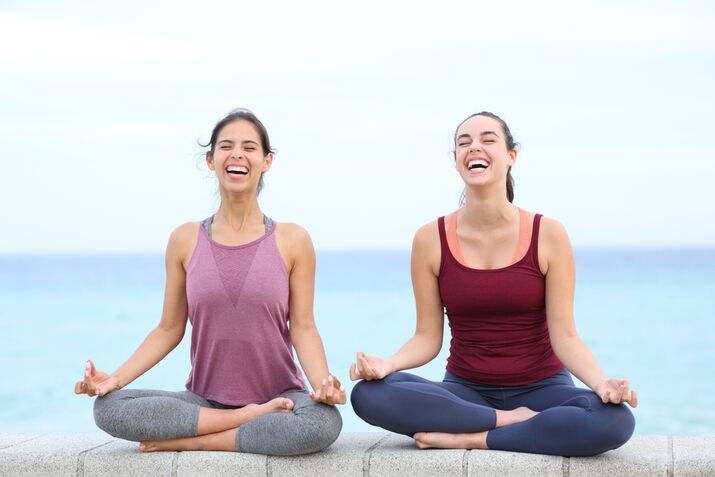
When you laugh on purpose, your body still goes through the motions of laughing. Your belly moves, your breath empties out, your face lights up. And in a group, fake laughter rarely stays fake for long. Laughter is contagious. Someone snorts, someone giggles, and soon everyone is laughing for real.
You don’t need to be happy to start. You start, and the happy part follows.
What Does a Laughter Yoga Session Feel Like?
Imagine this.
It’s early morning in Rishikesh. You’re standing in a circle with fifteen people from ten countries. Most of you met three days ago.
The teacher starts clapping. Ho ho, ha ha ha. You feel a bit foolish. Everyone does.
Then the woman next to you pretends to drink an invisible milkshake and bursts out laughing. You catch her eye. Now you’re laughing too, and you can’t stop. Ten minutes later you’re lying on your mat, breathing slowly, face aching, feeling lighter than you have in weeks.
That’s a laughter yoga session.
The Usual Flow (30–45 Minutes)
- Clapping warm-up. Rhythmic clapping with the chant “ho ho, ha ha ha”. It gets energy moving and breaks the ice.
- Deep breathing. Slow breaths in, long breaths out, often with arms rising and falling. This is the yoga part.
- Childlike play. Cheering “very good, very good, yay!” after each exercise. It sounds silly on purpose.
- Laughter exercises. Short, playful games like greeting laughter (shake hands and laugh instead of saying hello), lion laughter (tongue out, eyes wide) or milkshake laughter.
- Laughter meditation. Everyone sits or lies down and lets laughter come freely, without any games.
- Relaxation. A few quiet minutes lying down to let your body settle.
What’s In It For You? 7 Benefits of Laughter Yoga
You’ll read that laughter yoga cures disease, boosts immunity, and melts weight.
We’d rather tell you what research actually shows. It’s still impressive.
1. Less stress, often after one session. This is the best-studied benefit. A meta-analysis of randomised trials found laughter programmes, including laughter yoga, clearly reduced stress in adults. You’ll likely feel it as loose shoulders and a quieter mind.
2. A lighter mood. A 2018 systematic review found the most promising effect of laughter yoga was on low mood and depressive symptoms, at least in the short term. It isn’t a replacement for treatment, but it can be a good support alongside it.
3. Help with burnout at work: A 2024 review of studies on nurses, one of the most stressed groups of workers, found laughter yoga lowered stress, burnout, and cortisol, a stress hormone. If your job wears you down, this one’s for you.
4. Deeper breathing and more energy. Hearty laughter empties your lungs, and the yogic breathing in between fills them again. Many people walk out feeling awake rather than tired.
5. A real feeling of connection. It’s hard to stay a stranger to someone you’ve just laughed with for twenty minutes. In group courses, laughter sessions often break the ice faster than anything else.
6. A gentle workout for your belly and diaphragm. Try laughing hard for one minute. You’ll feel your stomach muscles working. It’s no replacement for exercise, but it does get your body moving.
7. Anyone can do it. No flexibility, fitness or sense of humour needed. It’s used with children, older adults and people in hospital care. A review on cancer patients found it improved quality of life and reduced stress and low mood.
What about immunity, pain or weight loss? Some small studies point in a good direction, but the evidence isn’t strong yet. Researchers say more and better studies are needed. We’d rather not promise what science hasn’t proven.
Try It Now: A 5-Minute Laughter Yoga Practice
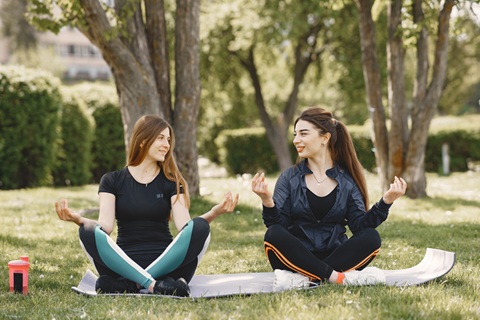
Reading about laughter only gets you so far. Try this at home. It works best with a friend or family member, but you can do it alone too.
- Clap and chant (1 minute). Clap in a 1-2, 1-2-3 rhythm and say “ho ho, ha ha ha”. Move around if you have space.
- Deep breath (30 seconds). Breathe in slowly as you raise your arms. Hold for a moment. Let the breath out with a big laugh as your arms come down.
- Greeting laughter (1 minute). Wave or shake hands with your partner, or your reflection in the mirror, and laugh instead of saying hello.
- Milkshake laughter (1 minute). Pretend to pour milk from one glass to another. Say “aeee” as you pour, then “drink” it and laugh.
- Silent laughter (30 seconds). Open your mouth wide and laugh with no sound at all. It’s harder than it sounds, and funnier.
- Rest (1 minute). Sit or lie down. Close your eyes. Breathe slowly and notice how you feel.
Tip: feeling awkward is normal. Keep going for the full five minutes. The awkwardness is usually what tips you into real laughter.
Who Should Be Careful?
Laughter yoga is gentle, but hearty laughing is real exercise. It raises pressure in the belly and works the heart and lungs, much like jogging or swimming.
Laughter Yoga International, the founder’s own organisation, advises checking with a doctor first if you have:
| Condition | Why it matters |
|---|---|
| Hernia | Strong laughing raises pressure in the belly |
| Urine leaking when you laugh or cough | Laughing can make it worse |
| Bleeding anywhere in the body, including piles | Pressure can increase it |
| Heart problems or chest pain during exercise | Laughter is a cardio workout |
| Pregnancy, especially with a past miscarriage or in the last two months | Belly pressure and strain |
| Epilepsy or past seizures | Strong emotion can sometimes trigger them |
Wait Before Joining If:
- You’ve had major surgery in the last three months
- You have a bad cold or flu (rest, and don’t pass it on)
Stop right away if you feel pain, discomfort, or breathlessness, and get medical advice.
“But I’ll Feel Silly”: Common Worries, Answered
What stops most people from trying laughter yoga isn’t health. It’s doubt.
Let’s clear those doubts away.
“I’m not a funny person.” You don’t need to be. There are no jokes. Nobody performs. You just follow simple games.
“I’m shy. I’ll feel embarrassed.” Everyone feels that in the first two minutes, including people who’ve done it for years. That shared awkwardness is often what makes the group laugh first.
“Isn’t fake laughter pointless?” It’s only fake at the start. In a group, laughing on purpose turns into real laughter surprisingly fast.
“Is it really yoga?” It uses yogic breathing, but there are no hard poses. Think of it as a joyful breathing practice rather than a workout on the mat.
“I’m not fit or flexible.” You can do it sitting on a chair. Many laughter clubs are full of retired people.
“I’m sad or stressed right now. Is this the wrong time?” It may be exactly the right time, as long as you go gently. If you’re dealing with depression, see it as a support alongside your treatment, not a replacement.
Laughter Yoga in Rishikesh
Why try it here?
Because Rishikesh, often called the Yoga Capital of the World, is a place where people come to try new things. You’re away from work, away from the people who know you, surrounded by others who’ve also come to grow. Feeling silly is easier when everyone around you is open.
Laughter also fits well beside a serious yoga course. Teacher training is intense: early mornings, long asana classes, philosophy, anatomy. A short laughter session can release that build-up and bring a group closer.
Also Read: Best Yoga Teacher Training Courses in India
Conclusion
Laughter Yoga is a simple practice that brings together laughter, breathing exercises, and group activities to support emotional well-being. You don’t need to be naturally funny or wait for something amusing to happen. The practice encourages you to laugh, relax, and connect with others in a positive environment.
Whether you are new to yoga or have been practising for years, Laughter Yoga can be an enjoyable way to add more positivity and mindfulness to your daily routine. With regular practice, it may help you manage everyday stress, improve your mood, and feel more connected to the people around you.
At Rishikul Yogshala Rishikesh, we believe that yoga is much more than physical postures. It is a practice that brings attention to the connection between the body, mind, and breath. If you wish to deepen your understanding of traditional yoga, you can explore our 200 Hour Yoga Teacher Training in Rishikesh programs to learn more about different aspects of yogic practice.
Laughter Yoga FAQs
What is laughter yoga in simple words?
It’s laughing on purpose, usually in a group, mixed with deep yogic breathing. You don’t need jokes. Fake laughter soon turns into real laughter.
Who started laughter yoga?
Dr Madan Kataria, a family doctor, started it in Mumbai in 1995 with his wife Madhuri.
Does fake laughter have the same benefits as real laughter?
It seems to help in similar ways. A 2019 meta-analysis found that laughter without humour, like laughter yoga, worked at least as well as laughter from jokes or comedy.
How long is a laughter yoga session?
Usually 30 to 45 minutes. At home, even 5 to 10 minutes can leave you feeling better.
How often should I do laughter yoga?
There’s no fixed rule. Many laughter clubs meet daily or a few times a week. Regular practice matters more than long sessions.
Can I do laughter yoga alone?
Yes, though it’s easier in a group because laughter spreads. Alone, try it in front of a mirror or with an online class.
Is laughter yoga good for anxiety and depression?
Research suggests it can lower stress and help with low mood. It works best as a support alongside proper treatment, not instead of it.
Can laughter yoga help with weight loss?
Not in any meaningful way on its own. It gets your belly muscles working, but it’s not a replacement for exercise and good food.
Who should not do laughter yoga?
People with a hernia, heart problems, bleeding, epilepsy, late or high-risk pregnancy, or recent surgery should check with a doctor first.
This article is for general information and is not medical advice. If you have a respiratory or heart condition, are pregnant, or are unsure whether these practices suit you, please speak to your doctor before beginning.

 +91-8433225327,
 Rishikul Yogshala Rishikesh, Narayan Kunj, Jonk Village, Ram Jhula, Swarg Ashram, Rishikesh, Uttarakhand 249304
 By Airway
 By Railway
 By Bus/Cabs