








Butterfly Pose: Steps, Benefits and Common Mistakes
Table of Contents
- Quick Facts About Butterfly Pose
- What Butterfly Pose Actually Does?
- The Name, and Where It Comes From
- How To Do Butterfly Pose: Step By Step?
- What Are the Benefits of Butterfly Pose?
- 1. Improves Hip and Inner-Thigh Flexibility
- 2. Supports Better Hip Mobility
- 3. Helps Prepare the Body for Meditation
- 4. Relaxes the Body and Mind
- 5. Helps Release Tension After Physical Activity
- 6. Can Be Practised by Beginners
- Does Butterfly Pose Reduce Thigh Fat?
- How Long and How Often?
- Five Mistakes We Correct Constantly?
- Butterfly Pose for Men
- Variations Of Butterfly Pose
- Butterfly Pose During Pregnancy
- Who Should Avoid Butterfly Pose?
- Butterfly Pose vs Similar Hip Openers
- Where It Fits In a Practice?
- Final Takeaway
- Butterfly Pose FAQs
- What is Butterfly Pose good for?
- Is Butterfly Pose the same as Baddha Konasana?
- How long should I hold Butterfly Pose?
- Does Butterfly Pose reduce thigh fat?
- Why can’t my knees touch the floor?
- Can men do Butterfly Pose?
- Is it safe to do Butterfly Pose every day?
- Can I do Butterfly Pose during pregnancy?
- Does Butterfly Pose help induce periods?
Butterfly Pose, or Baddha Konasana, is a seated yoga posture where you bring the soles of your feet together and let both knees open out to the sides. It stretches the inner thighs and groin, opens the hips, and calms the nervous system. Most people can hold it for one to five minutes. It suits complete beginners.
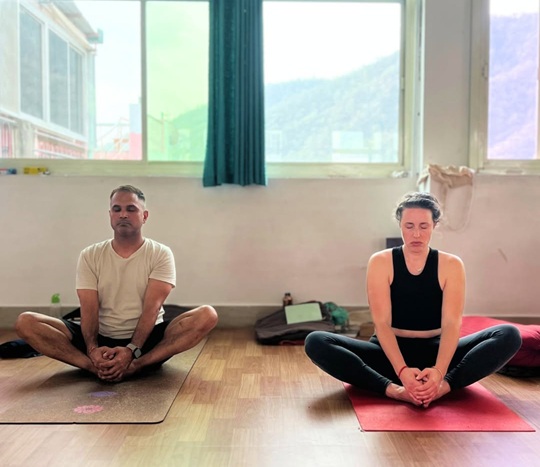
Quick Facts About Butterfly Pose
| Sanskrit name | Baddha Konasana (बद्ध कोणासन) |
| Meaning | Baddha = bound, Kona = angle, Asana = posture |
| Also called | Bound Angle Pose, Cobbler’s Pose, Titli Asana |
| Type | Seated hip opener |
| Level | Beginner |
| Main muscles stretched | Adductors, gracilis, pectineus, groin |
| Typical hold | 1–5 minutes |
| Common props | Folded blanket under the hips, blocks under the knees |
| Take care if | Knee or groin injury, sciatica, SI joint pain |
What Butterfly Pose Actually Does?
Most of us find this shape long before we find yoga. You sit on the floor, pull your heels in, let your knees drop, and something in the hips lets go.
Butterfly Pose works on the adductor group, the muscles running along your inner thigh that pull your legs toward the midline. It also reaches the gracilis and pectineus, and it opens the groin through external rotation at the hip joint.
One common misconception about Butterfly Pose is that it stretches the hip flexors. In this posture your hips are flexed, which means the hip flexors sit in a shortened position, not a lengthened one. If tight hip flexors from desk work are your problem, you want lunges, Anjaneyasana, or a supported backbend. Butterfly is for your inner thighs and groin.
That distinction matters. People sit here for ten minutes waiting for their hip flexors to release, then wonder why their lower back still aches.
What Butterfly is genuinely good for: inner-thigh tightness from running or cycling, building a comfortable meditation seat, and winding down before sleep.
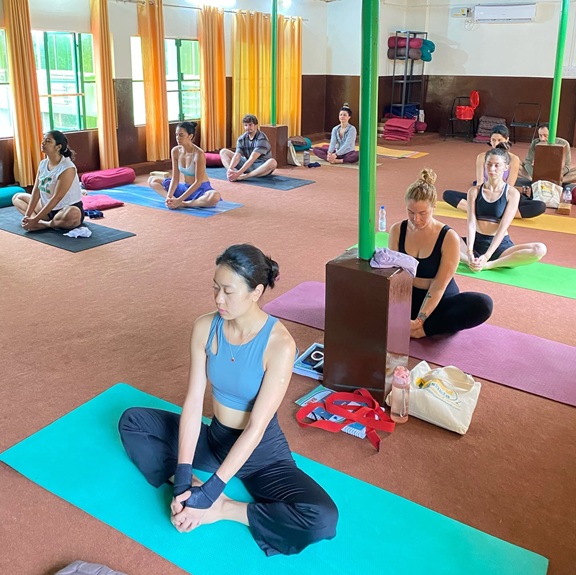
The Name, and Where It Comes From
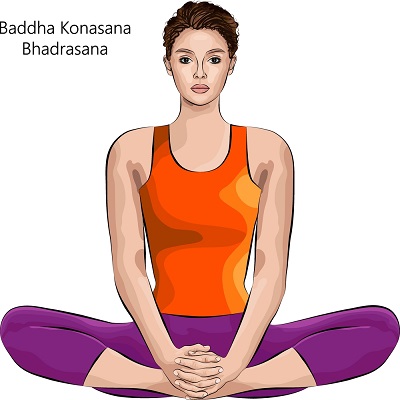
Baddha means bound. Kona means angle. The bound angle is the shape your legs make when the feet lock together and the knees open.
The English name comes from the knees rising and falling like wings. In India, you will also hear Titli Asana; titli is Hindi for butterfly. Older texts and Iyengar-lineage teachers often call it Cobbler’s Pose, after the way cobblers in India sat to work with a shoe held between their feet.
All of these describe the same posture.
How To Do Butterfly Pose: Step By Step?
Before you start: sit on the front edge of a folded blanket, about four inches high. Almost everyone needs this. If your pelvis tips backward and your lower back rounds, the stretch leaves your inner thighs and starts compressing your spine instead.
- Sit with your legs straight out in front of you. Shake out your legs. Let the backs of your knees soften.
- Bend both knees and bring the soles of your feet together. Let the outer edges of the feet rest on the floor. Your legs will make a diamond shape.
- Decide how close your heels come in. Closer to the body is a stronger stretch. Further away is gentler and better for most beginners. There is no correct distance.
- Hold your feet, ankles, or shins. Whichever you can reach without rounding your back. Holding the shins is not a lesser version of the pose.
- Inhale and lengthen your spine. Grow up through the crown of the head. Draw the shoulders down and back, away from the ears.
- Exhale and let the knees drop. Do not push them down with your hands and do not bounce. Gravity does this work, slowly.
- Stay for one to five minutes, breathing normally. Start at one minute if you are new.
- Come out slowly. Lift the knees with your hands if they feel stuck, stretch the legs forward, and lean back on your hands for a few breaths.
On flapping the knees: the up-and-down movement is a warm-up, not the pose. Ten to twenty gentle flaps bring blood into the hips before you settle. Vigorous flapping for minutes at a time adds nothing and irritates some knees.
Read More: Baddha Konasana Benefits: What This Pose Really Does for Your Body and Mind
What Are the Benefits of Butterfly Pose?
Butterfly Pose, or Baddha Konasana, is a simple seated posture that mainly works on the inner thighs, groin, and hips. When practised regularly with comfortable alignment and relaxed breathing, it can be a useful addition to both beginner and experienced yoga routines.
1. Improves Hip and Inner-Thigh Flexibility
Butterfly Pose gently stretches the inner thighs and groin while encouraging mobility in the hips. With regular practice, it can gradually make seated positions more comfortable.
2. Supports Better Hip Mobility
Keeping the soles of the feet together and allowing the knees to open creates gentle movement around the hip joints. This can be particularly useful for people who spend long hours sitting or have limited hip mobility.
3. Helps Prepare the Body for Meditation
A comfortable seated position is important for meditation. Butterfly Pose can help improve mobility around the hips and inner thighs, making it easier to sit comfortably for longer periods.
4. Relaxes the Body and Mind
When held gently with slow, steady breathing, Butterfly Pose can encourage relaxation. It works well as part of a cool-down sequence, evening yoga practice, or preparation for meditation.
5. Helps Release Tension After Physical Activity
Runners, cyclists, and people who regularly exercise may experience tightness in the inner thighs and groin. Butterfly Pose provides a gentle stretch to these areas and can be included after a workout or yoga session.
6. Can Be Practised by Beginners
One of the advantages of Butterfly Pose is that it can be easily modified. Beginners can sit on a folded blanket or cushion and place blocks or cushions under the knees for additional support. The goal is not to force the knees toward the floor but to practise within a comfortable range.
Remember: Butterfly Pose can support flexibility, mobility, and relaxation, but it should not be presented as a cure for medical conditions or as a way to reduce fat from a specific part of the body. Practise gently and stop if you experience sharp or unusual pain.
Does Butterfly Pose Reduce Thigh Fat?
No. Not in the way the question means.
You cannot lose fat from one specific body part by exercising that part. This is spot reduction, and it does not work. It has been tested repeatedly and failed every time. Fat loss happens across the whole body in response to an overall energy deficit, and where you lose it first is largely genetic.
Butterfly Pose is a stretch. It burns very few calories.
What it does do is improve hip and inner-thigh mobility, so you move better in the activities that do burn calories: walking, running, cycling, a full vinyasa practice, strength work. A real benefit, just an indirect one.
If leaner thighs are the goal, the honest answer is a sustainable calorie deficit, resistance training, and patience.
How Long and How Often?
| Level | Hold | Frequency |
|---|---|---|
| Complete beginner | 30–60 seconds | Daily is fine |
| Regular practitioner | 2–3 minutes | Daily is fine |
| Yin or restorative | 3–5 minutes | 2–4 times a week |
- Can you do it every day? Yes. It is a low-load stretch, not a strength exercise, so it needs no recovery day. Short daily holds beat long weekly ones for mobility.
- What happens if you do it every day? Over six to eight weeks, you will notice the knees sitting lower and cross-legged sitting getting easier. Not much more, and that is fine.
Ignore anyone recommending twenty-minute holds. Long passive holds in external rotation load the medial knee, and no benefit justifies it.
Five Mistakes We Correct Constantly?
- Sitting flat on the floor with no support. If the pelvis rolls back, the stretch leaves your inner thighs and lands in your lower spine. A folded blanket fixes this for most people.
- Pushing the knees down with the hands. You are forcing the joint past what the muscle will give. Let them go where they go.
- Rounding forward to reach the feet. Length in the spine matters far more than reaching your toes. Hold your shins instead.
- Chasing the floor with the knees. Hip socket shape is individual. Some people will never touch the floor with their knees and are perfectly mobile. This is not a target.
- Holding far too long on day one. Adductors change slowly. Sixty seconds daily for a month gets you further than fifteen minutes once.
Butterfly Pose for Men
Nothing about this posture is female-specific, and men usually need it more.
Men typically carry more tightness through the adductors and external rotators, especially if they run, cycle, lift, or play field sport. If your knees sit up near your ears, that is a mobility deficit worth addressing, not a personal failing.
For men, it works best as a post-training stretch and as preparation for sitting in meditation. Sit higher, take the feet further from the body, and expect progress in months rather than weeks.
Variations Of Butterfly Pose
- Supported Butterfly (start here). Blocks or cushions under both knees, blanket under the hips. This is the version most beginners should be doing, and it is not a downgrade.
- Half Butterfly (Ardha Baddha Konasana). One leg extended, the other foot to the inner thigh. Useful when one hip is tighter than the other.
- Reclined Butterfly (Supta Baddha Konasana). Lie back over a bolster with the knees supported. Deeply restful and good before sleep.
- Forward-folding Butterfly. Hinge from the hips, not the waist, and rest your forehead on stacked blocks. Never round the spine to get lower.
- Butterfly at the wall. Legs up the wall, then let the soles come together and slide down. Good for tired legs and swollen ankles.
Butterfly Pose During Pregnancy
Baddha Konasana is a standard posture in prenatal yoga and suits most pregnancies, provided you sit upright and use props. It opens the hips, stretches the adductors, and stays comfortable well into the third trimester when many seated poses stop working.
How to adapt it:
- Sit on a folded blanket, adding height as your bump grows
- Blocks or cushions under both knees
- Take the heels further away from the body than you normally would
- Sit against a wall for back support in later months
- Keep the hold to one or two minutes
Three things to be careful about:
- Skip deep forward folds from the second trimester onward — they compress the belly.
- Do not lie flat on your back for long holds after the first trimester. Prop the torso on an incline with a bolster, or rest on your left side instead.
- Relaxin makes joints more mobile, so you can reach further than is good for you without feeling a warning stretch. Work at about seventy percent of what feels available.
Substitute or skip the pose if you have symphysis pubis dysfunction (SPD) or pubic bone pain, SI joint pain, a breech baby, or placenta previa.
On the question people ask most: Butterfly Pose helps prepare the pelvis and inner thighs for the positions used in labour, and prenatal yoga overall is associated with lower stress and better sleep. No posture guarantees a normal delivery. Practise it because it makes pregnancy more comfortable.
Always clear prenatal exercise with your doctor or midwife, especially in a high-risk pregnancy.
Who Should Avoid Butterfly Pose?
Skip it or get hands-on guidance if you have:
- A knee injury, particularly meniscus or medial ligament problems. Always support the knees on blocks.
- A groin strain or adductor tear. Wait until it has healed.
- Sciatica. Sit high on a bolster; stop if anything travels down the leg.
- SI joint instability.
- A recent hip replacement. Wide external rotation is often restricted. Ask your surgeon.
Pain in the knee is a stop signal. Pain in the inner thigh is usually just a stretch. Learn to tell them apart.
Butterfly Pose vs Similar Hip Openers
| Butterfly (Baddha Konasana) | Pigeon (Eka Pada Rajakapotasana) | Garland (Malasana) | |
|---|---|---|---|
| Position | Seated, soles together | Kneeling, one shin forward | Deep squat |
| Main target | Adductors, groin | Glutes, external rotators | Adductors, ankles, calves |
| Difficulty | Beginner | Intermediate | Beginner–intermediate |
| Knee load | Low with props | High | Moderate |
| Best for | Meditation prep, inner thighs | Deep glute release | Ankle and hip mobility |
Where It Fits In a Practice?
Butterfly works well in three places:
- As a warm-up, with the gentle knee flapping, before standing sequences that need hip mobility.
- As a cool-down, held passively after any leg-heavy practice or run.
- Before meditation, for two or three minutes, so that sitting cross-legged afterwards is bearable.
Poses that prepare it well: Malasana, Sukhasana, gentle Cat-Cow. Poses that follow it well: Janu Sirsasana, Paschimottanasana, or straight into a seated meditation.
Final Takeaway
Butterfly Pose is a gentle and accessible yoga posture that can help improve hip flexibility, stretch the inner thighs, and make seated practices more comfortable. Practising it regularly with proper alignment and relaxed breathing can gradually improve mobility and awareness in the lower body.
For those who want to go beyond individual yoga poses and develop a deeper understanding of asana, alignment, pranayama, and traditional yoga practices, Rishikul Yogshala Rishikesh offers Yoga Teacher Training in India. It provides an opportunity to learn yoga in a structured and traditional environment while building a stronger foundation for personal practice or teaching.
Butterfly Pose FAQs
What is Butterfly Pose good for?
Stretching the inner thighs and groin, opening the hips, building a comfortable meditation seat, and calming down before sleep.
Is Butterfly Pose the same as Baddha Konasana?
Yes. Baddha Konasana is the Sanskrit name. Bound Angle Pose, Cobbler’s Pose and Titli Asana all refer to the same posture.
How long should I hold Butterfly Pose?
One to three minutes for most people. Thirty to sixty seconds if you are new. Up to five minutes in a yin or restorative practice.
Does Butterfly Pose reduce thigh fat?
No. Spot reduction is not possible. It improves mobility, which supports the training that does burn calories.
Why can’t my knees touch the floor?
Usually hip socket shape, which you cannot change, combined with adductor tightness, which you can. Knees to the floor is not the goal.
Can men do Butterfly Pose?
Yes, and most men need it more than they think. Sit higher and move the feet further from the body.
Is it safe to do Butterfly Pose every day?
Yes. It is a low-load stretch and needs no recovery day.
Can I do Butterfly Pose during pregnancy?
Usually yes, sitting upright with props. Avoid it with SPD, SI joint pain, a breech baby or placenta previa, and skip long flat-on-the-back holds after the first trimester. Check with your doctor.
Does Butterfly Pose help induce periods?
There is no reliable evidence that it induces menstruation. Some practitioners find gentle hip openers ease cramping once a period has started, which is a different claim.
This article is for general information and is not medical advice. If you have a respiratory or heart condition, are pregnant, or are unsure whether these practices suit you, please speak to your doctor before beginning.

 +91-8433225327,
 Rishikul Yogshala Rishikesh, Narayan Kunj, Jonk Village, Ram Jhula, Swarg Ashram, Rishikesh, Uttarakhand 249304
 By Airway
 By Railway
 By Bus/Cabs