








Gyan Mudra: A Gentle Guide to the Wisdom Gesture
Table of Contents
Gyan Mudra and Why Should You Try It?
Touch the tip of your index finger to the tip of your thumb, letting the other three fingers rest open. That small, simple shape is the Gyan Mudra, yoga’s wisdom gesture. It’s been practised for thousands of years, and you can do it almost anywhere: sitting on a chair, on a train, before bed. In this guide, we’ll explore what the Gyan Mudra is, how to practise it gently, and what it quietly offers.
In today’s fast-paced world, where technology constantly vies for our attention and demands seem never to cease, it’s easy to feel overwhelmed and disconnected from ourselves. We rush from one task to another, seldom pausing to catch our breath or listen to the whispers of our hearts. Yet, amidst the chaos, a timeless practice exists that invites us to slow down, turn inward, and reconnect with the essence of who we are.
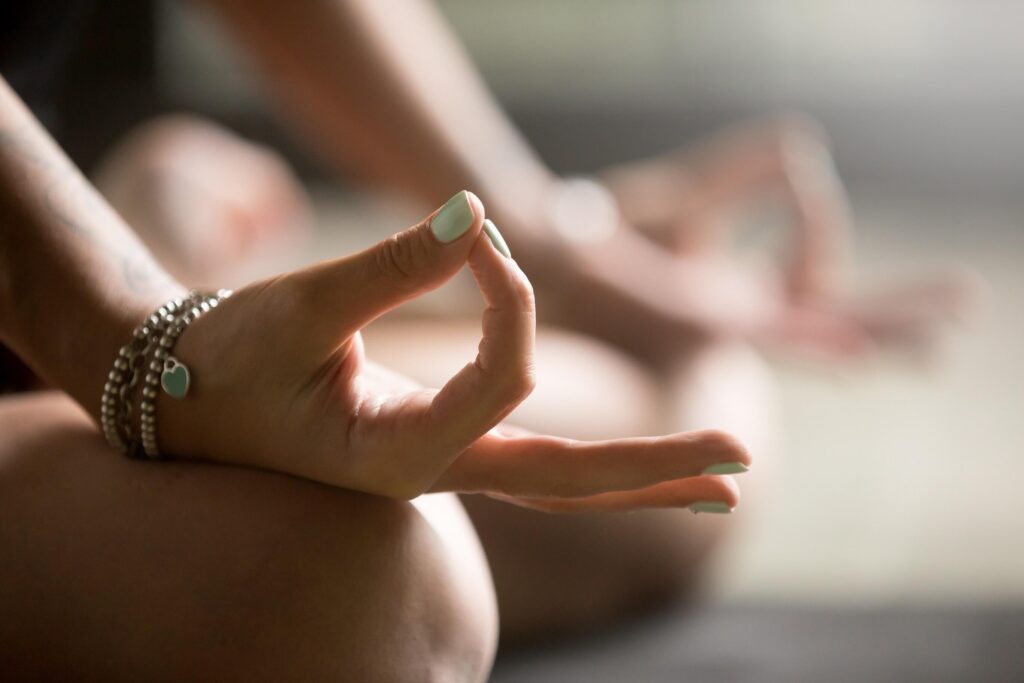
With its graceful simplicity, Gyan Mudra serves as a gentle reminder that the power to find peace and clarity lies within us, waiting to be awakened with a simple touch of our fingertips. It embodies the profound wisdom of ancient sages who understood the importance of stillness amidst the chaos of life. As we start this journey of discovery, let us embrace the transformative potential of Gyan Mudra and allow its magic to unfold in our lives. The Gyan Mudra’s meaning is rooted in its representation of wisdom and spiritual knowledge, achieved through the specific positioning of the fingers.
Join us on a journey of discovery as we unravel the mysteries of Gyan Mudra, explore its easy-to-follow steps, and uncover the myriad benefits it holds for our well-being. Together, let’s delve into the ancient wisdom that has stood the test of time and discover how a simple hand gesture can become a powerful tool for transformation in our modern lives.
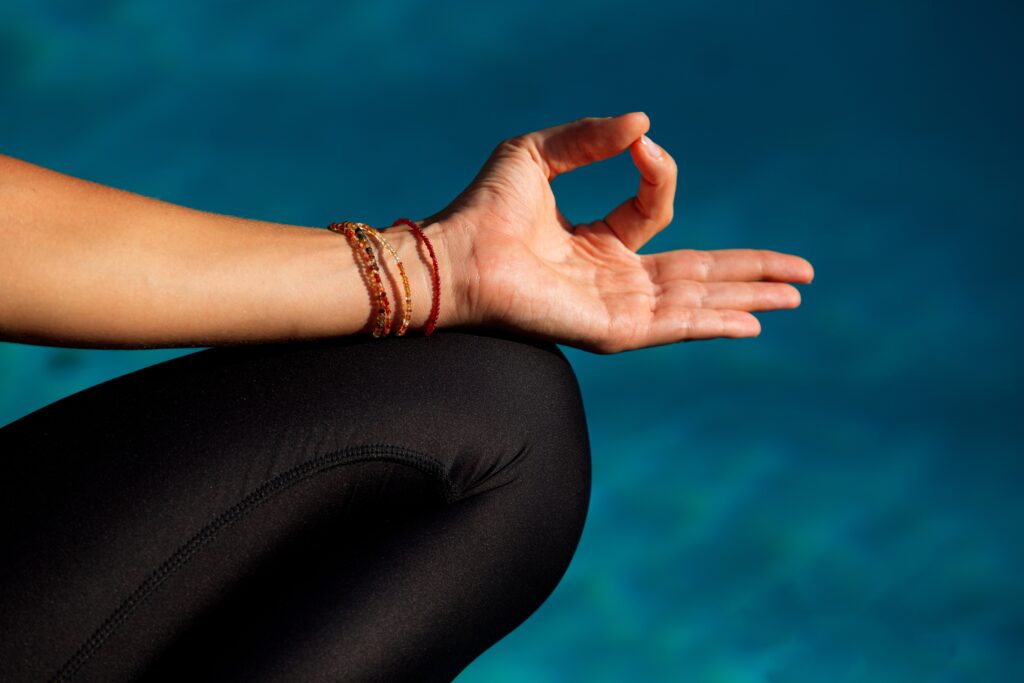
As we start this journey, it’s essential to approach Gyan Mudra with an open mind and a willingness to explore the depths of our inner landscape. While the practice itself may seem simple, its effects are profound and far-reaching. With each gentle touch of thumb to the index finger, we create a bridge between our consciousness and the universal wisdom that surrounds us.
In this comprehensive guide, we will delve into the practical aspects of Gyan Mudra, from its simple steps to its profound benefits. Together, we will learn how to incorporate this ancient practice into our daily lives and harness its transformative power to cultivate a greater sense of well-being, balance, and inner peace.
So, let’s unlock the magic of this mudra together and awaken to the infinite possibilities that lie within our own two hands.
What is Gyan Mudra?
Before we delve into the practical aspects, let’s take a moment to understand the essence of Gyan Mudra. Originating from the ancient traditions of yoga and meditation, Gyan Mudra is often referred to as the ‘gesture of knowledge’. The word ‘Gyan’ translates to ‘knowledge’ in Sanskrit, while ‘Mudra’ signifies a symbolic hand gesture. Together, they form a powerful tool for connecting with our inner wisdom and the universal consciousness.
Read More – 7 Yoga Mudras To Balance The Mind And The Body
In the rich tapestry of ancient wisdom, Gyan Mudra holds a special place as a symbol of enlightenment and insight. It is believed that this sacred gesture has been passed down through generations of sages and mystics, each adding their own layers of meaning and significance. As we trace its origins back to the dawn of human civilization, we find that Gyan Mudra transcends cultural boundaries and speaks to the universal quest for knowledge and understanding.
Steps to Practice Gyan Mudra
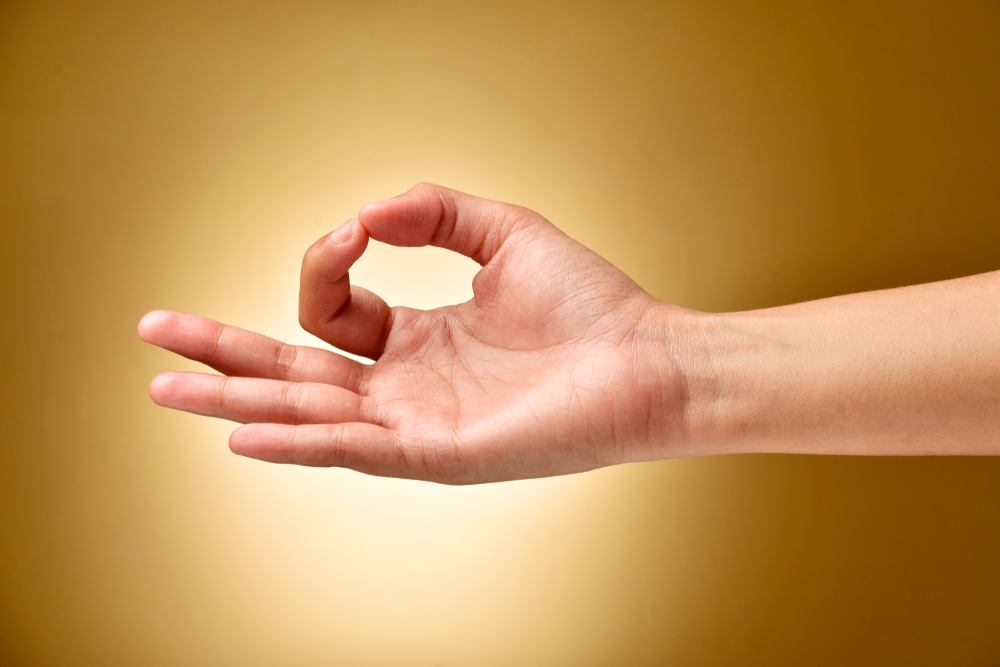
Now that we have a basic understanding of what Gyan Mudra represents, let’s explore how to do Gyan Mudra and incorporate it into our daily lives. The beauty of Gyan Mudra lies in its simplicity; it can be practised anytime and anywhere, with no special equipment required. Here’s a step-by-step guide to get you started:
- Find a comfortable seated position: Whether you choose to sit cross-legged on the floor or in a chair, make sure your spine is straight and your body is relaxed.
- Rest your hands on your knees or thighs: Allow your palms to face upward in a receptive gesture, signalling your openness to receive knowledge and wisdom.
- Bring your thumb and index finger together: Gently touch the tip of your thumb to the tip of your index finger, creating a small circle or loop.
- Extend the other three fingers: Let your middle, ring, and little fingers relax and extend outward without any tension.
- Close your eyes or soften your gaze: If it feels comfortable, gently close your eyes to turn your focus inward. Alternatively, you can maintain a soft gaze ahead, keeping your attention relaxed and unfocused.
- Breathe deeply and naturally: Take slow, deep breaths, allowing the rhythm of your breath to guide you into a state of calm and centeredness.
- Hold the gesture for several minutes: There’s no rush, take your time to sink into the practice and feel the subtle energy flowing through your fingertips.
Benefits of Gyan Mudra (ज्ञान मुद्रा के लाभ)
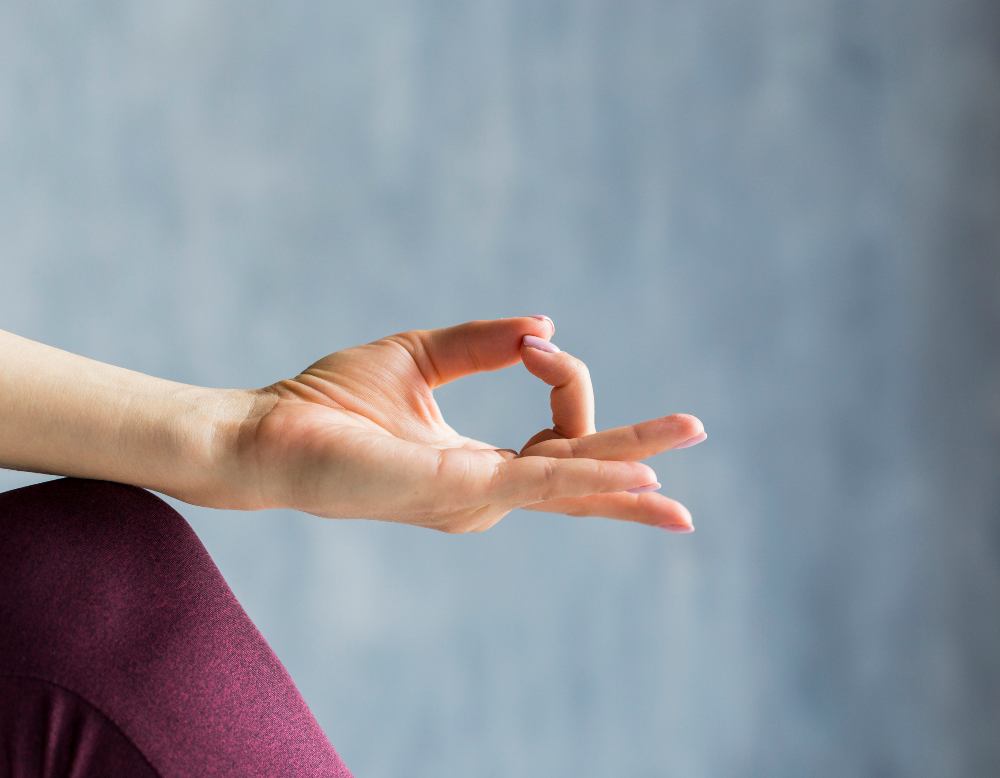
Now that you’ve learned how to practise Gyan Mudra, you might be wondering, what exactly are the benefits? Gyan Mudra offers a wide range of advantages for both the body and mind, making it a valuable tool for anyone seeking to improve their overall well-being. Regular practice supports improved concentration, enhanced memory, and a deeper sense of calm and mindfulness, fostering mental clarity and spiritual growth. Read on to find all gyan mudra benefits explained in clear, practical detail below.
- Enhanced focus and concentration: By stimulating the brain and activating critical areas associated with focus and cognitive function, Gyan Mudra helps sharpen the mind and improve concentration.
- Reduced stress and anxiety: The gentle pressure of this mudra on the thumb and index finger creates a sense of calm and relaxation, helping to alleviate stress, anxiety, and nervous tension.
- Increased mental clarity and alertness: Regular practice of Gyan Mudra can clear the mind of cluttered thoughts and mental fog, leaving you feeling more alert, focused, and present.
- Heightened intuition and insight: As the ‘gesture of knowledge’, Gyan Mudra opens the channels of intuition and inner wisdom, allowing you to tap into your innate wisdom and make clearer decisions in life.
- Balanced energy flow: According to traditional Indian and Chinese medicine, each finger is associated with specific elements and energy channels in the body. This mudra helps balance these energies, promoting overall vitality and well-being.
Incorporating Gyan Mudra into Your Daily Routine
Now that you’re familiar with the steps and benefits of Gyan Mudra, you might be wondering how to incorporate it into your daily routine. Right? But not to worry, as the good news is that it’s pretty simple to do! Whether you’re sitting at your desk, waiting in line, or relaxing at home, you can practice Gyan Mudra anytime, anywhere. Here are a few simple ways to integrate it into your day:
- Start your morning with a few minutes of Gyan Mudra meditation to set a positive tone for the day ahead.
- Take a Gyan Mudra break whenever you feel stressed or overwhelmed to help calm your mind and regain your focus.
- End your day with a relaxing Gyan Mudra practice to unwind and prepare for a restful night’s sleep.
In summary, Gyan Mudra serves as a beacon of calmness and solace amid the chaotic rhythms of modern life. Amidst the cacophony of distractions and demands, this ancient practice offers a sanctuary of stillness where the mind can find respite and the spirit can soar. By integrating the gentle yet profound practice of Gyan Mudra into your daily routine, you open the door to a world of inner exploration and self-discovery. With each touch of your fingertips, you invite a sense of calm and clarity to permeate your being, guiding you toward a deeper understanding of yourself and the world around you.
Read More – 4 Powerful Meditative Postures for Deep Focus and Relaxation
Embrace Gyan Mudra’s transformative potential and unlock the boundless wisdom dormant within your own two hands. With dedication and intention, you can harness its magic to cultivate a greater sense of peace, balance, and well-being in your life.
Conclusion
Gyan Mudra in yoga is one of yoga’s simplest yet most enduring practices. Touch the tip of your index finger to your thumb, rest the other three fingers open, and you have formed a gesture that has been used for thousands of years to sharpen focus, quieten the mind, and invite a sense of inner stillness.
At Rishikul Yogshala Rishikesh, we teach Gyan Mudra as part of every yoga teacher training programme, not as a standalone technique, but as an integrated part of pranayama, meditation, and the broader yogic lifestyle. In over 15 years of teaching, our founder, Bipin Baloni Ji, has observed that students who practise Gyan Mudra consistently for even 10-15 minutes daily report noticeably improved concentration and a calmer response to stress within the first few weeks.
You do not need a mat, a studio, or any equipment. You need only your hands, a few quiet minutes, and the intention to turn inward. Begin with the morning, hold the mudra through a short breathing session, and notice what shifts over time.
If you wish to deepen your understanding of mudras, pranayama, and traditional yogic practice in the place where yoga originated, explore our 200 Hour Yoga Teacher Training in Rishikesh, a Yoga Alliance-certified programme taught by experienced masters in the foothills of the Himalayas.
Frequently Asked Questions
Q1. What is Gyan Mudra?
Ans: Gyan Mudra is a yogic hand gesture where the tip of the index finger touches the tip of the thumb, while the other three fingers stay extended. It is known as the wisdom gesture and is widely used in meditation and pranayama.
Q2. What does Gyan Mudra do?
Ans: It calms the mind, improves focus and concentration, reduces stress, and supports deeper meditation. It is also believed to stimulate the Ajna (third eye) chakra and activate the air element in the body.
Q3. How long should I hold Gyan Mudra?
Ans: Hold it for 10 to 15 minutes daily. Beginners can start with 5 minutes and gradually increase to 30–45 minutes during meditation or pranayama.
Q4. When is the best time to practise Gyan Mudra?
Ans: Early morning, ideally between 4–6 AM, is best. It can also be practised before study, creative work, or any time you need mental clarity.
Q5. Can beginners do Gyan Mudra?
Ans: Yes. It is one of the safest and easiest mudras in yoga. No prior experience, flexibility, or equipment is needed. It can be done seated on a chair, on the floor, or even lying down.
Q6. What is the difference between Gyan Mudra and Chin Mudra?
Ans: Same finger position, different palm direction. Gyan Mudra faces palms upward (receiving wisdom). Chin Mudra faces palms downward (grounding energy). Both support meditation.
Q7. Which chakra does Gyan Mudra activate?
Ans: It primarily activates the Ajna chakra (third eye), supporting intuition, mental clarity, and spiritual awareness.
Q8. Can I do Gyan Mudra while walking or working?
Ans: Yes. It can be held discreetly during daily activities, commuting, sitting at a desk, or during breathing breaks. Deepest benefits come when paired with slow, conscious breathing.
Q9. How many fingers touch in Gyan Mudra?
Ans: Only two, the tip of the index finger and the tip of the thumb. The middle, ring, and little fingers remain gently extended and relaxed.
Q10. Is Gyan Mudra mentioned in classical yoga texts?
Ans: Yes. It is referenced in the Hatha Yoga Pradipika and the Gheranda Samhita. It also appears in Hindu and Buddhist iconography, with deities like the Buddha depicted using this gesture.

 +91-8433225327,
 Rishikul Yogshala Rishikesh, Narayan Kunj, Jonk Village, Ram Jhula, Swarg Ashram, Rishikesh, Uttarakhand 249304
 By Airway
 By Railway
 By Bus/Cabs