








Marichyasana: A Gentle Guide to the Sage Marichi’s Family of Seated Twists
Table of Contents
Introduction
Marichyasana is named after Marichi, the sage said to be one of Brahma’s first creations and the grandfather of Surya — the sun god. The pose isn’t just one shape but actually four classical variations, lettered A, B, C, and D, taught in sequence in Ashtanga’s Primary Series. Each one combines a folded leg, a stretched leg, and a twist or fold in a slightly deeper arrangement. In this guide, we’ll meet the Marichyasana family gently, walk through the four variations, and explore the sage’s wisdom encoded in this seated practice.
Marichyasana shines as a light of spiritual illumination in the hallowed domain of yoga philosophy, pointing practitioners toward a more profound realization of their identity and the interdependence of all things. With its roots in traditional knowledge, it offers a way for consciousness to awaken and allows practitioners to transcend ego boundaries and unite with the global divine. Entering the depths of Marichyasana means undertaking a transforming journey where barriers between the ego and the infinite melt, and the physical body serves as a vessel for spiritual enlightenment.
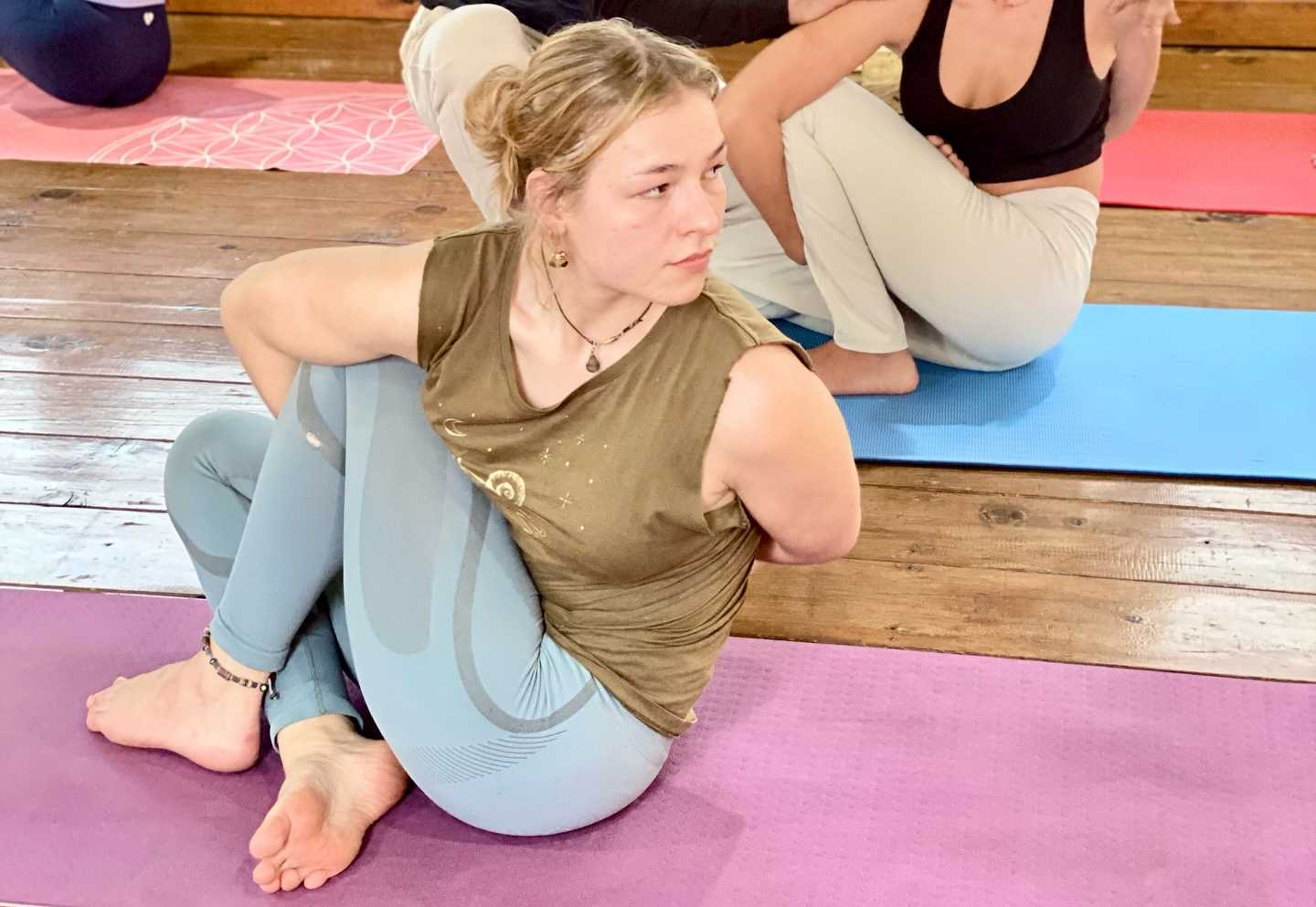
A sacred alchemy of body, mind, and spirit is at the core of Marichyasana, where physical practice opens doors to spiritual awareness. As they move through the posture, practitioners awaken to the inherent wisdom that lies at the core of their being and awaken the dormant energy within. As we work through the subtleties of Marichyasana, we are reminded of the unique connectivity of all things and the endless dance of creation that takes place both inside and outside of us.
Comprehending Marichyasana
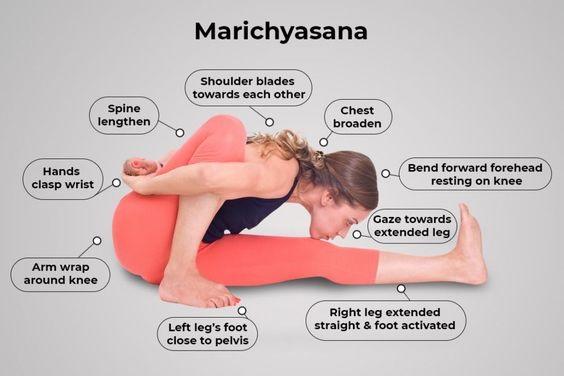
Before we dive into the spiritual essence of yoga philosophy, first, we’ll understand what Marichyasana is. It is a seated twist that works the entire body, mind, and spirit. It is named after the sage Marichi. This position calls for a lot of flexibility and strength since it includes severe twisting and stretching. Practitioners take students on a voyage of self-discovery and inward investigation as they lead them through the intricacies of the sage twist pose.
The Spiritual Essence
In the realm of yoga philosophy, each pose carries a symbolic meaning, representing various facets of reality. Marichyasana is no exception. Its twist symbolizes the liberation of internal knots and the release of tension in the body and mind. This liberation allows the vital life force, known as prana, to flow freely through the body’s twisted nadis, or energy channels, fostering a harmonious balance within.
Sage twist pose is also linked to Manipura, the solar plexus chakra that regulates change and personal power. By activating this energy center, practitioners develop inner strength and confidence that enables them to bravely and resiliently face life’s obstacles. By deliberate breathing, practitioners can access the power of prana, which imbues each cell with vigor and renewal. Breathing becomes a divine rhythm that harmonizes the body, mind, and soul.
The Inner Journey
Marichyasana encourages practitioners to go within and discover the vast terrain of their own selves. Layers of stress and stagnant energy are peeled away from the body as it twists and bends, exposing the genuine essence beneath. Practitioners uncover latent emotions, fears, and aspirations through this process of self-inquiry, enabling them to be acknowledged and let go of.
With every Marichyasana practice, practitioners explore new depths inside themselves, facing their inner demons and accepting their divine essence. It is a path of self-realization on which the outside world disappears, and the inner light becomes radiant.
The Union of Opposites
Integrating the dualities that exist both within and around us is often understood as yoga, being the union of opposites. This idea is illustrated in Marichyasana, which combines aspects of solidity and fluidity, effort and ease, strength and surrender. By grounding themselves in the present moment, practitioners discover equilibrium in the midst of life’s tumult through the serenity of the posture.
Also Read: Parivrtta Trikonasana (Revolved Triangle Pose): Steps, Benefits, and Contraindications
Marichyasana also highlights the value of acceptance and detachment. Practitioners develop a sense of serenity that permeates every part of their lives as they learn to let go of expectations and judgments and appreciate the sensations that come throughout the process.
Asana and Yoga Sutras – The Way to Calm
Asana practice is described in Patanjali’s Yoga Sutras as a way to achieve steadiness and ease in the body and as a prelude to meditation. Marichyasana embodies this idea, striking a balance between strength and flexibility, effort and surrender. By performing this asana, practitioners set the stage for profound levels of meditative absorption by readying themselves for the trip inward.
Embodying Sage Wisdom – Radiance from Within
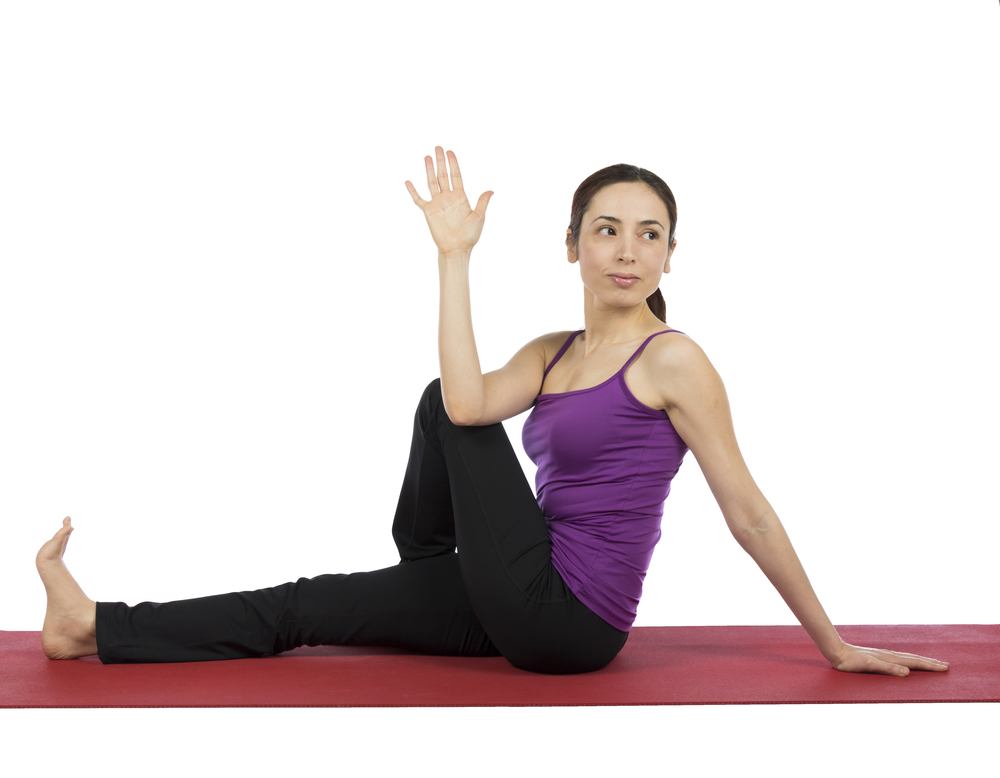
Marichyasana encourages practitioners to adopt the wisdom, insight, and inner radiance of the sage Marichi. By doing this asana, people connect with the sages’ ages-old wisdom and lift the layers of misconception and ignorance that conceal their true selves. As they wind through Marichyasana, they awaken the spirit, cleanse the body, and travel farther into the infinite field of consciousness.
Conclusion
In summary, Marichyasana is the spiritual essence extracted from ancient wisdom, a sacred thread intricately woven into the great fabric of yoga philosophy. Beyond its outward form, Marichyasana offers practitioners a profound doorway to inner peace and self-realization, inviting them to pursue a life-changing exploration. It is a bright doorway to the soul that invites people to explore the depths of themselves and find the incandescent spark of divinity within.
In addition to being reunited with the depths of their actual selves, practitioners of Marichyasana’s embrace become aware of the connectivity that unites all beings in the cosmic dance of existence. As a result, by practicing Marichyasana, one not only realizes the infinite potential of the human soul but also becomes aware of the everlasting creative symphony that is taking place both inside and outside of it.
Located in the holy city of Rishikesh, also known as the ‘Yoga Capital of the World’, Rishikul Yogshala is a shining example of a real Yoga School in Rishikesh. It is renowned for its conventional methods and profound spiritual teachings; it embodies yoga philosophy in its purest form. With a staff of highly skilled instructors who are experts in yoga’s physical and philosophical aspects, Rishikul Yogshala provides a thorough education that explores the depths of yoga philosophy.
At Rishikul Yogshala, students are immersed in a holistic learning environment where they get a profound grasp of the spiritual concepts that underlie the practice of yoga, Yoga Teacher Training in Rishikesh, and gain practical abilities. Using a demanding curriculum, all-encompassing encounters, and profound exercises, Rishikul Yogshala equips students to become not only practitioners of yoga but also virtuosos of this age-old knowledge.
For those interested in deepening their yoga journey, consider enrolling in a yoga teacher training program. Rishikul Yogshala Rishikesh, a leading Yoga school in Rishikesh, offers comprehensive courses like the 200 Hour Yoga TTC in Rishikesh and the 300 Hour Yoga Teacher Training in India. These programs are designed to help you master your practice and share the transformative power of yoga with others.
Last modified Date: 27th September 2025
This article is for general information and is not medical advice. If you have a respiratory or heart condition, are pregnant, or are unsure whether these practices suit you, please speak to your doctor before beginning.

 +91-8433225327,
 Rishikul Yogshala Rishikesh, Narayan Kunj, Jonk Village, Ram Jhula, Swarg Ashram, Rishikesh, Uttarakhand 249304
 By Airway
 By Railway
 By Bus/Cabs