








Anantasana (Sleeping Vishnu / Side-Reclining Leg Lift): A Gentle Guide to Yoga’s Balanced Side Pose
Table of Contents
Why Yoga Is Essential for Mind, Body, and Spirit
Anantasana — the Sleeping Vishnu Pose, also called the Side-Reclining Leg Lift — is named after the great serpent Ananta on whose coils Lord Vishnu is said to recline between the cycles of creation. You lie on your side, rest your head on your hand, lift the top leg straight up and reach for the big toe — a beautifully balanced shape. It looks easy and isn’t, requiring core stability, hamstring length, and quiet focus. In this guide, we’ll meet Anantasana gently, walk through the steps, and explore kind modifications.
The Sleeping Vishnu Pose, despite its intermediate-level status, is a gentle stretch that can be easily incorporated into any yoga practice. By adding poses like the Sleeping Vishnu Pose to our daily routine, we can all achieve a more balanced and harmonious life. In this article, we will discuss the meaning of the Sleeping Vishnu Pose (Anantasana), Vishnu asana benefits, how to do the Sleeping Vishnu Pose, and the modifications that can be added to the yoga asana to make it simpler for beginners.
What is Sleeping Vishnu Pose?
Sleeping Vishnu Pose is an intermediate yoga asana performed by balancing on the sides. It opens the pelvis and stretches the core, hips, hamstrings, inner thighs, and calves. The Sanskrit name of the Sleeping Vishnu Pose is Anantasana, which is derived from two Sanskrit words: “Ananta,” meaning infinite or endless, and “asana,” meaning yoga posture. Anantasana symbolises Lord Vishnu resting on a thousand-headed coiled snake (Sheshanaga), lying at the bottom of the primordial ocean, which is why this asana is called the Anantasana pose or विष्णु मुद्रा. Other names for this pose include Vishnu Pose, Vishnu Couch Pose, and Side Reclining Leg Lift Pose. Anantasana enhances awareness, flexibility, and balance, making it suitable for all levels.
Benefits of Sleeping Vishnu Pose
Anantasana benefits include improved flexibility, balance, and core strength, along with enhanced relaxation and mindfulness.
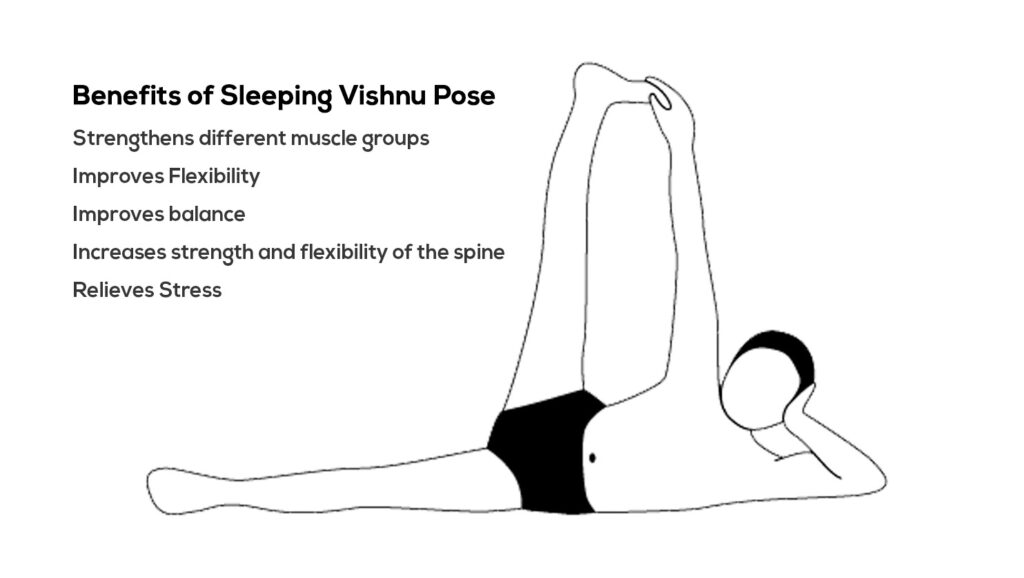
- Strengthens Different Muscle Groups – Anantasana stretches the core, shoulders, neck, pelvic area, and entire body, thereby effectively strengthening all these muscle groups.
- Improves Flexibility – The Vishnu pose engages the entire legs, especially the inner thighs, hamstrings, and calves, which can help improve overall leg flexibility.
- Improves Balance – Balancing on the one hand in Anantasana helps develop stability and coordination.
- Increases Strength and Flexibility of the Spine –Anantasana also improves spinal flexibility by providing a gentle stretch to the back muscles. Regular practice of this pose can lead to a stronger, more flexible spine.
- Relieves Stress – In the Sleeping Vishnu pose, keeping the body horizontal improves circulation, reduces stress, and promotes relaxation.
To help you make the most of all aspects of yoga, we offer comprehensive yoga courses at our esteemed yoga school in Rishikesh. Choose and select the programme that suits you best: beginner-friendly 200 Hour YTTC in Rishikesh, Intermediate 300 Hour YTTC in Rishikesh, or advanced 500 Hour Yoga Teacher Training in Rishikesh.
Steps to Do the Sleeping Vishnu Pose
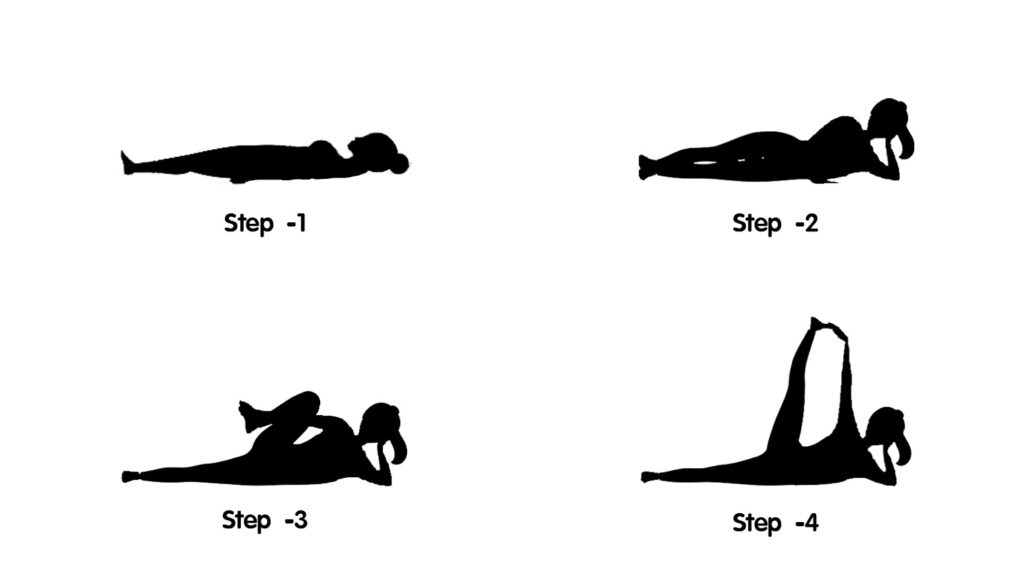
As its name suggests, Sleeping Vishnu Pose is performed lying on one side, with your head supported by one hand and one leg extended upward. Lying on your side with one leg raised may seem easy, but it can be quite challenging and requires a lot of focus and concentration. To make it easier for you, here is a step-by-step guide so that even beginners can perform Anantasana easily.
- Step 1: The Vishnu Pose requires strong engagement of the neck, shoulders, hip flexors, legs, and core muscles. Therefore, it is important to warm up these muscles properly to make them ready and avoid injury.
- Step 2: Start by lying on your back with your legs extended and arms by your sides.
- Step 3: Roll onto your right side. Make sure your body forms a straight line.
- Step 4: Bend your right elbow and support your head with your right hand. Make sure to press your right armpit and right upper arm firmly into the mat.
- Step 5: Now, inhale as you bend your left knee and bring it up to your waist, holding your left big toe with your left hand. Exhale, and then stretch your leg up towards the sky, fully extending your left arm to form Anantasana.
- Step 6: Fix your gaze on a point in front of you. Keep breathing smoothly and properly engage your core as well as glute muscles.
- Step 7: Focus on maintaining your balance without wobbling forward or backward.
- Step 8: Hold this pose for 30 seconds to a minute or as long as you feel comfortable.
- Step 9: To release the pose, inhale and lower the leg, bending the knee. Release the grip of the big toe and gently switch on the other side. Perform the same steps on the other side.
Modifications of Sleeping Vishnu Pose
The sleeping Vishnu pose is an intermediate-level yoga asana that challenges your balance. We understand that safety is vital, especially for beginners. Therefore, we strongly recommend practising this pose under the guidance of an expert teacher to ensure proper form and avoid injury. To make learning yoga easier and safer, we invite you to join our 200 Hour YTTC inRishikesh at Rishikul Yogshala, a renowned Yoga School in Rishikesh, India.
Those who find it difficult to follow the above steps can try these modifications to practise the Sleeping Vishnu Pose:
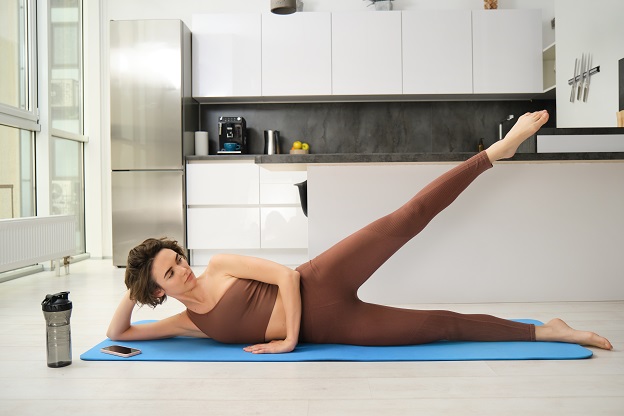
- Using a Strap – If you find it difficult to straighten the upper leg, you can use a yoga strap or a towel. For this, wrap the yoga strap around the ball of your upper foot and hold the ends with your hand. Make sure the grip is firm but gentle.
- Support Your Head – If supporting your head with your hand is uncomfortable, you can rest your head on your outstretched arm or use a cushion for support.
- Using The Cushion – If you are having difficulty balancing, you can place a pillow or folded blanket under your hips to prevent wobbling and maintain stability.
- Support of the Wall – Stability is the key to this yoga pose. If you’re a beginner, press the soles of your feet against the wall while doing Vishnu Pose for extra support. Also, press your lower leg to the wall while pulling your other leg upward.
Contraindications to Practising Anantasana
- If you have any injury or pain in the neck, shoulders, or knees, then avoid practising Sleeping Vishnu Pose. Also, avoid it if you have had recent surgery.
- Do not practise this pose if you have pain or problems in your hips or lower back.
- Pregnant women should avoid this asana or practice it safely only with necessary modifications under the guidance of a prenatal yoga teacher after consulting a healthcare professional.
- Anantasana may not be suitable for people who have high blood pressure;; therefore, they should avoid doing it.
Joining the internationally accredited 200 Hour Yoga Teacher Training In Rishikesh India at Rishikul Yogshala is ideal for learning yoga. We provide structured guidance, deepen the understanding of yoga philosophy, and provide practical learning experiences under expert supervision.
Read Also – 7 Yoga Mudras To Balance The Mind And The Body
Conclusion
Sleeping Vishnu Pose is a great addition to any yoga practice that requires stretching and strengthening of the entire body. Along with providing many physical benefits, it also works wonders on the mental and spiritual well-being of the practitioner. Regular practice of the Sleeping Vishnu Pose can increase your flexibility and stability and promote calmness.
Set in the serene lands of Rishikesh, the Yoga Capital of the World, all our Yoga Teacher Training courses are thoughtfully designed for both beginners and experienced practitioners. So, whether you are looking to deepen your practice or begin your career in yoga, enrolling in our Yoga Teacher Training in Rishikesh gives you unmatched opportunities to explore, learn, and grow.
Incorporating this pose into your practice can lead to significant improvements in overall well-being. For those interested in deepening their yoga journey, consider enrolling in a yoga teacher training program. Rishikul Yogshala, a leading Yoga school in Rishikesh, offers comprehensive courses like the 100 Hour Yoga Teacher Training In Rishikesh, 200 Hour Yoga TTC In Rishikesh. These programs are designed to help you master your practice and share the transformative power of yoga with others.
This article is for general information and is not medical advice. If you have a respiratory or heart condition, are pregnant, or are unsure whether these practices suit you, please speak to your doctor before beginning.

 +91-8433225327,
 Rishikul Yogshala Rishikesh, Narayan Kunj, Jonk Village, Ram Jhula, Swarg Ashram, Rishikesh, Uttarakhand 249304
 By Airway
 By Railway
 By Bus/Cabs