








Dhanurasana (Bow Pose): A Gentle Guide to Steps, Benefits, and Modifications
Table of Contents
- What is Bow Pose?
- How To Do The Bowing Pose?
- Prerequisites for Yoga Bow Pose
- 15 Steps of a Complete Dhanurasana (Yoga Bow Pose)
- What Muscles Does Dhanurasana Work?
- What Are the Benefits of Bow Pose?
- 1. Strengthens the Back
- 2. Opens the Chest and Shoulders
- 3. Stretches the Front of the Body
- 4. Strengthens the Legs
- 5. Engages the Core
- 6. May Support Better Posture
- 7. Improves Flexibility
- 8. Develops Balance Between Strength and Flexibility
- 9. Encourages Mindful Breathing and Body Awareness
- What Are the Common Mistakes in Dhanurasana?
- 1. Pulling the feet too hard
- 2. Letting the knees move too far apart
- 3. Forcing the chest too high
- 4. Throwing the head back
- 5. Holding your breath
- 6. Skipping the warm-up
- How Can Beginners Modify Dhanurasana?
- Use a yoga strap
- Keep the lift low
- Try Half Bow Pose
- Focus on control, not depth
- How Should You Breathe During Dhanurasana?
- Final Take
- Bow Pose (Dhanurasana) FAQs
- How long should I hold the bow pose?
- Is bow pose good for your back?
- Does the bow pose increase breast size?
- Is the bow pose good for weight loss?
- Does the bow pose reduce belly fat?
- What is the standing bow pose yoga?
What is Bow Pose?
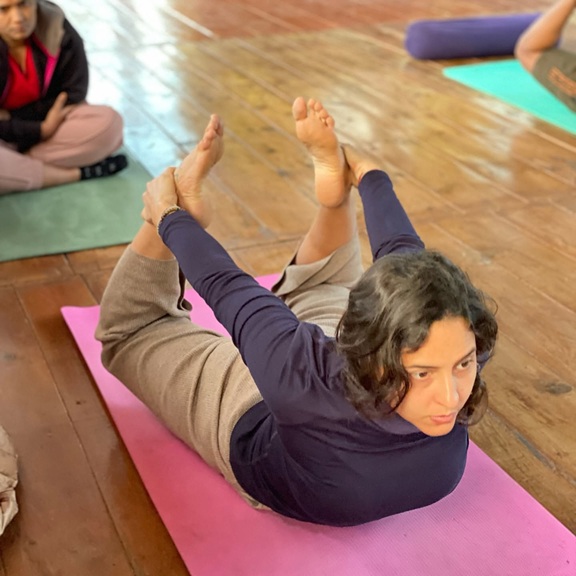
Dhanurasana, or Bow Pose, is a prone backbend: you lie on your stomach, bend your knees, hold your ankles, and lift your chest and thighs so the body curves like a drawn bow. It stretches the entire front line — chest, abdomen, hip flexors, quadriceps — while strengthening the back, and it’s one of the most direct antidotes to a body that spends most of its day folded forward over a desk.
It’s also a pose that goes wrong easily. Most people pull hard with the arms, splay the knees, and end up compressing the lower back rather than opening the front of the body. This guide covers the steps, the breath, the modifications that make it accessible if you can’t reach your ankles yet, and the conditions under which you shouldn’t attempt it at all.
How To Do The Bowing Pose?
There are three variations to the bowing pose in Hatha yoga:
- Parsva Dhanurasana, or the lateral side plank, is performed by doing the bowing pose on your lateral sides. This yoga asana massages the abdominal muscles.
- Urdhva Dhanurasana, or the wheel pose, is an upward-facing bow position. This stretches the abdominal core, hip flexors, thighs, wrists, and shoulders, along with fully arching the spine.
- Akarna Dhanurasana, or the shooting bow pose, resembles an archer ready to shoot. It works immensely on your leg flexibility and helps in its seamless rotation.
Prerequisites for Yoga Bow Pose
The bowing pose yields the maximum benefits when done in an ideal physical state at a specific time. Confusing? This is what we mean:
- You must not perform this asana within 4 to 5 hours of having a meal.
- Try this yoga in the morning before you have your meal. In case you missed the morning routine, do it in the evening.
Make sure your body is warm enough with the following preparatory poses:
- Locust posture (Shalabhasana)
- Cobra stretch (Bhujangasana)
15 Steps of a Complete Dhanurasana (Yoga Bow Pose)
- Lie down on the flat ground on your belly.
- Keep your legs hip-distance apart.
- Place your palms beside your lower ribs on the floor.
- Extend your feet and press down on the toes to activate your quadriceps.
- Lift your head and chest while supporting yourself with your palms on the ground.
- Roll your shoulders back.
- Bend your knees.
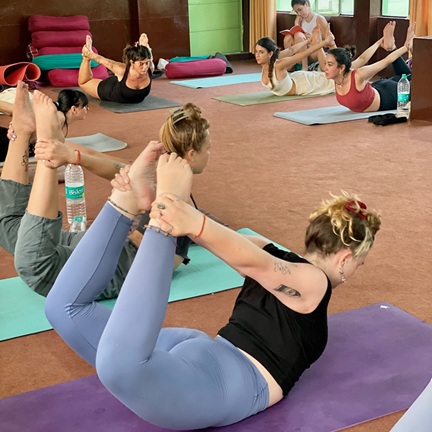
- Reach back with both your hands and clasp your ankles from the outside.
- Press your thighs into the floor.
- Point your upturned toes towards the ceiling to energise your legs.
- Begin to lift your inner thighs and relax your glutes.
- Lift your gaze slightly upwards so that the curve of your back is in continuation with your neck.
- Balance on your navel.
- Hold the pose for at least 15 seconds or 5 to 10 breaths.
- To ease out of this asana, lower your thighs, release your grip, and lower your legs.
You may attempt the following asanas to follow up the bowing pose so that your posture doesn’t cause discomfort in your muscles:
What Muscles Does Dhanurasana Work?
Dhanurasana works several muscle groups at the same time. Since the pose combines a backbend with a strong leg lift, you need strength as well as flexibility to hold the position comfortably.
The main muscles involved in Dhanurasana include:
- Back muscles: They help lift and support the upper body.
- Quadriceps: These muscles work as you bend your knees and lift your thighs.
- Hip flexors: They get a deep stretch as the legs move upward.
- Glutes: They help support the movement of the hips and legs.
- Shoulders and arms: They help you hold the ankles and maintain the position.
- Abdominal muscles: They remain active as you lift the chest and legs from the floor.
You may feel the pose strongly through your back, thighs, chest, shoulders and the front of your hips. The amount of work you feel can vary depending on your flexibility, strength, and how you perform the pose.
What Are the Benefits of Bow Pose?
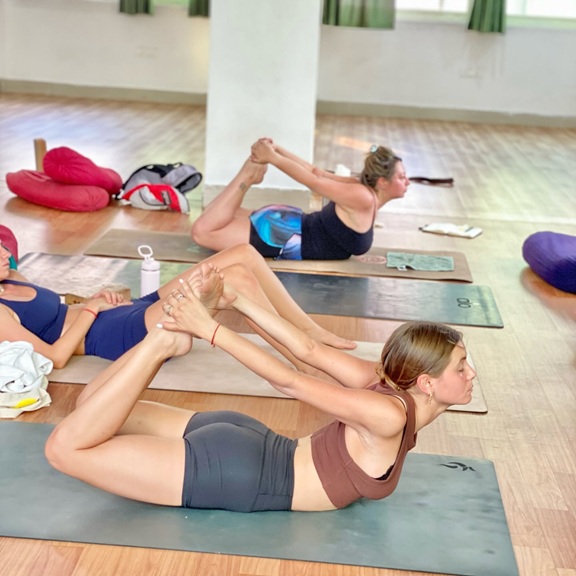
Dhanurasana is a strong backbend that works several parts of the body at the same time. As you lift your chest and legs while holding your ankles, the pose engages the back, legs, shoulders, and core while also stretching the front of the body.
With regular and mindful practice, Dhanurasana may offer the following benefits:
1. Strengthens the Back
Dhanurasana engages the muscles along the back as you lift your chest away from the floor. Practicing the pose with proper alignment can help build back strength and body awareness.
2. Opens the Chest and Shoulders
The arms reach backward to hold the ankles, creating a stretch across the chest and shoulders. This can be especially useful if you spend long periods sitting or working at a desk.
3. Stretches the Front of the Body
The pose creates a deep stretch through the front of the thighs, hips, abdomen, and chest. This makes Dhanurasana a useful addition to a yoga practice focused on improving overall mobility.
4. Strengthens the Legs
As you lift the thighs and press the feet backward, the leg muscles remain active throughout the pose. The quadriceps, hamstrings, and glutes all contribute to the movement.
5. Engages the Core
Dhanurasana requires control through the centre of the body while the chest and legs are lifted. This helps you develop greater core awareness and stability during the posture.
6. May Support Better Posture
Regular yoga practice can help improve body awareness and strengthen muscles involved in maintaining an upright posture. Since Dhanurasana works the back and opens the chest, it can be included in a broader practice aimed at developing better posture.
7. Improves Flexibility
Dhanurasana works on several areas that can become tight, including the shoulders, chest, hips, and thighs. Practicing consistently and without forcing the body can gradually improve flexibility and range of movement.
8. Develops Balance Between Strength and Flexibility
This asana is not only about stretching. You need enough strength to lift the chest and legs and enough flexibility to reach and hold the ankles comfortably. This combination makes the pose a good way to develop greater body control.
9. Encourages Mindful Breathing and Body Awareness
Because Dhanurasana can feel intense, it encourages you to pay attention to your breathing and physical sensations. Staying aware of your breath can help you recognize when you are working comfortably and when you may be pushing too far.
The benefits of Dhanurasana develop with regular, controlled practice. You do not need to lift your chest and legs as high as possible to benefit from the pose. Good alignment, steady breathing, and gradual progress are more important than depth.
Also Read: Akarna Dhanurasana (Archer’s Pose / Shooting Bow)
What Are the Common Mistakes in Dhanurasana?
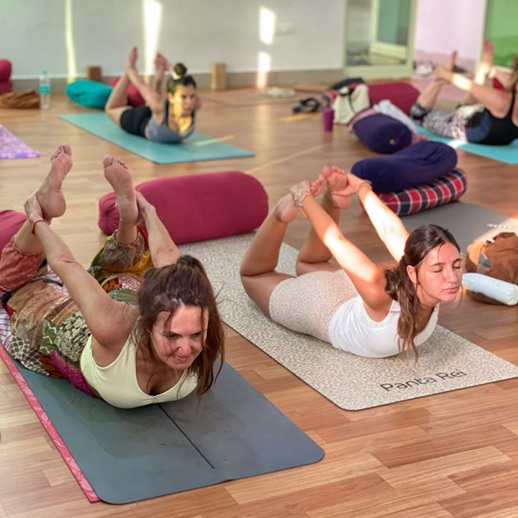
Dhanurasana can feel challenging when you are new to backbends. Many beginners try to go deeper into the pose before they have enough flexibility and control. This can make the pose uncomfortable.
Here are some common mistakes to avoid:
1. Pulling the feet too hard
Your hands do not need to pull the ankles aggressively. Instead, gently press your feet back into your hands. This helps create the lift without putting unnecessary strain on your shoulders.
2. Letting the knees move too far apart
Try to keep your knees around hip-width apart. When the knees move too wide, you may lose proper alignment and put more pressure on the lower back.
3. Forcing the chest too high
You do not need to lift as high as possible. Focus on creating length through the spine and opening the chest. A smaller, controlled backbend is better than forcing the body into a deeper position.
4. Throwing the head back
Keep your neck relaxed and in line with the rest of your spine. Avoid suddenly looking upward or pushing your head back.
5. Holding your breath
It is easy to hold your breath when a pose feels difficult. Try to keep your breathing slow and steady while holding Dhanurasana.
6. Skipping the warm-up
Dhanurasana is a deep backbend. A few gentle preparatory poses can help warm the spine, shoulders, hips, and thighs before you attempt the full pose.
How Can Beginners Modify Dhanurasana?
You do not need to perform the full expression of Dhanurasana on your first attempt. If your shoulders, thighs, or back feel tight, start with a simpler version.
Use a yoga strap
If you cannot comfortably reach your ankles, place a yoga strap around them. Hold the ends of the strap instead of forcing your hands to reach your feet.
Keep the lift low
Your chest and thighs do not have to come very high off the floor. Start with a small lift and gradually increase it as your body becomes more comfortable.
Try Half Bow Pose
Half Bow Pose allows you to work with one leg at a time. It can be a useful way to understand the movement before trying the full posture.
Focus on control, not depth
Flexibility takes time. Instead of trying to create the biggest backbend possible, focus on keeping your breathing steady and your movements controlled.
With regular practice, your range of movement may improve naturally.
How Should You Breathe During Dhanurasana?
Breathing is an important part of Dhanurasana. When the pose feels intense, beginners often stop or hold their breath without noticing.
Try to keep your breathing slow and comfortable while holding the pose. Take steady breaths rather than trying to stay in the posture for too long.
As you prepare to lift into Dhanurasana, breathe in and create length through the chest. Once you are in the pose, continue breathing normally. When you are ready to release, lower the chest and legs slowly while exhaling.
If you cannot breathe comfortably, reduce the intensity of the pose or come out and rest.
Final Take
Dhanurasana rewards patience more than effort. The students who progress fastest in this pose are rarely the flexible ones; they’re the ones who stop forcing the lift, use a strap without embarrassment, and come out the moment the lower back complains. Give it a few weeks of consistent, unhurried practice and the shape arrives on its own.
If you want to go deeper than a single pose, to understand why a backbend works, how to sequence around it, and how to teach it safely to someone else, that’s what a full training is for. Rishikul Yogshala Rishikesh runs yoga teacher training in India on the banks of the Ganga, where this practice has been taught for generations.
Bow Pose (Dhanurasana) FAQs
How long should I hold the bow pose?
Hold the bow pose for 15 seconds with your shoulders and chest open. Look straight ahead and focus on your balancing, breathing, and stretching. While releasing the pose, focus on the exhale.
Is bow pose good for your back?
Yes, the pose is focused on expanding your chest and stretching your upper back. Dhanurasana also stretches and strengthens your shoulders.
Does the bow pose increase breast size?
No. Breast tissue is fat and glandular tissue, and no asana changes either. What Dhanurasana does is stretch the chest and strengthen the upper back, so the shoulders stop rounding forward and the chest sits more open — a change in posture, not size.
Is the bow pose good for weight loss?
Not on its own. It burns few calories, but it builds strength through the back and legs and improves mobility, which makes the rest of your practice more effective. Treat it as one pose in a full routine, not a weight-loss technique.
Does the bow pose reduce belly fat?
No — fat loss doesn’t happen in one spot. Dhanurasana strengthens the abdominal wall and corrects the forward-rounded posture that makes the belly protrude, so the midsection often looks firmer even without weight loss. Actual fat loss comes from your overall practice, diet, and sleep.
What is the standing bow pose yoga?
The Standing Bow Pose (Dandayamana Dhanurasana) is a balancing yoga posture where you stand on one leg, lift the other leg behind you, and hold it with your hand while stretching forward with the opposite arm. It improves balance, flexibility, strength, and focus.
This article is for general information and is not medical advice. If you have a respiratory or heart condition, are pregnant, or are unsure whether these practices suit you, please speak to your doctor before beginning.

 +91-8433225327,
 Rishikul Yogshala Rishikesh, Narayan Kunj, Jonk Village, Ram Jhula, Swarg Ashram, Rishikesh, Uttarakhand 249304
 By Airway
 By Railway
 By Bus/Cabs