


Third Eye Chakra (Ajna): Meaning, Signs of Blockage, and 6 Easy Ways to Open It
Table of Contents
- What Is the Third Eye Chakra?
- The Meaning Behind the Name
- Why Two Petals?
- 7 Signs of a Blocked Third Eye Chakra
- Signs of an Overactive Third Eye Chakra
- What Can Unbalance Ajna?
- 6 Easy Ways to Open and Balance the Third Eye Chakra
- 1. Yoga Poses That Calm the Mind and Bring Attention to the Forehead
- 2. Pranayama (Breathing Practices)
- 3. Trataka (Steady Gazing)
- 4. Chanting “Om”
- 5. Meditation on the Eyebrow Centre (Ajna Dharana)
- 6. Daily Life Habits
- What Does Science Say?
- A Simple 10-Minute Third Eye Practice
- Safety Notes
- Final Thoughts
- Frequently Asked Questions
- What is the third eye chakra?
- Where is the third eye chakra located?
- What does Ajna mean?
- What colour is the third eye chakra?
- What is the mantra for the third eye chakra?
- How do I know if my third eye chakra is blocked?
- How do I open the third eye chakra?
- How long does it take to open the third eye?
- Can the third eye chakra be overactive?
- Is the third eye the same as the pineal gland?
- Does opening the third eye give psychic powers?
- Which chakra should I work on before the third eye?
Have you ever had a strong gut feeling about something and later found out you were right? Or sat quietly and suddenly understood a problem that was confusing you all week? Yoga connects that kind of inner knowing with a point between the eyebrows. It is called the third eye chakra, or Ajna.
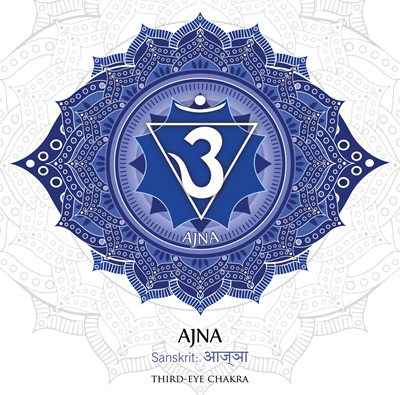
The third eye chakra (Ajna) is the sixth of the seven main chakras. It sits between the eyebrows and is linked with intuition, focus, imagination, and clear thinking. Its colour is indigo, its element is light, and its seed mantra is “Om.”
In this article, we will look at what Ajna means, how to notice when it feels out of balance, and which simple practices can help. We will also be honest about what science does and does not say.
What Is the Third Eye Chakra?
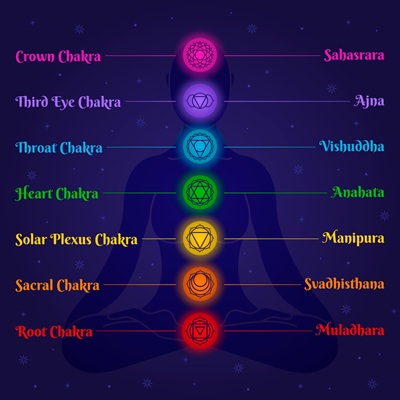
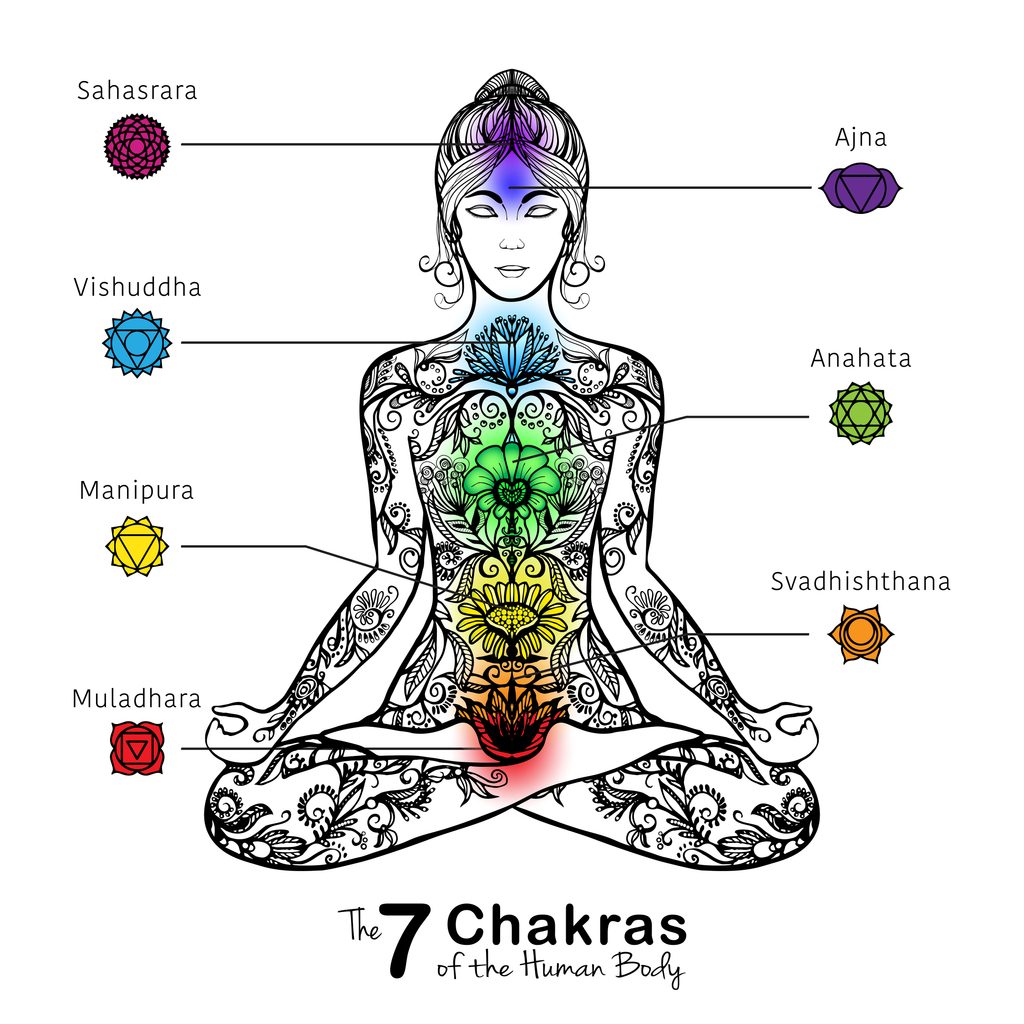
The third eye chakra is the sixth energy centre in the yogic system. If you are new to this topic, you can first read our article on the 7 chakras.
Ajna is placed between the eyebrows, at the centre of the forehead. Traditional descriptions say it is not a physical part of the body but part of the subtle, or pranic, system. Many teachers say that although you feel it at the forehead, its true place is deeper inside the head, in line with the centre of the brain.
It is called the “third eye” because it stands for inner sight. The two physical eyes see the outside world. The third eye is about seeing what is not obvious: patterns, meanings, and the bigger picture.
One important point: chakras belong to yogic philosophy. They are not organs you can find in a scan. We use this framework the way yoga has used it for centuries, as a map for understanding the mind and body.
Ajna at a Glance
| Detail | Third Eye Chakra |
|---|---|
| Sanskrit name | Ajna (Ajña) |
| Meaning | “Command” or “perceive” |
| Number | Sixth of seven |
| Location | Between the eyebrows, centre of the forehead |
| Colour | Indigo (some traditions say violet or white) |
| Element | Light (some texts say mind) |
| Seed mantra | Om |
| Symbol | Lotus with two petals |
| Linked gland (modern view) | Pineal gland |
| Themes | Intuition, insight, focus, imagination, wisdom |
The word Ajna comes from a root meaning to command, to perceive, and to know. Indigo is its usual colour and “Om” is its mantra.
The Meaning Behind the Name
“Command” may sound strange for a chakra about intuition. The idea is this: when this centre is clear, your mind is no longer pushed around by every thought and worry. You are able to guide your thoughts instead of being dragged by them.
Some yogic traditions also say Ajna is where a student receives guidance from within, which is why the word is sometimes linked with “inner teacher.”
You may already know the bindi or tilak that many people wear between the eyebrows. The spot between the eyebrows is called Bhrumadhya, and it is the point where the gaze is focused in meditation to help concentration.
Why Two Petals?
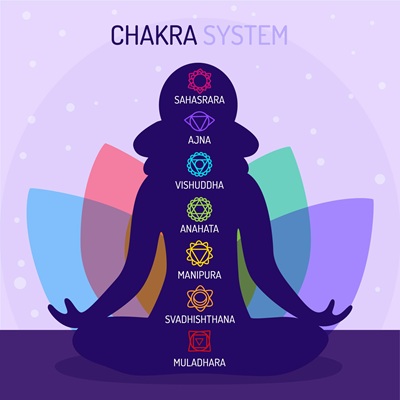
The earlier chakras have four, six, ten, twelve, and sixteen petals. Ajna has only two. Why?
In yogic teaching, the two petals stand for the two main energy channels, Ida (calm, cooling, lunar) and Pingala (active, warming, solar). These two channels, along with Sushumna, are said to meet at Ajna before rising to the crown.
You can also read the two petals as a simple lesson: logic and intuition do not need to fight. A clear mind uses both.
7 Signs of a Blocked Third Eye Chakra
In yogic teaching, a blocked or underactive Ajna may show up like this:
- Trouble trusting your gut. You doubt every instinct and ask everyone else for their opinion.
- Difficulty focusing. Your mind jumps from one thing to another.
- Overthinking. You go around in circles and cannot reach a decision.
- Feeling stuck in routine. It is hard to imagine a different future or try new ideas.
- Rigid thinking. You find it hard to see another point of view.
- Lack of direction. You are not sure what you want or why you do what you do.
- Restless sleep or a “noisy” mind at night.
Older texts also connect a blocked third eye with headaches, eye strain, and trouble with sight or hearing. These are traditional associations, not diagnoses. Many ordinary things cause them, from screen use to poor sleep to a need for glasses. If they keep coming back, please see a doctor.
Signs of an Overactive Third Eye Chakra
Too much of this energy is also described in yoga. It may look like:
- Living in imagination and finding it hard to stay in the present
- Daydreaming a lot or struggling with everyday practical tasks
- Trusting “signs” over facts and ignoring real evidence
- Feeling cut off from other people
- Getting overwhelmed by too many ideas and never acting on them
Balance means using intuition together with common sense. A balanced Ajna keeps both feet on the ground.
What Can Unbalance Ajna?
Yoga does not point to a single cause. Common ones include:
- Constant screen time and information overload
- Ignoring your inner voice for years to please others
- Long-term stress and lack of sleep
- Never giving the mind quiet time
- A habit of living only in the head, with little physical movement
- Fear of facing the truth about a situation
6 Easy Ways to Open and Balance the Third Eye Chakra
1. Yoga Poses That Calm the Mind and Bring Attention to the Forehead
These poses are mostly forward bends and gentle inversions. They quiet the body and draw attention inward. Our 7 chakras guide lists the same family of poses.
- Balasana (Child’s Pose): Kneel and sit back on your heels. Fold forward and rest your forehead on the mat or a folded blanket. Feel the gentle contact between the eyebrows. Stay for 1 to 3 minutes.
- Uttanasana (Standing Forward Fold): Stand with feet hip-width apart. Hinge at the hips and let your head hang. Bend the knees as much as you need. Hold for 5 slow breaths.
- Adho Mukha Svanasana (Downward-Facing Dog): From all fours, lift your hips up and back. Let your head hang between your arms. Hold for 5 breaths.
- Prasarita Padottanasana (Wide-Legged Forward Fold): Stand with legs wide apart and fold forward. If you can, rest the crown or forehead lightly on the floor or a block.
- Garudasana (Eagle Pose): Wrap one arm around the other and one leg around the other. This pose needs steady focus, which is exactly what Ajna is about.
- Savasana (Final Rest): Lie still and bring your attention to the space between your eyebrows.
Beginner tip: If you have high blood pressure, eye pressure problems or a neck injury, keep your head at or above heart level and skip deep inversions.
2. Pranayama (Breathing Practices)
- Nadi Shodhana (Alternate Nostril Breathing): Breathe in through one nostril and out through the other, then switch. Do not hold your breath. Because it balances the left and right sides, it fits the two-petal symbol of Ajna. Do 5 to 10 rounds.
- Bhramari (Humming Bee Breath): Close your eyes, breathe in, and hum softly on the exhale. Feel the vibration in your head. It is calming and easy for beginners.
For more on starting a breath practice, see our breath awareness meditation guide.
3. Trataka (Steady Gazing)
Trataka is a classic yogic cleansing practice. In Kundalini Yoga, steady gazing (Trataka), gazing at the space between the eyebrows (Shambhavi mudra) and certain breathing exercises are said to stimulate the Ajna chakra.
How to do it:
- Sit comfortably in a dim, quiet room. Place a lit candle at eye level, about an arm’s length away.
- Look at the flame softly without blinking for 1 to 2 minutes. Beginners should stop as soon as the eyes feel strained or begin to water a lot.
- Close your eyes. You will see an afterimage of the flame. Gently hold it at the space between your eyebrows.
- When the image fades, open your eyes and repeat 2 or 3 rounds.
Never stare at the sun or any very bright light. Keep sessions short at first.
4. Chanting “Om”
Sit with a straight back. Take a deep breath and chant “Om” slowly on the exhale. Feel the humming in the forehead and head. Do 9 to 21 rounds, or chant for 5 to 10 minutes. You can also chant softly or mentally if you prefer.
5. Meditation on the Eyebrow Centre (Ajna Dharana)
Sit quietly with your eyes closed. Without straining, bring gentle attention to the space between your eyebrows. Imagine a soft indigo light there. Let your breath be natural. When thoughts come, return to the light. Start with 5 minutes and slowly build up.
If you struggle to stay focused, our post on meditation for focus and concentration will help. You can also learn the benefits of meditation in more detail.
6. Daily Life Habits
Ajna needs quiet. A few small habits make a real difference:
- Keep a fixed sleep time and protect your sleep
- Take regular breaks from phones and screens, especially before bed
- Spend a few minutes in silence each day
- Keep a short journal and write down thoughts or feelings
- Spend time in nature and look at the sky or far horizon to rest your eyes
- Make small decisions without asking anyone, and notice how they turn out
- Eat well, drink enough water, and move your body
What Does Science Say?
Let us be clear: there is no scientific proof that chakras, or a “third eye,” exist as energy centres. Some traditions link Ajna with the pineal gland, which is a real gland in the brain that helps control sleep through the hormone melatonin. But the link between the pineal gland and any spiritual vision is a belief, not a proven fact. Also, claims that opening the third eye gives psychic powers have no scientific support.
What research can study are the practices used to work with Ajna. Trataka is one of them. In a 2021 study published in Frontiers in Psychology, 41 healthy volunteers practised Trataka for two weeks. The researchers reported that it improved working memory, spatial memory and spatial attention. An eye-exercise session used for comparison did not show significant changes.
That is encouraging, but it was a small study of young, healthy people over a short time. Larger and longer studies are needed. So a fair summary is this: gazing practices and meditation may help attention, and they can help many people feel calmer. They are not a cure for any illness.
A Simple 10-Minute Third Eye Practice
You can do this at home in the evening.
- Settle (1 minute): Sit comfortably with your spine tall. Close your eyes.
- Breathe (2 minutes): Take slow breaths through the nose. Let the mind slow down.
- Hum (2 minutes): Do Bhramari, humming gently on each exhale.
- Focus (3 minutes): Bring your attention to the space between your eyebrows. Picture a soft indigo glow. If your mind wanders, bring it back kindly.
- Chant (1 minute): Say “Om” softly or silently.
- Rest (1 minute): Sit in stillness. Open your eyes slowly.
Safety Notes
- Eyes: Do not strain during Trataka. If you have glaucoma, a serious eye condition, or you are sensitive to flickering light or have epilepsy, speak to your doctor before doing candle gazing. You can gaze at a small dot on the wall instead, or simply close your eyes.
- Headaches and vision changes: If you often get headaches, blurred vision, or changes in hearing or sight, see a doctor. Do not assume it is a chakra problem.
- Mental health: If deep meditation makes you feel very anxious, disconnected or confused, stop and talk to a trained teacher or a mental health professional. Persistent low mood, anxiety, or unusual experiences need proper care.
- Pregnancy, high blood pressure, and heart conditions: Avoid breath-holding and deep inversions unless your doctor agrees.
Final Thoughts
You do not need to chase special experiences to work with the third eye chakra. Quiet time, steady breath, and a little regular practice are enough. Over time, many people find they listen to themselves more and worry less.
Once you feel settled with Ajna, the next step in the chakra system is the crown chakra, which is about awareness and connection. If you would like to learn these practices from experienced teachers, you can explore our Yoga Teacher Training in Rishikesh, where meditation, pranayama, and chakra teachings are part of the course.
Frequently Asked Questions
What is the third eye chakra?
The third eye chakra, or Ajna, is the sixth of the seven main chakras. It is located between the eyebrows and is linked with intuition, insight, concentration and imagination.
Where is the third eye chakra located?
It is between the eyebrows, at the centre of the forehead. Traditional teachings place its deeper centre inside the head, in line with the eyebrow point.
What does Ajna mean?
Ajna means “command” or “to perceive.” It points to the idea of guiding your own mind and seeing things clearly.
What colour is the third eye chakra?
Indigo is the main colour. Some traditions describe it as violet or white.
What is the mantra for the third eye chakra?
The seed mantra is “Om.” You chant it slowly on the exhale and feel the sound in your forehead and head.
How do I know if my third eye chakra is blocked?
In yogic teaching, signs include self-doubt, trouble focusing, overthinking, feeling stuck and not trusting your intuition. These are traditional and emotional signs, not medical ones.
How do I open the third eye chakra?
Common methods are forward-bending yoga poses, alternate nostril breathing, Trataka, chanting Om and meditating on the space between the eyebrows. Start gently and build up slowly.
How long does it take to open the third eye?
There is no fixed time. Some people feel calmer after one session. Others practise for months before noticing changes. A short daily practice works better than a long one done rarely.
Can the third eye chakra be overactive?
Yes. An overactive Ajna can look like daydreaming, living in fantasy, ignoring facts, or feeling cut off from daily life.
Is the third eye the same as the pineal gland?
Some traditions link the two, but this is a belief, not a scientific fact. The pineal gland is a small gland in the brain that helps regulate sleep. Science has not shown that it gives spiritual sight.
Does opening the third eye give psychic powers?
There is no scientific evidence for this. In yoga, the real aim is clearer thinking, calmness and better self-awareness, not special powers.
Which chakra should I work on before the third eye?
Many teachers suggest building a steady base first, starting with the root chakra and moving upward, including the throat chakra just below Ajna. That said, a simple breath or meditation practice is fine to start any time.
This article is for general information and is not medical advice. If you have a respiratory or heart condition, are pregnant, or are unsure whether these practices suit you, please speak to your doctor before beginning.

 +91-8433225327,
 Rishikul Yogshala Rishikesh, Narayan Kunj, Jonk Village, Ram Jhula, Swarg Ashram, Rishikesh, Uttarakhand 249304
 By Airway
 By Railway
 By Bus/Cabs