








7 Yoga Mudras To Balance The Mind And The Body
Table of Contents
- What Are Yoga Mudras?
- Types of Mudras and Their Functions
- 7 Simple and Easy Yoga Mudras To Balance The Mind And The Body
- 1. The Chin Mudra
- 2. The Anjali Mudra
- 3. Shuni Mudra
- 4. Prithvi Mudra
- 5. Vayu Mudra
- 6. The Apana Mudra
- 7. Surya Mudra
- Which Mudra Should You Choose?
- Conclusion
- Frequently Asked Questions:
- Which yoga mudra should a beginner start with?
- How long should you hold a mudra?
- Can mudras be done without meditation?
- When is the best time to do yoga mudras?
- Can I do yoga mudras while walking or lying down?
- How many mudras can I practice in a day?
- Are there any side effects of yoga mudras?
- What is the difference between Prithvi and Surya Mudra?
- Can children and elderly people practice mudras?
- Can I practice mudras without meditation?
- Which mudra is formed by joining the tip of the thumb and index finger?
- How many mudras are there in yoga?
- What is Avahan Mudra?
- How long should I hold a mudra?
- Can beginners do yoga mudras?
- Can I do mudras while walking or working?
Bring your hands together and rest them in your lap. Already, you’ve moved into a mudra — a small, conscious gesture that the body and mind respond to in subtle ways. Mudras are an ancient part of yoga: tiny shapes made with the hands and fingers that gently invite energy to settle and flow. In this guide, we’ll explore seven simple mudras you can practise anywhere — even sitting at your desk.
The origins of yoga mudras can be traced back to ancient India and are mentioned in ancient texts such as the Hatha Yoga Pradipika and the Gheranda Samhita, which date back to the 15th century CE. But what exactly is a yoga mudra? Let’s explore.
What Are Yoga Mudras?
Yoga mudras are simple hand gestures used during meditation, pranayama and yoga practice. The word mudra comes from Sanskrit and means “seal” or “gesture.” In yoga, each gesture is linked to a quality, such as calm, focus or grounding.
In old yoga texts like the Hatha Yoga Pradipika and Gheranda Samhita, the word mudra also covers body practices such as Maha Mudra and Viparita Karani. Today, when most people search for mudras, they mean hand mudras (hasta mudras). This guide focuses on those.
Is “yoga mudra” also a pose? Yes. Yoga Mudra is also the name of a seated forward bend (Yoga Mudrasana). You sit in Lotus or Vajrasana, hold your hands behind your back, and bend forward. So mudra yoga can mean either hand gestures or this mudra asana, depending on the context.
Types of Mudras and Their Functions
Here is a quick guide to common hand mudras, how to make them, and what they are traditionally used for.
| Mudra | How to make it | Traditionally used for |
|---|---|---|
| Gyan Mudra | Tip of thumb touches tip of index finger, palms up | Focus, calm mind, meditation |
| Chin Mudra | Same as Gyan, but palms face down | Grounding, steady meditation |
| Prana Mudra | Thumb touches tips of ring and little fingers | Energy, reducing tiredness |
| Prithvi Mudra | Thumb touches tip of ring finger | Stability, patience |
| Varun Mudra | Thumb touches tip of little finger | Balance of the water element |
| Vayu Mudra | Index finger folds to base of thumb; thumb presses on it | Balance of the air element |
| Shunya Mudra | Middle finger folds to base of thumb; thumb presses on it | Balance of the space element |
| Apana Mudra | Thumb touches tips of middle and ring fingers | Digestion, letting go |
| Hakini Mudra | All fingertips of both hands touch, palms apart | Concentration, memory |
| Dhyana Mudra | Right hand rests on left palm in lap, thumbs touch | Deep meditation |
| Anjali Mudra | Palms pressed together at the heart | Respect, gratitude |
7 Simple and Easy Yoga Mudras To Balance The Mind And The Body
Here are 7 powerful yoga mudras to perform daily for a strong mind and body.
1. The Chin Mudra

The Chin Mudra is often used during meditation and pranayama practices to help increase focus and concentration. It is believed to help balance the flow of energy in the body and promote a sense of calm and serenity. Mudra for concentration, or Mudras for meditation, sharpens focus, improves mental clarity, and helps center the mind for better attention.
It is also used in yoga postures and asanas. The representation of the union of individual consciousness with universal consciousness refers to the belief that by practicing this mudra, one is able to transcend the ego and attain a higher level of consciousness. It is often depicted in statues of the Buddha, sitting in meditation with his hands in Chin Mudra.
Here’s how to perform Chin Mudra:
- Sit in a comfortable seated position with a straight spine, such as in Sukhasana (Easy Pose), Padmasana (Lotus Pose), or Vajrasana (Thunderbolt Pose).
- Bring your hands together in front of your chest, with your palms facing up.
- Touch the tip of your index finger to the tip of your thumb, while holding the other fingers straight. The index finger and thumb form a circle, and the other fingers remain extended.
- Hold this position while you focus on your breath and your intention. Take slow, deep breaths, and let go of any tension in your body.
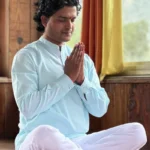
2. The Anjali Mudra

The Anjali Mudra is a common gesture used in yoga practice and is often performed at the beginning and end of a yoga class as a sign of respect and gratitude to the teacher and the practice.
Read More – Learn About Gyan Mudra – 7 Powerful Steps and Benefits Explained
Here’s how to perform the Anjali Mudra:
- Stand or sit in a comfortable position with a straight spine.
- Bring your hands together in front of your heart, with your palms touching and fingers pointing upward.
- Press your palms together firmly but comfortably, making sure your fingers are pointing upward and not bent back.
- Hold this position while focusing on your breath and your intention. Take slow, deep breaths, and relax.
- As you press your palms together, you can bow your head slightly in a gesture of respect, humility, and gratitude.
3. Shuni Mudra

Shuni Mudra is formed by pressing the tip of the middle finger to the tip of the thumb while holding the other fingers straight. This yoga mudra is associated with the element of earth and is believed to increase the qualities of patience and determination in the practitioner, as well as the ability to overcome obstacles.
Here’s how to perform Shuni Mudra:
- Sit in a comfortable seated position with a straight spine, such as in Sukhasana (Easy Pose), Padmasana (Lotus Pose), or Vajrasana (Thunderbolt Pose).
- Bring your hands to your knees, with your palms facing up.
- Touch the tip of the middle finger to the tip of the thumb, while holding the other fingers straight. The middle finger and thumb form a circuit of energy, and the other fingers remain extended.
- Hold this position while you focus on your breath and your intention. Take slow, deep breaths, and let go of any tension in your body.
- This mudra can be practiced during seated meditation, pranayama, and yoga asanas, but also can be incorporated into your daily routine at any time, such as when you are feeling stressed or have a difficult task ahead.
4. Prithvi Mudra

Prithvi Mudra is formed by touching the tip of the ring finger to the tip of the thumb while holding the other fingers straight. This yoga mudra is connected to the element of earth and is believed to help balance this element within the body, which can improve overall physical strength and stability. This Mudra for physical strength boosts energy, enhances vitality, and supports overall physical resilience.
The Mudra for body balance, known as the “Prana Mudra,” helps to activate the energy within the body, promoting physical stability and mental equilibrium. By practicing this mudra regularly, you can enhance your overall sense of harmony and well-being. The Mudra for strength, known as the “Vajra Mudra,” boosts inner power and resilience, enhancing both physical and mental strength.
Here’s how to perform Prithvi Mudra:
- Sit in a comfortable seated position with a straight spine, such as in Sukhasana (Easy Pose), Padmasana (Lotus Pose), or Vajrasana (Thunderbolt Pose).
- Bring your hands to your knees, with your palms facing up.
- Touch the tip of the ring finger to the tip of the thumb, while holding the other fingers straight. The ring finger and thumb form a circuit of energy, and the other fingers remain extended.
- Hold this position while you focus on your breath and your intention. Take slow, deep breaths, and let go of any tension in your body.
- As with other mudras, it’s recommended to practice Prithvi Mudra for at least 5-10 minutes daily for optimal benefits. It can be practiced during seated meditation, pranayama, and yoga asanas, and it can be included in your daily routine as well.
Read More – 5 Yoga Mudras for Good Sleep and Cure Insomnia
5. Vayu Mudra

Vayu Mudra is formed by folding the index finger and pressing it against the base of the thumb. This mudra is associated with the air element and is believed to help balance this element within the body, which can alleviate certain conditions such as constipation and fatigue.
Here’s how to perform Vayu Mudra:
- Sit in a comfortable seated position with your spine straight.
- Bring your hands to your knees, with your palms facing up.
- Fold the index finger and press it against the base of the thumb, while keeping the other fingers straight. The index finger and thumb form a circuit of energy, and the other fingers remain extended.
- Hold this position while you focus on your breath and your intention. Take slow, deep breaths, and let go of any tension in your body.
Vayu mudra is believed to be beneficial for people with conditions such as constipation, indigestion, and gas, as well as for those who suffer from respiratory issues such as asthma, chronic obstructive pulmonary disease (COPD), and chronic bronchitis.
However, mudras should not be considered a substitute for medical treatment, and if you have any health concerns, you should consult a healthcare professional before starting a mudra practice. Mudras are considered to be a complement to traditional medical treatment and not a replacement for it.
6. The Apana Mudra

The Apana Mudra is formed by folding the middle and ring fingers and pressing them against the base of the thumb while keeping the other fingers straight.
It is used to help stimulate the downward movement of energy in the body, also called Apana Vayu, which is responsible for expelling waste and controlling the reproductive organs. This Mudra is believed to help in the treatment of conditions such as constipation, indigestion, and gas, as well as certain conditions related to the reproductive organs.
Here’s how to perform Apana Mudra:
- Sit in a comfortable seated position with a straight spine.
- Bring your hands to your knees, with your palms facing up.
- Fold the middle and ring fingers and press them against the base of the thumb, while keeping the other fingers straight. The middle, ring finger, and thumb form a circuit of energy.
- Hold this position while you focus on your breath and your intention. Take slow, deep breaths, and relax.
It’s important to note that, like all mudras, Apana Mudra is believed to be more effective when accompanied by pranayama, visualization, and affirmation. And as always, it’s important to consult a healthcare professional before starting a mudra practice.
Also Read: Apana Vayu Mudra: Top Benefits, Steps, Precautions, Tips for Beginners
7. Surya Mudra

Surya Mudra is formed by pressing the tip of the ring finger against the base of the thumb while keeping the other fingers straight. This yoga mudra is believed to help balance the element of fire in the body and is often used to increase energy and vitality and to help with weight loss. It is used to activate the Manipura Chakra, or the solar plexus, which is associated with willpower, self-esteem, and the digestive system.
Here’s how to perform Surya Mudra:
- Sit in a comfortable seated position with a straight spine, such as in Sukhasana (Easy Pose), Padmasana (Lotus Pose), or Vajrasana (Thunderbolt Pose).
- Bring your hands to your knees, with your palms facing up.
- Press the tip of the ring finger against the base of the thumb, while keeping the other fingers straight.
- Hold this position while you focus on your breath and your intention. Take slow, deep breaths, and let go of any tension in your body.
Which Mudra Should You Choose?
- Mudra for balance: Prithvi Mudra is the most common choice for feeling steady and grounded. Practice it while sitting quietly for 10–15 minutes.
- Mudra for memory power and focus: Hakini Mudra and Gyan Mudra are the two most used for concentration. Students often practice Hakini Mudra before study time.
- Mudra for a restless mind: Some people search for a mind-control mudra. No mudra can “control” the mind, but Gyan Mudra and Dhyana Mudra help many people feel calmer and more focused, especially when combined with slow breathing.
Conclusion
Yoga mudras are one of the easiest yoga practices to begin with. You don’t need a mat, special clothes, or flexibility- just your hands, a quiet place, and a few minutes each day. Start with one mudra that fits your needs, such as Gyan Mudra for focus or Prithvi Mudra for balance. Practice it for 5 minutes with slow breathing and notice how you feel over a few weeks.
Remember, mudras work best as part of a wider practice. When you combine them with pranayama, meditation, and asanas, their effect becomes deeper and easier to feel. And while mudras can support your well-being, they are not a replacement for medical care.
If you want to learn mudras the traditional way, with correct hand positions, their meaning in yogic texts, and how to use them in teaching, the best way is to study with experienced teachers. At Rishikul YogshalaRishikesh, mudras are taught as part of our Yoga Teacher Training in Rishikesh, alongside asana, pranayama, meditation, and yoga philosophy.
Whether you want to deepen your own practice or become a certified yoga teacher, our Yoga Alliance–certified Yoga Teacher Training in Rishikesh, Indiais a good place to start.
Your next step: Try one mudra today. When you’re ready to go deeper, explore our yoga teacher training in Rishikesh and learn the complete science of yoga at Rishikul Yogshala.
Frequently Asked Questions:
Which yoga mudra should a beginner start with?
Anjali Mudra is the most accessible starting point. It’s familiar, grounding, and practiced in virtually every yoga tradition worldwide.
How long should you hold a mudra?
Most teachers recommend 5 to 15 minutes per session. Even 5 minutes of focused practice daily produces noticeable effects over time.
Can mudras be done without meditation?
Yes. You can practice them while seated at your desk, during a commute, or before sleep. Their power lies in regularity, not in the setting.
When is the best time to do yoga mudras?
Mudras can be practiced anytime and anywhere, but they are most effective when done during meditation, pranayama, or in a calm and relaxed state.
Can I do yoga mudras while walking or lying down?
Yes, mudras can be practiced while sitting, standing, walking, or lying down—as long as your body is relaxed and your focus is steady.
How many mudras can I practice in a day?
It is recommended to practice 1–2 mudras at a time instead of switching frequently, so your body can fully experience their benefits.
Are there any side effects of yoga mudras?
Yoga mudras are generally safe. However, over-practicing or doing the wrong mudra for a specific condition may not give desired results, so proper guidance is helpful.
What is the difference between Prithvi and Surya Mudra?
Prithvi Mudra connects the fingertip to the thumb tip to build grounding energy. Surya Mudra presses the finger to the thumb base to activate fire energy — opposite effects.
Can children and elderly people practice mudras?
Yes. Mudras are suitable for all ages and can be done seated or lying down.
Can I practice mudras without meditation?
Yes. Mudras work on their own, even while sitting quietly or during daily routines.
Which mudra is formed by joining the tip of the thumb and index finger?
It is Gyan Mudra when the palms face up, and Chin Mudra when the palms face down. It is the most common mudra used in meditation.
How many mudras are there in yoga?
There is no fixed number. The Gheranda Samhita describes 25 mudras, including body practices. Most modern yoga classes use about 10–15 common hand mudras.
What is Avahan Mudra?
Avahan Mudra (Avahana Mudra) is a hand gesture used at the start of a Hindu puja to invite the deity. It belongs mainly to ritual worship rather than yoga meditation practice.
How long should I hold a mudra?
Start with 5 minutes. With practice, you can build up to 15–30 minutes a day, in one sitting or split into shorter sessions.
Can beginners do yoga mudras?
Yes. Yoga mudras need no flexibility or equipment. You can practice them sitting on the floor, on a chair, or even lying down.
Can I do mudras while walking or working?
Simple mudras like Gyan Mudra can be held at your desk or while travelling. For the best results, practice while sitting still and breathing slowly.
This article is for general information and is not medical advice. If you have a respiratory or heart condition, are pregnant, or are unsure whether these practices suit you, please speak to your doctor before beginning.

 +91-8433225327,
 Rishikul Yogshala Rishikesh, Narayan Kunj, Jonk Village, Ram Jhula, Swarg Ashram, Rishikesh, Uttarakhand 249304
 By Airway
 By Railway
 By Bus/Cabs